
Birding 123 Bird Guide Gear Guide Attracting Birds Conservation Studying Birds

Bird Guide

Species Accounts

Video Gallery

Mexican Jay

Aphelocoma ultramarina Order PASSERIFORMES - Family CORVIDAE
Summary Detailed
For complete Life History Information on this species, visit Birds of North America Online.

enlarge
Mexican Jay, breeding adult (Def. Basic) ; Portal, AZ; June
About the photographs
enlarge
Mexican Jay, 3rd year; Portal, AZ; June
Menu
  1. Cool Facts
  2. Description
  3. Similar Species
  4. Sound
  5. Range
  6. Habitat
  7. Food
  8. Behavior
  9. Reproduction
  10. Conservation Status
  11. Other Names

A bird of the Mexican mountains, the Mexican Jay lives in the oak woodlands of western Texas, New Mexico, and Arizona. It lives in social groups that may include multiple breeding pairs, and group members may feed young at multiple nests within the group territory.

Cool Facts

  • In most populations of the Mexican Jay, young jays have large areas of white or flesh color on the basal half of the bill. It can take more than two years for the bill to turn entirely dark. These light areas on the bill may be asymmetrical and can be used by observers to identify individual jays.
  • Mexican Jay groups may number from 5 to 25 individuals, and may contain several active nests within one territory. Only the socially paired group members engage in nest-building, incubation, and brooding. All group members do virtually everything else, including alarm calling, mobbing, and feeding the young. Some jays feed at several nests within the territory, others feed at only one, and still others do not feed any young at all.

  • Genetic studies have shown that parentage within a Mexican Jay group is complicated, with most nests containing young sired by different males. Most of the extra-pair young were fathered by males within the group that did not help in nest building and did not appear to be paired.

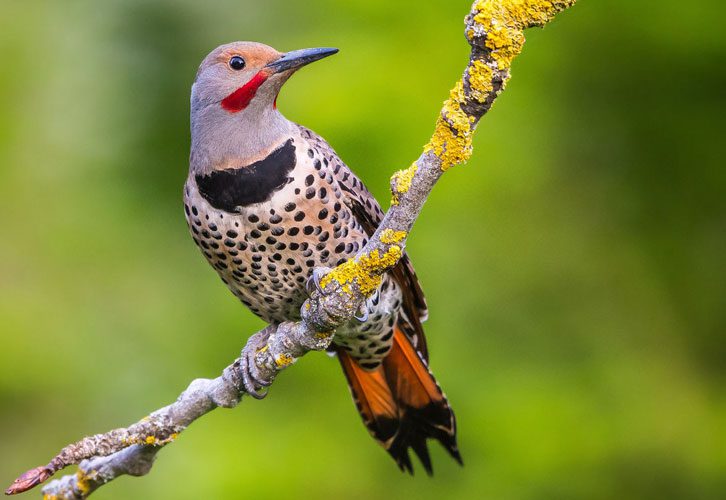
  • In winter Mexican Jay groups are often followed by Northern Flickers. The flickers pay attention to Mexican Jay alarm calls and are protected from predators by the vigilance of the jays.

Description

  • Size: 29 cm (11 in)
  • Weight: 120-135 g (4.24-4.77 ounces)

  • Large songbird.
  • Blue head, wings, and tail.
  • Grayish blue back.
  • Dingy white underparts.
  • Long tail.

  • Bill black, or with whitish coloring at base.
  • Face darker blue.
  • Black in front of eyes.
  • Throat lighter than chest.
  • White under tail.
  • Eyes dark brown.
  • Legs and feet black.

Sex Differences

Sexes look alike.

Immature

Juvenile all dull gray, with pale bill. Immature similar to adult, but may retain pale patches at base of bill and gape for several years.

Similar Species

  • Western Scrub-Jay has grayish brown back, a blue necklace across the chest, and a white line over the eye.
  • Pinyon Jay has a short tail, a blue chest, and a long, pointed bill.

Sound

Call loud, harsh, and upwardly inflected, "weet, weet."

»listen to songs of this species

Range

Range Map


© 2004 Cornell Lab of Ornithology

Summer Range

Resident in mountains of southern Arizona, New Mexico, and western Texas. Also in Mexico.

Habitat

Found in pine, oak, and juniper woodland.

Food

Acorns, pinyon nuts, arthropods, lizards.

Behavior

Foraging

Forages on ground and in trees. Harvests and hides (caches) acorns and other nuts. Holds food under feet to peck at it.

Reproduction

Nest Type

Nest an open cup of twigs with an inner layer of rootlets, lined with plant fibers. Nest placed in tree.

Egg Description

Greenish, with or without dark markings.

Clutch Size

Usually 4-5 eggs. Range: 1-6.

Condition at Hatching

Naked and helpless.

Conservation Status

Populations restricted, but appear stable.

Other Names

Geai du Mexique (French)
Grajo Azul, Charra Azulosa, Urraca Azulejo, Parajo Azul, Ruín (Spanish)
Gray-breasted Jay (English)

Sources used to construct this page:

  1. Brown, J. M. 1994. Mexican Jay (Aphelocoma ultramarina). In The Birds of North America, No. 118 (A. Poole and F. Gill, Eds.). Philadelphia: The Academy of Natural Sciences; Washington, D.C.: The American Ornithologists? Union.
  2. Jones, Z. F., and C. E. Bock. 2003. Relationships between Mexican Jays (Aphelocoma ultramarina) and Northern Flickers (Colaptes auratus) in an Arizona oak savanna. Auk 120: 429-432.
  3. Li, S.-H., and J. L. Brown. 2000. High frequency of extrapair fertilization in a plural breeding bird, the Mexican jay, revealed by DNA microsatellites. Animal Behaviour 60: 867-877.


Home | Contact Us    ©2003 Cornell Lab of Ornithology