

How to Deal With Unwanted Yard Visitors: Squirrels, Cats, Bugs, Hawks, and More
April 20, 2009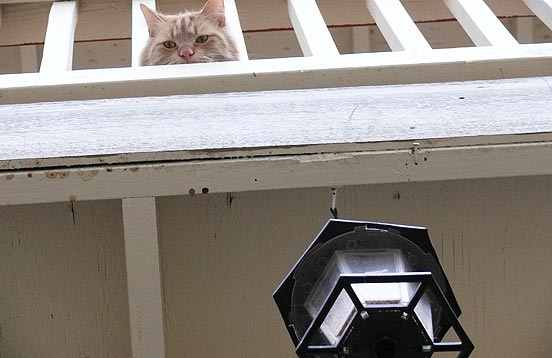
Does a hawk or cat catch birds at your feeders? Are wasps or bees vying for nectar with your hummingbirds? Are you trying to feed wild birds without attracting hordes of pigeons or starlings? Is a woodpecker drumming or excavating on the side of your house?
If you answered “yes” to any of the above questions, we’re here to help. Click or scroll down for advice on the following problems:
- European Starlings
- Woodpeckers hammering on houses
- Unwanted birds at feeders
- Hawks
- Aggressive hummingbirds
- Canada Geese
- Squirrels
- House cats
- Rats and mice
- Bears
- Deer, raccoons, skunks, and other mammals
- Ants
- Bees and wasps
Other problems? Try this link if birds are hitting your windows. If you have questions about sick or injured birds, you’ll find answers on our Frequently Asked Questions pages.
European Starlings
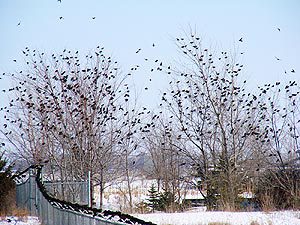
The European Starling is an exotic species that was introduced to North America in the 19th century. It’s now a permanent resident across the United States and Canada, almost always near areas of human habitation or areas with a reliable food source (near barns or granaries).
The European Starling is often considered a “problem” bird for several reasons:
-
It competes fiercely for nesting cavities, ousting such native birds as bluebirds and woodpeckers. It sometimes kills the original cavity-holding birds, and often destroys their eggs and young
- It is aggressive at feeders, keeping smaller birds away and quickly exhausting birdseed supplies
- Its enormous winter foraging flocks can be considered pests in agricultural areas
- Its huge winter roosts present hygiene challenges in human-inhabited areas
Discouraging a flock of starlings from roosting around your house is difficult at best. Installing a plastic model hawk or owl in a tree is at best a short-term help. The birds will quickly realize it poses no threat and ignore it. A predator decoy in combination with another bird deterrent, such as a recording of starling distress calls broadcast through a speaker, may help a bit longer, but very often the birds habituate to the sound before you and your neighbors do. Unexpected loud noises may flush bird flocks from your trees. Some people use fireworks, or clang pots and pans together. Sometimes even just clapping your hands is enough to flush a starling flock. But they usually return quickly. If you are persistent, chasing them away every evening for a week or so, the flock may move to another roost. It’s easier to deal with starlings when they’ve first discovered a new roost location than after they’ve settled in.
Woodpeckers hammering on houses
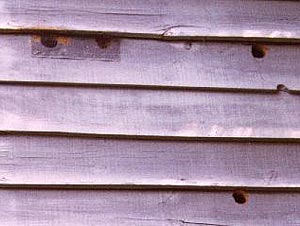
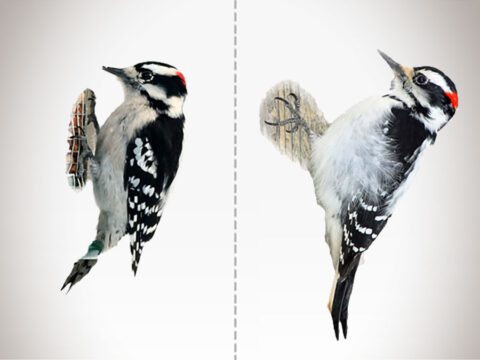
A woodpecker may go to work on your house for one of three reasons: because it makes a satisfyingly loud noise that proclaims the bird’s territory; because it wants to excavate a nesting or roosting hole, or because the bird is feeding on insects living in the siding. Researchers at the Cornell Lab have studied damage inflicted on property by woodpeckers. Visit our full page on how to deter woodpeckers for more information.
Unwanted Birds at Feeders
Some people welcome any bird to their feeding station, regardless of its size or appetite. But others get frustrated when ravenous flocks of grackles, crows, pigeons, or starlings overrun their feeders, and some people don’t like the thought of hawks preying on the songbirds that come to their feeders.
There are a few ways to discourage larger birds from crowding out small birds at feeders. Manufacturers have designed clever feeders that use size to exclude some birds and feed others. Some feeder ports automatically shut when a heavy bird or squirrel alights. Some feeders are enclosed by a wide mesh that excludes larger species while allowing small birds to enter. Some feeder perches are too small to support larger birds. If you have a homemade feeder, you could try adapting these principles.
Hawks
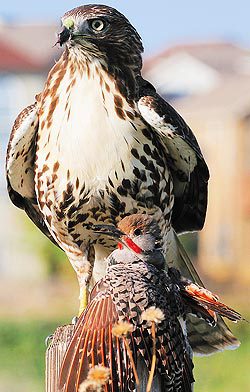
Many people enjoy seeing magnificently wild raptors visiting their yards. But others don’t want to invite songbirds to their feeders only to be attacked. During migration, individual hawks may appear at a feeder for only a few minutes, and there’s little anyone can do to discourage them. During winter, a hawk may take up more permanent residence in a neighborhood, visiting a feeding station a few times every day or every week. During the breeding season, a pair of hawks may become even more regular visitors. If you wish to discourage a hawk from visiting your yard, you might try closing down your feeding station for a week or so in hopes that the raptor will develop a new feeding routine. But because these hungry predators are alert to hunting opportunities within a fairly large area, when songbirds discover that you’ve reopened your feeding station, the hawks may quickly return. If you can’t bear to lose your backyard chickadees to the local Merlin or Cooper’s Hawk, you might have to close down your feeding station for the season.
Aggressive hummingbirds
Hummingbirds are exceptionally territorial around feeding areas and often attack each other near food supplies. Very often a single hummingbird will defend even a large, multiple-perch feeder, making it difficult for others to share.
Placing several feeders in different parts of your yard, or separated by vegetation or other barriers, usually accommodates more hummingbirds than a single feeder.
Canada Geese
In recent decades, Canada Geese have become truly urbanized; huge populations of them now live in cities and suburbs, feeding on lawn turf and taking over ponds, streams, and wetlands. In many places these large, resident flocks have outstayed their welcome. Canada Geese especially like expansive lawns; you can dissuade them by replacing your turf with taller native vegetation.
In the short-term, the best way to discourage geese is to employ a dog to chase them off. In the long term, the wisest way to keep goose populations at more sustainable levels is to promote natural vegetation instead of lawns. We have more on this issue in our full post, Where Did All These Canada Goose in Town Come From?
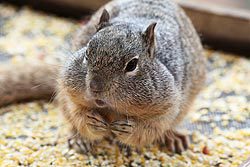
Squirrels
Squirrels can be fun to watch, and some people accept that squirrels are part of the feeding station community. But when squirrels devour too much expensive birdseed, chew holes in feeders, and discourage feeder birds from visiting, it may be time to take action.
Be warned that it’s very difficult to completely squirrel-proof a feeder setup. Squirrels can leap several feet horizontally or from above onto your feeder. To minimize the number of squirrels that try this, position your feeders at least 10 feet away from jumping-off points, but remember that your birds are safest from window collisions if your feeders are very close to your house.
Another approach is to distract them by feeding them peanuts or dried ears of corn in a location some distance from your feeders. You can also try “squirrel-proof” bird feeders. But beware: squirrels are willing to spend far more time and ingenuity trying to get to feeders than humans can afford to spend trying to outwit them.
Squirrel baffles are a good bet. These are barriers, sometimes shaped like an inverted bowl, placed on a feeder’s support post. Usually when a squirrel lands on a baffle, it simply slides off. On pole-mounted feeders, baffles should be fixed in place below the feeder. On hanging feeders, a tilting baffle—at least 18 inches in diameter—should be installed above the feeder. As an alternative to commercial plastic baffles, bird watchers have used large pizza pans, old vinyl records, large plastic salad bowls, two-liter soda bottles, and even stove pipes.
If your feeder is hung from a horizontal line, another anti-squirrel tactic is to thread the line through several lengths of plastic tubing, end to end; the tubing should spin when a squirrel tries to walk on it.
Some hopper-style feeders are specifically designed to deter squirrels. Most use a spring-loaded or counterweighted gate that closes off access to the seed ports under the squirrel’s weight. This weight adjustment can be changed to selectively exclude larger birds as well.
Some tube feeders are enclosed inside a wire mesh cage, the mesh wide enough to allow small birds to gain access to the feeder while excluding squirrels and larger birds.
Yet another way to keep squirrels from your birdseed is a “squirrel spooker.” As the squirrel climbs up a feeder pole to reach your feeder, it climbs over a moveable sleeve. Because of the squirrel’s added weight, the sleeve slips down or spins around, dumping the surprised squirrel onto the ground. Once the squirrel has let go, the sleeve automatically moves back into place.
Some people have tried seeds coated with hot pepper or capsaicin products. Theoretically, squirrels avoid the coated seed while birds are unaffected (just as in the wild, birds don’t respond to chile pepper heat, but mammals do). However, we have heard mixed reports on how well this practice deters squirrels.
Don’t coat feeder poles with grease, oil, petroleum jelly, or glycerin as an anti-squirrel strategy. These substances can mat fur and feathers, causing them to lose their insulative properties.
If you can’t dissuade your squirrels from chewing your feeders to get at the seeds inside, consider buying a feeder made of a more durable material, or one with metal-reinforced seed ports. Some of these come with guarantees against destruction by squirrels.
Other ideas can be found in many magazine articles and books that have been written about ways to outwit squirrels at your bird feeder, including BirdNotes—What Can You Do About Squirrels?
Download this issue of BirdNotes as a PDF document.
House Cats
The domestic cat is the most numerous pet in North America. Unfortunately, cats kill hundreds of millions of birds each year. Ground-feeding and ground-nesting birds and fledglings are at greatest risk. Feeder birds are also easy prey. Cats often lurk in shrubbery near feeders and birdbaths awaiting a chance to pounce. Cats walk and run very smoothly; when wearing a bell collar, they quickly learn to control their movements to prevent the bell from ringing.
If you own a cat, we strongly recommend that you keep it indoors to reduce the needless loss of birdlife. The American Bird Conservancy has created the Cats Indoors campaign to increase awareness of the problem. For more information, contact: American Bird Conservancy, 1250 24th Street, NW, Suite 400, Washington, DC 20037, Phone: (202) 778-9666, or go to their website.
Rats and mice
Rats and other pest rodents are attracted to seeds beneath feeders. Once a population is established, it can be very difficult to discourage. The first step is to discontinue feeding for a couple of weeks to encourage the rodent population to disperse. Next, consider ways to feed without any waste falling to the ground. Several feeders are sold with catch-trays to collect dropped seeds, but most aren’t big enough to really do the job. You may want to look into constructing your own large catch tray to place (off the ground) or hang under your feeders; then you can empty or remove it each night. Do keep the catch tray clean, because bird droppings can spread illnesses such as salmonella if birds end up feeding from the tray. See our page on how to maintain your bird feeders.
Related Stories

Bears
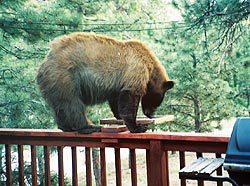
More and more black bears have made visits to bird feeders part of their regular activities. When bears learn to associate humans and homes with food, it poses dangers for both people and bears. As black bears become more numerous and widespread, this problem is emerging in more and more states.
Wildlife agencies offer the following suggestions for reducing bear problems:
- Don’t feed birds during months when bears are most active—late March through November
- Bring all of your feeders in at night
- Hang feeders 10 feet above ground and 6 feet away from tree trunks
- Don’t place a feeder on a pole or on a deck; bears may either rip it down or climb onto your deck
- Don’t leave spilled birdseed lying on the ground
- Keep your birdseed supply indoors
- Don’t hang your bird feeder from your front porch
- If you do have a bear in your yard, don’t approach it
Deer, raccoons, skunks, and other mammals
If other mammals become a nuisance, the best tactic is to make your feeders inaccessible with fencing. The trick is making it high enough to exclude deer and close enough to the ground to exclude rabbits. If that approach is impractical and you’re dealing with regular visits from these animals, you’ll probably have to take down your feeders temporarily. Like hawks, mammals will find new foraging places. If your mammalian visitors appear only at night, take in your feeders at dusk.
Many people enjoy seeing white-tailed deer in their yards until the deer damage their flowerbed or garden. But deer overpopulation has serious impacts on natural habitats, and deer are predators on eggs and chicks in ground nests. Deer have an important place in the natural world, but their populations should not be subsidized and maintained at unhealthy levels.
Ants
Ants, bees, and wasps are often attracted to the sugar solution in hummingbird feeders. Besides consuming and sometimes contaminating the food, they often discourage hummingbirds from visiting.
The best way to deal with ants is to keep them from discovering a hummingbird feeder in the first place: use dripless feeders. Bottle-style feeders may leak if the feeder is located in direct sun—air trapped in the top of the bottle expands as it warms and pushes the nectar out. Saucer-type hummingbird feeders are less likely to drip.
Many saucer-type feeders are designed with a central “ant moat,” walled off from the pool of sugar water, designed to hold clean tap water. Ants can’t swim across, so have no access to the sugar water. You can also purchase or design a separate ant moat (sometimes called “ant baffle” or “ant guard”)—a small plastic cup about 3 inches in diameter that fits tightly around the hanger wire above the hummingbird feeder. Ant moats are available from several manufacturers. Don’t fill them with vegetable oil or petroleum jelly—water is just as effective, and won’t mat their feathers the way grease will.
You can make your own ant moat by running a hanger wire though a hole in a spray can top or small plastic tub. Use a dab of silicone sealer or hot glue to seal the hole so it’s waterproof.
Bees and Wasps
Many hummingbird feeders are sold with bee guards, made of plastic mesh, to keep bees and wasps away from the feeding port. Unfortunately, bees and wasps are attracted to the color yellow, so some bee guards may actually lure these insects in! A better defense is to use saucer-shaped feeders, from which the birds feed through ports in the top. This type is inherently bee- and wasp-resistant because the syrup level is usually too low for insects to reach, but easily within range of hummingbird tongues.
If the insects persist, try moving the feeder. They may never find it in its new location, whereas the hummingbirds will quickly find it again. If that doesn’t work, take the feeder down for a day or two, until you stop seeing bees and wasps looking for it. The hummingbirds will look for it, too, but they won’t give up nearly as soon as the insects will.

All About Birds
is a free resource
Available for everyone,
funded by donors like you
American Kestrel by Blair Dudeck / Macaulay Library