
Choosing Bird Food: Other Foods
Suet:
Suet is particularly attractive to woodpeckers, such as the
Red-bellied Woodpecker at right, but many insect-eating
birds—nuthatches, chickadees, wrens, creepers, kinglets, and even
cardinals—are fond of it, too. It's a high-energy food, much
appreciated in cold weather.
Suet is the hard fat surrounding beef kidneys. It is inexpensive and
available from butchers and at many supermarket meat counters.
Commercial suet cakes are manufactured from "rendered" suet, a process
in which it is melted, cooked, and strained, making it less prone to
melting and spoilage.
Avoid offering unprocessed suet in hot weather—it quickly becomes
rancid. If you want to offer suet year-round, commercial suet cakes are
preferable, but check the package recommendations. Another suggestion
is to put out only small amounts of suet, keeping the rest refrigerated
until needed. A good warm-weather alternative to suet is a mixture of
one part peanut butter to five parts cornmeal.
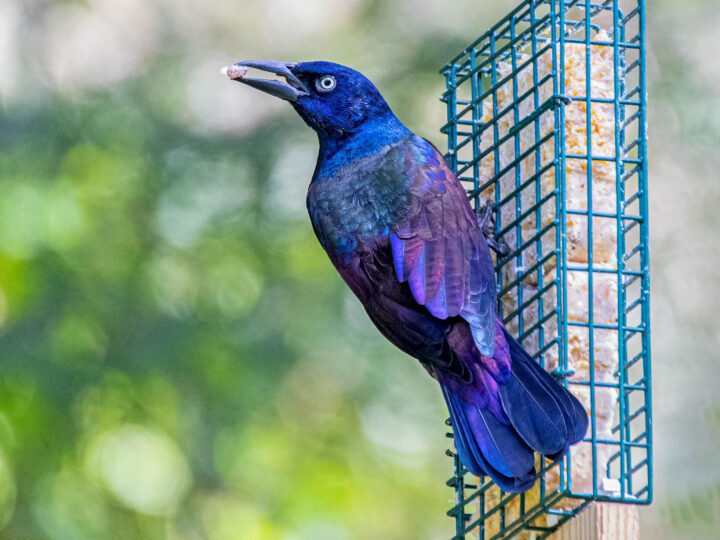
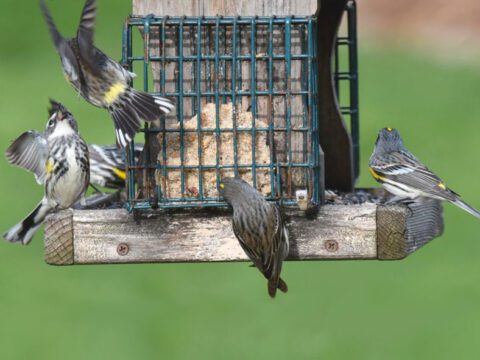
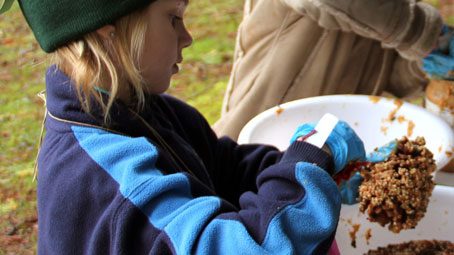
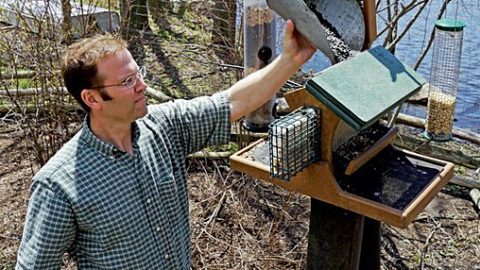
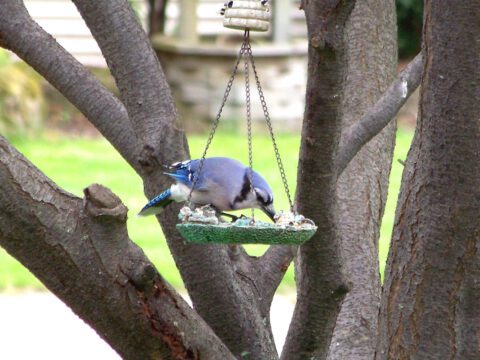
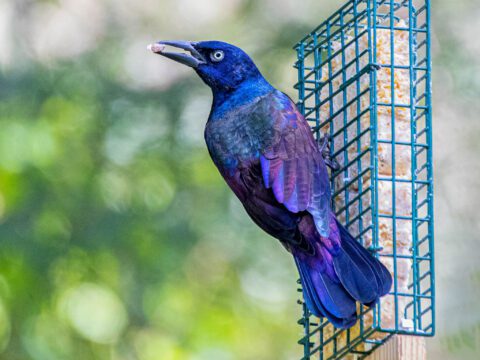
Offer suet in a plastic mesh bag (like the sort onions are packaged in)
or a wire basket or cage (this keeps the raccoons and squirrels out),
suspended from a branch or attached to a tree trunk.
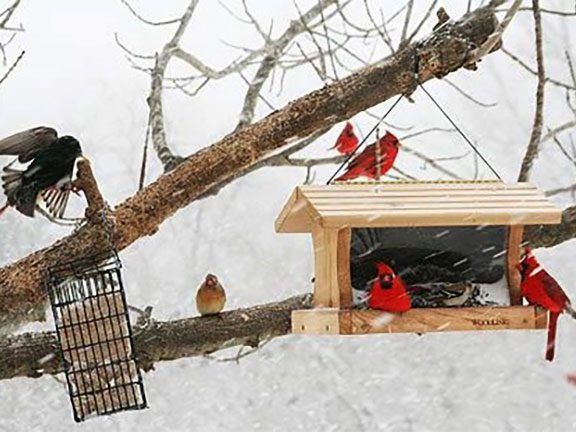
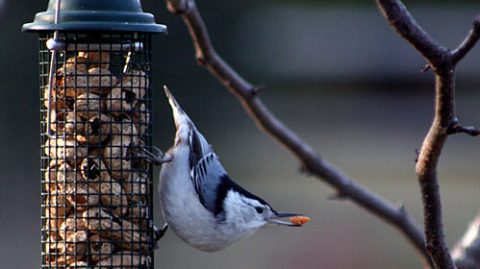
Starlings are very fond of suet. To dissuade these undesirables, offer suet in a feeder that requires birds to feed hanging upside down. Woodpeckers, chickadees, and nuthatches will access it easily, but starlings cannot.
Fruit and Fruit Seeds:
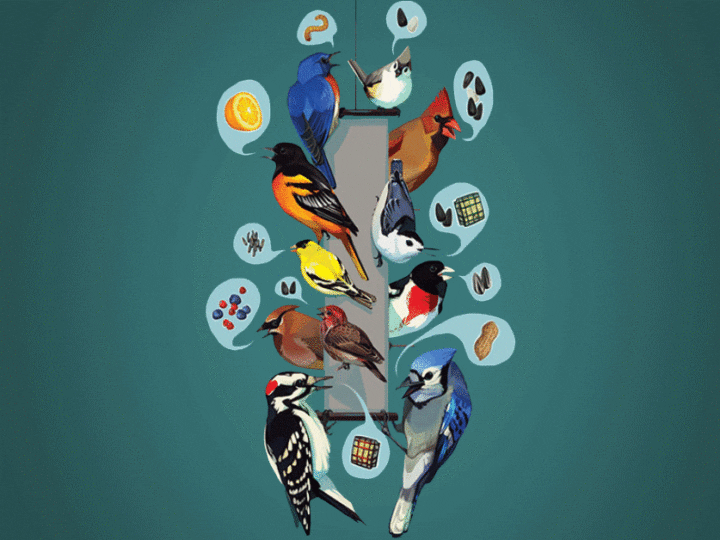
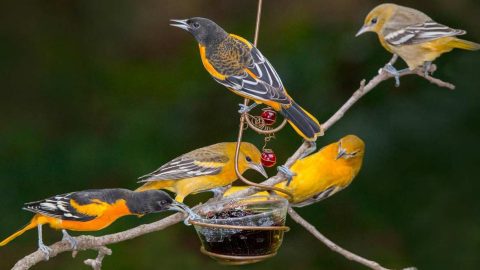
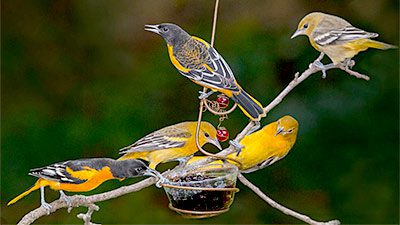
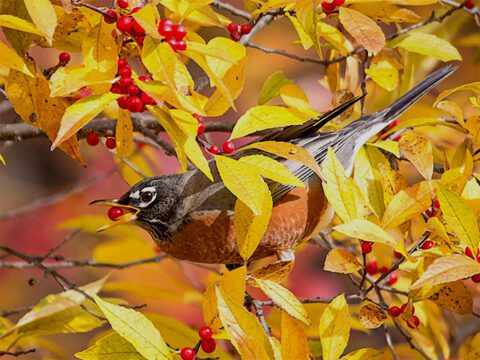
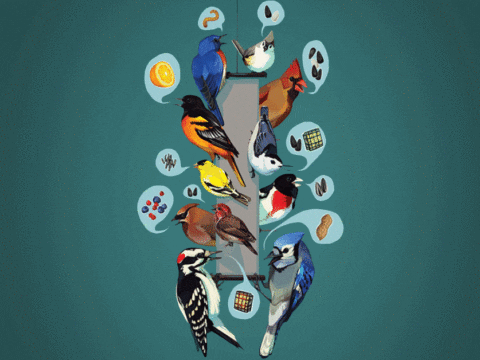
Birds such as robins, thrushes, waxwings, and bluebirds usually don't visit seed feeders because seeds are not a major part of their diet. But you can attract them with fruit. Mockingbirds, tanagers, and catbirds may be attracted too. Try raisins or currants softened by soaking in water. Offer diced fresh fruit, such as apples, melons, or grapes. Orange halves are particularly desirable, especially to orioles, which also go for grape jelly.
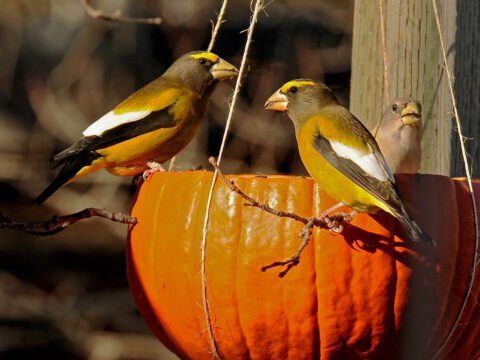
You can also save your Halloween pumpkin seeds, and other squash or melon seeds, for the birds. Some relish these more than black-oil sunflower seeds. Spread them out to let them dry and then run them through the food processor. This makes it easier for smaller birds to eat them.
Leftovers:
Birds also will eat stale bread and other leftovers. Just make sure they're not moldy or they may harm the birds. Be aware, too, that table scraps may attract nuisance species such as European Starlings, House Sparrows, rats, or raccoons.
Natural Food Plants:
Visit the Landscaping for Birds section to learn about the best natural food plants for birds.
Grit and Minerals:
Putting out grit will attract birds because they need it as a
digestive aid. Birds, especially the seed eaters, "chew" their food in
their gizzard, a highly muscular part of the stomach. To assist in the
grinding, they sometimes swallow hard materials such as tiny stones,
sand, ashes, fragments of charcoal, or broken oyster shells. You can
purchase grit at most feed and pet stores.
Eggshells are another source of grit, plus they provide calcium, an
important mineral for birds in the spring when they are producing their
own eggs. If you provide eggshells, be sure to bake them for 20 minutes
at 250 degrees F to kill Salmonella bacteria. Let the eggshells cool,
and then crush them into pieces smaller than a dime. Offer the
eggshells on the ground, in a dish, or on a low platform feeder,
separate from your seed feeders.
To learn more about birds and calcium, read the following Birdscope articles:
Birds and Calcium
, by Tracey L. Kast, Paul E. Allen, and Andre A. Dhondt (1998). Results
of the Lab's Birds and Calcium Project show that calcium use varies
among species.
Feeding Calcium to Birds, by Andre A. Dhondt (1999).
The Lab's Birds and Calcium Project determines we should offer calcium on the ground and on platform feeders.
Water:
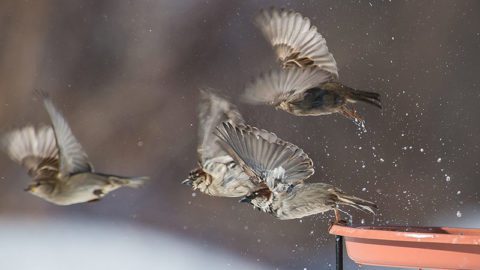
Birds need to drink and bathe, so they are attracted to water just as they are to bird feeders. To learn about providing birdbaths, visit the Other Attractants section