
Feeder Pests and Predators: Insects
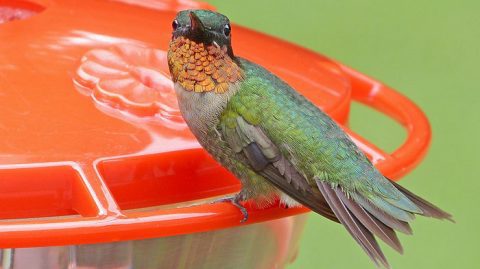
Insect Pests at Hummingbird Feeders
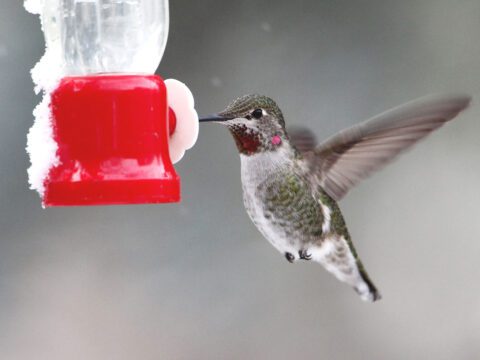
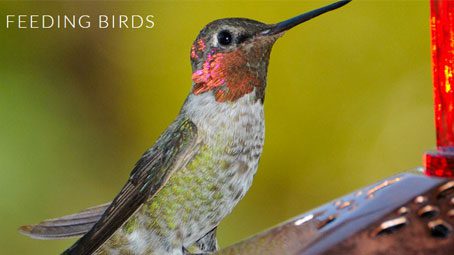
Ants, bees, and wasps are often attracted to the sugar solution in hummingbird feeders. Besides stealing and sometimes contaminating the food, they also may dissuade the birds from visiting. Here are some suggestions for dealing with them:
Ants
Take
precautions to prevent ants from discovering your hummingbird feeder in
the first place—the best way is to buy a dripless feeder. Bottle-style
feeders may leak if the feeder is located in direct sun—air trapped in
the top of the bottle expands as it warms and pushes the nectar out.
Saucer-type hummingbird feeders are less likely to drip.
Otherwise, try an "ant moat" (sometimes called "ant baffle" or "ant
guard"). This is a small plastic cup (about 3 inches in diameter) that
fits tightly around the hanger wire above the hummingbird feeder, as
shown at right. Ant moats are available from several manufacturers, and
some feeders have them built-in. Fill the moat with water—ants can't
get past this barrier to the feeder. Some people fill them with
vegetable oil or petroleum jelly. Be sure not to get these substances
on the feeder support poles—oil and grease can mat bird feathers,
ruining their insulative properties.
You can make your own ant moat by running the hanger wire though a hole
in a spray can top (use a dab of silicone sealer or hot glue to seal
the hole so it's waterproof).
Another extremely effective defense against ants is to paint the inside
of an ant moat with "Tanglefoot," a very sticky, insect-trapping
material sold at plant nurseries. Then install the moat open side down
on the feeder hanger wire. This way, the sticky material poses no
threat of a bird getting stuck or contaminated, and stays protected
from rain and dust.
Bees and Wasps
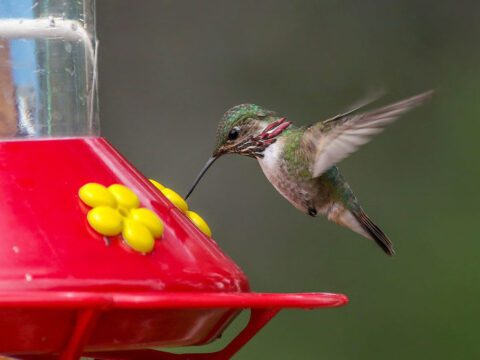
You can buy a hummingbird feeder with bee guards, made of plastic
mesh, that keeps bees and wasps away from the feeding port. An even
better defense is to buy a saucer-shaped feeder, from which the birds
feed through ports in the top. This type is inherently bee- and
wasp-proof because the syrup level is usually too low for insects to
reach, but easily in range of the shortest hummingbird tongues.
If the insects persist, try moving the feeder. They may never find it
in its new location, whereas the hummingbirds will quickly find it
again. If that doesn't work, take the feeder down for a day or two,
until you stop seeing bees and wasps looking for it. The hummingbirds
will look for it, too, but they won't give up nearly as soon as the
insects will.