Everything You Need To Know About Feathers
All About Feathers
Unique to birds and their dinosaur ancestors, feathers have evolved into impressive biological structures that come in a surprising diversity of colors and forms. Here, we cover the breadth of feather biology by looking at feathers from a variety of scientific viewpoints including their anatomy, function, development, and evolution.
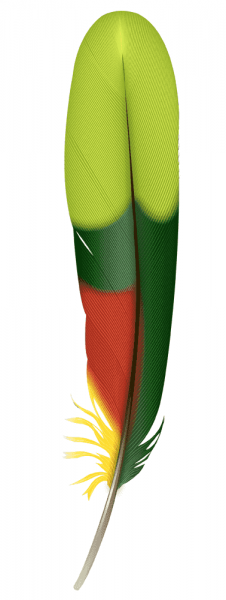
From the fluffy down on a swan chick to the brilliant spiral on a King Bird-of-Paradise tail, feathers are remarkable not just in the way they look to the naked eye, but also for their intricate microstructure. Understanding feather anatomy at the microscopic level provides insight into how feathers function. For example, the interlocking Velcro-like structure on many bird feathers creates the smooth, flexible, and resilient surface that supports flight and sheds water.
As feathers grow, they mature into highly branched structures. Careful study of this process inspired new hypotheseshypothesisan explanation that is testable through study and experimentation about the evolution of feathers through stages of increasing complexity. Newly unearthed dinosaur fossils from China and Canada have supported these hypotheses by providing specimens from each stage in the proposed evolutionary history—a clear example of how investigating biological structures across contexts can create scientific breakthroughs.
Feather Science From Many Angles
Thorough understanding of biological structures like feathers requires examination from many angles. We now recognize that how feathers function is intricately connected to how they’re structured, and how they grow is closely linked to how they evolved.
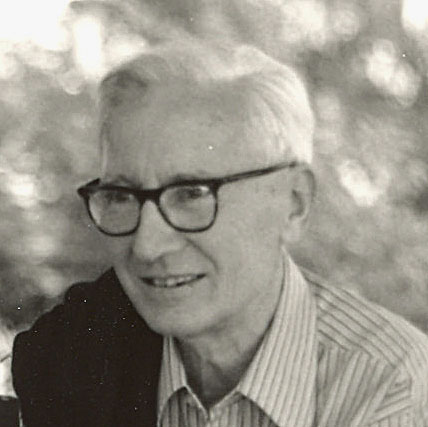
Niko Tinbergen, a 1973 Nobel Prize winner for his work to understand animal behavior, developed what he called the four levels of analysis that biologists have been using ever since to structure their research. For us to fully understand anything in nature, he said, we need to think about these four questions:
- How does it work? (mechanism)
- How does it function? (adaptation)
- How does it develop? (development)
- How did it evolve? (evolution)
Here we have taken Tinbergen’s advice and explored each of these questions to give you a comprehensive understanding of feather biology.
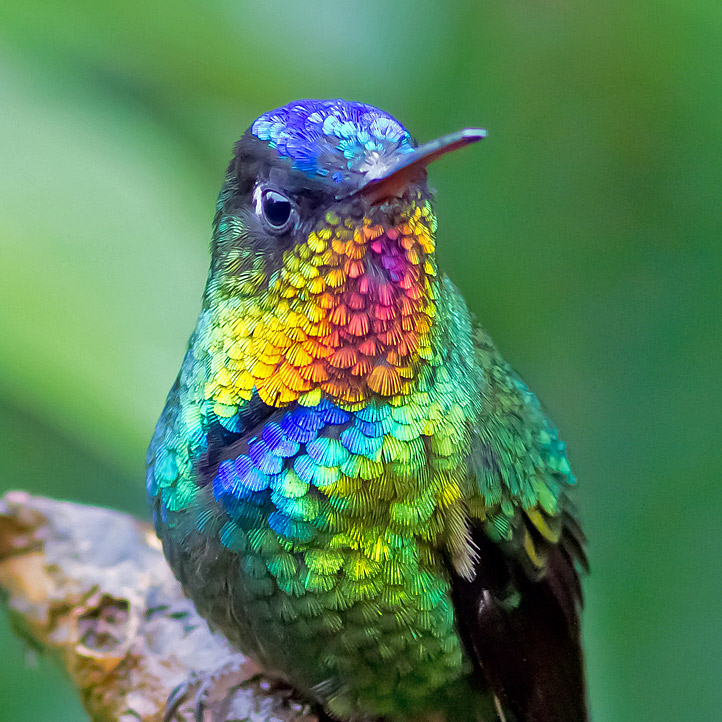
Feather Anatomy: How Do Feathers Work?
Feather structure
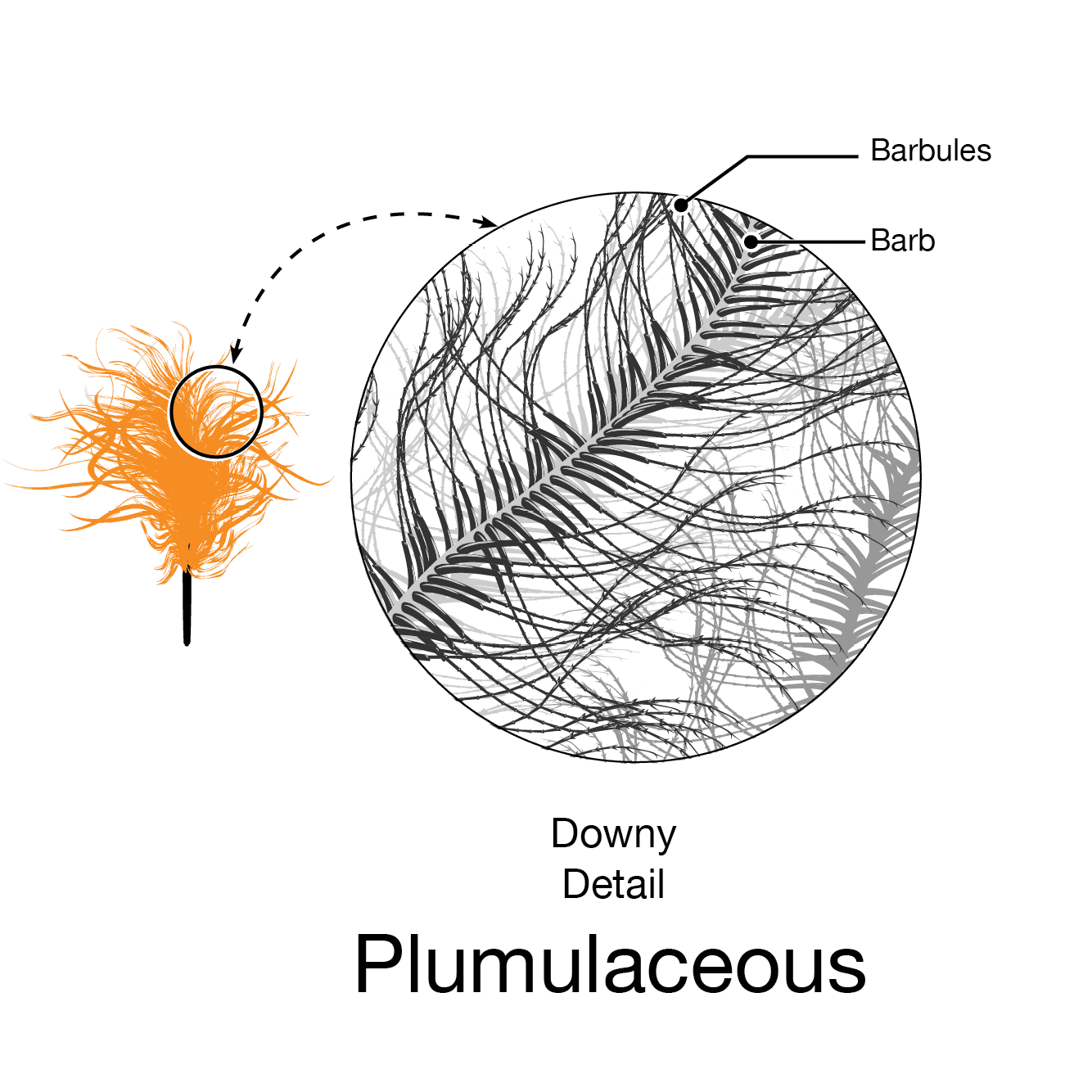
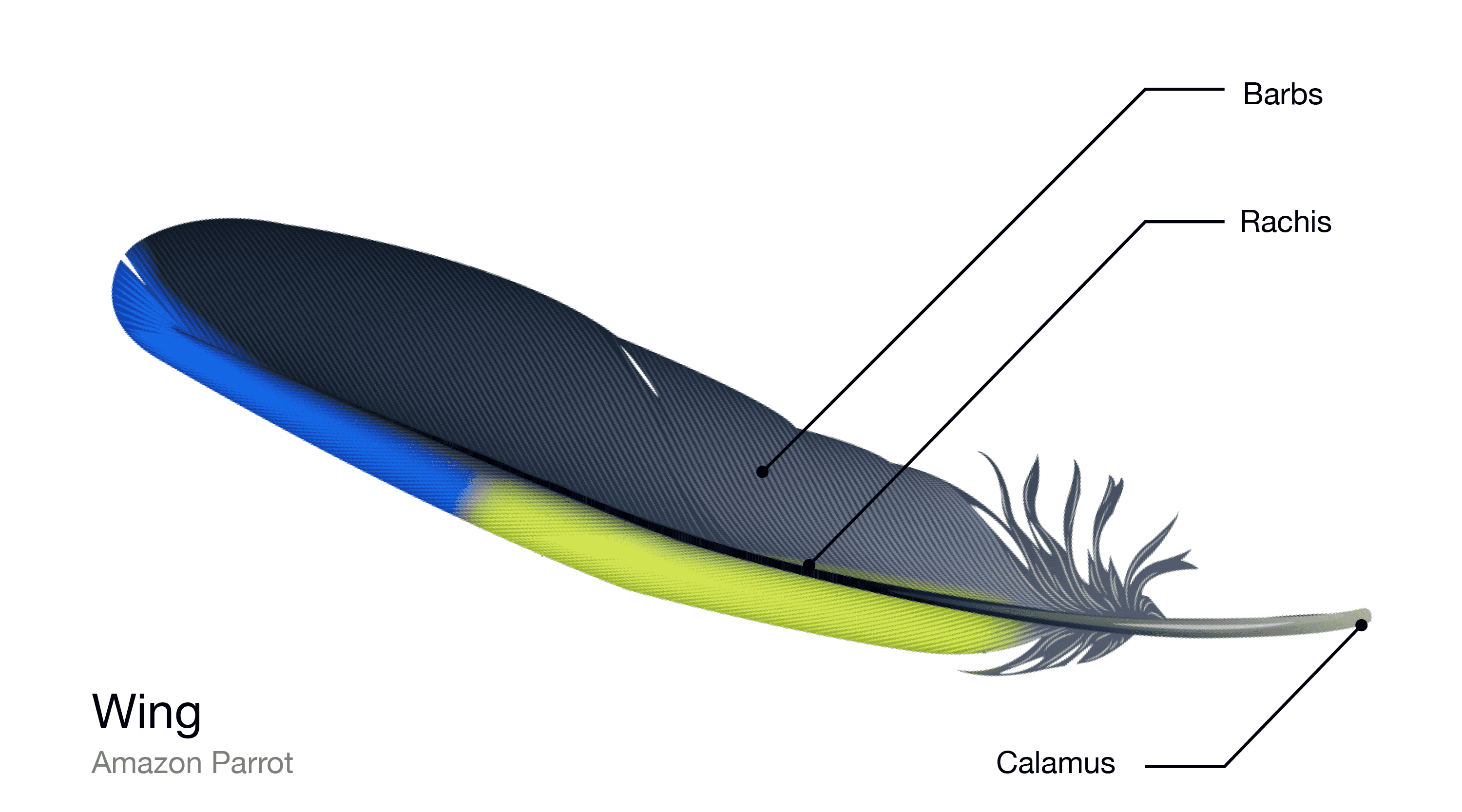
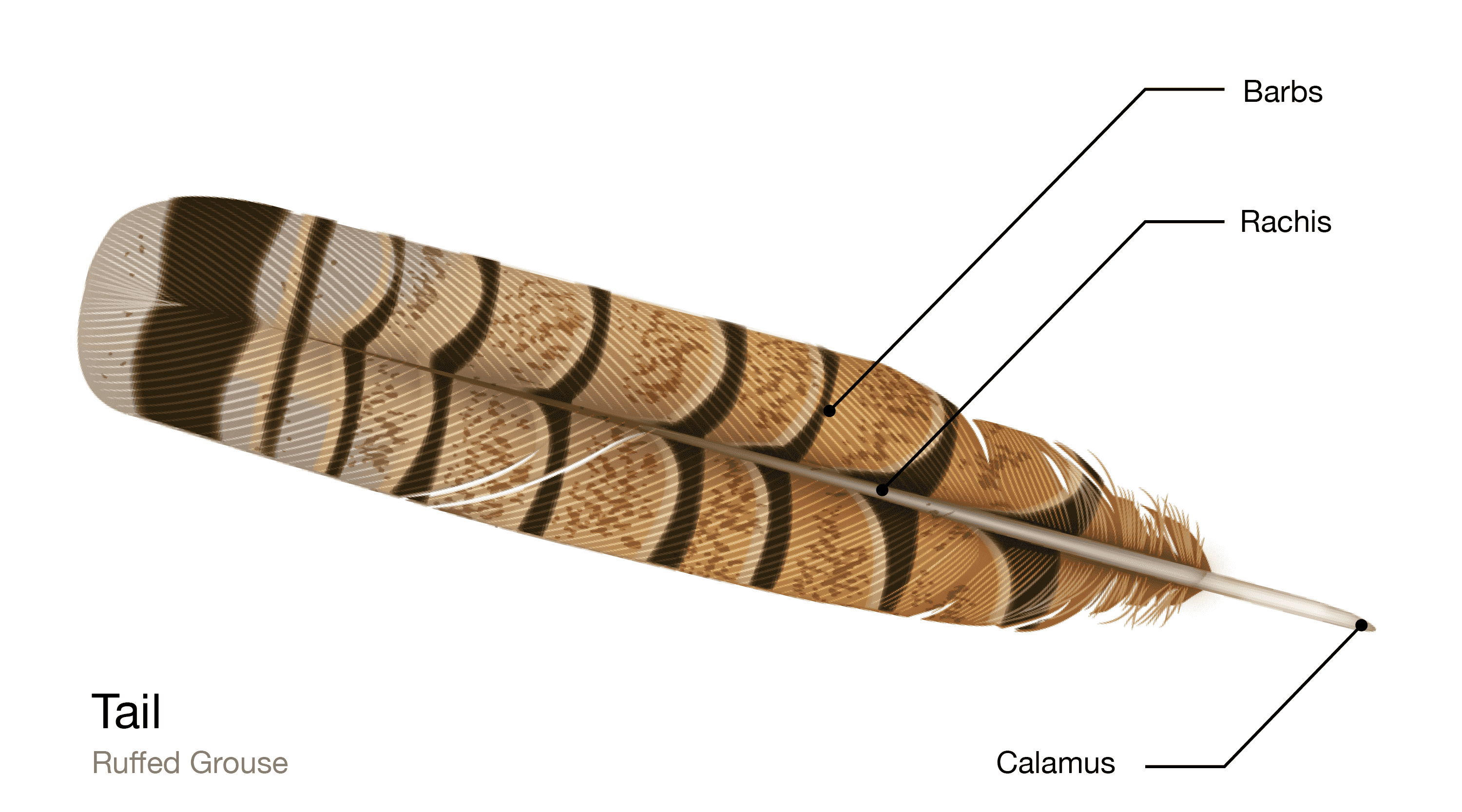
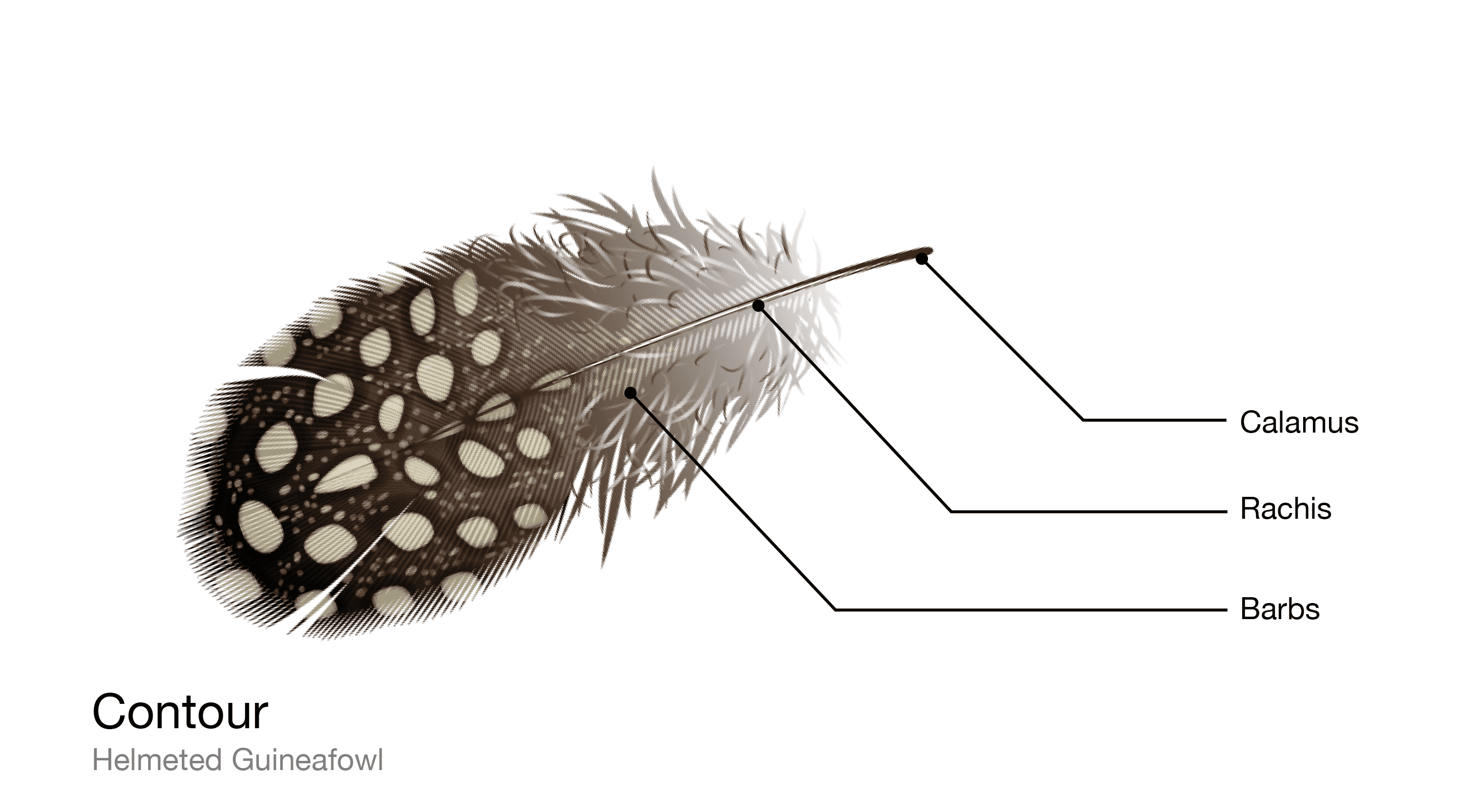
Although feathers come in an incredible diversity of forms, they are all composed of the protein beta-keratin and made up of the same basic parts, arranged in a branching structure. In the most complex feathers, the calamuscalamus<span class=”phonetic”>CAL-a-muss</span>the hollow barbless base of a feather’s stiff central shaft extends into a central rachisrachis<span class=”phonetic”>RAY-kiss</span>the stiff central shaft of a feather from which barbs branch which branches into barbsbarbone of the main branches off the central shaft of a feather, and then into barbulesbarbule<span class=”phonetic”>barb-YOOL</span>one of the secondary branches off a feather barb with small hooks that interlock with nearby barbules. The diversity in feathers comes from the evolution of small modifications in this basic branching structure to serve different functions.
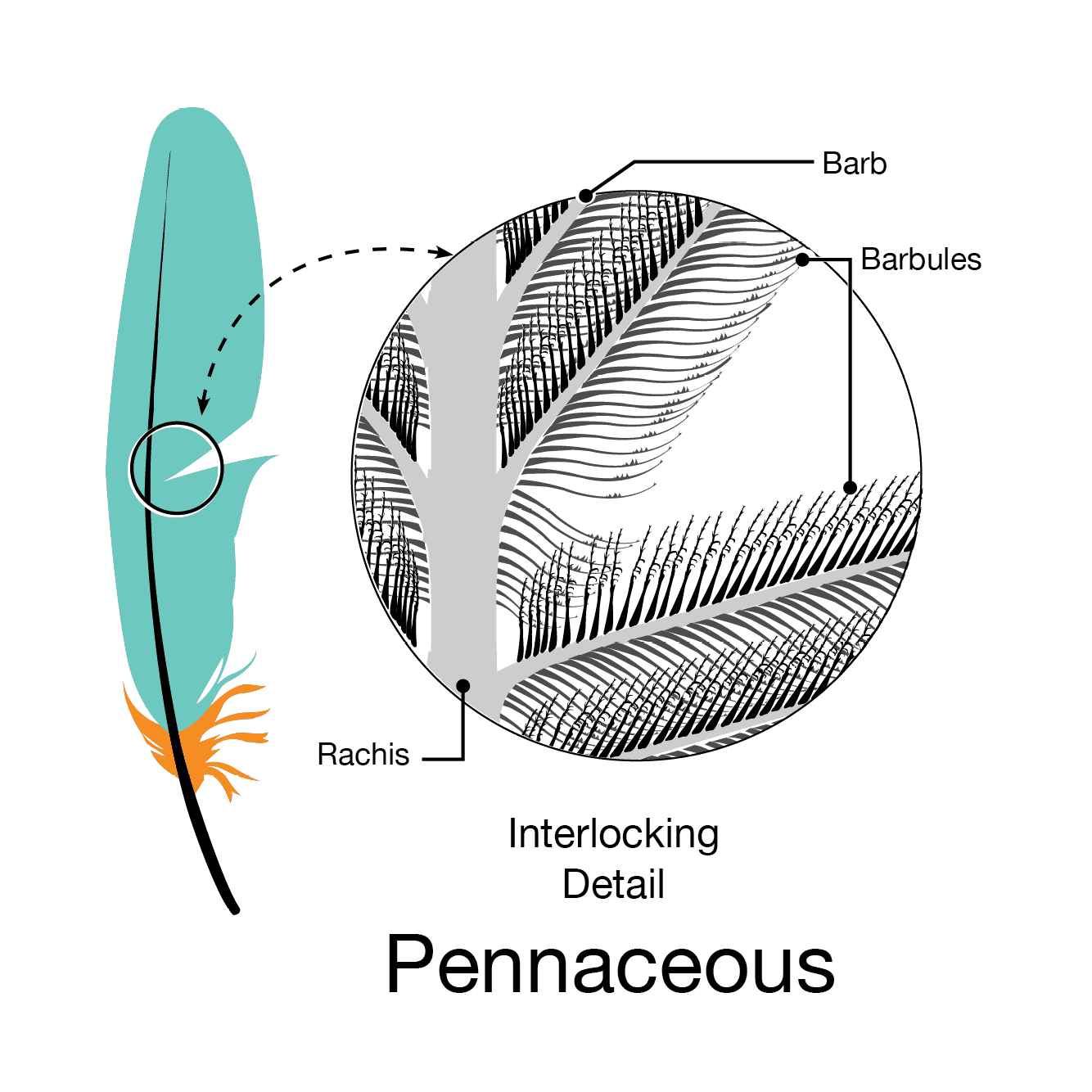
Downy feathers look fluffy because they have a loosely arranged plumulaceousplumulaceous<span class=”phonetic”>ploom-yoo-LAY-shuss</span>having a loose, non-interlocking feather structure microstructure with flexible barbs and relatively long barbules that trap air close to the bird’s warm body. Pennaceouspennaceous<span class=”phonetic”>pen-AY-shuss</span>having an interlocking feather structure that creates a smooth surface, or vane feathers are stiff and mostly flat, a big difference that comes from a small alteration in structure; microscopic hooks on the barbules that interlock to form a wind and waterproof barrier that allows birds to fly and stay dry. Many feathers have both fluffy plumulaceous regions and more structured pennaceous regions.
Feather types
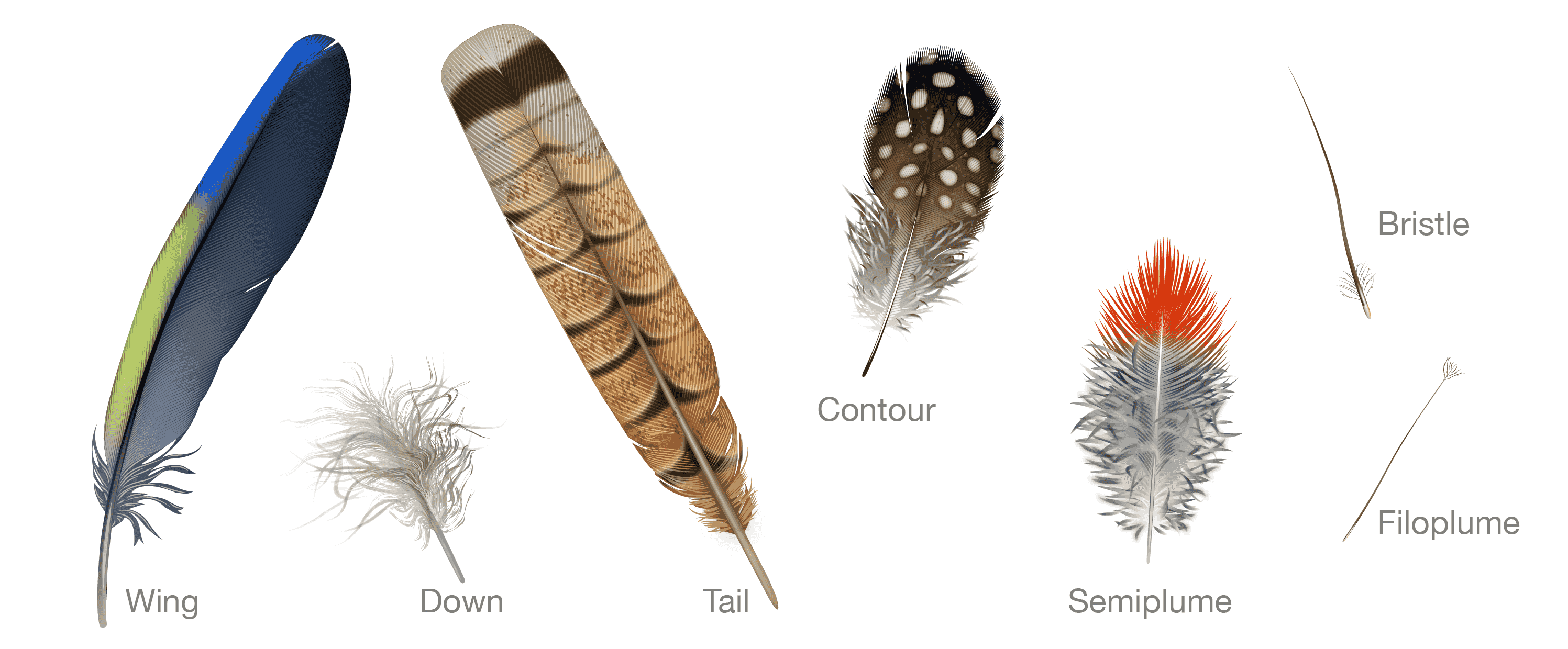
Feathers fall into one of seven broad categories based on their structure and location on the bird’s body.
Wing feathers
The wing feathers specialized for flight are characterized by uniform windproof surfaces, or vanes, on either side of the central shaft that are created by an interlocking microstructure. Also called remigesremigesREM-i-jeezthe flight feathers on the wing that are attached to bone rather than only to skin, these feathers are asymmetric with a shorter, less flexible leading edge that prevents midair twisting.
Tail feathers
Most tail feathers, or rectricesrectricesRECT-ri-seestail feathers, feature an interlocking microstructure similar to wing feathers. Arranged in a fan shape, these feathers support precision steering in flight. Typically, birds have six pairs of feathers on the tail, which display increasing levels of asymmetry toward the outer pairs. In some birds, tail feathers have evolved into showy ornaments that are useless in flight.
Contour feathers
Contour feathers are what you see covering the bird’s body and streamlining its shape. Arranged in an overlapping pattern like shingles, the waterproof tips are exposed to the elements and the fluffy bases are tucked close to the body. Sometimes brilliantly colored or uniformly drab, contour feathers can also help the bird show off or stay camouflaged. Contour feathers on the wing, called covertscovertsCOH-vertsoverlapping feathers that shape the wing into an efficient airfoil, shape it into an efficient airfoilairfoilwinglike structure that produces lift and drag as it moves through the air by smoothing over the region where the flight feathers attach to the bone.
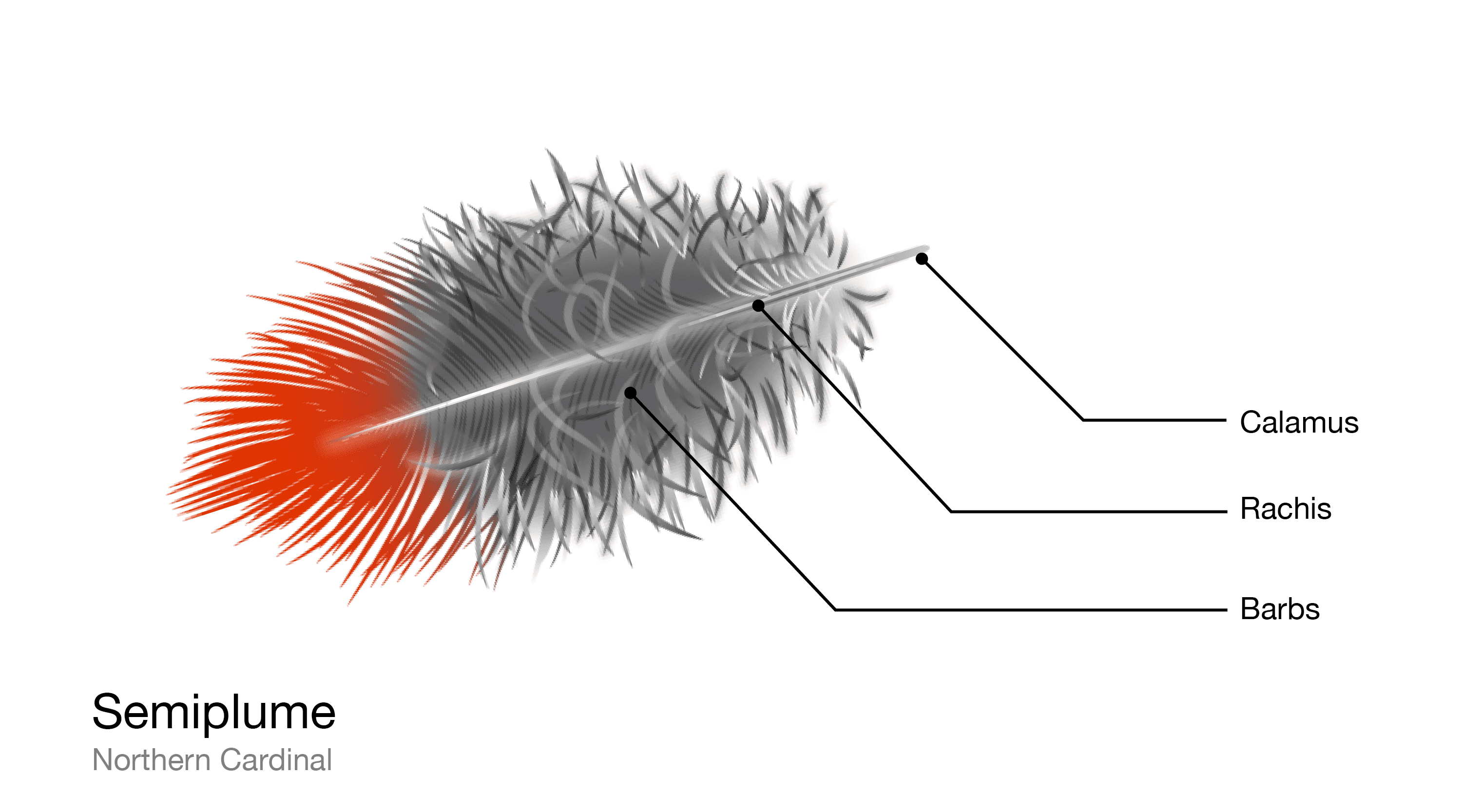
Semiplume
Mostly hidden beneath other feathers on the body, semiplumes have a developed central rachis but no hooks on the barbules, creating a fluffy insulating structure.
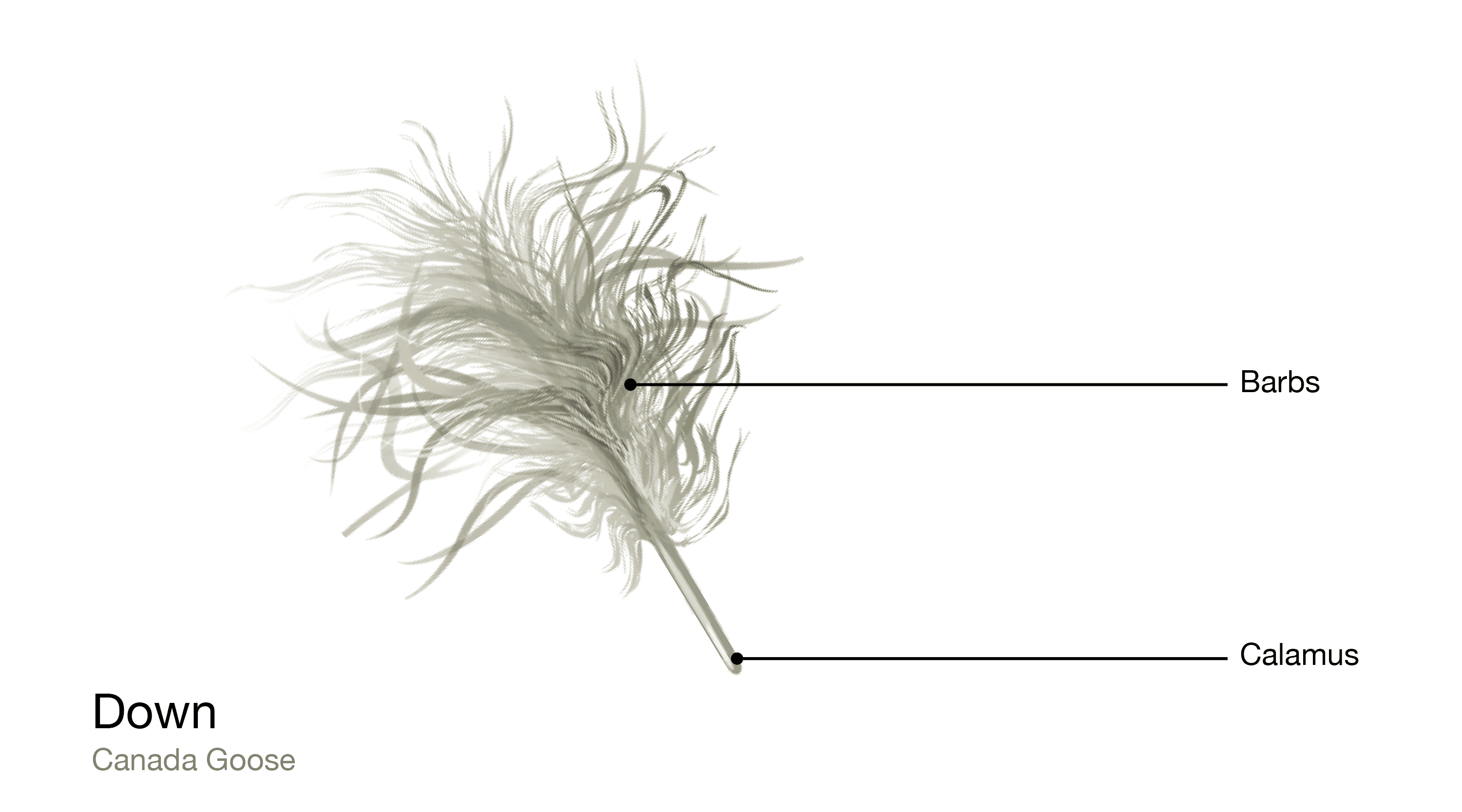
Down
Similar to semiplumes with an even looser branching structure but little or no central rachis, down feathers are relatively short and positioned closest to the body where they trap body heat.
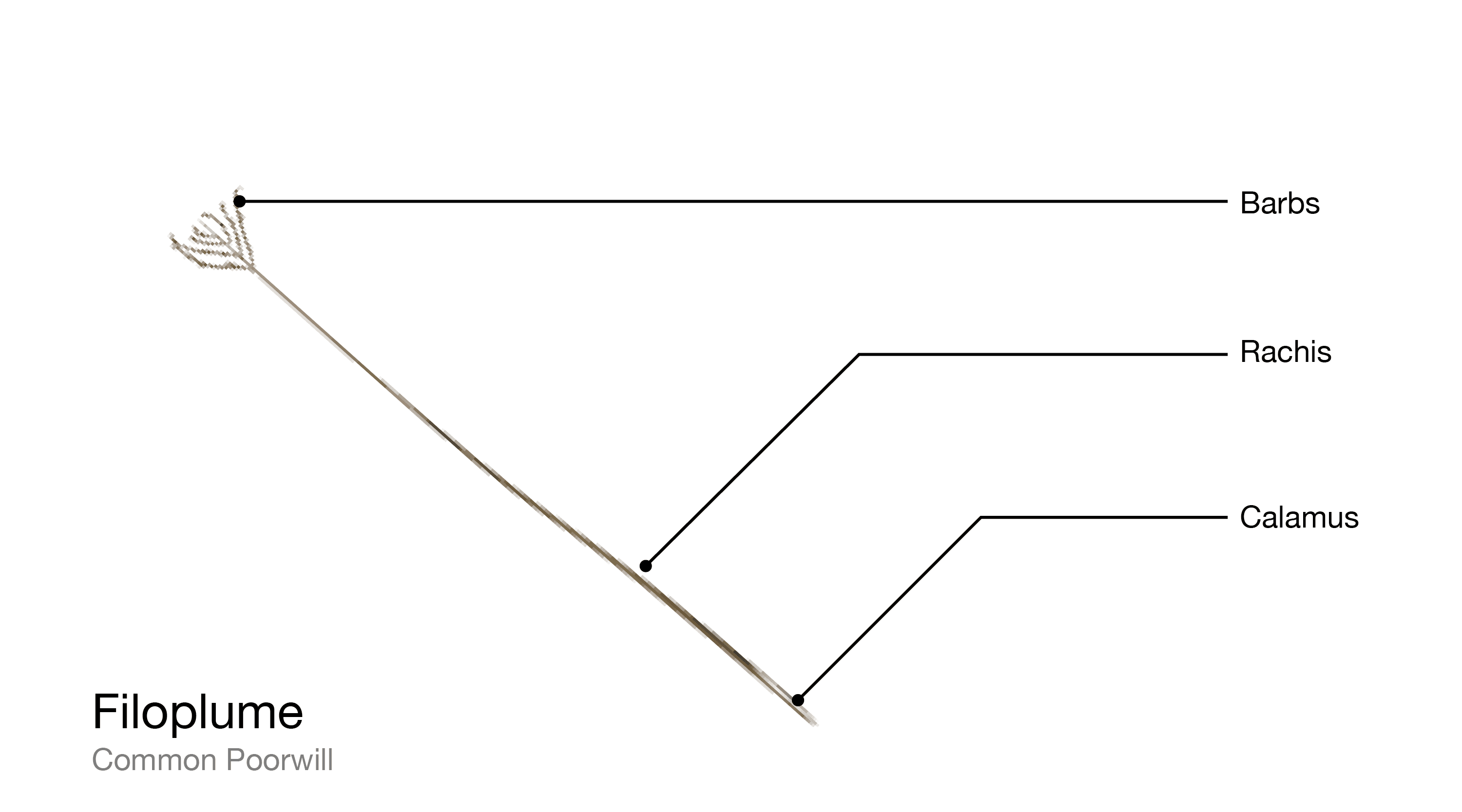
Filoplume
Short simple feathers with few barbs, filoplumes function like mammal whiskers to sense the position of the contour feathers.
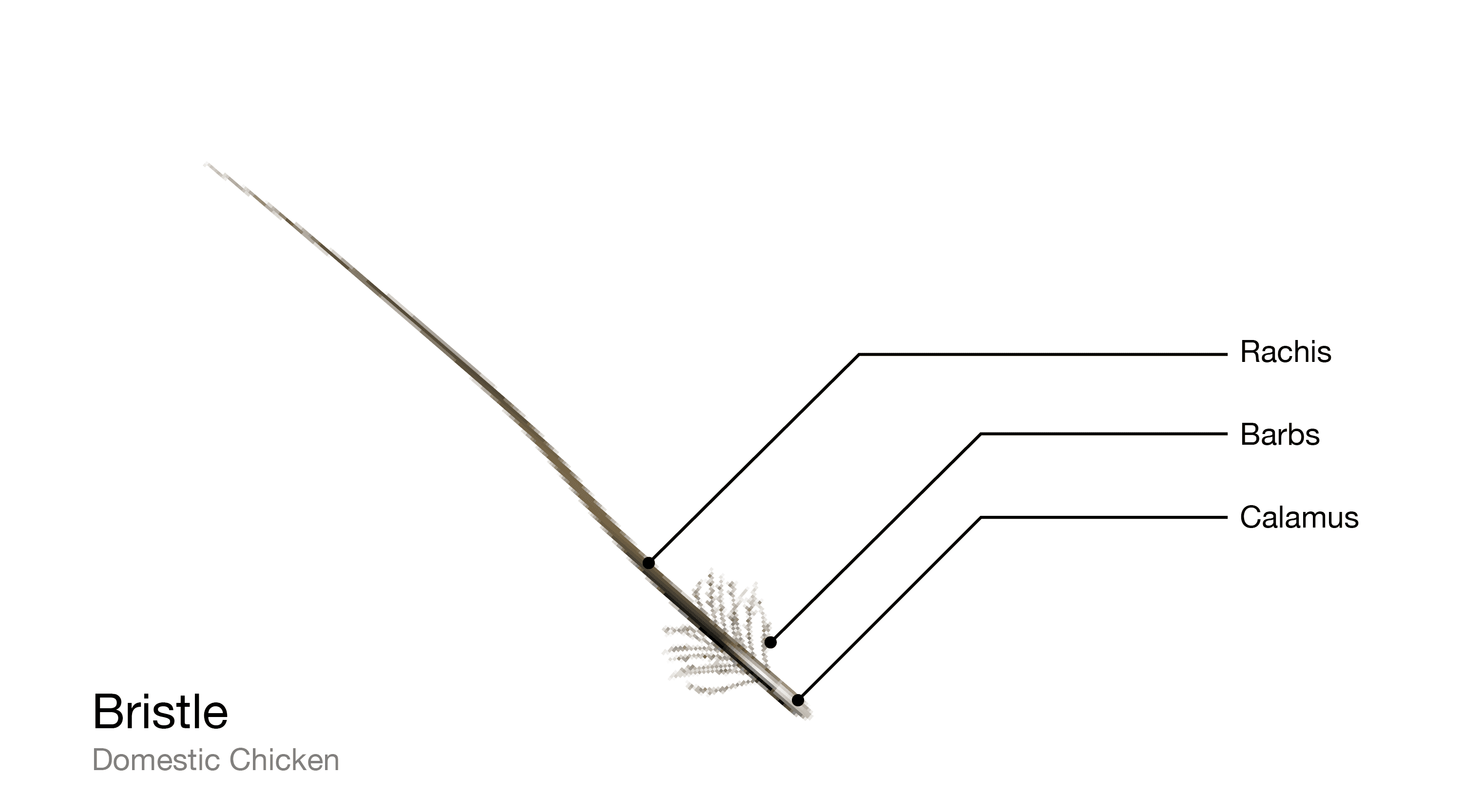
Bristle
Bristles are the simplest feathers, with a stiff rachis that usually lacks barb branches. Most commonly found on the head, bristles may protect the bird’s eyes and face.
Further Learning
 Download the accompanying Animated Slide set.
Feather Function: What do feathers do?
Each feather on a bird’s body is a finely tuned structure that serves an important role in the bird’s activities. Feathers allow birds to fly, but they also help them show off, blend in, stay warm, and keep dry. Some feathers evolved as specialized airfoilairfoilwinglike structure that produces lift and drag as it moves through the air for efficient flight. Others have been shaped into extreme ornamental forms that create impressive displays but may even hinder mobility. Often we can readily tell how a feather functions, but sometimes the role of a feather is mysterious and we need a scientific study to fill in the picture.
Flight
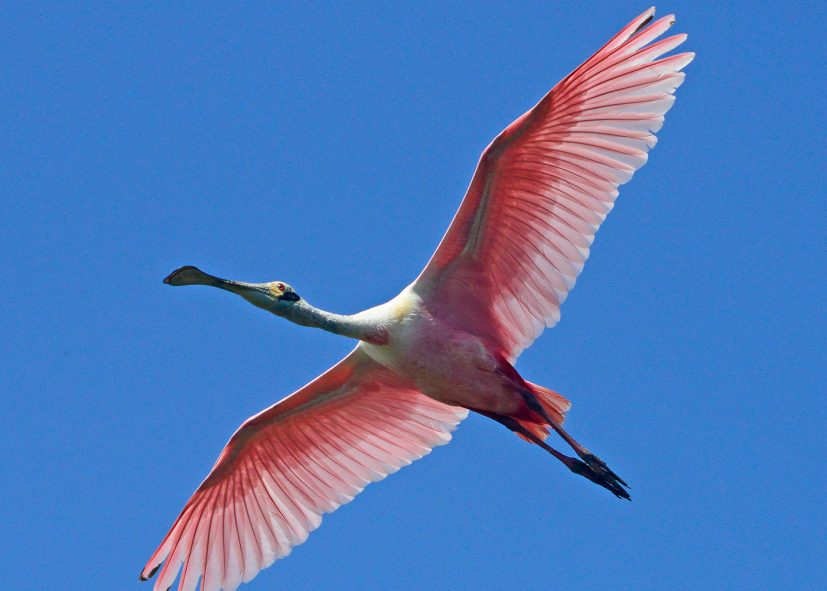
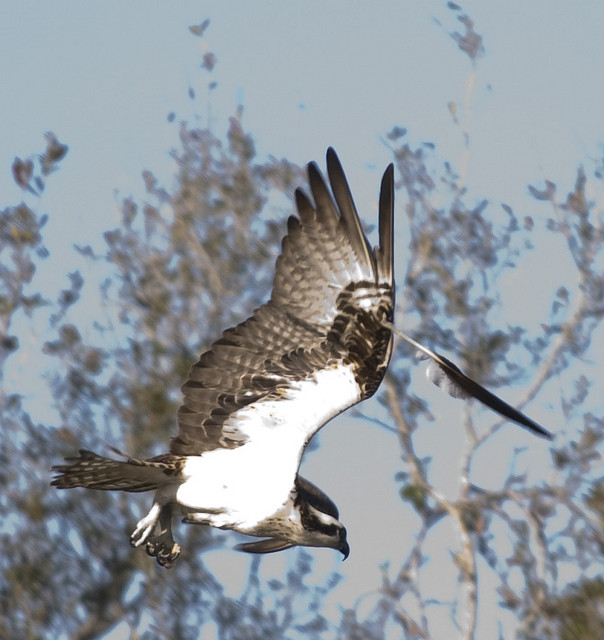
The primary and secondary wing feathers, or remigesremigesREM-i-jeezthe flight feathers on the wing that are attached to bone rather than only to skin, permit birds to take to the skies. Unlike other feathers, remiges are anchored to bone with strong ligamentsligamentband of tissue that connects a bone to another bone, piece of cartilage, or feather so they can withstand the demands of flight and be precisely positioned. The primariesprimaryone of the feathers occupying the outer half of the wing that can be controlled to generate forward thrust during flight are longest of the flight feathers. They occupy the outer half of the wing, can be controlled and rotated like rigid fingers, and provide most of the bird’s forward thrust. While secondariessecondaryone of the feathers occupying the inner half of the wing that overlap with other secondaries to form an airfoil that provides lift during flight cannot be controlled as extensively, they provide most of the lift by overlapping to form an efficient airfoilairfoilwinglike structure that produces lift and drag as it moves through the air. Tail feathers, or rectricesrectricesRECT-ri-seestail feathers, are also classified as flight feathers. They are essential for steering, but only the two most central feathers attach to bone.
Display
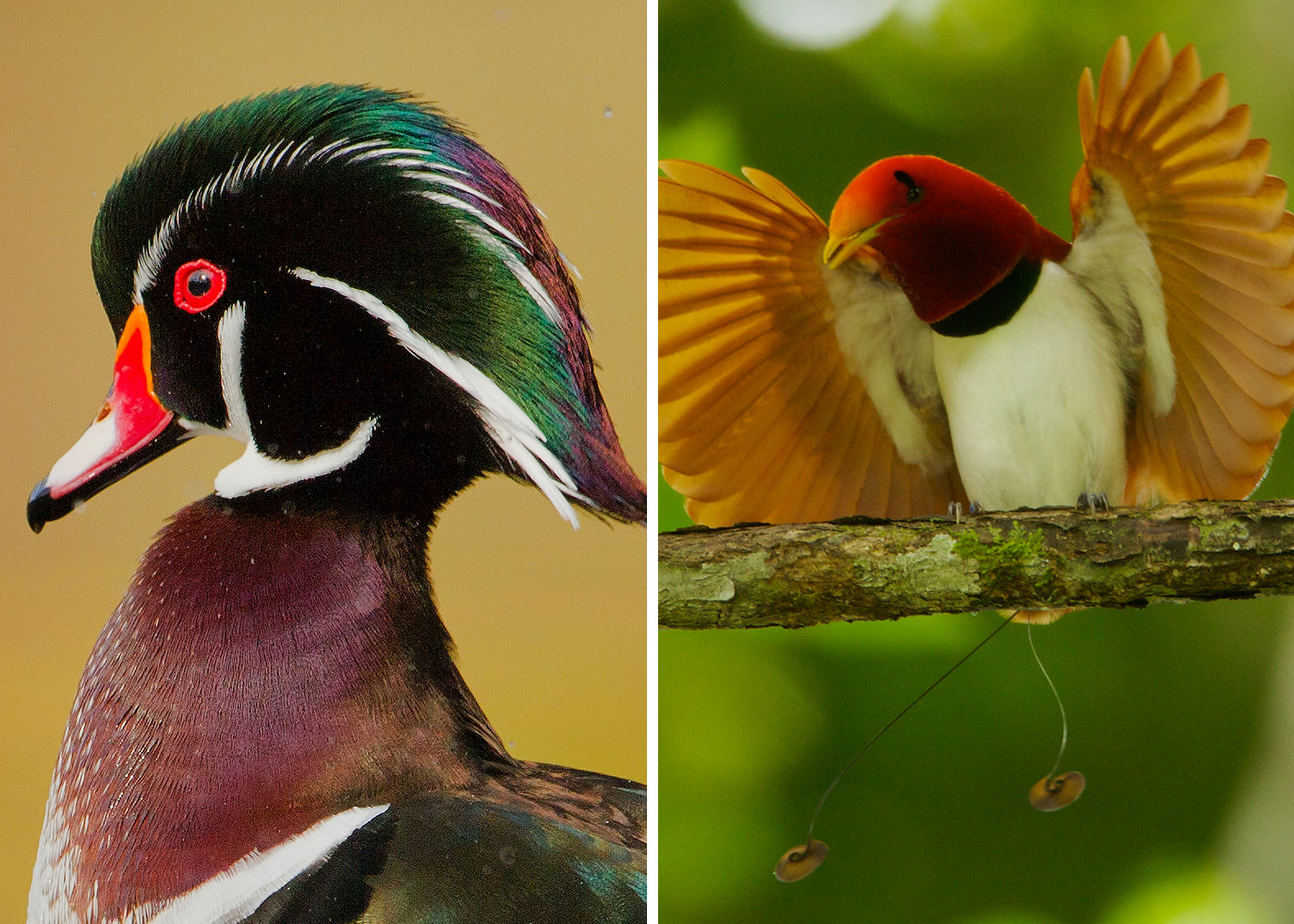
Some feathers are so highly modified for display that they almost don’t look like feathers at all. For example, the iridescent spiral from a King Bird-of-Paradise (Cicinnurus regius) tail functions as an ornament in the male’s courtship display. Structurally, the feather is bizarre, with a bare rachisrachisRAY-kissthe stiff central shaft of a feather from which barbs branch that ends in a tight spiral of barbsbarbone of the main branches off the central shaft of a feather and barbulesbarbulebarb-YOOLone of the secondary branches off a feather barb arranged only on one side of the rachis to form an eye-catching brilliant medallion.
Modified contour feathers on the head are also commonly used in courtship displays. For example, the male Wood Duck’s (Aix sponsa) crest forms a colorful fan that completely changes its head shape. During this transformation, the bird elevates thousands of tiny feathers in unison by manipulating muscles just under the skin.
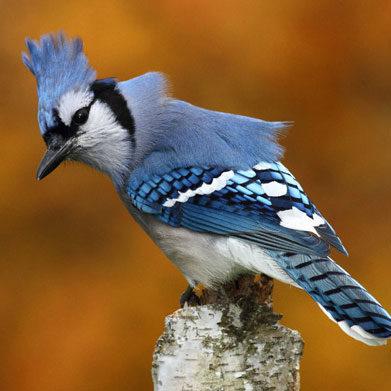
Not all fancy feathers are used to woo a partner; some are used in displays of aggression. For example, Blue Jays (Cyanocitta cristata) keep their crests lowered when they are at rest or with family and flock members, but raise them during aggressive interactions.
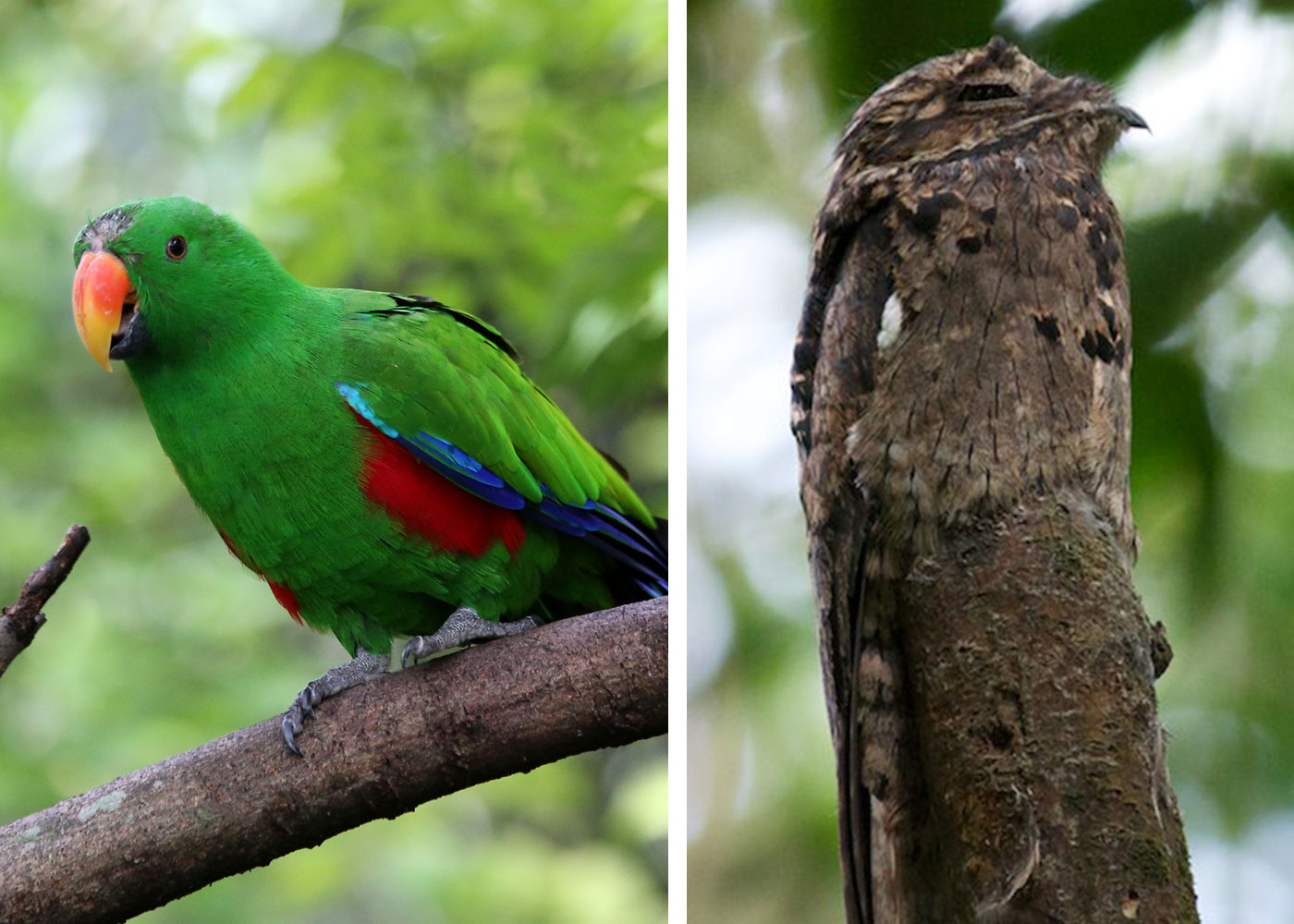
The drab contour feathers covering the body of some birds may seem lackluster, but subtle brown patterns can create an impressive degree of camouflage in forested environments. Famous for hiding in plain sight, the Common Potoo (Nyctibius griseus) is covered with feathers that mimic the colors of the tree branches it perches on. Adding to the disguise, the potoo will adjust its posture and close its eyes into tiny slits, making itself appear to be an extension of the tree.
Not all camouflage has to be drab. For example, the vibrant green contour feathers of male Eclectus Parrots (Eclectus roratus) serve a camouflage function during foraging trips in the rainforest canopy. Back at the nest cavity where the green stands out against the brown tree bark, the male coloration aids in the intense competition with other males to win female mates. Male Eclectus Parrots likely evolved their green coloration as a tradeoff between effective camouflage and display. This is a rare example of feathers that allow birds to both hide and show off.1
Insulation
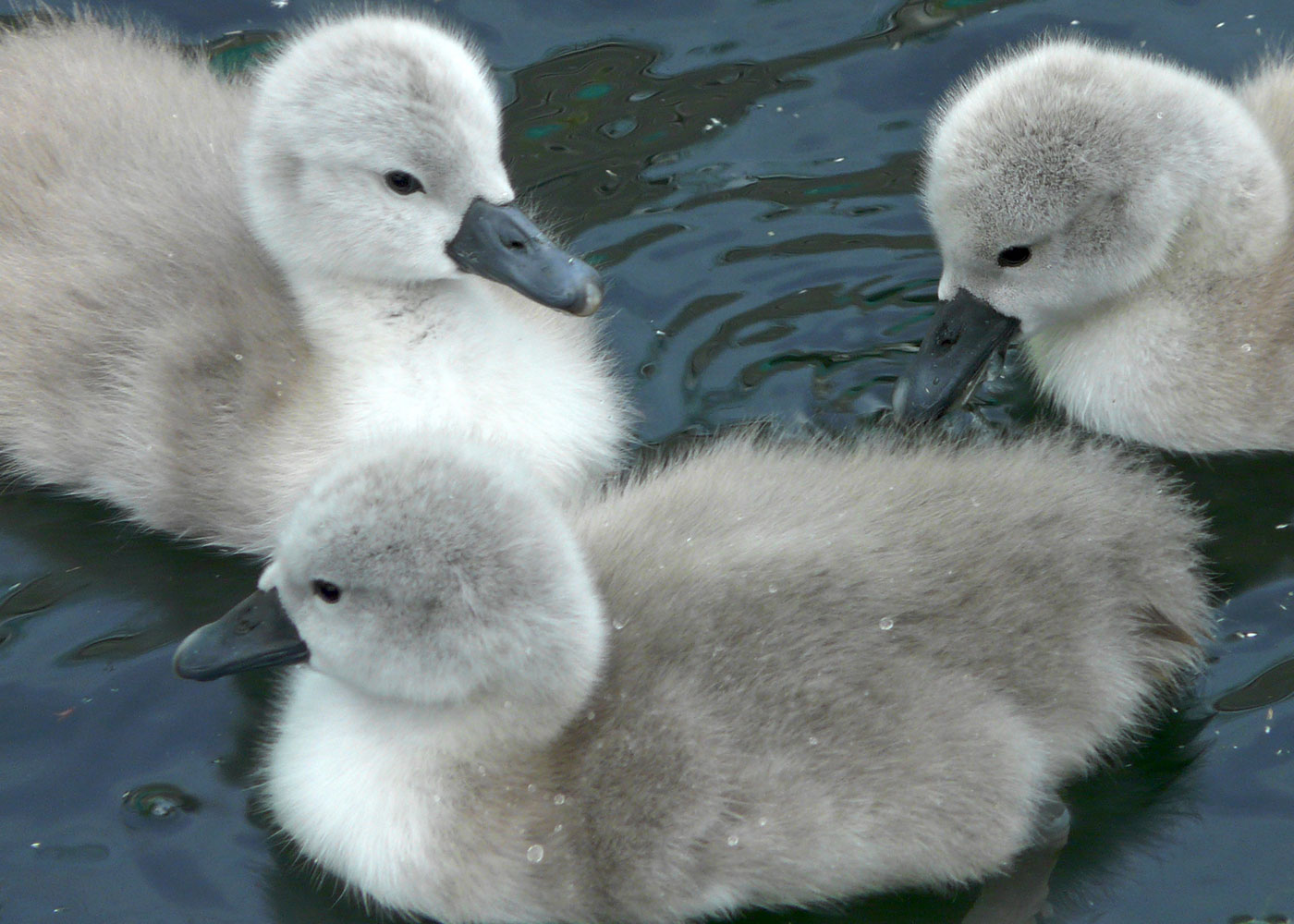
Have you ever wondered why some birds hatch naked while others are covered in a coat of fuzzy feathers? Many young water birds must be able to swim and forage alongside their parents almost immediately after hatching. These precocialprecocialpree-KO-shuldescribing a chick that is mobile quickly after hatching and requires little parental care chicks hatch with a full coat of natal down to keep them warm in cold water. Young Mute Swans (Cygnus olor) for example, hatch with a fuzzy coat of natal down and after a few weeks, replace the natal down with an inner layer of adult down and an outer coat of contour feathers. In contrast, the young of many songbirds are born completely naked.
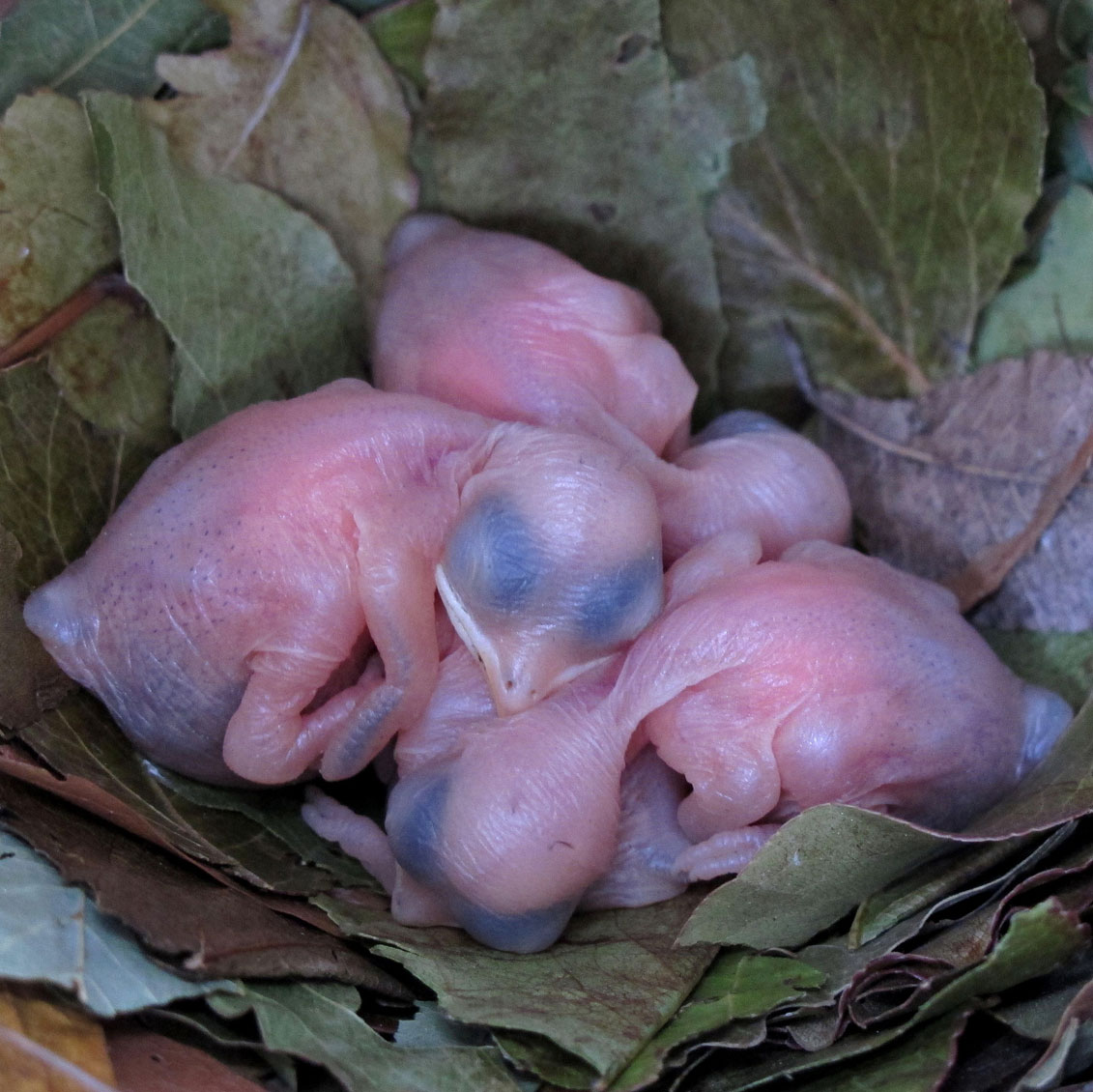
These altricialaltricialAl-TRISH-uldescribing a chick that is unable to walk, fly, or swim soon after hatching and requires parental care for an extended period species stay warm by absorbing heat from attending parents and huddling together in an insulated nest. Utterly dependent at hatch, altricial species, like Purple Martins (Progne subis), require lots of parental care.
Weatherproofing
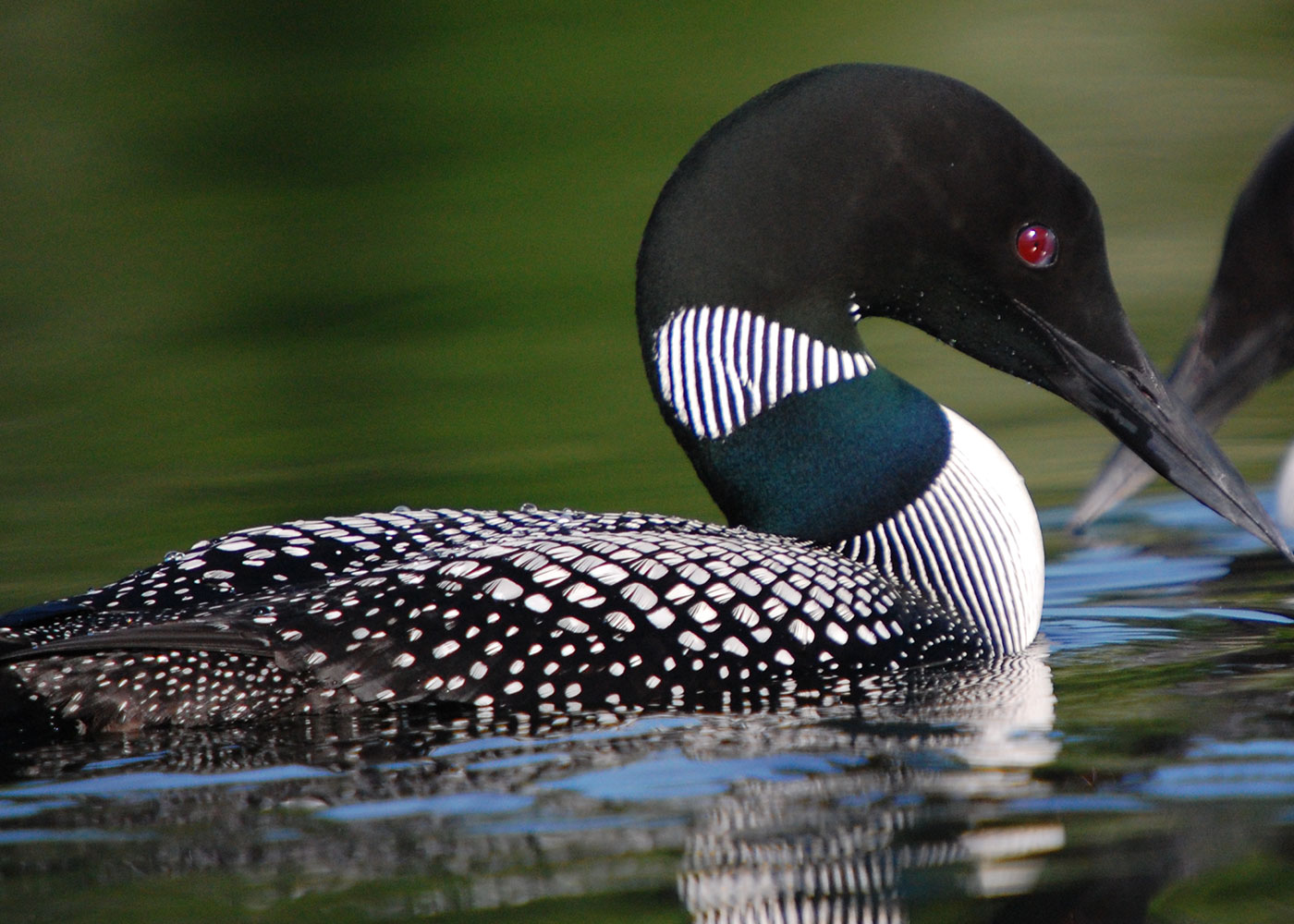
Arranged in an overlapping pattern on a bird’s body to expose the waterproof tips, contour feathers allow water to roll right off a bird’s back. Birds constantly maintain their waterproof coat through extensive grooming, or preeningpreenusing the beak to maintain the health and structure of feathers to ensure that every feather is in good shape. The interlocking structure is so important that any disruption to it—such as if spilled oil coats the feathers—leaves the bird waterlogged and helpless. For ducks and birds like the Common Loon (Gavia immer) that spend most of their time in the water, maintaining a waterproof coat is critical for survival.
Still a mystery
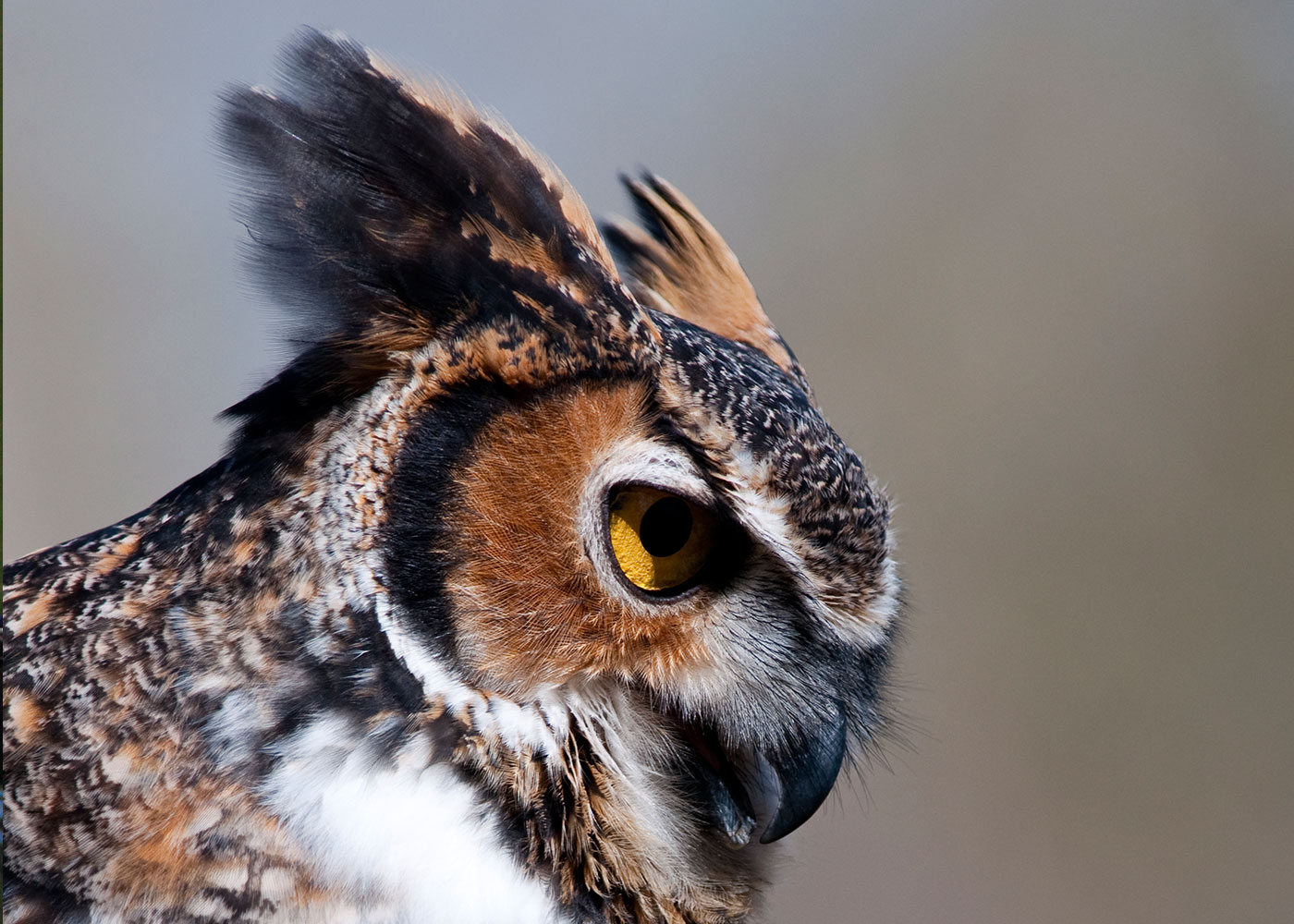
Some feather functions remain a mystery. The feather tufts on the heads of Great Horned Owls (Bubo virginianus) are often mistaken for ears. These modified contour feathers are completely separate from the ear and do not help owls hear, yet there is no scientific consensus on the function of these tufts. Some have proposed that the horns are for display. Others have suggested that owls use them for more complete camouflage while roosting in daylight, but other functions are also possible and no one has yet done a detailed study to find out.2
Further Learning
 Explore photographs of some intriguing feathers and guess their function to reveal the full story.
Interactive >
Feather Growth: How do feathers develop?
Feathers are dead structures that cannot repair themselves when damaged. Because a healthy and functional coat is critical to survival, each year birds shed their old feathers and then grow a whole new set. This moltingmoltin birds, the process of losing and regrowing feathers on a regular cycle process is a carefully timed affair in which feathers are shed and regenerate in turn over a period of weeks so the bird can maintain its protective outer layer and ability to fly. Once the new set of feathers has matured, molt is complete and new growth only occurs before the next molt cycle when feathers are accidentally lost.
The growth process
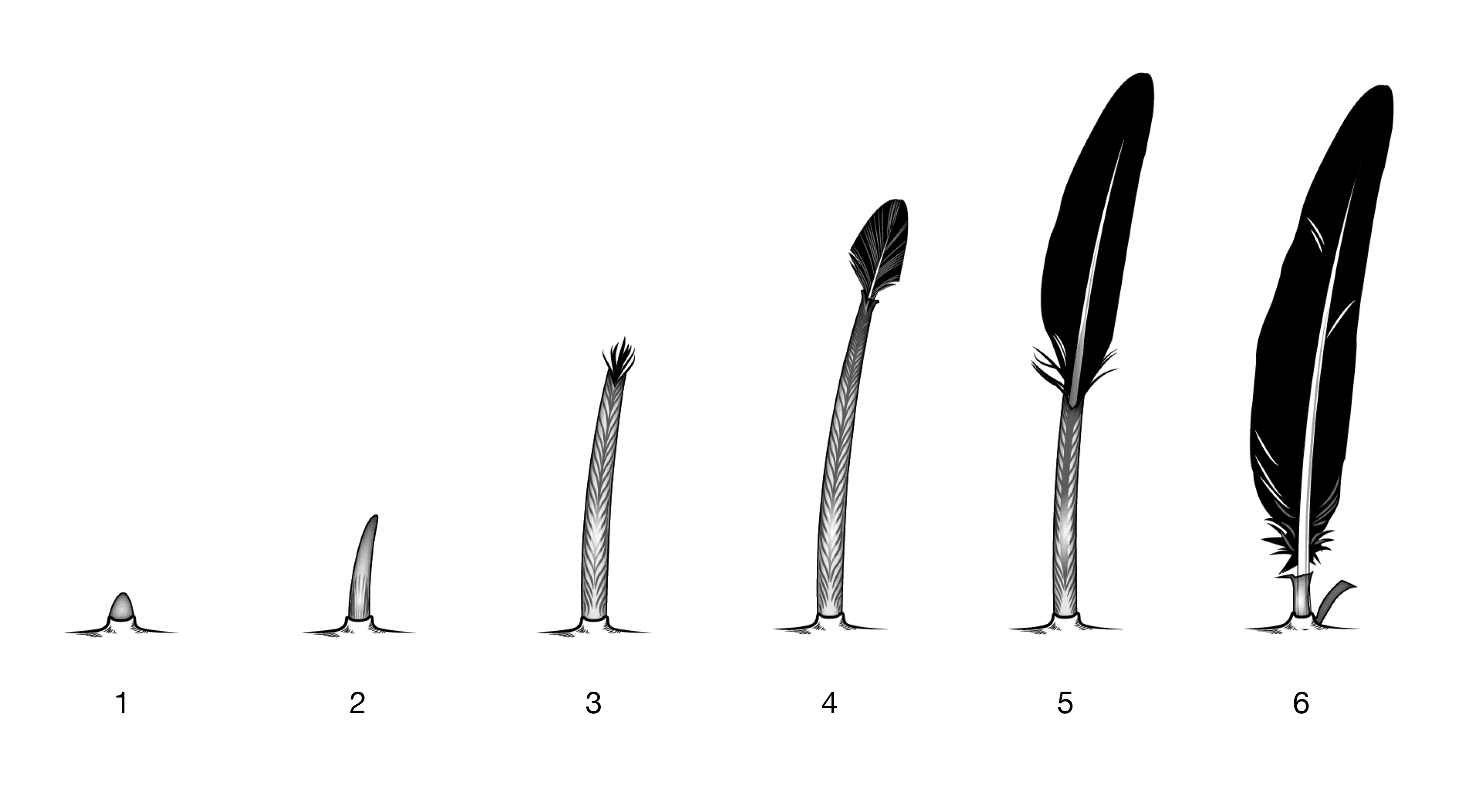
A close look at feather growth reveals how these intricate structures form.
- Each new feather grows from a small outgrowth of skin called the papilla.
- As feathers mature, their tips get pushed away from the papilla, where the newest parts of the feather form. Like human hair, feathers are youngest at their base.
- The feather’s structure develops as proteins are laid down around the surface of this bump of skin. It’s here that the branching patterns form by smaller branches fusing at the base to make thicker ones—barbulesbarbulebarb-YOOLone of the secondary branches off a feather barb fuse into barbsbarbone of the main branches off the central shaft of a feather and barbs fuse into a rachisrachisRAY-kissthe stiff central shaft of a feather from which barbs branch.
- As the feather grows, it stays curled in a tubular shape around the papilla until it is pushed away from the growth area.
- A protective sheath maintains the feather’s cylindrical shape until it starts to disintegrate near the tip, allowing the mature part of the feather to unfurl.
- The sheath falls off and the growth process is complete.
Once the feather unfurls, its interlocking structure is fully formed. Throughout the year, the bird maintains its mature feathers through regular care, or preeningpreenusing the beak to maintain the health and structure of feathers. Whenever the barbulesbarbulebarb-YOOLone of the secondary branches off a feather barb become disturbed, the bird uses its beak to carefully guide them back into place. By the following molt season, many of the bird’s feathers have experienced enough wear and tear that preening can no longer maintain their structure. Fortunately, during molt the bird grows a completely new set.
Further Learning
Feather Evolution: How did feathers evolve?
Flight feathers, with their intricate microstructure, are impressive examples of natural engineering. But how did they evolve? From the fossil record, we know that birds evolved from dinosaurs, some of which had feathers. But those first feathers had nothing to do with flight—they probably helped dinosaurs show off.
Scientists recently worked out a hypothesishypothesisan explanation that is testable through study and experimentation to explain how flight feathers could have evolved.3 They probably began as simple tufts, and then gradually developed through stages of increasing complexity into interlocking structures capable of supporting flight.
Evolutionary stages
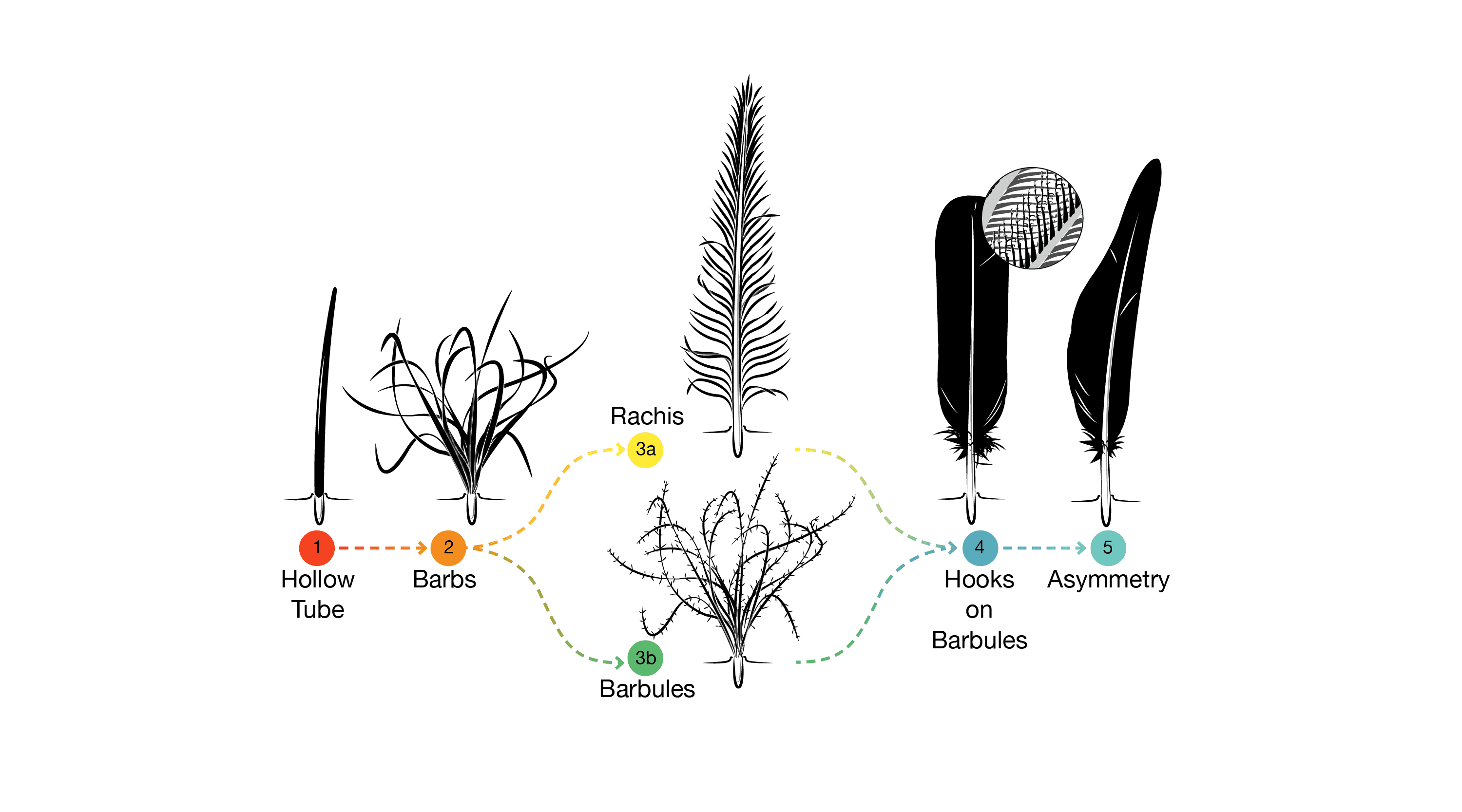
1. The earliest feather was a simple hollow tube.
2. The simple tube evolved into a cluster of barbsbarbone of the main branches off the central shaft of a feather.
3. (a) The base of the barbs fused together to form a central rachisrachisRAY-kissthe stiff central shaft of a feather from which barbs branchand (b) barbulesbarbulebarb-YOOLone of the secondary branches off a feather barb branched from the barbs, as we see in modern-day down feathers.
4. The barbules evolved hooks that interlock to make flat vanes as in current contour feathers.
5. The feather structure evolved asymmetry with the aerodynamic properties of modern-day flight feathers.
Fossil evidence recently unearthed in China and Canada has confirmed that bird ancestors did indeed possess feathers from each of the steps in this proposed evolutionary pathway. Surprisingly, many theropodtheropodTHAIR-o-podbelonging to a bipedal subgroup of dinosaurs from which birds likely evolved dinosaurs had simple stage 1 feathers covering their bodies. This “dino fuzz” even covered close relatives of the great Tyrannosaurus rex. These early feathers may have been insulating, or when colorful, may have helped dinosaurs show off or stay camouflaged. There is also intriguing evidence of more complex Stage 3 and 4 feathers from finds like Ornithomimus edmontonicus. As adults, these large, bulky creatures sported feathers arranged along wing-like structures, but no wing feather traces have been found among the juvenile specimens. This suggests that even as dinosaurs started to evolve wings, the wing feathers were likely used for courtship or territorial display, not flight.4

Though it may take time for people to get used to the idea of fuzzy or elaborately plumed meat-eating dinosaurs, this scientific breakthrough reminds us that asking questions from multiple perspectives helps generate new testable hypotheseshypothesisan explanation that is testable through study and experimentation and scientific knowledge. For this reason, it is becoming more and more common for scientists to work across disciplines. In fact, the active field of evolutionary-developmental biologyevolutionary-developmental biology (evo-devo)a field of biology that investigates the relationship between an organism’s development and its evolutionary origins (“evo-devo”) focuses on discovering a structure’s evolutionary past by observing its process of growth and development.
Further Learning
Navigate a cartoon about feather growth and evolution to learn more about how “dino fuzz” evolved into elegant flight feathersInteractive >
Studying Feathers: How do scientists use Tinbergen’s four questions?
We’ve just used Tinbergen’s approach to look at feathers from several different perspectives—but it’s not just a learning exercise. Scientists like those in the evo-devo crowd, are making discoveries in just the same way, by linking findings from across the biological disciplines.
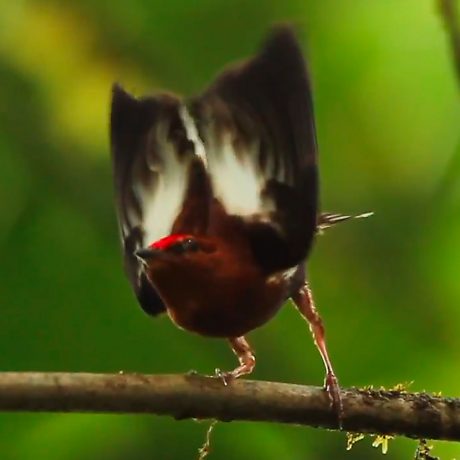
One such scientist is Kim Bostwick, who used this integrated approach to untangle the mysteries of a bird whose feathers work like a musical instrument. This may sound like an outrageous idea, but male Club-winged Manakins of Central and South America use a highly modified feather structure to play a powerful one-note tune. Strong evolutionary pressure on these males to attract females has made them unique in the bird world, but it took years of scientific investigation by Bostwick and colleagues to work out the full story of how and why these birds sing with their wings.
Singing wings
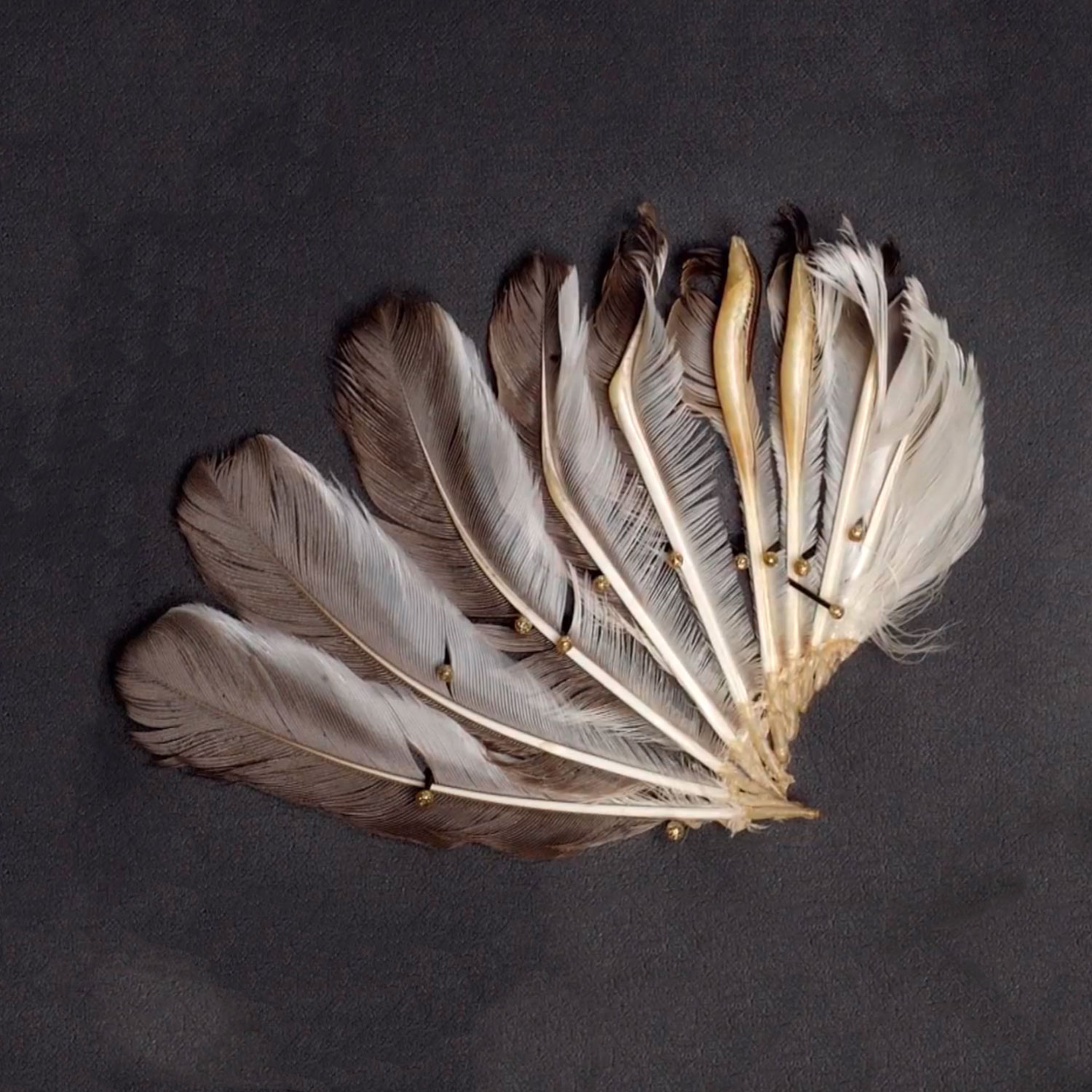
So how do they do it? Club-winged Manakins sing with their wings by rubbing specialized feathers together. One of these feathers is club-shaped with ridges along its edge. The adjacent feather is slender, and bent at a 45-degree angle. This bent feather acts as a pick, while its ridged counterpart acts as a comb to produce a one-note song. This method of producing sound is called stridulationstridulation<span class=”phonetic”>stri-du-LAY-<br>shun</span>the act of rubbing together body parts to make a sound and also occurs in insects, such as crickets.
Kim’s story
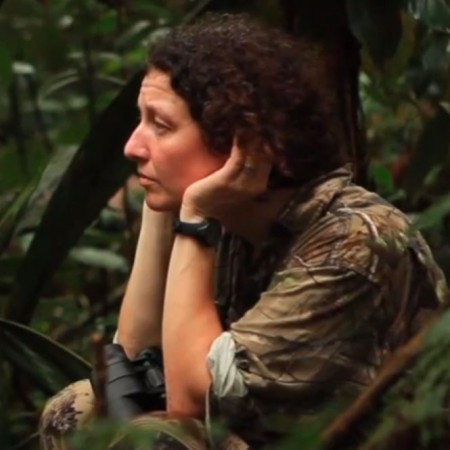
Kim Bostwick began her study of Club-winged Manakins by asking questions about how they sing with their wings. She spent years piecing together how the birds accomplish this feat mechanically, but she did not stop there. Because Kim had always been interested in evolution, she also asked questions about how their specialized feathers and associated behaviors evolved. This led her to study other birds closely related to Club-winged Manakins to see what behavioral innovations occurred in their evolutionary history that contributed to the display we see today. It turns out that the behavior evolved through a series of small steps, including short wing clicks and backwards hopping, into one of the most unusual displays in the animal world. Like Niko Tinbergen, Kim is one of the many scientists who prefer to ask scientific questions from many angles, going beyond the mechanics to make discoveries about function, development, and evolution.
To learn more about Kim’s story at the Singing Wings website.
Further Learning
References
1. Heinsohn, R., Legge, S., & Endler, J. A. (2005). Extreme reversed sexual dichromatism in a bird without sex role reversal. Science. 309(5734), 617–9.
2. Perrone, M. (1981). Adaptive significance of ear tufts in owls. The Condor, 83(4), 383.
3. Prum, R. O., & Brush, A. H. (2002). The evolutionary origin and diversification of feathers. The Quarterly Review of Biology, 77(3), 261–295.
4. Zelenitsky, D. K., Therrien, F., Erickson, G. M., DeBuhr, C. L., Kobayashi, Y., Eberth, D. A., & Hadfield, F. (2012). Feathered non-avian dinosaurs from North America provide insight into wing origins. Science. 338(6106), 510–4.
Suggested citation: Cornell Lab of Ornithology. 2013. All About Feathers. All About Bird Biology <birdbiology.org>. Cornell Lab of Ornithology, Ithaca, New York. < add date accessed here: e.g. 02 Oct. 2013 >.
Acknowledgements:
Author: Mya Thompson
Web Designer: Jeff Szuc
Web programmer: Tahir Poduska
Illustrator: Andrew Leach
Content assistants: Marie Russell, Feven Asefaha