
K-12 Materials and Professional Development for Educators
“Students who are given the chance to discover the wonders of nature gain a better appreciation of life.“—Elementary Teacher
Revised Nature-Based Inquiry Units Available Now!
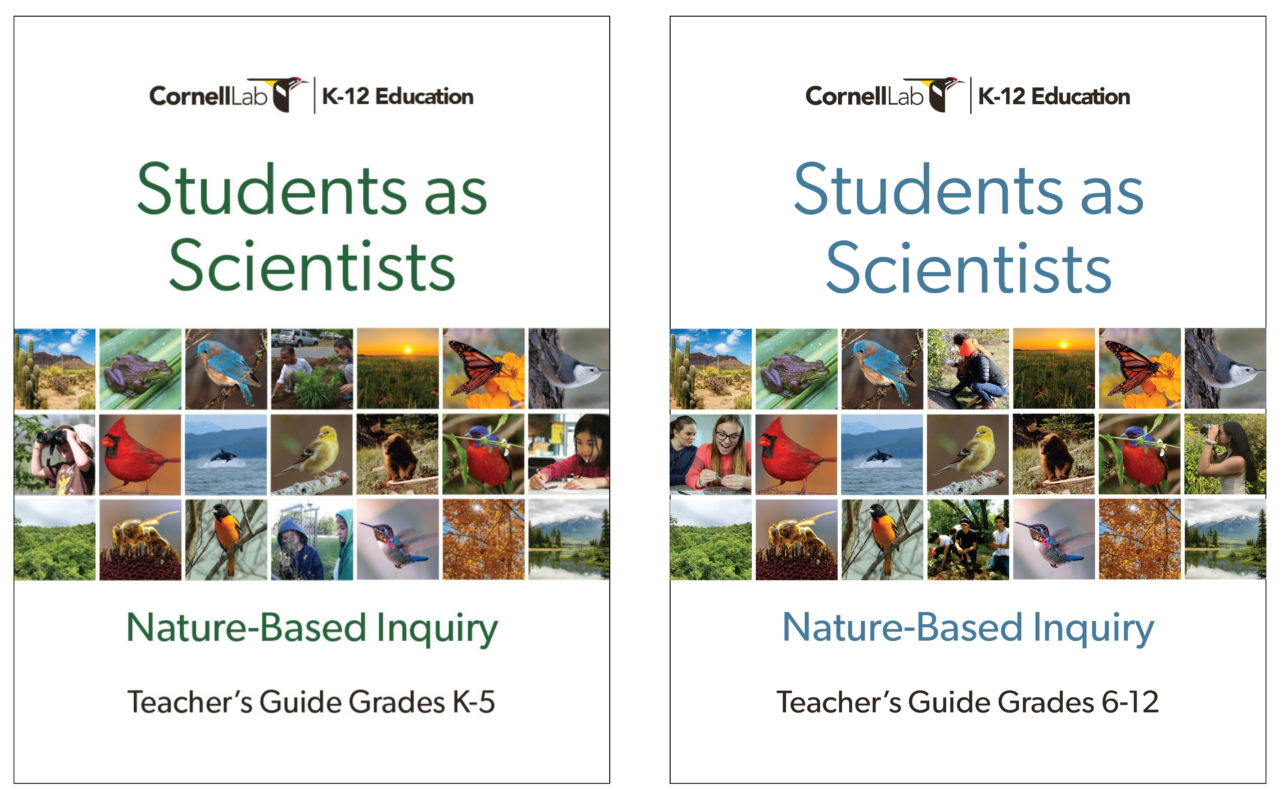
We are thrilled to announce that our newly-revised science inquiry unit is here! If you loved Investigating Evidence, you’ll be excited to explore the differentiated versions of Students as Scientists: Nature-Based Inquiry for K-5th and 6th-12th grades. This revision includes both beloved and entirely new activities, a whole new graphic to teach the science process, scientists from all walks of life, and all the supporting materials you need to successfully guide your students to ask and answer their own questions.
Upcoming Webinars
April 16th – Do Questions Matter?
May 21st – Tips, Tricks, and Tools: Bird ID Made Easy
June 11th – Sparking Kids’ Connection to Nature with Fun Hands-On Activities
From easy, hands-on activities, and building observation skills through art, to engaging in participatory science, and incorporating culturally responsive teaching into inquiry-based science, our webinars provide you with fresh ideas for you classroom or program. You can view all our archived webinars on our YouTube channel.