Barb-Harmony Art Mom
Meet home-schooling mom, Barbara McCoy (online most people know
her as Barb-Harmony Art Mom). She writes:
- I live in the Sierra Nevada foothills of California with my husband and children. I have four children who I have homeschooled for the last twelve years. I currently have two high school sons that accompany me daily on nature walks.....with or without the family dog. We have always been an outdoor loving family but about eight years ago we started keeping nature journals as a family and it has helped us to go much deeper in our understanding of the world around us. I started keeping a nature blog as a way to share my photos and experiences but it has become much more than that. We now have a community of online nature loving homeschool families that participate in my Outdoor Hour Challenges each week. We inspire, support, and encourage one another. The art and music blog is a product of my teaching art for our local homeschool group and it ignited a passion to include art and composer study in our homeschool. The love of art has trickled down into the nature journals and helping others to do the same. Here is a link to something I put together to help families work on their art skills and connect it to their nature journals: http://www.squidoo.com/drawingwithchildrennature Both subjects, nature study and art, have blended together in our family's life and it is really what I try to encourage in both my blogs.
- I use Anna Botsford Comstock's 'Handbook of Nature Study', written in 1911, with many subsequent publications. I haven't always
loved this book. I purchased it a number of years ago and couldn't wrap
my mind around it. It was too big and bulky and I just didn't know how
to tackle it. I was mistakenly thinking it was a field guide. About a
year ago I pulled it down off the shelf and decided I wanted to figure
out how to use it in our family for a more focused system of nature
study. My son was completing a course in high school biology and as a
Charlotte Mason homeschooler at heart, I wanted his biology to be
something he could connect to nature study. I found lots of ways to do
this using the HNS. Here is a link to how I did that exactly: http://www.squidoo.com/apologiabiology
I am pretty proud of how it all came together actually. My son *loved*
biology and he loved it so much we are continuing with marine biology
this year. Anyway, what I love about the HNS is that Comstock writes to
the teacher...the book teaches us how to direct and teach our children's
nature study. I love the freedom that gives me to pick and choose what
activities to include and it gives me flexibility to go as far as we
want with each topic. We can apply the study to our local area and find
ways to adapt it when the subject is not included in the book. I love
the way it doesn't talk down to the reader and it includes lots of
interesting ideas and thoughts. It inspires me to be a better teacher
and guide. I took that feeling and along with some urging from a blog
reader, I started the Outdoor Hour Challenges on my blog. It has far and
away surpassed my expectations as far as what I set out to achieve.
There are participants from all over the world-Brazil, Scotland, UK,
New Zealand, Spain, Netherlands, and just about ever region of the US.
I have received back more than I ever expected.
- The Handbook for Nature Study is meaty but yet it doesn't
overwhelm. It has a little bit of everything that I have not found in
any more modern books on nature study. We use other resources when we
can't find something in the HNS but as a basic "how to" for nature
study, you can't beat the no nonsense approach that Anna Botsford
Comstock takes in the opening pages of her handbook. Nature study in a
few minutes can be done if you have a focus and then children know what
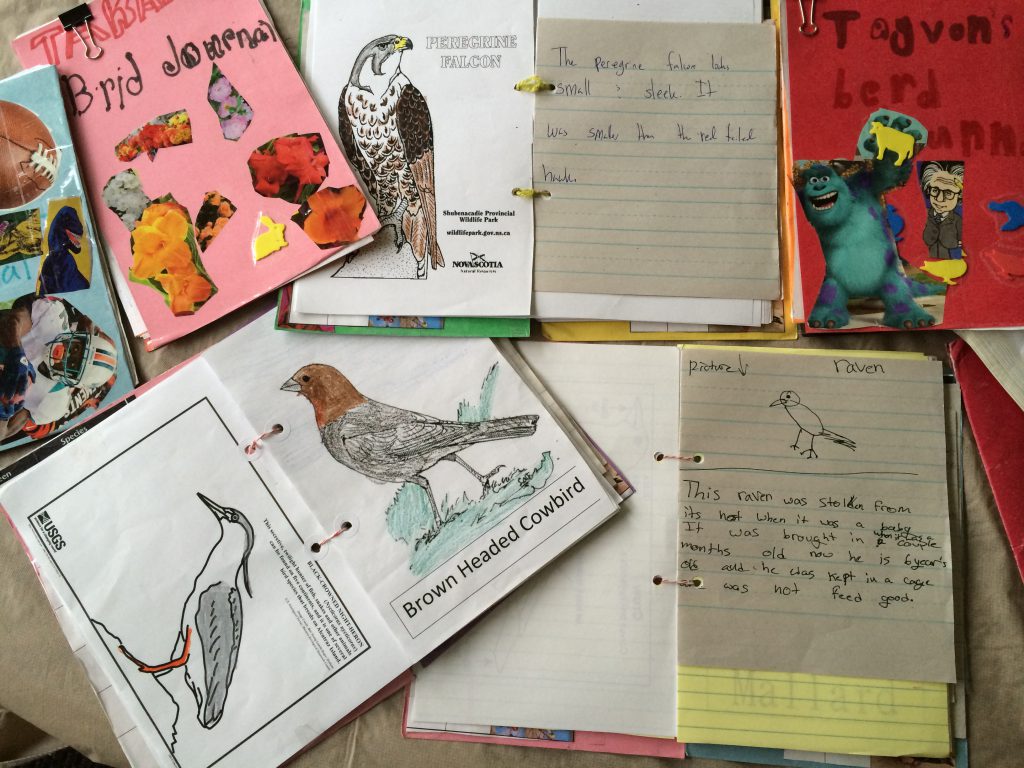
the focus is. The nature journal ideas she gives are easy to use with
children which I haven't found in the more popular "how to" nature
journal books, which focus on fancy, pretty, girly journals whereas the
HNS encourages a more scientific approach which works better, in my
opinion.
- Charlotte Mason seems to understand how children learn best and most
naturally. Her methods show us how to give our children exposure to
lots of great ideas by reading what has been termed "living books". She
bases her whole idea on training children with good habits and feeding
them lots of great literature, hours and hours outside, and free time
to explore interests such as handicrafts and music. Her methods are not
overwhelming to mothers or to their children and have made me realize
that my children are not blank slates that I need to write on. I need
to expose them to lots of ideas and then let them narrate those ideas
back either in words or in writing. This is a topic I write a lot about
on my Harmony Art Mom blog.
- How do I inspire people to get out and study nature? I try to make goals in the Outdoor Hour Challenges
that are reasonable. I encourage only 10-15 minutes a week outdoors in
nature study to start with. This is a reachable goal for most families.
I also encourage the parents to be participants in the nature study
with a goal or focus. The focus is something they can prepare for and
look for during their outdoor time but I always make sure that the
families know they can shift gears at any time if the child is
interested in something else that comes along during the 10-15 minutes
of outdoor time. I wrote a blog entry about this topic: http://handbookofnaturestudy.blogspot.com/2008/05/nature-study-gentle-way.html Here I talk about just taking it one tree, one bird, and one insect at a time.
- Many people are very intimidated with art and their
perceived lack of skills. I gave you the link above to my Drawing With
Children page and that book is probably the best as far as learning to
draw alongside your child. The preface in that book is the best
explanation of how to get started with art that I have found so far.
Getting families to *look* at art is much easier that getting them to
make art. Children are less intimidated with their art skills.
My favorite quote from the Handbook of Nature Study has sort of become my motto:
"Nature study is for the comprehension of the individual life of the bird, insect, or plant that is nearest at hand."