
The Hidden Symphony: Challenges in Capturing the Sounds of Indonesia’s Protected Toad (Leptophryne cruentata)
By Rizki Kurnia Tohir, Bleeding Toads Team
As a dedicated student researching the elusive bleeding toads (Leptophryne cruentata) in their natural habitat for nearly a year, I initially believed that identifying their vocalization patterns would be a straightforward task. However, I soon discovered that I was entirely wrong!
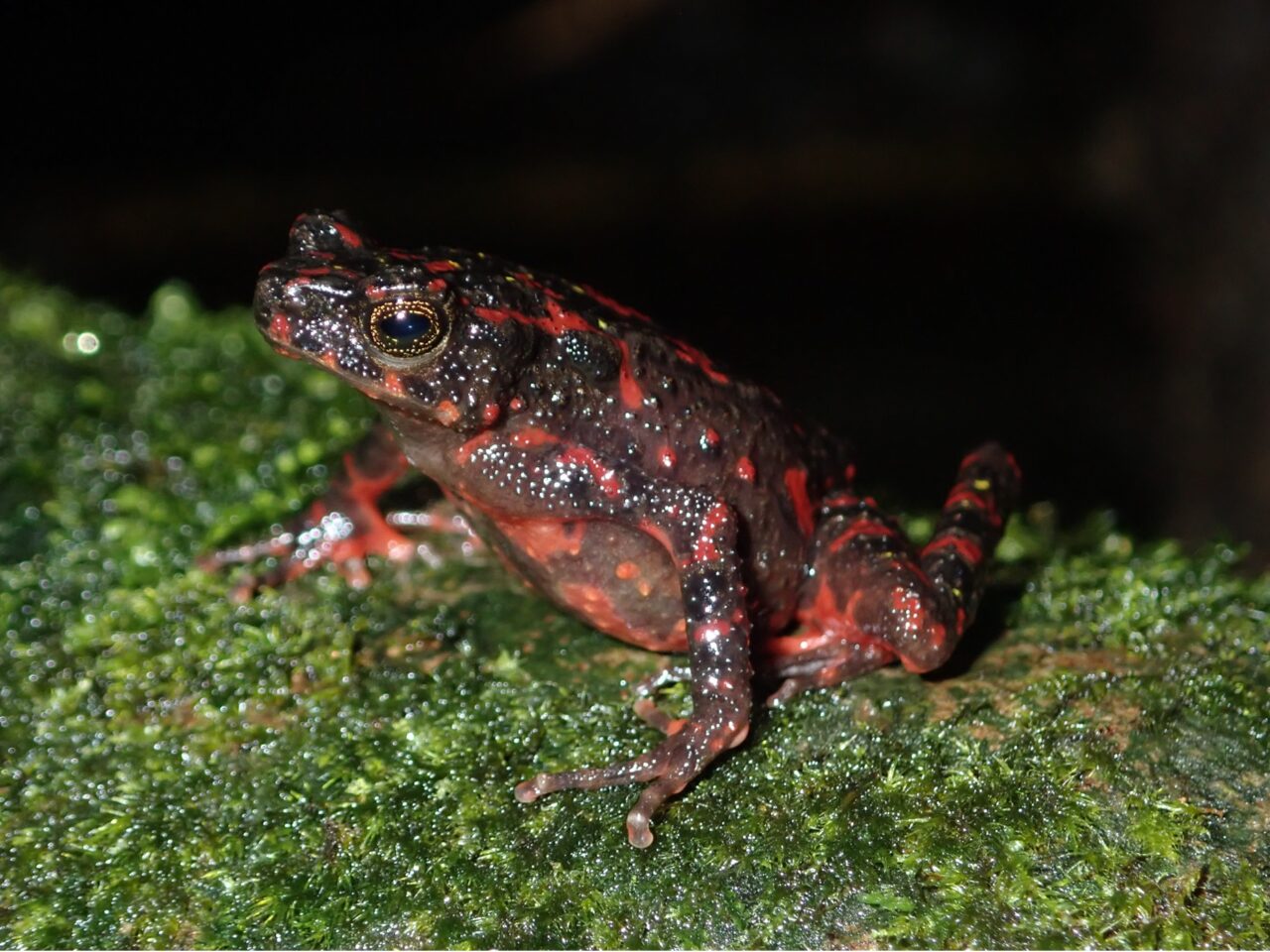
In 2023, I was thrilled to qualify for the Bioacoustics Equipment and Training Program for Indonesia and Malaysia, offered by the K. Lisa Yang Center for Conservation Bioacoustics. My proposal involved deploying recorders across diverse environmental conditions, including waterfalls, fast-flowing rivers, and medium-flowing rivers. However, the plan encountered a significant setback due to the high water noise, making it exceptionally challenging to capture clear recordings. At the start of the training, our mentor had cautioned us about the difficulties of recording near waterfalls and rapids, emphasizing that water noise would be a major obstacle for our research. As a result, my team, the “Mount Gede Bleeding Toad Team”, engaged in intensive discussions with our mentor to make essential adjustments to our research design.

To minimize recording failures, we decided to focus on recording L. cruentata in a low-noise area near a spring, where my research indicated a high concentration of males and which was relatively distant from the waterfall. Additionally, we expanded our species range to include Leptophryne borbonica, due to our ongoing breeding project for this frog in the lab. Thus, our revised research design involved recording L. cruentata at two locations within the national park and recording L. borbonica at one location within the park and another in the lab. We conducted these recordings over a three-month period. Moreover, we actively involved the local community in the installation of the recorders. These installations took place from February to May 2024, and we were pleased to achieve quite satisfactory results!

During the initial months, we replaced the memory once a month to mitigate data corruption risks and other potential issues. We harbored some pessimism regarding the chosen location’s suitability or the absence of any sounds at all. Moreover, as novices, we were anxious about the possibility of mishandling the recording device since this was our first experience. However, after three months of diligent effort, we can finally breathe a sigh of relief. We were thrilled to discover the distinct sounds of these two tiny frogs. You can experience the calls of L. cruentata in sound file 1 and those of L. borbonica in sound file 2. If you were to listen to their melodious calls, mistaking them for cricket sounds would lead you astray! Despite belonging to the same genus, the vocalizations of these two species are strikingly distinct. Fascinating, isn’t it?
Once we uncovered their voices, the satisfaction of three months spent recording in the field was immeasurable. Our next challenge was efficiently analyzing the vast amount of sound data accumulated over this period. Thankfully, the guidance and support from our mentors proved invaluable as we delved deeper into the realm of bioacoustics.