

From Birds to Forests: A Decades-Long Effort to Protect the World's Third Largest Rainforest
“What happens to the intact Indo-Pacific forests between now and 2030 will not only determine the future of the people and wildlife that live there, it will affect the future for all of us on planet Earth.”
— Dr. Edwin Scholes, Birds-of-Paradise Project Leader
For over 15 years, the Cornell Lab of Ornithology has documented how birds help shape and sustain the world’s third largest rainforest. Now, working with partners across New Guinea and the wider Indo-Pacific, we’re expanding this story—combining science, media, and community voices to highlight what’s at stake and what’s needed for these irreplaceable forests.
RECENT NEWS: The Spring 2026 issue of Living Bird, the Cornell Lab of Ornithology’s quarterly magazine, features an in-depth story on the Northern Cassowary — Papua’s towering, elusive “forest farmer” — and the remarkable collaboration behind the effort to document it.
Written by Wahyu Mulyono of the Rekam Nusantara Foundation and photographed by Birds-of-Paradise Project co-founder Tim Laman, the feature follows Indonesian ornithologist Yoki Hadiprakarsa and three Moi Tribe guides into the Klasow Forest of Indonesian Papua, where eight months of camera trapping finally captured extraordinary images of this rarely seen giant. The story explores the cassowary’s irreplaceable role as a seed disperser and architect of the rainforest. Like the companion film (below), this story shows why cassowaries are a living symbol of why these forests must be protected. Read the full story in Living Bird →
This work builds on the growing momentum of our partners at the Rekam Nusantara Foundation, whose Papua Pride campaign continues to deepen national and global awareness through Indonesian-led conservation storytelling.
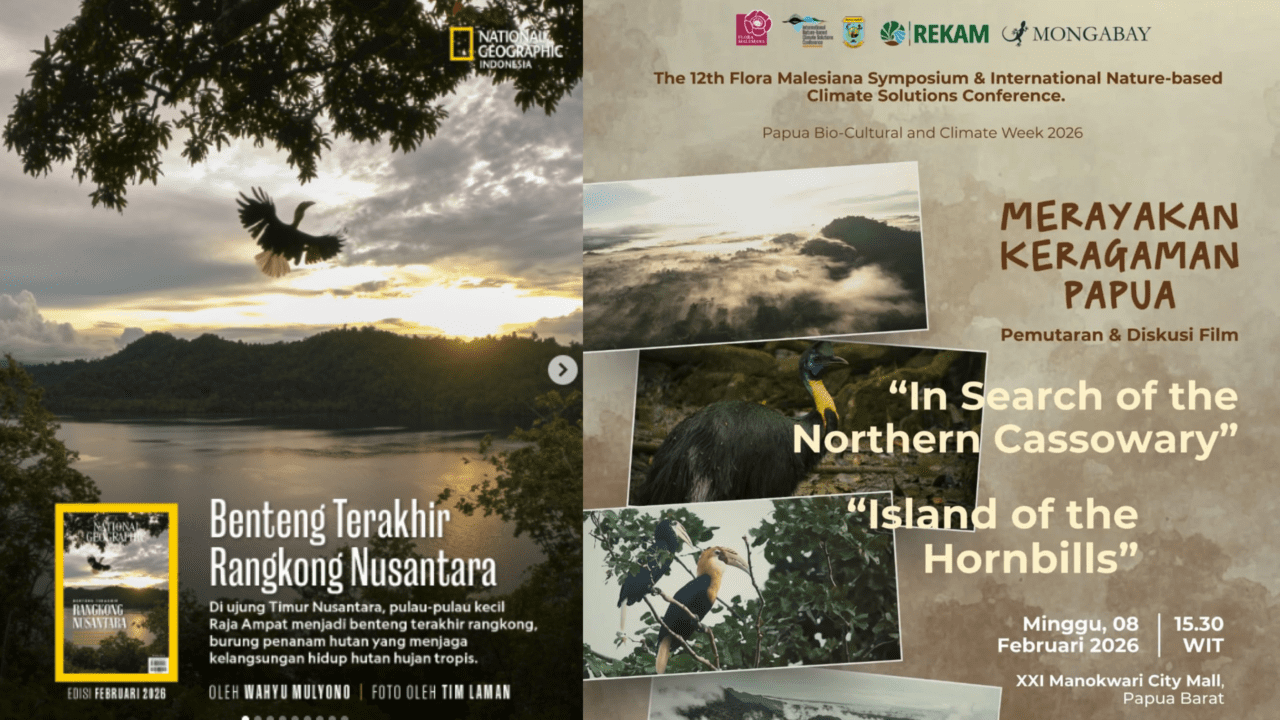
A growing portfolio of short-form videos, digital and print articles, and social media content is strengthening pride in Papua’s forests and wildlife — framing iconic species such as cassowaries and hornbills as living engines of forest health and cultural identity — and demonstrating how conservation media can inspire long-term public support for forest stewardship.
Built by Birds
Much of the New Guinea Rainforest exists because of birds. Cassowaries, hornbills, and birds-of-paradise are more than icons—they are engineers of the forest itself, carrying and sowing the seeds that shape its structure and future.
This vast rainforest, spanning more than 730,000 km² across Indonesia’s Papua provinces and Papua New Guinea, is the world’s third largest. Home to 7% of the world’s species and over 20 billion metric tons of carbon, it regulates climate, generates rainfall, and sustains millions of lives. Yet its survival depends on living connections between birds, trees, and people.
These remarkable birds function as forest architects, dispersing seeds and maintaining ecosystems that sustain both wildlife and human communities. Understanding their role reveals why protecting the New Guinea Rainforest means protecting the intricate relationships that keep this ecosystem intact.
When world leaders discuss forest conservation, the New Guinea Rainforest is often overlooked despite its outstanding biodiversity, intact forest cover, and deep cultural ties with Indigenous peoples. The Cornell Lab is working with partners across New Guinea and the wider Indo-Pacific to elevate this forest in the global conversation and demonstrate why protecting what remains intact is our most powerful climate strategy.
Learn more about the Third Largest Rainforest

The Amazon, Congo, and Southeast Asian forests are all climate safety nets. Losing them would mean losing our last natural defense against chaos. Protecting them is not optional; it’s mission critical for the survival of humanity.
António Guterres, UN Secretary General
An Urgent Conservation Opportunity
The islands of New Guinea and surrounding Indo-Pacific archipelagos hold one of Earth’s last great strongholds of tropical biodiversity. These forests are home to thousands of plant and animal species found nowhere else. Yet these forests are under pressure from industrial logging, mining, and agricultural expansion.
At the same time, this region offers one of the planet’s greatest conservation opportunities. The vast majority of forests in New Guinea are still standing, and most are owned and managed by Indigenous peoples whose traditional stewardship has maintained them for generations. With the right partnerships and investment, the Indo-Pacific can remain a place where forests, communities, and biodiversity thrive.
In the Beginning: The Birds-of-Paradise
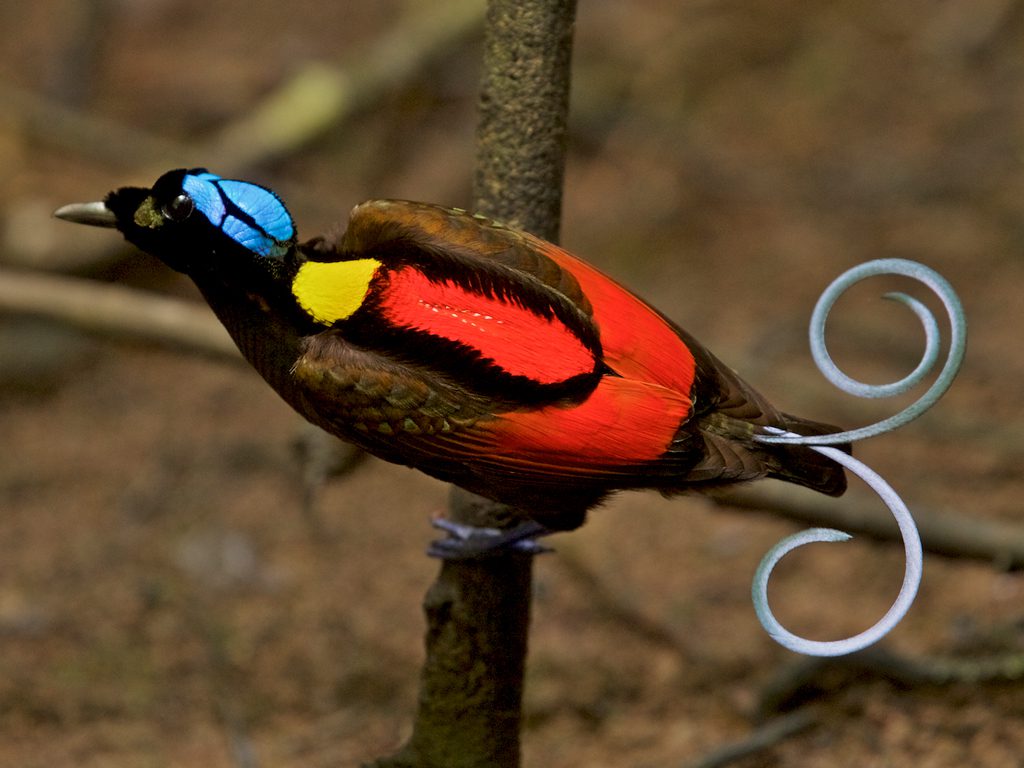
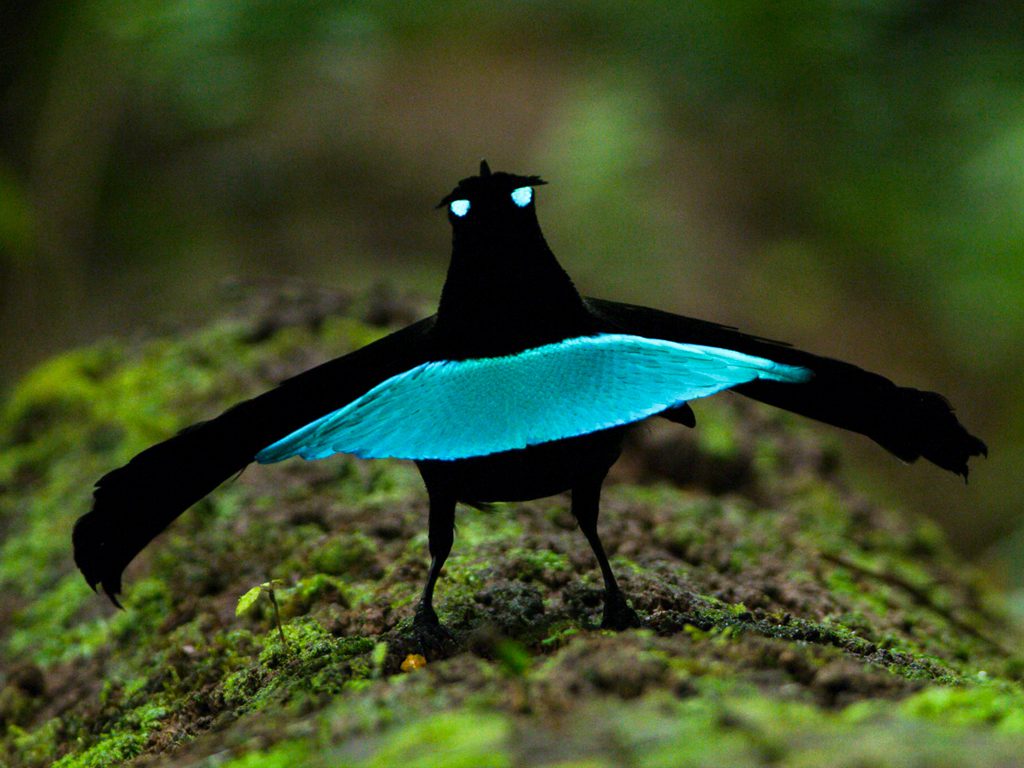
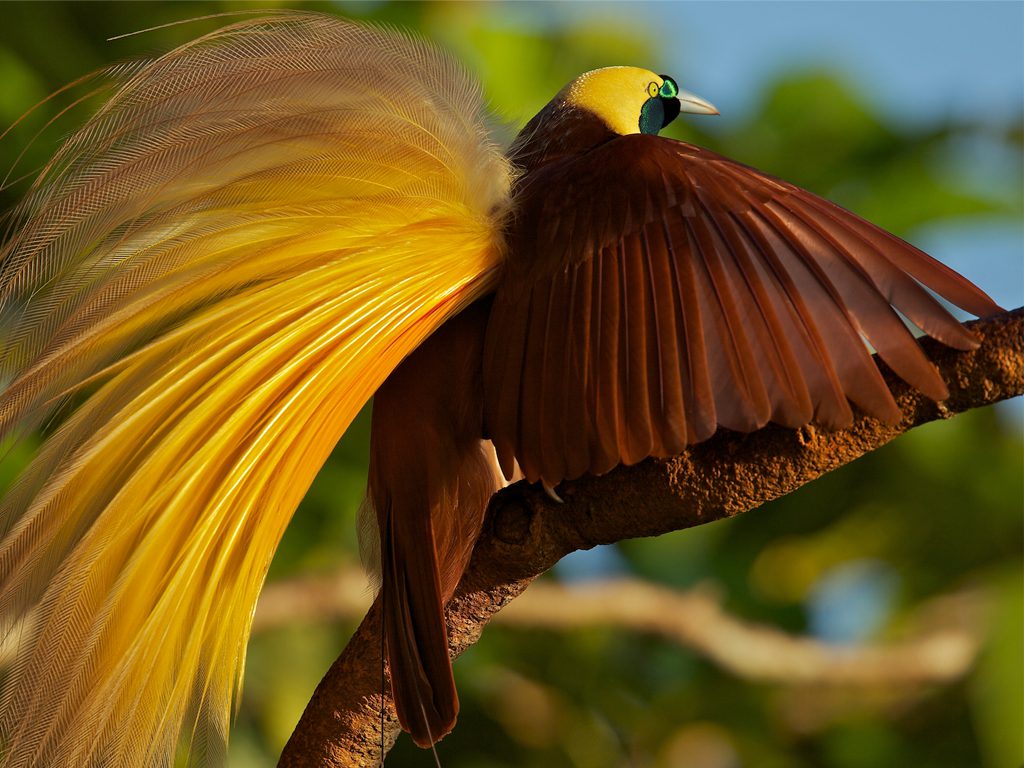
The story began with a simple yet ambitious goal — to share with the world the breathtaking beauty of New Guinea’s birds-of-paradise. Beginning in 2009, scientists and filmmakers from the Cornell Lab partnered with local experts to document all 39 known species.
What started as a quest for scientific and visual discovery soon became something larger. The project showed how these iconic birds depend on intact, fruit-rich forests. Each photograph and film helped show that conserving birds-of-paradise means conserving the rainforest they embody.
The Birds-of-Paradise Project, completed in 2012, reached global audiences through exhibitions, films, and publications. It also launched a new wave of collaboration among stakeholderes dedicated to the protection of these forests and the cultures connected to them.
Protecting the Home of the Birds-of-Paradise
Building on years of collaboration, the Cornell Lab and its partners work alongside Indigenous landowners, local conservation leaders, and government agencies to strengthen protection for key rainforest habitats while also supporting local communities. These partnerships have showed how biodiversity conservation and sustainable livelihoods go hand in hand.
“Kids, now we’re in our forest. Why are we here? I want you to know what we have in front of us”
Indonesia’s Land of Papua – “Tanah Papua.”
Consisting of two provinces, Papua supports one of the only remaining large tropical forests in the world.
With the Amazon and Congo basins, these forests serve as the lungs of the planet. And in Papua, they are the lifeblood of the people.
“What impresses me the most about the forests of Papua is that they nurture/sustain the communities here. All resources needed to live, are found here.”
Papua’s geography contains a variety of ecosystems –
coasts, mangroves, forests…and mountains –
that supports roughly half of Indonesia’s biodiversity.
Over 600 species of birds are found in Papua, including the birds-of-paradise, many of which live nowhere else on earth.
“For me, the birds in Papua, especially the birds-of-paradise, are incredibly beautiful, unique, and unforgettable.”
The birds-of-paradise are icons of Papua’s biodiversity.
Their unparalleled beauty has made them a symbol of international renown.
“That’s a bird that tourists like to look for near the village.”
“Usually, we walk in the morning and listen. Then we follow the calls, and look for them.”
Global interest in Papua’s birdlife is leading to increased opportunity for wildlife tourism…bringing newfound economic benefits to local communities.
“… King of Cockatoo, White Cockatoo, Hornbill …”
“We can find the Magnificent playing on the ground. Then as we walk, we find Parotia. This is where they dance.”
“The bird we’re looking for tonight is Papuan frog mouth.”
“The forest gives us our water to drink, our food, it gives us our medicines, and provides the air we breathe.”
But these forests are no longer isolated from the rest of the world.
The demand for timber, palm oil, minerals and gas has arrived.
The future existence of Papua’s resources and biodiversity, and the communities that rely on them, depend on the choices made today.
The governments of Papua and West Papua are bringing together non-government, community, academic, and religious partners to create a sustainable pathway for development.
“Kids, don’t cut down this tree. Don’t do any harm. The trees are food for the birds, and the birds are the source of our income.”
There are plenty of examples of ecosystems destroyed by overexploitation. With its forests still intact, Papua has the opportunity to develop in a way that allows both its people and its environment to thrive.
“The beauty of Raja Ampat is beyond amazing.”
Recent successes in the marine environments of the Raja Ampat region of West Papua show that development and conservation can go hand in hand.
Within the forests, local leaders are organizing their communities with similar goals.
“Here are three useful and important things that matter to us: The first is the forest, the second one is conservation, and the last is tourism.”
“What’s important is that we take good care of the birds. The tourists see them and the money goes to the village.”
The forests, the birds, and the communities make this region unique…and irreplaceable.
“If the forests in Papua are destroyed, they’ve got nothing left. Their wealth and life resources are in the forest.”
As the lungs of the planet, tropical forests are an important buffer against our changing climate.
If Papua’s ecosystems are degraded, the effects will be felt not just locally, but across the world.
“The Arfak forest is very valuable and it’s critical for our future.”
Through collaborative leadership, achieving sustainable growth, maintaining the livelihood of local communities, and protecting globally significant biodiversity are possible…for Tanah Papua and all of humanity.
“Papuan nature is so beautiful. I ask Papuans all over: let’s protect our beautiful country so that our grandchildren will enjoy what we have today. Let’s support conservation in Papua.”
End of Transcript
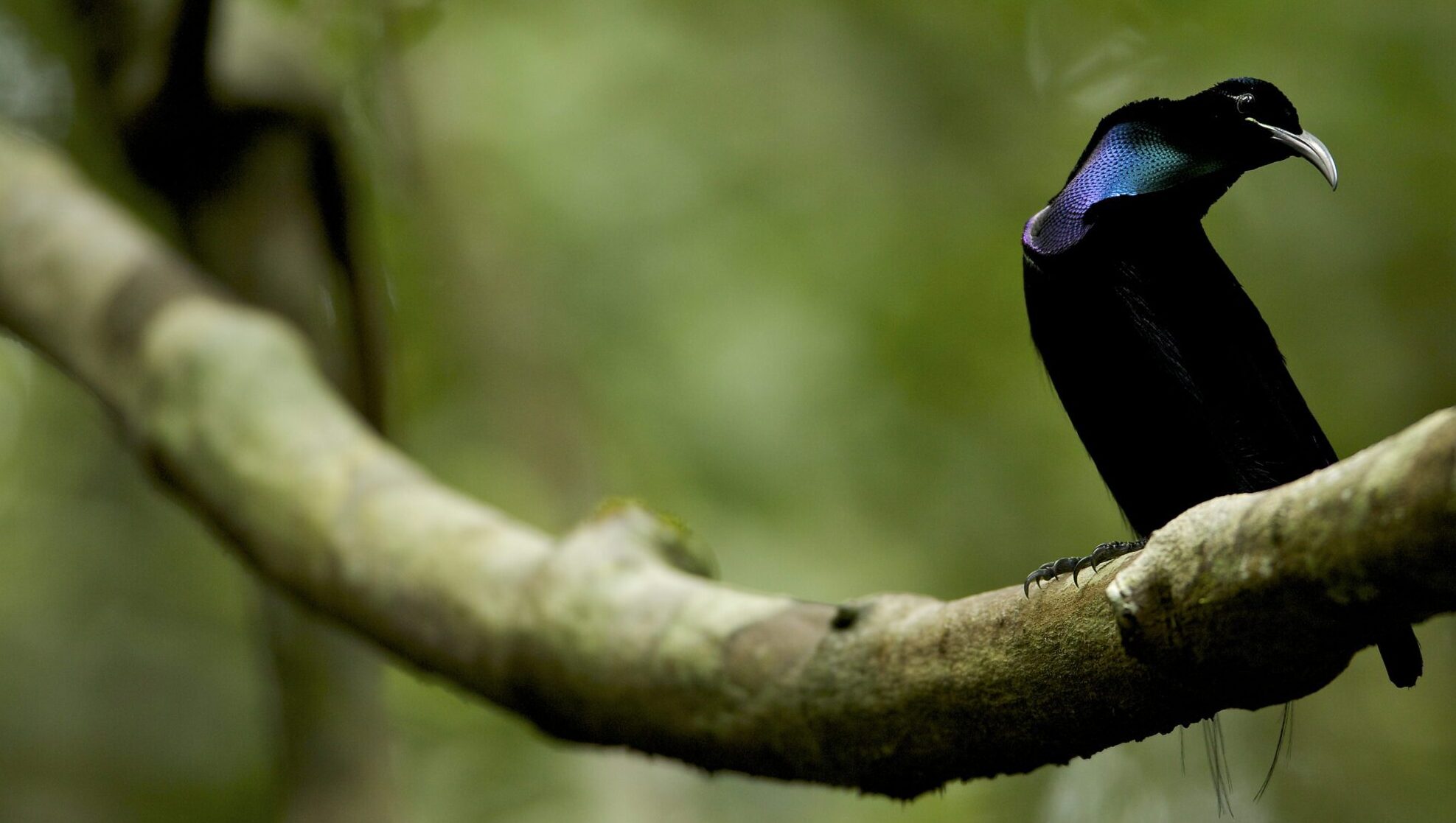
Since 2015, there has been growing awareness to take a sustainable development approach in West Papua. We encourage non-deforestation commodities and ecotourism as an economic driver while considering the protection of the existing biodiversity.
Prof. Charlie Heatubun, West Papua Regional Research and Development Agency
The Third Largest Rainforest in the World
Many of the Indo-Pacific’s rainforests are still large enough to support all ecosystem functions. This intactness yields critical global benefits such as ecosystem services and nature-based solutions. Protecting the forests means protecting one of Earth’s greatest seed banks, carbon stores, and biodiversity strongholds and securing their benefits for people and planet alike.
[animal sounds]
[dramatic music]
[city sounds]
The Indo-Pacific. A region of diverse landscapes, wildlife, and cultures.
Its natural resources, including one of the world’s three major rainforests, have helped to create some of today’s fastest growing economies.
It is also home to a tenth of the world’s remaining intact tropical forests.
[animal sounds]
Intact forest are more than just tree-covered landscapes.
They are complex networks of living and non-living elements, with few signs of human activity, that are large enough to sustain entire ecosystem functions.
[monkeys howling]
They improve food security and water availability while protecting people from natural disasters and climate change.
And as the world confronts the health, social, and economic consequences of the COVID-19 pandemic, the Indo-Pacific’s intact forests will play a key role in creating more resilient societies.
Maintaining the forests’ integrity will improve human wellbeing and support the natural systems we depend on.
And yet, their trajectory has been in decline for decades.
Twenty years ago, the Indo-Pacific was home to the second largest expanse of undisturbed rainforest in the world.
It covered roughly 188 million hectares, an area about twice the size of the island of New Guinea.
But it was losing forest more quickly than anywhere else.
Satellite records show that by 2019, this forest had been reduced to less than half of what it had been in 2001 with most cleared for resource extraction and infrastructure expansion.
In the northwest, the main drivers have been forestry, shifting small farms, and large-scale commercial agriculture.
In the central region, the leading factor was clear-cutting for palm oil production.
And in the east, losses came from shifting small farms and palm oil plantations.
Today with forests fragmented and degraded, few are large enough, and intact enough, to sustain all ecosystem functions while providing the full range of benefits that people depend on.
The intact forests that remain are essential.
[rainforest sounds]
About 30% are scattered widely, but roughly 70% are concentrated just within the islands of
Borneo and new Guinea, with around half, about 30 million hectares, in the New Guinea region alone.
[bird sounds]
These forest systems provide many undervalued benefits that are easy to overlook.
They support the highest levels of terrestrial biodiversity.
Up to 25,000 species of trees provide habitat and food for millions of forest-dependent plants, animals, fungi, and microbes.
Together their interconnected networks provide services that societies depend on, like nutrient cycling, seed dispersal, pollination, and pest resistance.
All for free.
[thunder crackling]
Beyond supporting biodiversity, intact forest systems also influence cloud cover and rainfall.
[thunder crackling]
They redistribute runoff, stabilize water tables, and regulate movement of nutrients and sediments, helping to maintain soil fertility for food production and preventing erosion.
And with today’s climate extremes, intact forests buffer people from the increasing intensity and frequency of heat waves, droughts, and floods.
These forests have also provided material and spiritual resources for forest-dependent communities for over 50,000 years.
And today, over 100 million people, roughly one quarter of the indigenous peoples worldwide, rely on their direct use for food, water, shelter, and livelihoods.
Forests provide benefits to human health by decreasing the negative impacts of smoke and haze by being better able to withstand wildfires than disturbed forests.
They yield compounds that supply millions of people with medicines worldwide.
Intact forests also reduce contact between humans and disease vectors, preventing the transmission of established and emerging infectious diseases that can impact human health and economic stability at global scales.
[rainforest sounds]
The benefits of intact forests also reach worldwide.
They provide a free service for mitigating the impacts of global climate change by storing carbon in their trees, soils, and peatlands.
The Indo-Pacific is estimated to hold up to 140 billion tons of carbon, with more than 40 billion tons in tree biomass alone.
Keeping them intact will play a vital role in preventing global warming from exceeding 1.5 degrees Celsius by 2030.
[airplane whirring]
The benefits of intact forests are increasingly clear.
Yet current land use plans are often at odds with maintaining their integrity.
For example, as of 2020, land concessions have been issued for much of the western half of New Guinea.
Millions of hectares have been allocated for industrial logging and wood pulp production, mining operations, and oil palm plantations.
Major infrastructure projects, including a 4,000-kilometer-long road network, are under way to facilitate these land use plans.
Throughout the Indo-Pacific, many intact forests face similar pressures.
[upbeat music]
If human health, indigenous cultures, food security, and low-cost tools for fighting climate change are to be provided by intact natural systems, then the current trajectory of use needs to be reconsidered.
Once intact forests are degraded, their benefits are lost for generations.
No known alternatives can restore all the services they provide.
[rainforest sounds]
Societies around the globe have exploited nature to shape the world we live in without recognizing the full value of intact natural systems.
This relationship has fueled development for centuries, but it is not sustainable for achieving economic growth while also reducing carbon emissions and ensuring human wellbeing.
Only by safeguarding these natural systems can we continue to draw on the environmental, economic, and human benefits they provide.
[bird noise]
For the forest-rich regions of the Indo-Pacific, protecting intact forests is a low-cost pathway for building more resilient and prosperous societies for today and for the future.
[rainforest sounds fade]
[animal sounds]
[dramatic music]
[city sounds]
The Indo-Pacific. A region of diverse landscapes, wildlife, and cultures.
Its natural resources, including one of the world’s three major rainforests, have helped to create some of today’s fastest growing economies.
It is also home to a tenth of the world’s remaining intact tropical forests.
[animal sounds]
Intact forest are more than just tree-covered landscapes.
They are complex networks of living and non-living elements, with few signs of human activity, that are large enough to sustain entire ecosystem functions.
[monkeys howling]
They improve food security and water availability while protecting people from natural disasters and climate change.
And as the world confronts the health, social, and economic consequences of the COVID-19 pandemic, the Indo-Pacific’s intact forests will play a key role in creating more resilient societies.
Maintaining the forests’ integrity will improve human wellbeing and support the natural systems we depend on.
And yet, their trajectory has been in decline for decades.
Twenty years ago, the Indo-Pacific was home to the second largest expanse of undisturbed rainforest in the world.
It covered roughly 188 million hectares, an area about twice the size of the island of New Guinea.
But it was losing forest more quickly than anywhere else.
Satellite records show that by 2019, this forest had been reduced to less than half of what it had been in 2001 with most cleared for resource extraction and infrastructure expansion.
In the northwest, the main drivers have been forestry, shifting small farms, and large-scale commercial agriculture.
In the central region, the leading factor was clear-cutting for palm oil production.
And in the east, losses came from shifting small farms and palm oil plantations.
Today with forests fragmented and degraded, few are large enough, and intact enough, to sustain all ecosystem functions while providing the full range of benefits that people depend on.
The intact forests that remain are essential.
[rainforest sounds]
About 30% are scattered widely, but roughly 70% are concentrated just within the islands of
Borneo and new Guinea, with around half, about 30 million hectares, in the New Guinea region alone.
[bird sounds]
These forest systems provide many undervalued benefits that are easy to overlook.
They support the highest levels of terrestrial biodiversity.
Up to 25,000 species of trees provide habitat and food for millions of forest-dependent plants, animals, fungi, and microbes.
Together their interconnected networks provide services that societies depend on, like nutrient cycling, seed dispersal, pollination, and pest resistance.
All for free.
[thunder crackling]
Beyond supporting biodiversity, intact forest systems also influence cloud cover and rainfall.
[thunder crackling]
They redistribute runoff, stabilize water tables, and regulate movement of nutrients and sediments, helping to maintain soil fertility for food production and preventing erosion.
And with today’s climate extremes, intact forests buffer people from the increasing intensity and frequency of heat waves, droughts, and floods.
These forests have also provided material and spiritual resources for forest-dependent communities for over 50,000 years.
And today, over 100 million people, roughly one quarter of the indigenous peoples worldwide, rely on their direct use for food, water, shelter, and livelihoods.
Forests provide benefits to human health by decreasing the negative impacts of smoke and haze by being better able to withstand wildfires than disturbed forests.
They yield compounds that supply millions of people with medicines worldwide.
Intact forests also reduce contact between humans and disease vectors, preventing the transmission of established and emerging infectious diseases that can impact human health and economic stability at global scales.
[rainforest sounds]
The benefits of intact forests also reach worldwide.
They provide a free service for mitigating the impacts of global climate change by storing carbon in their trees, soils, and peatlands.
The Indo-Pacific is estimated to hold up to 140 billion tons of carbon, with more than 40 billion tons in tree biomass alone.
Keeping them intact will play a vital role in preventing global warming from exceeding 1.5 degrees Celsius by 2030.
[airplane whirring]
The benefits of intact forests are increasingly clear.
Yet current land use plans are often at odds with maintaining their integrity.
For example, as of 2020, land concessions have been issued for much of the western half of New Guinea.
Millions of hectares have been allocated for industrial logging and wood pulp production, mining operations, and oil palm plantations.
Major infrastructure projects, including a 4,000-kilometer-long road network, are under way to facilitate these land use plans.
Throughout the Indo-Pacific, many intact forests face similar pressures.
[upbeat music]
If human health, indigenous cultures, food security, and low-cost tools for fighting climate change are to be provided by intact natural systems, then the current trajectory of use needs to be reconsidered.
Once intact forests are degraded, their benefits are lost for generations.
No known alternatives can restore all the services they provide.
[rainforest sounds]
Societies around the globe have exploited nature to shape the world we live in without recognizing the full value of intact natural systems.
This relationship has fueled development for centuries, but it is not sustainable for achieving economic growth while also reducing carbon emissions and ensuring human wellbeing.
Only by safeguarding these natural systems can we continue to draw on the environmental, economic, and human benefits they provide.
[bird noise]
For the forest-rich regions of the Indo-Pacific, protecting intact forests is a low-cost pathway for building more resilient and prosperous societies for today and for the future.
[rainforest sounds fade]
End of Transcript
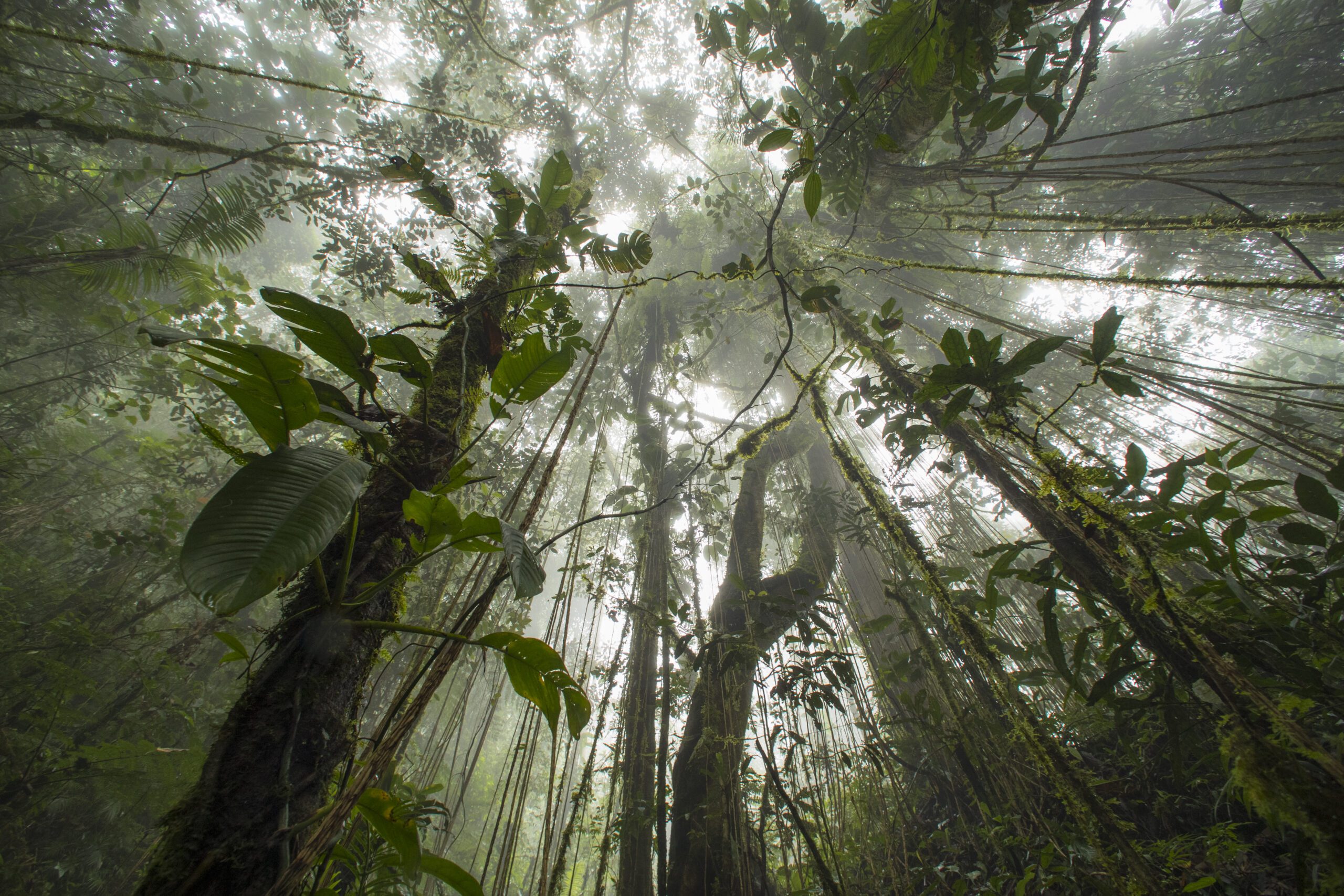
We call it paradise, because Papua and Maluku are like a piece of heaven that fell to earth, so we must protect it. Paradise is the forest and sea in Papua and Maluku that give us life, especially to the indigenous people of Papua and Maluku. It also serves as the biggest climate stabilizer currently in Indonesia and also the world, so it is an asset we should protect to sustain our lives in the long run.
Bustar Maitar, CEO of EcoNusa Foundation
Helping Partners in Indonesia
The Cornell Lab works alongside local partners who are leading the way in forest protection and education. Our role is to help amplify their efforts by providing tools and strategies that build conservation from the ground up.
These partnerships are helping local organizations tell their own stories, influence decision-makers, and inspire broader public engagement. The result is a growing network of regional leaders who are advancing conservation solutions rooted in science and local knowledge and sustained by community pride.
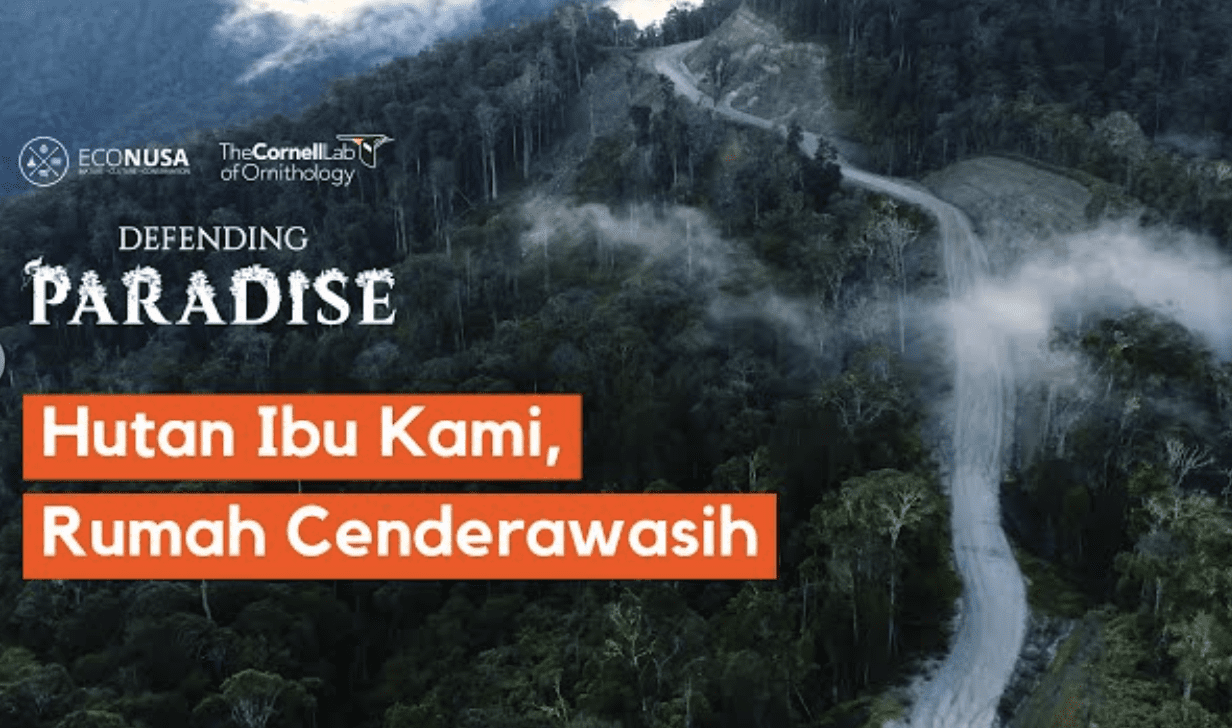
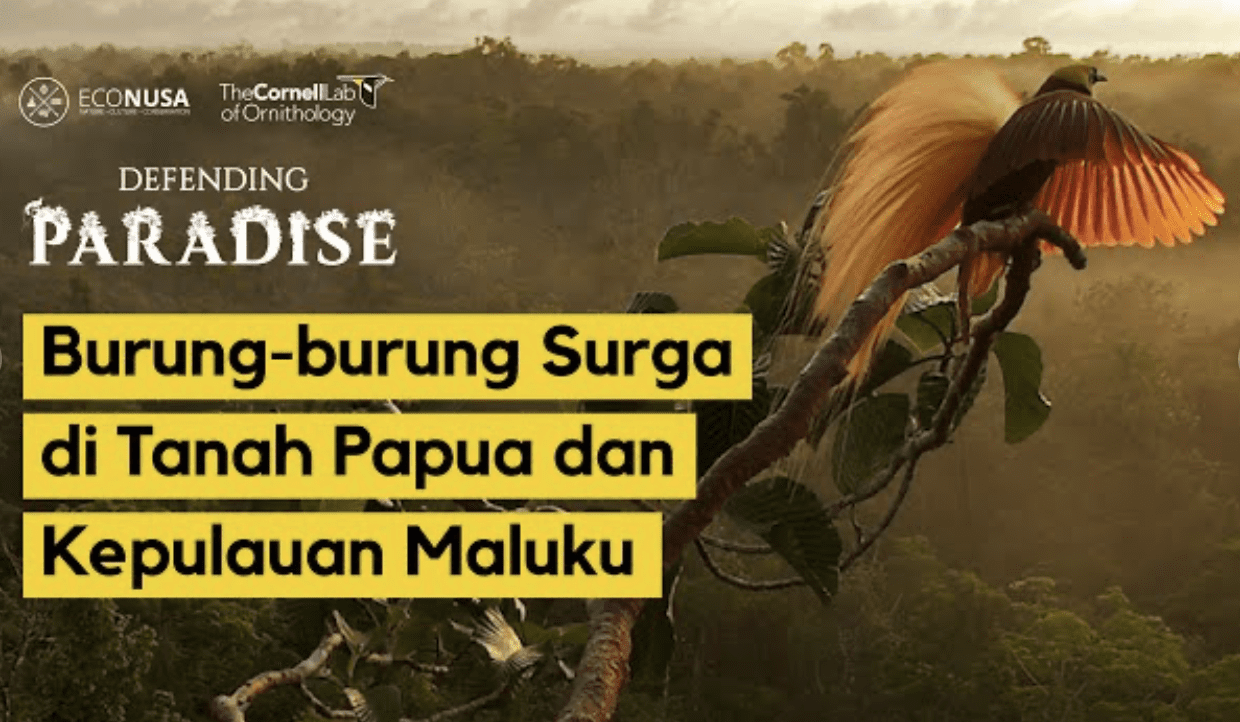
Forests and Human Health
The Cornell Lab of Ornithology produced two powerful videos helped make our events and online efforts stand out.
Dr. Nigel Sizer, Executive Director, Preventing Pandemics at the Source
Healthy forests and healthy people are deeply connected. Across the Indo-Pacific, communities that sustain tropical rainforests also sustain the ecosystems that regulate water, stabilize climate, and provide food and medicine. When forests are cleared or degraded, these natural protections weaken — increasing risks to human health through poor air and water quality, loss of nutrition, and the spread of infectious diseases.
Protecting forests is therefore not only an environmental priority, but a public health investment. In safeguarding forests, we also safeguard the foundations of human health, ensuring that both nature and people can continue to thrive together.
Our world as we know it is facing multiple existential threats. Greenhouse gas emissions are causing global warming and increasing the frequency and severity of floods, droughts, and heat waves. Habitat destruction, along with wildlife trade and consumption, are wiping out species essential to ecosystem resilience. On top of that scientists are warning us that deadly pandemics like Covid-19 will occur with increasing frequency.
Global leaders are struggling to address these three enormous and intertwined crises of climate change, biodiversity loss, and future pandemics. These are humanity’s most urgent challenges and yet we are overlooking a common solution that will help us solve all three at once – protecting our remaining intact forests. The world’s forests slow global warming by absorbing and storing carbon in their trees, soils, and peatlands. The carbon stored in today’s intact forests is equivalent to roughly 10 years worth of emissions caused by humans. Furthermore, intact forests absorb about one-fifth of the greenhouse gases that we emit annually. Keeping forests intact is essential to reaching the Paris agreement’s goal of preventing global warming from exceeding 1.5 degrees celsius by 2030. The vast majority of the world’s land-based species are found in forests. Species are often unable to subsist in the small fragments of forested land left behind after deforestation. Maintaining intact forests is therefore essential to avoid serious disturbances to the complex web of life.
Protecting forests will also help prevent the source of global pandemics –
the spillover of viruses from wild animals into humans. Nearly all global pandemics of the past century originated in wildlife. Most importantly, scientists overwhelmingly agree that animal-to-human spillover will be the most likely cause of the next pandemic. When people move into forested regions to clear land for agriculture and cattle rearing, to extract timber and minerals and to build roads and new frontier towns, they are increasing the probability of contact between humans and wild animals that may harbor new diseases. The risk is highest in tropical and subtropical areas where there is greater biodiversity. This can lead to the spillover of novel viruses, localized disease outbreaks, and potentially, the next global pandemic
It is clear that protecting remaining intact forests can mitigate the risk of three major crises – climate change, biodiversity loss, and emerging diseases. The good news is that effective and proven solutions to protect forests already exist – many of them spearheaded by local communities and indigenous peoples, who are the original guardians of these precious ecosystems. Our task now is to scale these solutions worldwide.
We can only do this by truly recognizing the value of these forests and mobilizing the money needed to enable governments, communities, and landowners to protect them. Forests are more than just tree-covered landscapes. They are complex networks of living and non-living elements, large enough to sustain entire ecosystem functions. If we fail to protect forests,
we do so at our own peril.
There is no backup plan – no alternative that can restore the many benefits that they provide. Forests are what stand between us and a future of unchecked climate change, biodiversity loss, and deadly pandemics. We must protect them for our planet, for our health, and for our children.
End of Transcript
A Crucial Turning Point
When the governors of Indonesian New Guinea (Tanah Papua) committed to protecting 70% of their forests, they charted a path for sustainable development unlike any other in Indonesia. But a new challenge emerged: the planned construction of a massive road network that could connect communities but also threaten the forests they rely on.
Our film, Tanah Papua’s Forest – A Turning Point, reveals the potential impacts of the Trans-Papua Highway — and how science, planning, and collaboration can still guide a different outcome.
At this juncture, the choices made will determine whether Tanah Papua’s forests continue to support biodiversity and society, or whether they will experience the same rapid deforestation seen elsewhere in Indonesia.
[Music] in 2018 the governors of tana papua’s two provinces committed to a sustainable development path that would strengthen the prosperity and well-being of indigenous peoples and protect at least 70 percent of its forests [Music] tana papua’s forests are more than just tree-covered landscapes they’re complex networks of living and non-living elements that support plants animals and cultures found nowhere else they provide life-sustaining services like food security and water availability while protecting people from natural disasters and climate change
through these forests a massive road network is being built at nearly 4 000 kilometers long the trans-papua highway is part of a national plan to connect and serve the people of tana papua however the highway also increases the risk that papaw’s forests will be converted from intact to degraded ecosystems with negative impacts on local communities biodiversity and carbon emissions
studies show that the development that follows road expansion can lead to hot spots of deforestation for example the expansion of roads in sumatra and borneo over the last 20 years supported the loss of as much as 25 of forest habitat with most permanently converted to commercial agriculture like oil palm in tana papua only two percent of forests were cleared during that same time period but with the highway nearing completion that rate is likely to change
the trans-papua highway passes through some of indonesia’s most rugged landscapes from coasts to forests to its highest mountains
in 2009 kenya was a roadless village surrounded by forest along the pomats river satellite records show that road construction first reached the village from the south by 2013 it had crossed the river into lorenz national park a protected unesco world heritage site the road cut through the park’s fragile alpine ecosystems on its way to connect with towns in the north by 2020 another segment arriving from the east was nearly complete as the highway continues to expand so does the urban footprint of kenya and other villages along the route since 2000 in tana papua new roads and growing towns accounted for 15 of forest loss a total of more than 115 000 hectares [Music] during the same time period 120 000 hectares were cleared for industrial logging in the bomberai peninsula alone a dense logging network led to the loss of over 52 000 hectares
while many of these networks are temporary their scale is extensive and the vast uncut forests that remain within lands already slated for logging are at a high risk of degradation or loss
[Music] but the single greatest driver of permanent forest conversion during this 20-year period with industrial agriculture especially oil palm as seen in sumatra and borneo there is a clear correlation between road construction and the expansion of plantations today all of tana papua’s palm oil industry is located within 35 kilometers of the highway palm plantations account for 27 of total forest conversion
in 2010 roads built near the town of tamika paved the way for the construction of new plantations by 2014 plantations near the road were already extensive but without a bridge to improve access forest along the western front remained intact two years later with a bridge in place previously forested land had been almost completely converted to oil palm [Music] elsewhere the scale of conversion into industrial plantations is even larger southeastern papua is home to over 100 000 hectares of plantations including some of the biggest oil palm projects in indonesia with over a million hectares of forest licensed for future conversion to oil palm or pulpwood
tana papua’s forests and the future of its sustainable economy are at a turning point as of 2021 forest loss over the last 20 years has been limited but as seen in other parts of indonesia deforestation driven by unmanaged road development could be extensive if tana papua follows a similar path then it could experience a six-fold increase in forest loss over the next 15 years data-driven models accounting for factors like topography roads and existing concessions have identified areas at the highest risk of future loss together these deforestation hot spots are predicted to exceed 4.5 million hectares an area larger than switzerland this loss would undermine the commitment to protect tana papua’s unique biological and cultural heritage and it would come at a time when rates of tropical deforestation must not only be slowed worldwide but reversed to avert the worst impact of climate change
infrastructure initiatives like the trans-papua highway can benefit local communities by providing access to new development opportunities but the current path is rapidly opening tana papua to large-scale industrial projects at odds with international and local commitments to sustainable development and reversing forest laws
with careful coordination and planning roads and infrastructure can bring economic growth while advancing sustainability goals and increasing the well-being of the forests and the people of Tana Papua.
End of Transcript
Prosperous Communities, Sustainable Forests
When local leadership shapes global climate solutions.
At the United Nations Climate Conference in 2023 (COP28), the story of Tanah Papua reached a global audience. Our film, co-produced with in-country partner the Rekam Nusantara Foundation, showed how Indigenous leadership and locally driven forest protection can define a new model for economic and climate resilience.
This film was made possible through the generous support of the Mastro Foundation. It was a presentation of the Government of the Republic of Indonesia, the Provincial Government of West Papua, and the Provincial Government of South-West Papua.
The world’s largest tropical rainforests are in the Amazon, the Congo Basin and the Indo-Pacific.
Half of the remaining intact rainforest in the Indo-Pacific is within Indonesia, with most in Indonesian Papua.
Charlie Heatubun:
My first time going into the forest was when I was in 5th grade.
The temperature and atmosphere felt comfortable.
I heard birds singing and insect sounds. It was very calming.
Entering the forest felt like a different world.
Charlie Heatubun:
Indonesia is at the forefront of efforts to control climate change.
In recent years, we have succeeded in reducing emissions from the two main causes of deforestation and forest degradation.
Papua’s forests are very unique and serve essential functions for human life on planet earth because of their role in carbon sequestration, photosynthesis, and oxygen production.
And of course, these forests are closely connected to the culture and living needs of Indigenous People in Papua.
Muhammad Musa’ad:
I would like to convey to everyone, both in Indonesia and internationally, that in the middle of this vast world, there is still an island … the vast island of Papua, which today has 6 provinces, with biodiversity and fauna …. both on land and at sea.
Deasy Natalia Lontoh:
The leatherback turtles that lay eggs in Papua have a wide geographical range. Their feeding areas are in the Americas, the South China Sea, the central Pacific, Australia, and New Zealand.
Papua is home to many leatherback turtles, about 75% of their nesting activity is here.
Sebedius Siyoho:
Mangrove forests are important for local communities …mangroves protect crabs, fish, and other creatures like shellfish and snails.
Obaja Kalami:
There are parrots, there are cockatoos, there are birds of paradise, there are crowned pigeons…That’s what is unique here.
Benny Mambrasar:
So there are not just one or two bird-of-paradise species. There are 38 species in Papua.
Daniel Kalami:
For me, it’s very beautiful. The beauty first comes from their sounds, then the beauty continues with their feathers when they dance. – That’s what makes it beautiful.
Muhammad Musa’ad:
More than 80% of Papuan people live in interior areas, including remote areas of the forest. So nature becomes part of people’s lives.
Aldri Erwin Lagu:
For me, forests, seas, and land are very important.
The forest is like a mother, someone who gives me food and water.
The importance of the forest, land, and sea, they are everything to us.
Charlie Heatubun:
Currently, the most pressing global problem is related to climate change – especially global warming.
However, if we understand the local knowledge and culture of the people in Papua, we can avoid these things by following their way of life.
They take just enough natural resources to ensure that they can properly take care of their future needs.
Yanuarius Anouw:
The communities in Papua are always committed to protecting natural ecosystems.
Starting with the soil, they maintain the fertility of the land, and after that, the forest ecosystem.
Amos Kalami:
Take care of the forest, take care of the wood, sake care of the birds.
We have a commitment known as “Egek.”
“Egek” means we only take what is needed and let nature recover by itself.
Yunita Debi Ahoren:
As a woman, I believe that the forest is our life.
We don’t just live on the land; our life comes from the forest.
From the forest we can breathe, and we can move.
We’re powerless without the forest.
The forest is our life, and our life is the forest.
Benny Mambrasar:
We don’t want just us and our parents to enjoy nature, while future generations can’t experience it.
They would miss out on the beauty of nature.
We must be proud to have a country with extraordinary natural wealth.
As children of the nation, let’s take advantage of this opportunity to protect forests and nature.
Muhammad Musa’ad:
Papua in general has extraordinary potential…
and what is very important is the strong commitment of its people, especially indigenous communities and also regional governments, to be able to protect our environment, safeguard the wealth that God has bestowed on us.
For this reason, I invite all people in the world to contribute to protecting Papua for the future of the global community, not only Indonesia.
Charlie Heatubun:
There’s a saying that goes: “sustainable forests, prosperous communities.”
However, for us in West Papua, it’s the opposite: “prosperous communities, sustainable forests.”
We all live in the same country and on same planet. It’s important to know that what we do will affect the quality of life for people everywhere.
If Papuan communities are prosperous, forests are sustainable, our country will also be prosperous. This can be a good example for other countries, that we carry out the noble duties for the welfare of future generations.
The important thing is our unwavering commitment and motivation to collaborate. Big things cannot be achieved alone. The most important factor is our strong will to work together and move forward collectively.
End of Transcript
Turning Momentum into Protection

In 2024, a landmark gathering at New York Climate Week brought global attention to the accelerating momentum behind forest conservation in the Indo-Pacific. Leaders from Indonesia and international partners came together to highlight a growing alliance — one that links Indigenous land stewardship, biodiversity protection, and sustainable development across the region’s vast rainforests.
Hosted by the Cornell Lab of Ornithology and partners, the event celebrated measurable progress on the ground: locally led forest management initiatives, emerging conservation economies, and new commitments from governments and global organizations. Among the milestones facilitated by this gathering was the creation of Indonesia’s 57th national park, a major step forward in protecting one of the world’s most biologically rich tropical landscapes.
This milestone moment built on more than a decade of collaboration. Since the release of the Cornell Lab’s Birds-of-Paradise Project in 2012, research and media have worked to elevate the voices and knowledge of local communities. What began as a quest to understand one of our most spectacular bird groups has evolved into a long-term conservation movement — one now shaping a more hopeful future for forests, wildlife, and the people who depend on them.

Indonesia has done something really remarkable…if other great forest nations had behaved in the manner that Indonesia has, then the whole discussion we’re having here across climate would be very different.
Lord Zac Goldsmith, Senior Fellow Bezos Earth Fund
I’m incredibly grateful that Indonesia’s achievements are being acknowledged on such an important platform.
Prof. Dr. Ir. Siti Nurbaya, Minister for Environment and Forestry, Republic of Indonesia
This event was hosted by the World Resources Institute, International Union for the Conservation of Nature and the Cornell Lab of Ornithology in partnership with the Climate and Land Use Alliance, the EcoNusa Foundation, the Rekam Nusantara Foundation and the Provincial Government of West Papua.
During the event, Rekam Nusantara premiered their film (a Cornell Lab co-production) on the cultural importance of forests.

What’s Next for the Birds, Forests, and People
The Cornell Lab continues to deepen its partnership with communities and conservation organizations to support landscape-scale forest protection in the Third Largest Rainforest. Building on Indonesia’s declining deforestation rates and the establishment of new protected areas, our work focuses on elevating Papua’s forests and biodiversity on both national and international stages.
A flagship effort is the proposed “Crown Jewel of Papua” (CJP) sustainable development and conservation landscape. At roughly 2.3 million hectares (about the size of New Jersey), establishing this landscape is a key step toward ensuring 70% of Papua’s forests remain protected. The CJP aims to be one of Southeast Asia’s largest protected areas while modeling how conservation and development can work together to improve Papuan wellbeing and help Indonesia achieve its national climate goals.
In partnership with the Rekam Nusantara Foundation, the Cornell Lab is developing a short film series and documentary miniseries for Indonesian national television that use birds-of-paradise, cassowaries, and hornbills as ambassadors for forest conservation. These films showcase how these remarkable birds function as forest architects, dispersing seeds and maintaining ecosystems that sustain both wildlife and human communities. By following Indonesian researchers and local forest guardians, the project creates authentic stories where conservation emerges naturally from celebrating Papua’s natural treasures.
These media resources will support the CJP initiative across local and global scales, ensuring Papua’s Crown Jewels receive the long-term recognition and protection they deserve.
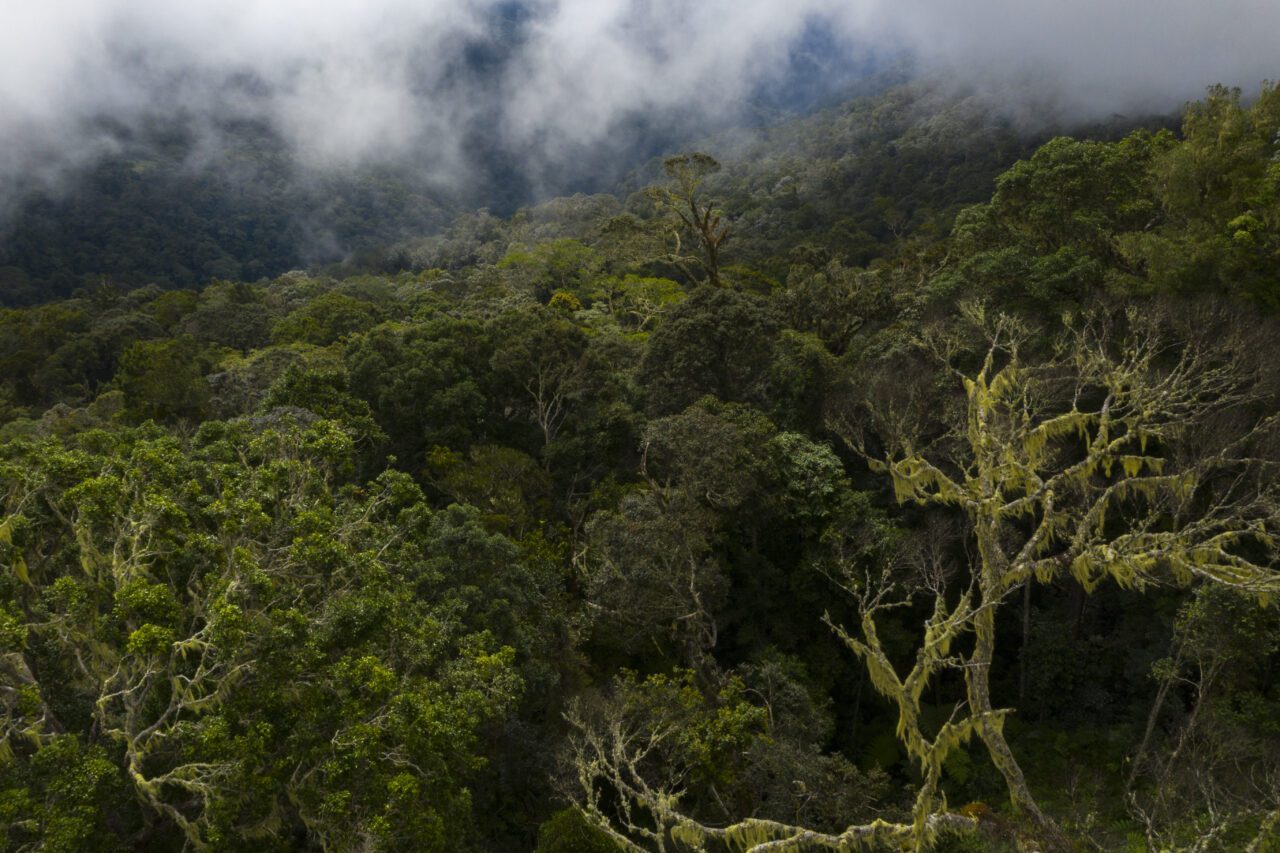
For us, our life is glorious because of the green. Our happiness and our life depend on nature. Our life depends on the forest. All animals, plants, and water are part of nature created by God. Therefore, all of the voices coming from nature are worshiping God. Because they are part of nature, birds-of-paradise voices sing for the greatness of God.
Ondoafi Gustaf Toto, Oldest Customary Leader in Necheibe Village, Papua