
Feeder Types
Selecting the right feeder
The
easiest way to attract birds to your yard is to put up a bird feeder.
There are many different ones on the market today. Most are made for
seeds, but there are also specialty feeders for certain foods, such as
sugar solution for hummingbirds, suet, or peanuts. Which should you
choose? The answer depends on the kinds of birds you want to attract.
We'll show you the major feeder types and describe their benefits and
shortcomings. Keep in mind that each style of feeder comes in a variety
of models and sizes. Quality varies too—the ideal bird feeder is sturdy
enough to withstand winter weather, tight enough to keep seeds dry,
large enough to avoid constant refilling, and easy to assemble and
clean. Plastic or metal feeders usually beat wooden ones in meeting all
these requirements.
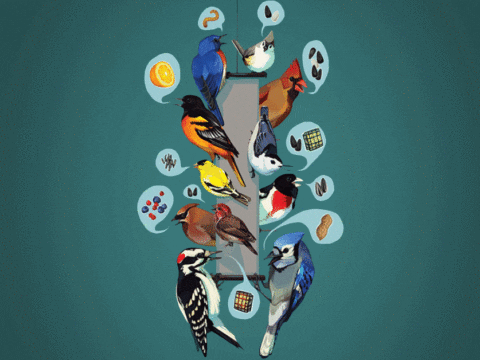
If you want to attract the greatest variety of birds to your yard,
you'll want to use several different feeder types offering a variety of
foods (see our Choosing Bird Food section). Alternatively, you may want
to attract certain bird species, but dissuade others. The following
information will help you make the correct feeder choice.
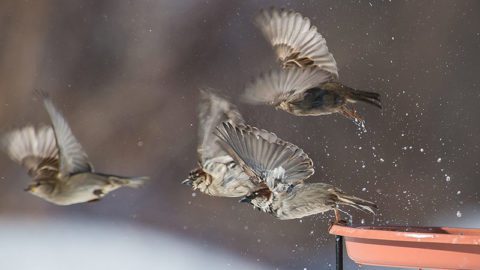
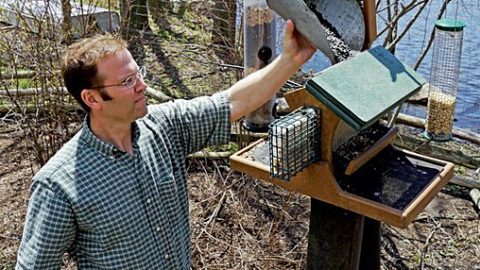
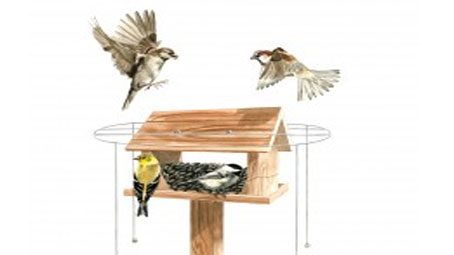
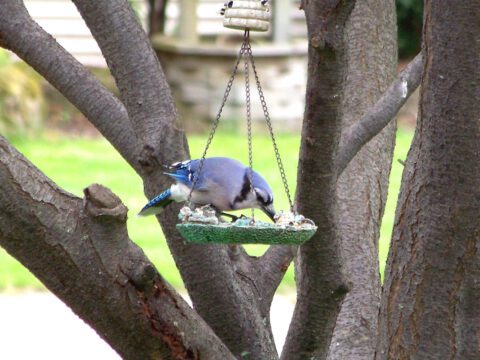
Tray or Platform Feeder:
Any flat, raised surface onto which bird food is spread.
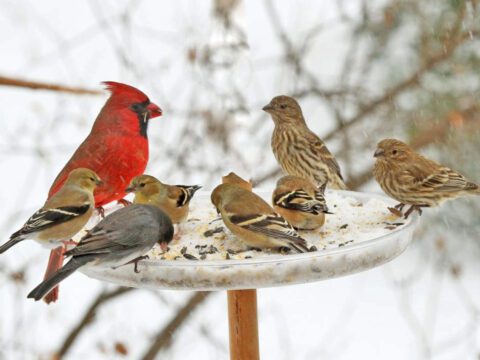
Trays attract most species of feeder birds, but they offer no
protection against squirrels, chipmunks, rain, or snow. Plus the seed
can quickly become soiled by droppings because birds stand right on top
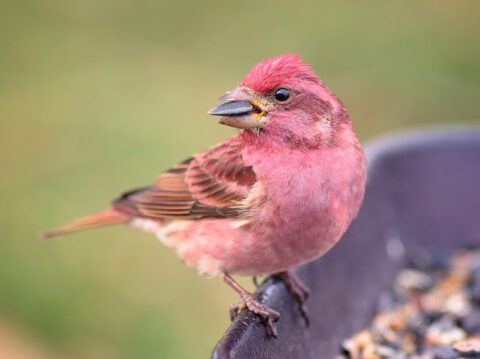
of it. Tray feeders placed near the ground are most likely to attract
ground-feeding birds such as juncos, doves, jays, blackbirds, and
sparrows. Tray feeders work well mounted on deck railings, posts, or
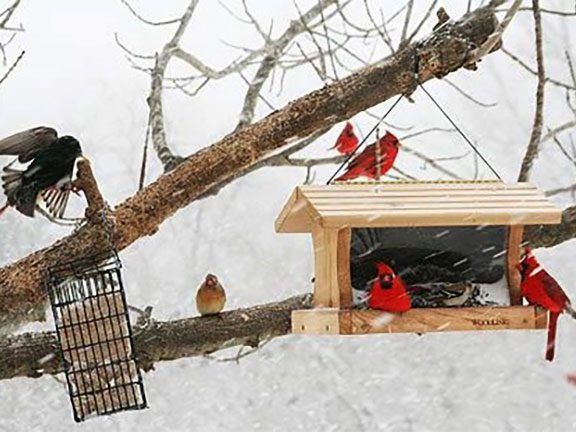
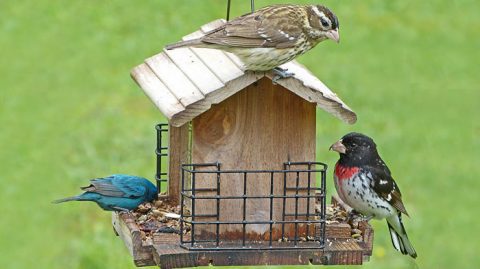
stumps, and also can be suspended. Some models, like the one above,
have a roof to provide some protection from the weather. Be sure your
tray feeders have plenty of drainage holes.
Hopper or House Feeder:
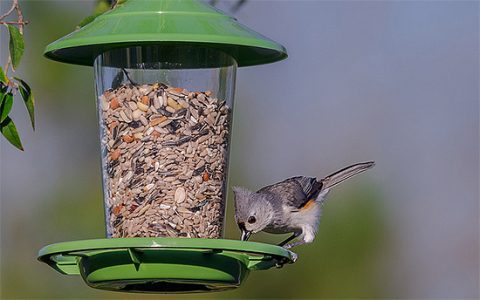
Platform with walls and a roof, forming an enclosed "hopper."
This type protects seeds fairly well against the weather, but less well
against squirrels. It also keeps seed cleaner. Hopper feeders are
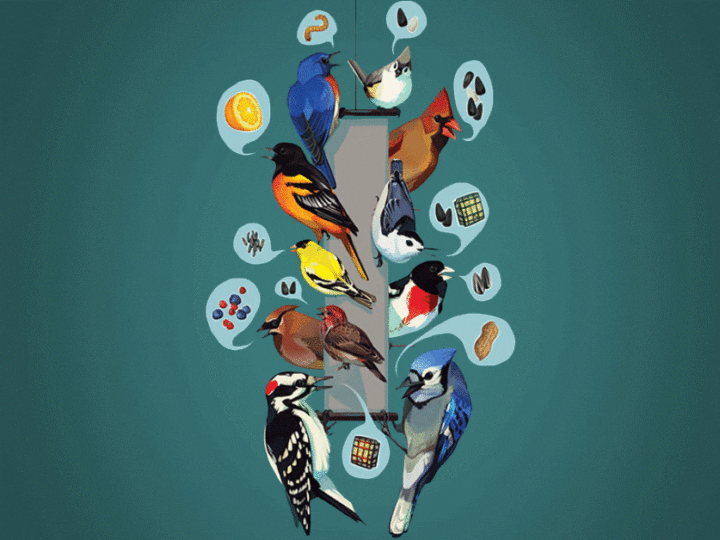
attractive to most feeder birds, including finches, jays, cardinals,
buntings, grosbeaks (at right is a Rose-breasted Grosbeak male),
sparrows, chickadees, and titmice. Most hoppers hold a good quantity of
seed. Few are weatherproof, however, so the food may get wet and moldy
if it sits for a few days. Hopper feeders can be mounted on a pole or
suspended.
Window Feeder:
Usually made of clear plastic and suction-cupped to a window.
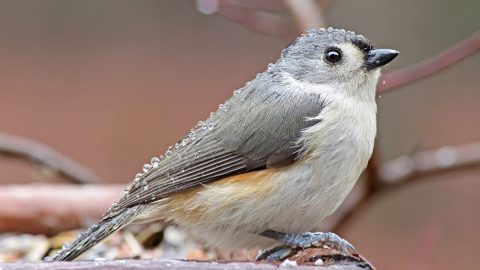
This type of feeder attracts finches, sparrows, chickadees, and
titmice, allowing close-up views of the birds as they come to feed. Be
aware, though, that the birds feed while standing on a pile of seeds
inside the feeder, so the food risks becoming soiled.
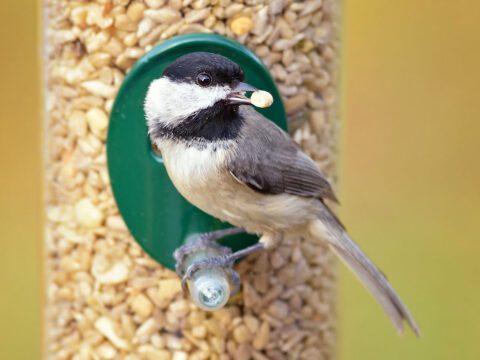
Tube Feeder:
Hollow cylinder, usually of clear plastic, with multiple feeding ports and perches.
Tube feeders keep seed fairly clean and dry, and if they have metal
feeding ports they are somewhat squirrel resistant. The birds attracted
depend on the size of the perches under the feeding ports: short
perches accomodate small birds such as sparrows, grosbeaks, chickadees,
titmice, and finches (such as the familiar House Finch), but exclude
larger birds such as grackles and jays. Styles with perches above the
feeding ports are designed for seed-eating birds that like to feed
hanging upside down such as goldfinches, while dissuading others.
Thistle Feeder:
Special tube feeder designed with extra-small openings to dispense tiny thistle seeds.
Thistle is also known as nyjer or niger (for more information go to our
Seed Types page). These feeders attract a variety of small songbirds,
especially finches and redpolls. Thistle "socks"—fine-mesh bags to
which birds cling to extract the seeds—are also available.
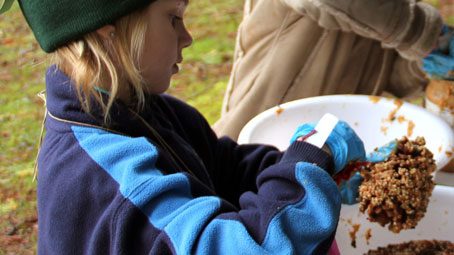
Suet Feeder:
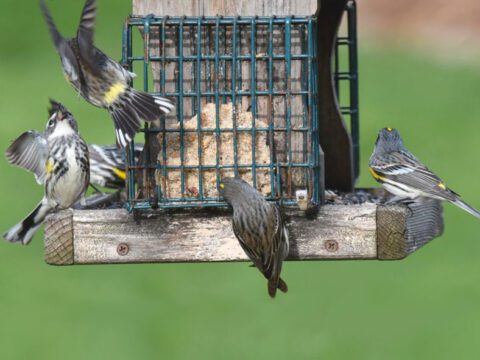
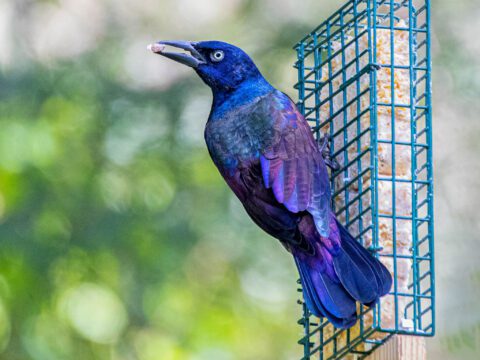
Wire-mesh cage or plastic-mesh bag, such as an onion bag, which holds suet or suet mixture.
This type of feeder can be nailed or tied to a tree trunk. It can also be suspended. Suet can also be smeared into knotholes.
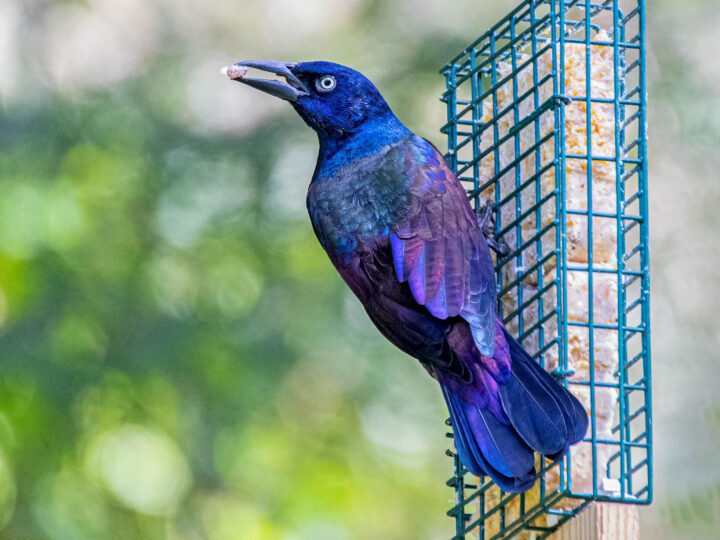
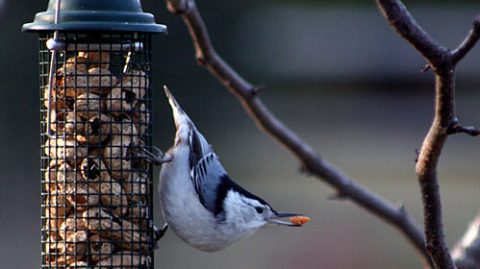
Suet feeders attract a variety of woodpeckers and nuthatches, as well
as chickadees, titmice, jays, and starlings. Suet cages that are open
only at the bottom are starling-proof; they force birds to hang upside
down while feeding, something starlings find difficult.
In the photograph at right, a Downy Woodpecker (left) and Hairy Woodpecker (right) visit a suet feeder.
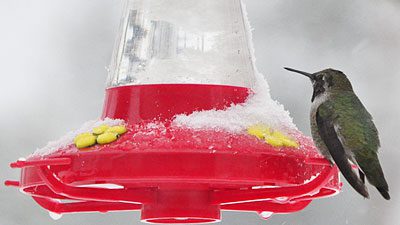
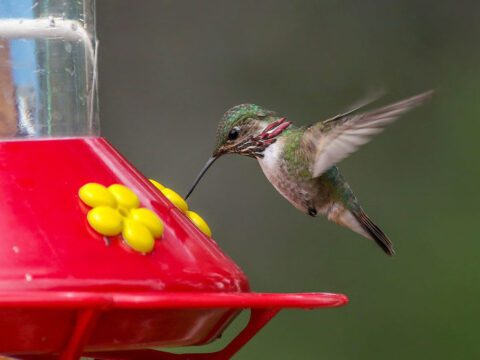
Hummingbird Feeder:
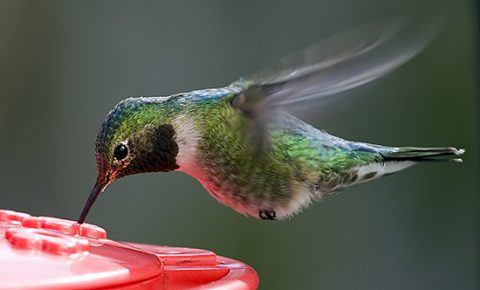
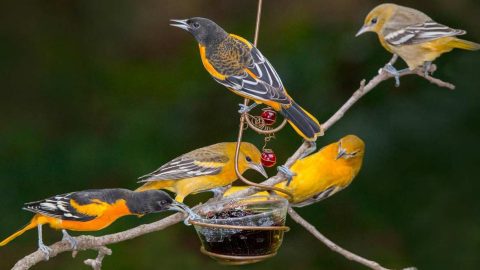
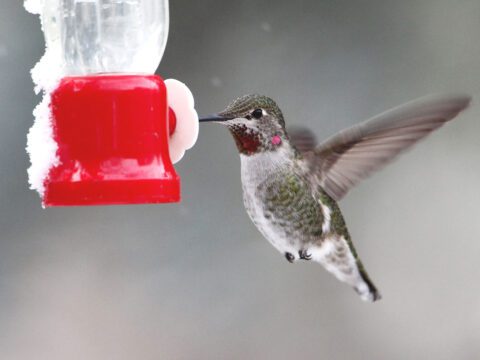
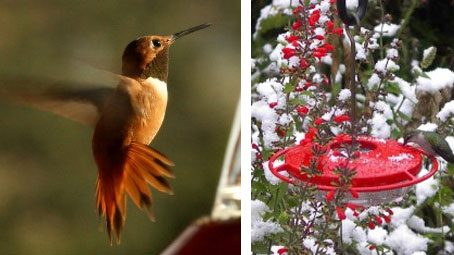
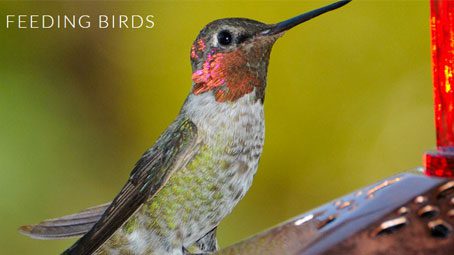
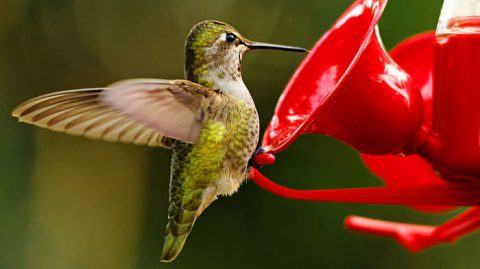
A container to hold artificial nectar or sugar solution; may be bottle or saucer style.
The bottle or tube type of hummingbird feeder is usually made of glass
or plastic, often with red plastic flowers and bee-guards (little
plastic screens that keep insects away from the sugar solution) on the
feeding ports. Saucer types are usually plastic.
Make sure the feeder is easy to take apart and clean, because it should
be washed frequently. For example, the fill hole should be large enough
for you to reach in while cleaning. See our Feeder Maintenance page for
more details.
You can make your own hummingbird feeder with a bottle, rubber cork,
and the drinking tube from a pet hamster water bottle. The color red
attracts hummingbirds, so paint the feeding port with red nail polish
or tie red ribbons to the feeder.
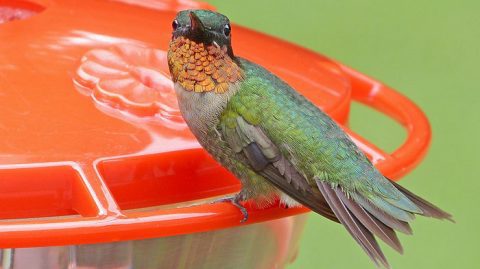
Saucer-shaped hummingbird feeders have feeding ports in the top, making
them bee-and wasp-proof. See our Feeder Pests and Predators: Insects
page for more about insect invaders.
Saucer feeders are better than bottle feeders in direct sunlight.
Bottle feeders tend to leak in the sun—air trapped in the top of the
bottle expands as it warms and pushes the nectar out. In fact, you
should avoid locating your hummingbird feeder in direct sun—it causes
the sugar solution to spoil rapidly.
To make your own hummingbird nectar, go to our Hummingbirds and Nectar page for a recipe.
Project
FeederWatch is a winter-long survey of birds that visit feeders at
backyards, nature centers, community areas, and other locales in North
America. FeederWatchers periodically count the highest numbers of each
species they see at their feeders from November through early April.
FeederWatch helps scientists track broadscale movements of winter bird
populations and long-term trends in bird distribution and abundance.
You are invited to join us as we study North America's feeder birds. Visit the Project FeederWatch Web site for the details.