

Why do woodpeckers like to hammer on houses? And what can I do about it?
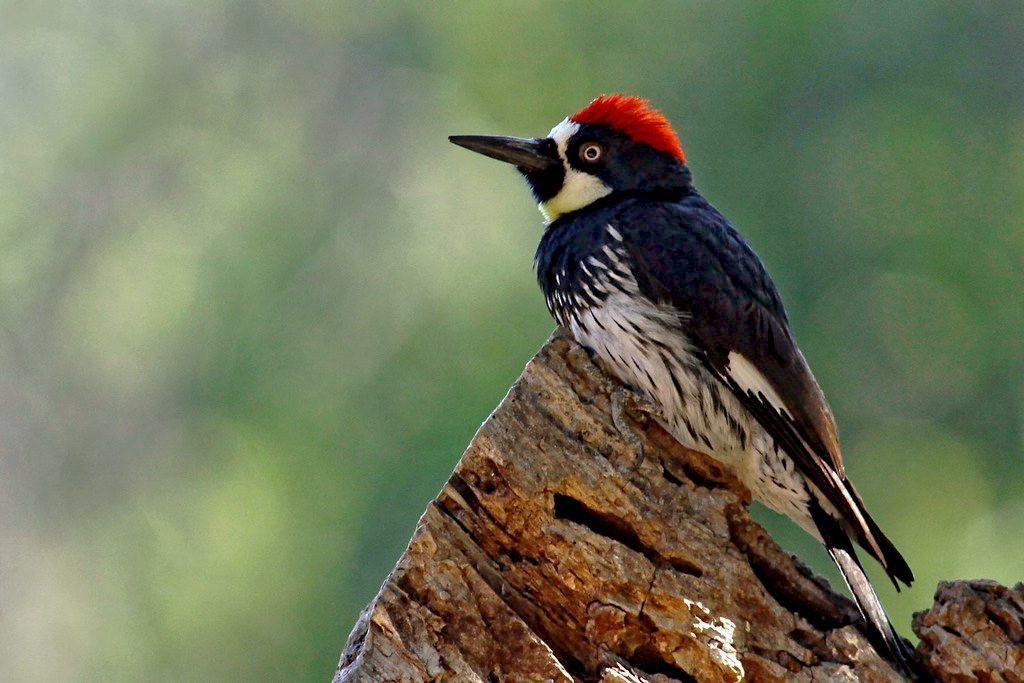
Woodpeckers usually hammer on houses for one of four reasons:

- Because it makes a loud noise that proclaims the bird’s territory and attracts a mate. If the birds are drumming for these reasons, they will most likely stop once breeding has begun in the spring (loud drumming is not related to looking for food).
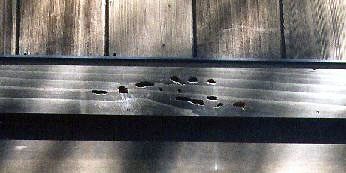
- Because the bird wants to excavate a nest or roost hole. If the woodpeckers are creating a nest cavity, the hole will be smoothly rounded and large. Nesting holes are usually built in the beginning of the breeding season between late April and May. If you need to evict woodpeckers from your home, aim to do so either before or after the nesting season.
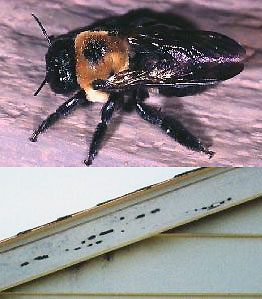
- Because it is feeding on insects living in the siding. If the birds are looking for insects, the holes will be small and irregular. You may have to call an exterminator to get rid of the underlying insect problem. When feeding on houses, woodpeckers are often going after the larvae of carpenter bees, leafcutter bees, and grass bagworms.
- Because they are storing food. If you are located in the West, Acorn Woodpeckers peck dozens, hundreds, or even thousands of acorn-sized holes into large trees, utility poles, and sometimes houses. They stash a single fresh acorn into each one.
How to get woodpeckers to leave a house alone
Once you know why woodpeckers are hammering on your house, you can develop strategies for stopping them. Researchers at the Cornell Lab of Ornithology have studied woodpecker damage to houses to develop recommendations.
What Attracts a Woodpecker to Your House?
A 2009 study of more than 1,000 houses in Ithaca, New York, found that roughly one-third of houses had some kind of issue with woodpeckers (either physical damage or disturbance by noise). A house’s siding type played a key role in woodpecker damage, with grooved plywood siding more likely to be damaged than other siding types; and earth-tone-stained houses were more likely to be damaged than houses painted in brighter colors.
How to Keep Woodpeckers Away
A 2007 study, tested the efficacy of six common long-term woodpecker deterrents: life-sized plastic owls with paper wings, reflective streamers, plastic eyes strung on fishing line, roost boxes, suet feeders, and a sound system broadcasting woodpecker distress calls followed by the call of a hawk. The streamers’ shiny coating and movement in the wind kept woodpeckers at bay and completely eliminated damage at half of the 16 test sites. Plastics owls and distress calls may work at first, but after a while the woodpeckers get used to them and go back to their old habits. Bottom line: the researchers reported that nothing deterred woodpeckers all the time, and only streamers worked with any consistency.
Additional methods: Homeowners have reported some success deterring woodpeckers with windsocks, pinwheels, helium balloons (shiny, bright Mylar balloons are especially effective), strips of aluminum foil, or reflective tape. Other people keep woodpeckers away by covering an affected area with burlap or attaching bird netting (the kind designed for gardens and fruit trees) from overhanging eaves to the siding. If you use netting, make sure it is taut and set at least 3 inches from the siding to avoid birds pecking through it. Close off openings on the sides to prevent birds from becoming trapped between the netting and the house.
You may also want to plug the holes with wood putty to discourage further activity. If a woodpecker has dug a roost hole into your house, make sure there are no birds inside before sealing it up.
Please don’t use sticky “repellents,” such as Tanglefoot Pest Control, Roost-No-More, or Bird Stop. These types of products can fatally trap or injure birds and other animals.

All About Birds
is a free resource
Available for everyone,
funded by donors like you
American Kestrel by Blair Dudeck / Macaulay Library