Palouse Land Trust
Why Bird Conservation?
For Lovina Englund, executive director of Palouse Land Trust (PLT), bird conservation serves as a natural anchor point for broader conservation efforts. She has found there is considerable joy around the topic in the community, with many allies eager to support bird conservation initiatives. By thoughtfully framing the narrative around the challenges facing bird species, PLT has developed an effective way to channel people’s passion toward tangible land conservation work.
PLT first experimented with this approach through a small grant project in 2022. Initially, Englund expected the project would be led by a “birdy” staff member, but when that person left PLT midway through the grant period, she turned to a different resource. Drawing on longtime PLT members who are also bird enthusiasts, she found the guidance and support needed to keep the project moving forward. As Englund notes, “Bird enthusiasts are among us everywhere.”
With a focus on community engagement and outreach around a bird species in decline, PLT’s grant project included a targeted mailing to private landowners and an educational event. Through outreach about Lewis’s Woodpecker, PLT sought to engage landowners in stewardship, restoration, and preservation of critical habitat for the species.
Spotlight Resources: Collaborative Partnerships, eBird
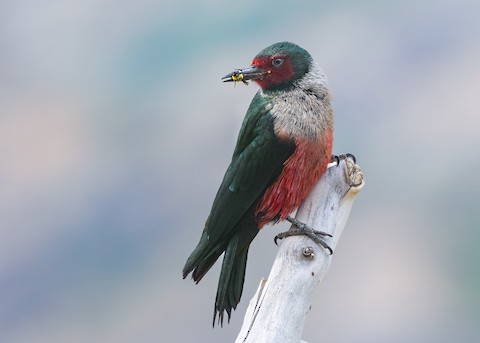
The Lewis’s Woodpecker is listed as a Yellow Alert Tipping Point species, with an estimated global breeding population of 82,000 individuals. According to the 2023 state-level eBird summary for the state, about 20% of the total population of the species breeds in Idaho—making it a critical location for conservation of Lewis’s Woodpecker.
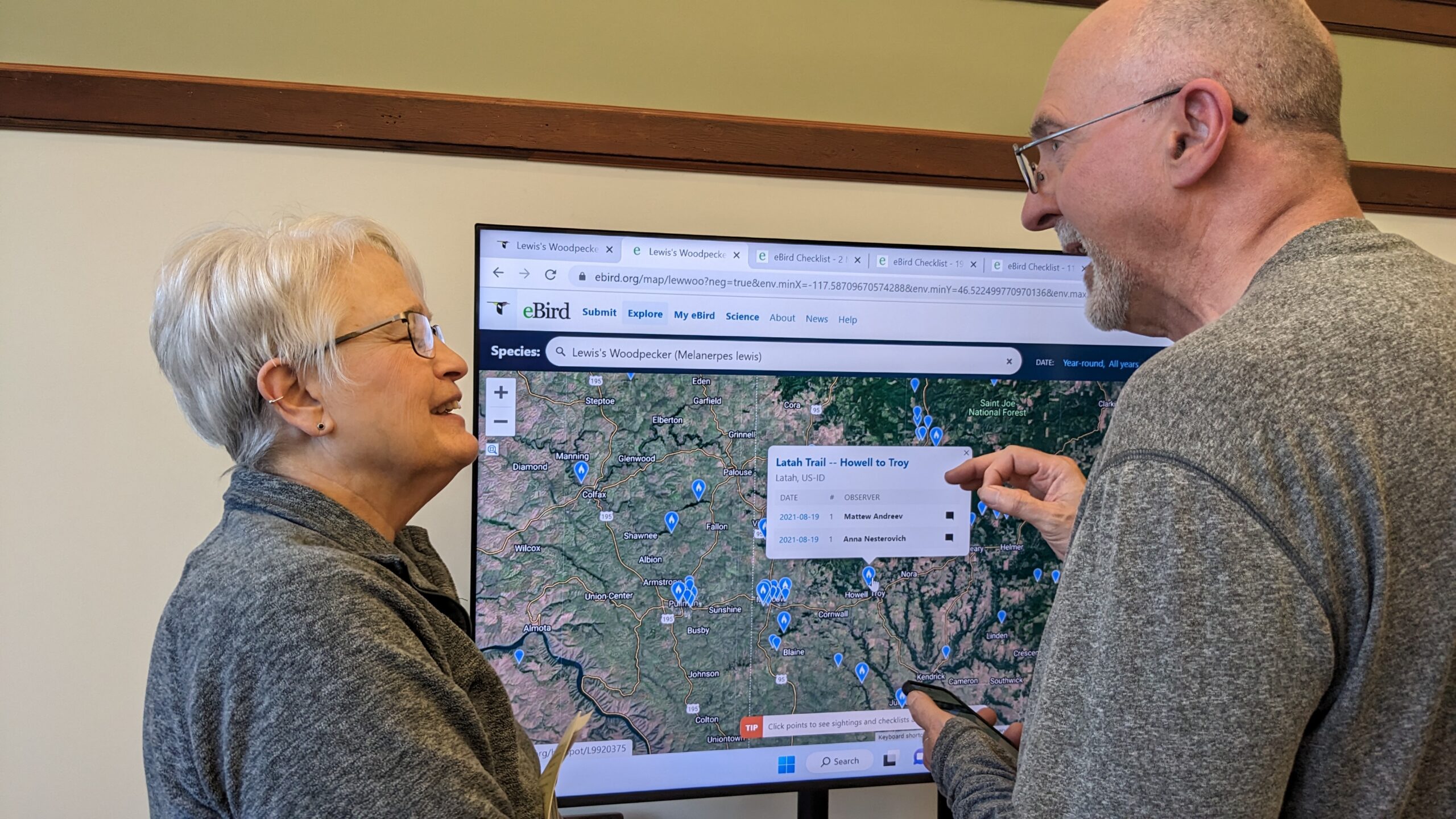
Aware of this conservation need, PLT set out to identify potential habitat for Lewis’s Woodpecker in its service range of Latah County, Idaho. PLT staff created a GIS map with overlays of county parcel data and Lewis’s Woodpecker sightings submitted to eBird, ultimately targeting 927 private landowners with an educational mailing about the species.
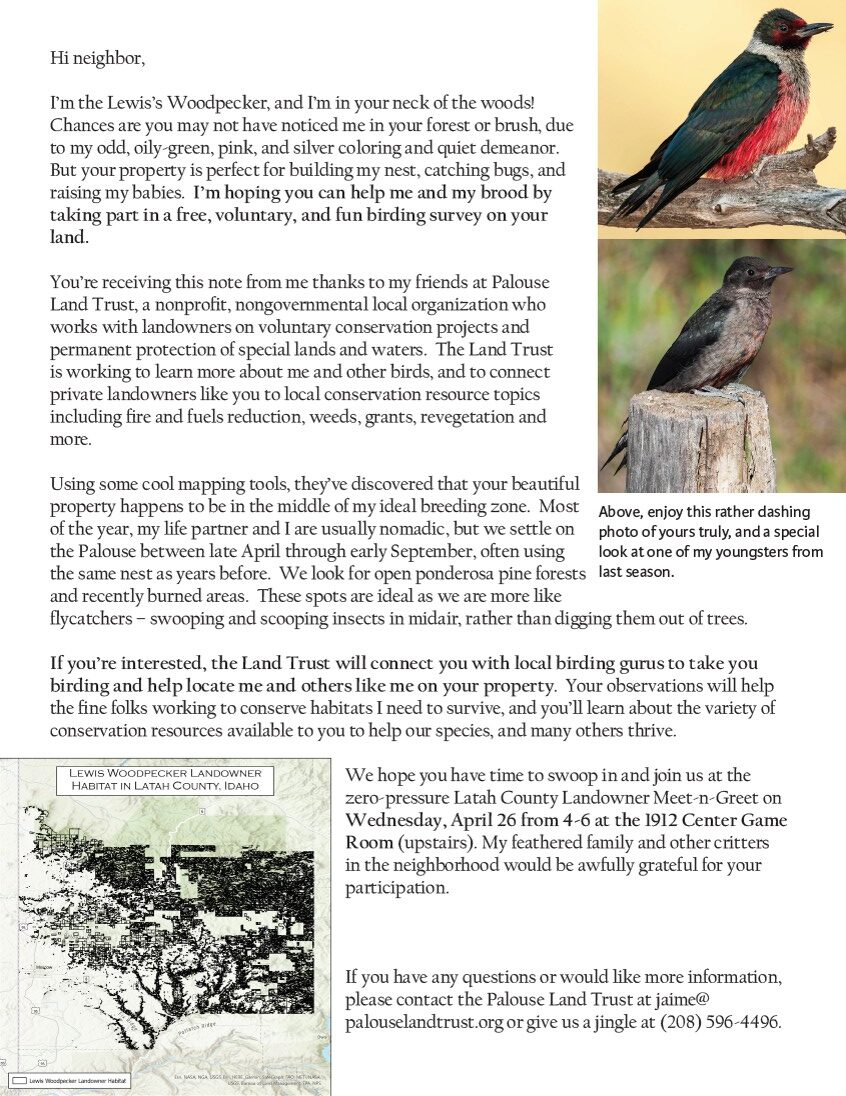
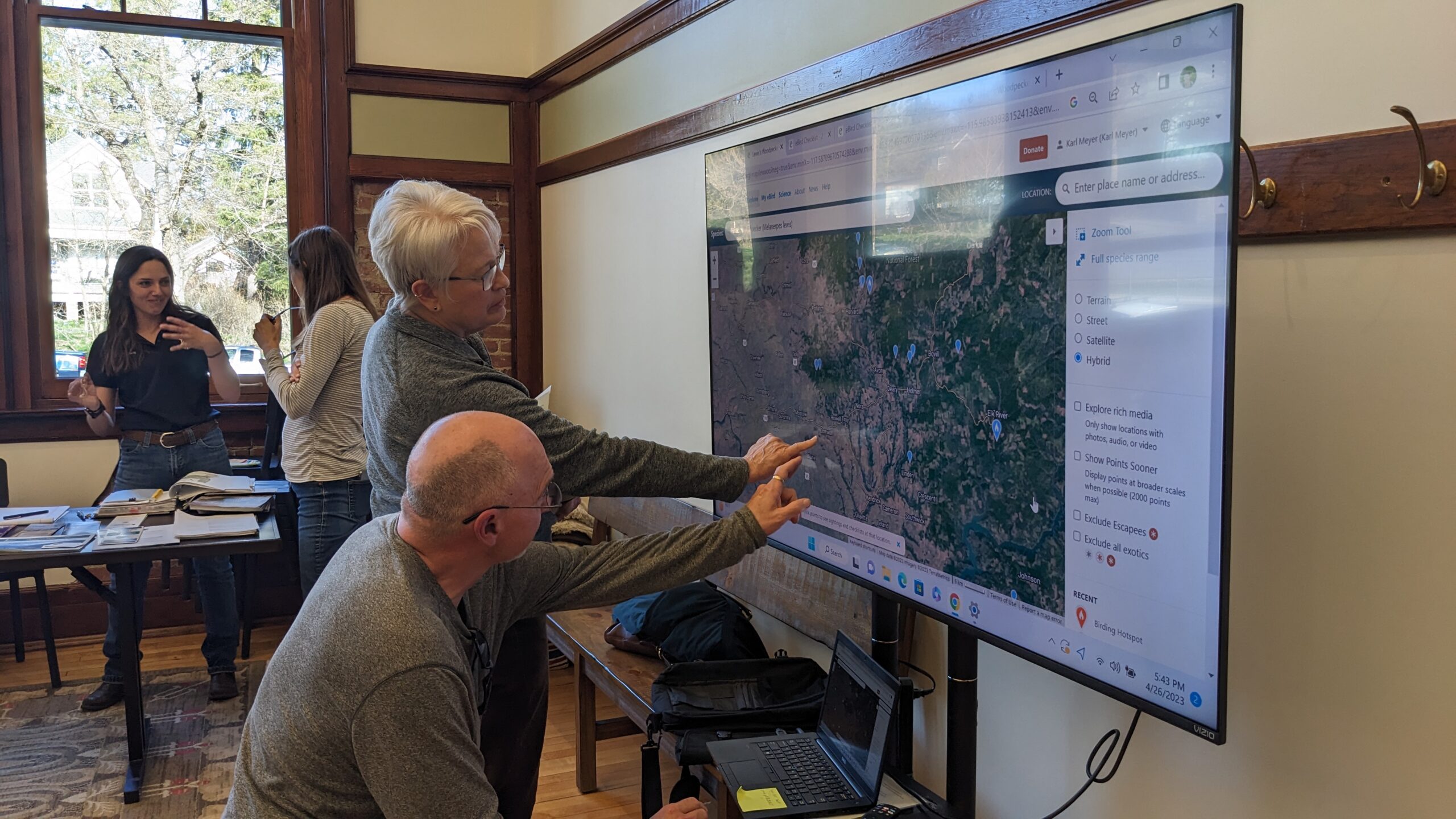
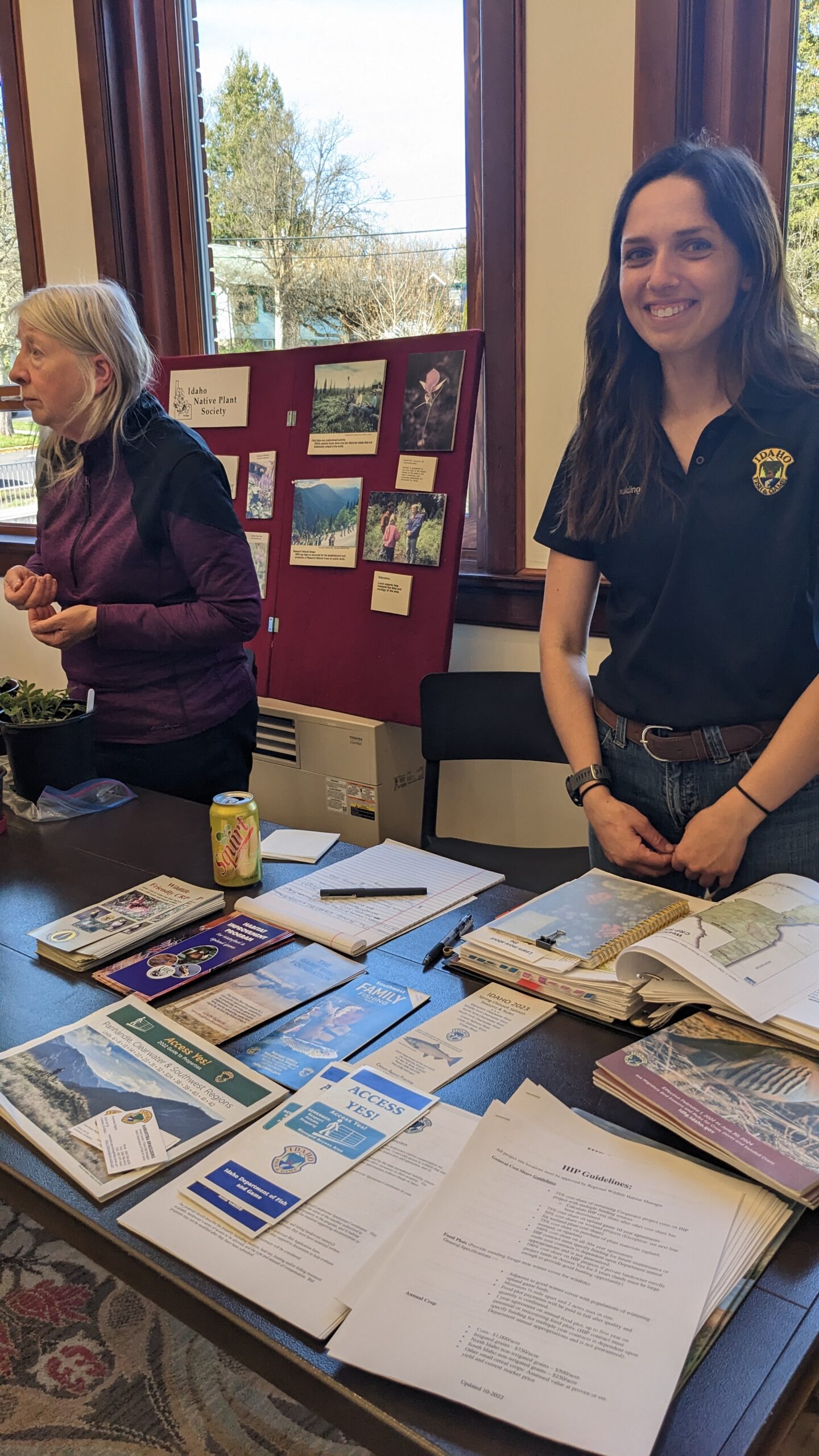
The mailing included an invitation to a resource-roundup workshop hosted by PLT, which was attended by about 50 landowners, technical service providers, and conservation partners. Partners included Idaho FireWise, Idaho Native Plant Society, and the Latah Soil and Water Conservation District, and the event helped connect landowners with on-the-ground conservation expertise and funding opportunities.
PLT also partnered with the Palouse Chapter of the Audubon Society to host a hands-on birding event at the Olson Family Conservation Preserve, a private property protected by the land trust. This event focused on identifying local bird species, including Lewis’s Woodpecker, and introduced participants to local land conservation efforts and the importance of wildlife habitat protection.
Making the Connection
Our small grant project had big ripple effects.
Lovina Englund
Englund notes that it’s often difficult to quantify the impacts of projects like this, but the land trust continues to receive inquiries from landowners who received the targeted mailing from PLT.
The concrete results are compelling: five to seven landowners from the original mailing are now actively pursuing land conservation projects with PLT. This has led to a significant shift in PLT’s approach to land protection. “Before this small grant project, we were waiting for landowners to come to us,” says Englund. Following their initial success with targeted outreach, PLT has adopted a much more proactive strategy for land protection.
Relying on maps and data from sources such as The Nature Conservancy and Heart of the Rockies, PLT is now using multiple lenses and filters to identify and prioritize land protection projects. Seeking to balance public accessibility with the protection of intact natural systems, the land trust has developed a strategic focus on preserving parcels where there are layered conservation benefits for people and wildlife.
Advice to Other Land Trusts
“I don’t think you need to have a bird enthusiast on staff to take on a similar project,” says Englund. While she personally identifies as more of a plant person, Englund says that this small grant project was a growth moment, helping her build confidence to take on more bird conservation work.
By embracing the opportunity to complete a project outside of her comfort zone, Englund discovered the support available from the local birding community. This foray into bird conservation opened Englund’s eyes to the power of leveraging partnerships and the possibilities for using eBird data to advance PLT’s mission.
Next Steps

“We’re seeing durable effects on the ground from our small grant project,” says Englund. In addition to several new land protection projects in the pipeline, PLT has continued to develop its relationship with the Palouse Audubon Society, establishing a regular rhythm for their collaborative birding events.
Additionally, PLT is creating a trail docent program, building eBird lists for the land trust’s preserves, and focusing on building new relationships with community members. “One of the best outreach tools we have is neighbors talking to neighbors,” says Englund. Two landowners PLT connected with through this small grant project have become unofficial ambassadors for the land trust, helping to spread awareness conservation opportunities and connect PLT with other potential partners in their network, including local birders.
This organic growth demonstrates the multiplier effect that targeted, community-focused conservation work can achieve. By leaning into the community’s enthusiasm for birds and engaging local allies, PLT has created a foundation for ongoing conservation success that extends well beyond the original grant period.