
Marbled Murrelet (MAMU)
Brachyramphus marmoratus
Range
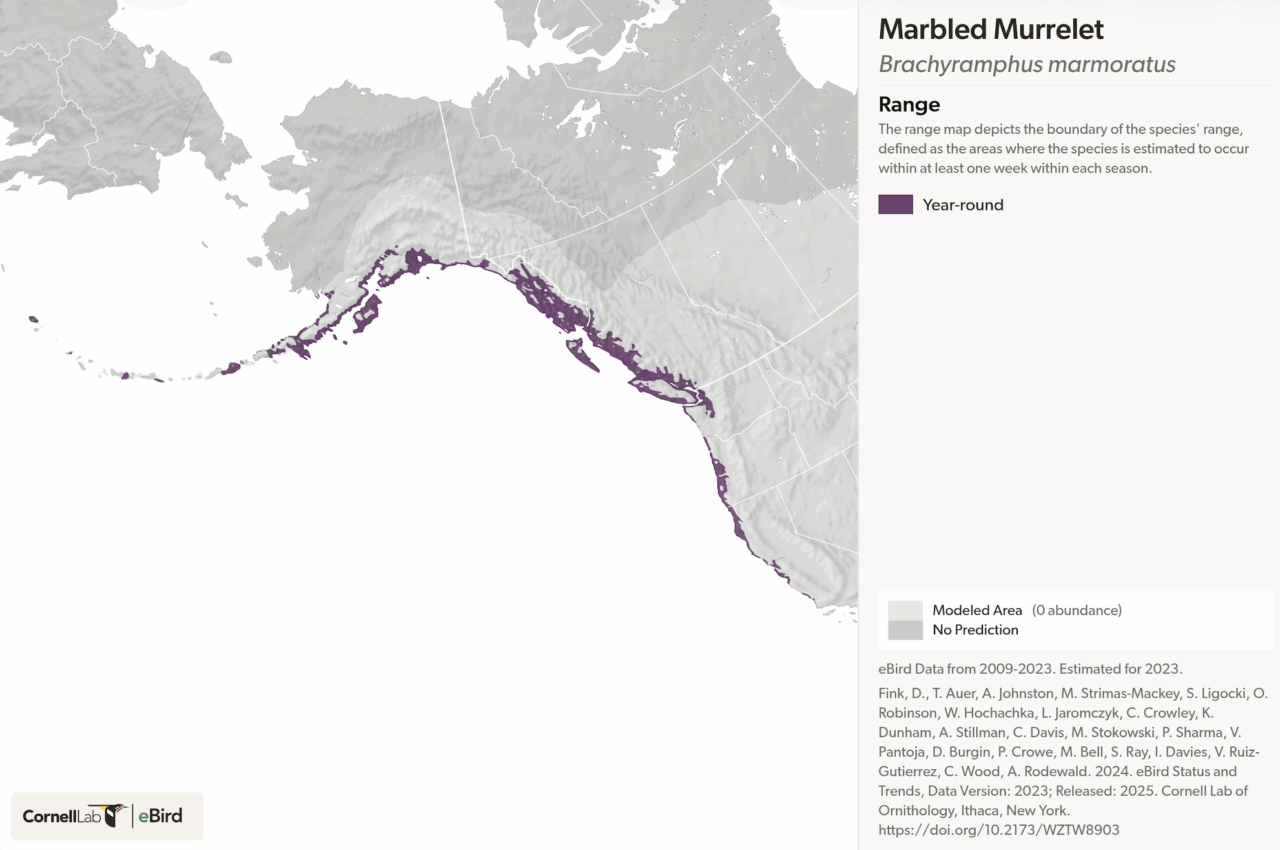
Marbled Murrelets are found near the coast of Alaska, Canada, and the U.S. Some colonies are found year-round on the coasts of Alaska, Canada, and the northwestern coast of U.S., while others only breed in those ranges and winter on the southern coastline, mostly in California.
Additional Maps
Identification
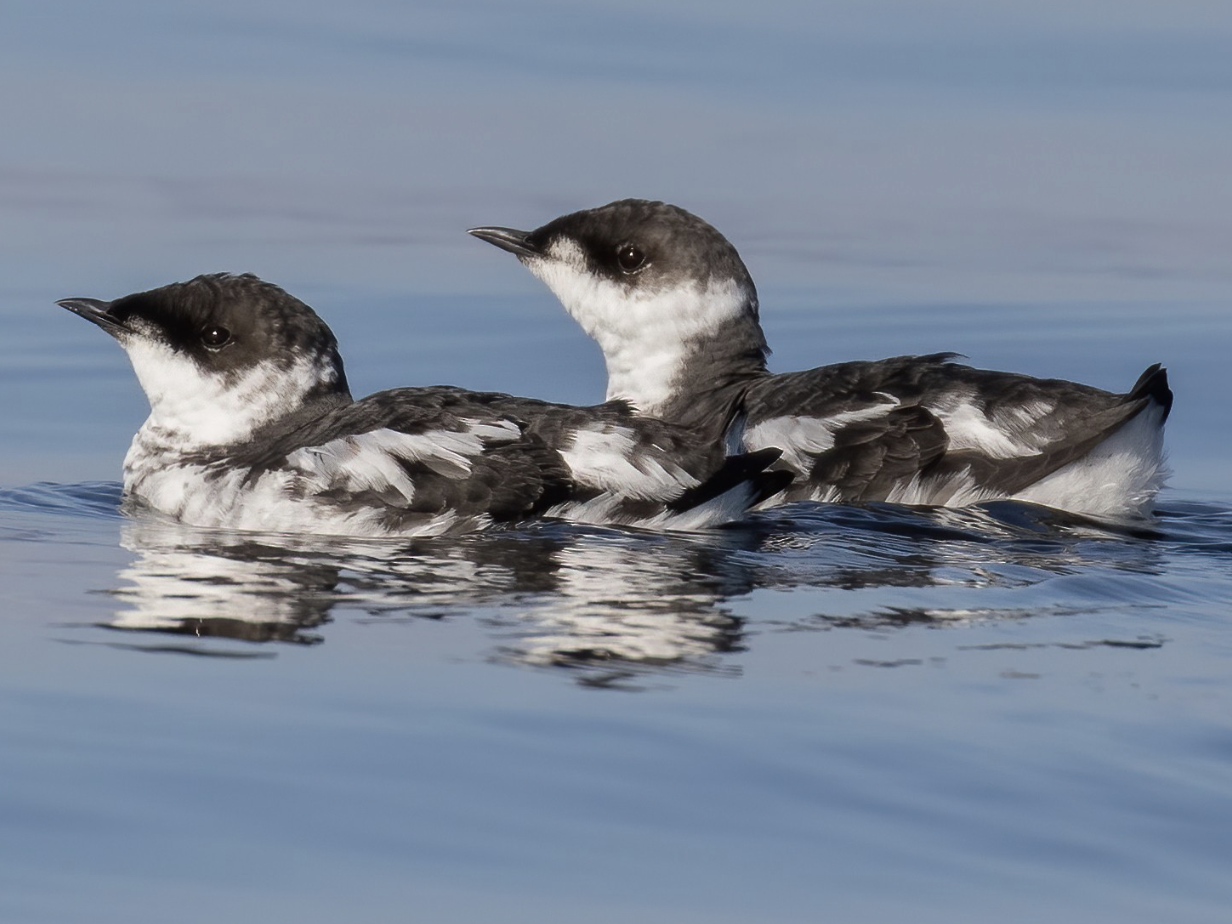
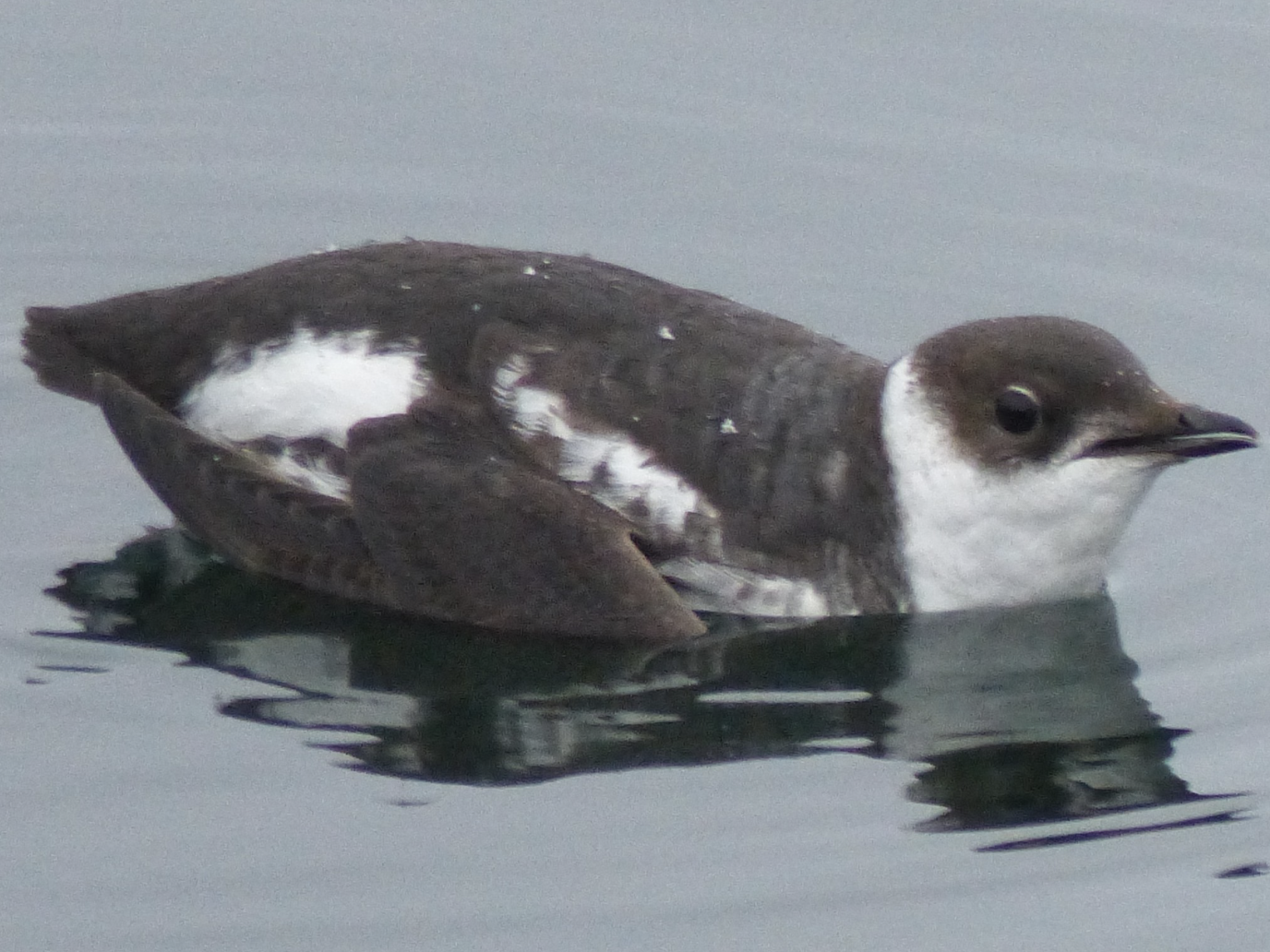
The Marbled Murrelet is a small marine bird that in the winter has a monochromatic pattern of dark grays and blacks with white streaks and spots on the back and wings. The head of nonbreeding birds has a dark gray cap, while the throat and chest is snow white. Males and females appear the same, while juveniles are more stocky, have a leaning posture, and appear almost penguin-like in appearance. When breeding, these birds are an entirely warm brown color with lighter and darker shades streaking down the body. These birds have small heads, with small short beaks that are dark gray or black regardless of the season. The calls of these birds are usually a whistling or piercing sound, in various intonations and patterns.
Habitat
Marbled Murrelets breed in old-growth and mature coastal forests, primarily in the Pacific Northwest, and forage in the marine environment. They nest on mossy limbs of large trees, often a few miles inland, but can be found up to 50 miles inland. Their marine habitat includes coastal waters, near shorelines, and areas with strong tidal rips or river currents where they forage for prey.
Conservation Status
- Listed as Decreasing by BirdLife International
- Listed as Vulnerable by California State Species of Greatest Conservation Need (C-22)
- Listed as Endangered by the International Union for Conservation of Nature
- Listed as Vulnerable by NatureServe Explorer
- Listed as Vulnerable by Oregon State Species of Greatest Conservation Need
Threats to Conservation
The primary threats to Marbled Murrelet conservation stem from habitat loss and degradation, both in their nesting forests and marine environments. Logging of old-growth and mature forests, human-caused fires, and land development destroy nesting habitat. In their marine habitat, oil spills, entanglement in fishing gear, and harmful algal blooms also pose significant risks.
Funding Opportunities
- America the Beautiful Challenge
- Community Forest Program
- ConocoPhillips Partnership for Public and Private Land Managers
- Conservation Nation Grant Program
- Conservation Reserve Program
- Environmental Quality Incentives Program (EQIP)
- Fish and Wildlife Grants List for California
- Hewlett Foundation- Western Conservation Grants
- Land Trust Bird Conservation Initiative Small Grant Program
- Neotropical Migratory Bird Conservation Act (NMBCA) Grant
- NFWF- America Restoration Grant
- Pacific Birds U.S. Partnership
- Partners for Fish and Wildlife
- Point Blue California Restoration Grant
- Regional Conservation Partnership Program (RCPP)
- Sacramento California Grant and Funding
- The Lawrence Foundation- Environmental Grants
- The Migratory Bird Program
- Tribal Wildlife Grants
- Western Habitat Grant Proposals
- Wildlife Conservation Grants for Species Conservation
- Wildlife Diversity Grant Program