
Eastern Meadowlark (EAME)
Sturnella magna
Range
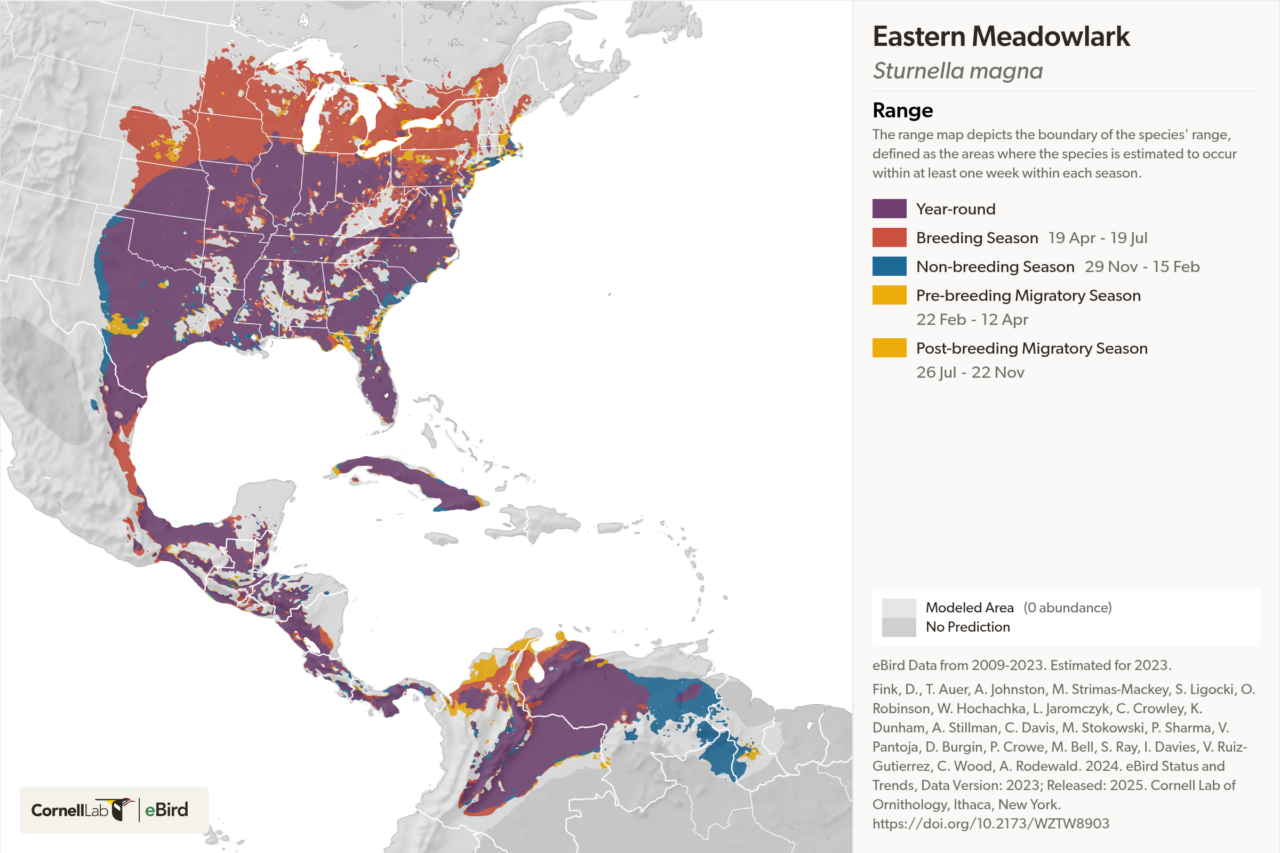
Eastern Meadowlark populations are found in most parts of the Eastern United States. The Eastern Meadowlark tends to reside in more northern areas during its breeding season, extending as far north as Maine and the New York-Canada border.
Additional Maps
Identification
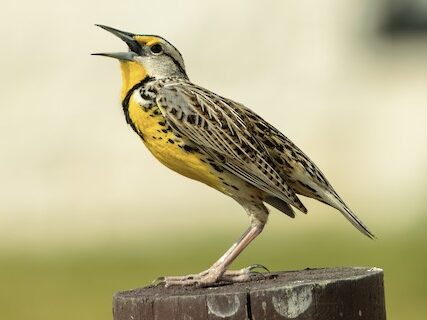
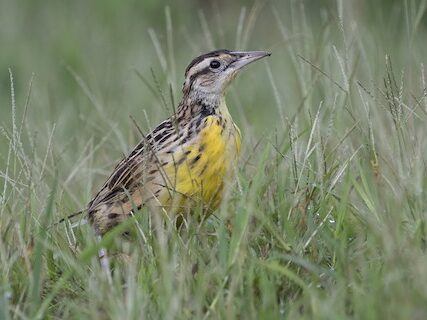
The Eastern Meadowlark is a medium-sized songbird with a long, slender beak. Identifying colors are the yellow breast, throat, and nostril area. Adults have a distinctive black “V” across the chest as well as a black stripe behind the eye. The wings and body have a speckled brown, black, and white coloration, with conspicuous white wings that can be seen when the bird is in flight. Males and females are similar in coloration but females are slightly smaller than males and are less strongly marked.
Habitat
The Eastern Meadowlark can most commonly be found in native grasslands, pastures, and agricultural grass fields, including hay and alfalfa fields. Additionally, they can be found in overgrown shrublands and poorly drained grasslands. These birds can also be found near human developments; in fact, Eastern Meadowlarks are known to reside on golf courses and abandoned strip mines in their habitat range. These birds like to stay in grasslands with good cover to protect themselves and their nests from predation. The ideal field size for this bird is something larger than six acres since they like to stay in large areas covered in their preferred grasses.
In their overwintering range, they like to stay in cultivated fields with mean temperatures above 12 degrees Celsius (53 degrees Fahrenheit). This includes parts of North America such as the East Coast but can reach as far as the Central United States.
Conservation Status
- Listed as Vulnerable by Alabama State Species of Greatest Conservation Need
- Listed as Decreasing by Bird Life International
- Listed as Vulnerable by Florida State Species of Greatest Conservation Need (pg 88)
- The Eastern Meadowlark is listed as Near Threatened by the International Union for Conservation of Nature
- Listed as Vulnerable by Louisiana State Species of Greatest Conservation Need (pg 102)
- Listed as Vulnerable by Mississippi State Species of Greatest Conservation Need
- Listed as Vulnerable by Missouri State Species of Greatest Conservation Need (pg 39)
- Listed as a High Priority Species of Greatest Conservation Need by the List of Endangered, Threatened and Special Concern Fish and Wildlife Species of New York State
- Listed as Species of Greatest Conservation Need by the 2015-2025 Pennsylvania Wildlife Action Plan (pg 472)
- Listed as Vulnerable by Texas State Species of Greatest Conservation Need (pg 37)
- Listed as High Priority by the Vermont Department of Fish and Wildlife (pg 162)
Threats to Conservation
The main threats to Eastern Meadowlark populations are filling, draining, ditching, pollution, and sea level rise in their natural habitats. The Eastern Meadowlark resides in areas that are prone to flooding when the sea level increases due to storms and other natural occurrences. Drainage of these locations is also occurring to intentionally clear land for urban development and expansion of coastal cities. Increasing heat waves pose a threat to nesting Eastern Meadowlarks. Ditching in these areas and the removal of key prey species like mosquitos are also harming populations of these birds.
Funding Opportunities
- Ag Allies Grassland Collaborative
- Agricultural Conservation Easement Program (ACEP)
- America the Beautiful Challenge (NFWF)
- Central Appalachia Habitat Stewardship Program
- Carolina Bird Club Conservation Grants
- Community Forest Program
- ConocoPhillips Partnership for Public and Private Land Managers
- Conservation Nation Grant Program
- Conservation Partners Legacy Grant Program
- Environmental Quality Incentives Program (EQIP)
- Florida’s State Wildlife Grants Program
- Grasslands Bird Trust New York State Grant
- Land Trust Bird Conservation Initiative Small Grant
- Land and Water Conservation Fund Grant Program
- Natural Areas Research Grant
- Natural Legacy Program
- Nature Works
- Neotropical Migratory Bird Conservation Act (NMBCA) Grant
- North American Wetlands Conservation
- NRCS Wetland Mitigation Banking Program
- Partners for Fish and Wildlife
- Regional Conservation Partnership Program (RCPP)
- Texas State Wildlife Grants
- The Lawrence Foundation- Environmental Grants
- The Migratory Bird Program
- Tribal Wildlife Grants
- U.S. Fish and Wildlife Partners for Fish and Wildlife
- U.S. Fish and Wildlife Services Cooperative Endangered Species Conservation Fund
- Virginia Grassland Bird Initiative
- Wildlife Habitat Grant Program
General Management Guides
- Audubon Grassland Management Guide
- Grassland Bird Trust Best Practices
- NRCS: Management Considerations for Grassland Birds in Northeastern Haylands and Pasturelands
- Sara Registry Eastern Meadowlark (Canada)
- Thousand Island Land Trust Management for Grassland Birds
- USGS: The Effects of Management Practices on Grassland Birds—Eastern Meadowlark
Regional Management Guides
- Mass Audubon Best Practices for Nesting Grassland Birds
- Massachusetts Grassland Bird Conservation Plan
- New York Forest Owners Association: Hayfield Management and Grassland Bird Conservation
- NYSDEC Strategy for Grassland Bird Habitat Management and Conservation
- Vermont Center for Ecostudies: Eastern Meadowlark
- Virginia Grassland Bird Initiative
- Birds of Nebraska
- Illinois Department of Natural Resources
- Kansas Wildlife Action Plan
- Minnesota State Wildlife Action Plan
- Missouri State Wildlife Action Plan
- Nature Serve Explorer
- Oklahoma City Audubon Society
- South Dakota Species Highlight
- South Dakota State Wildlife Action Plan
- Wisconsin Department of Natural Resources
- Wisconsin State Wildlife Action Plan