
Ferruginous Hawk (FEHA)
Buteo Regalis
Range
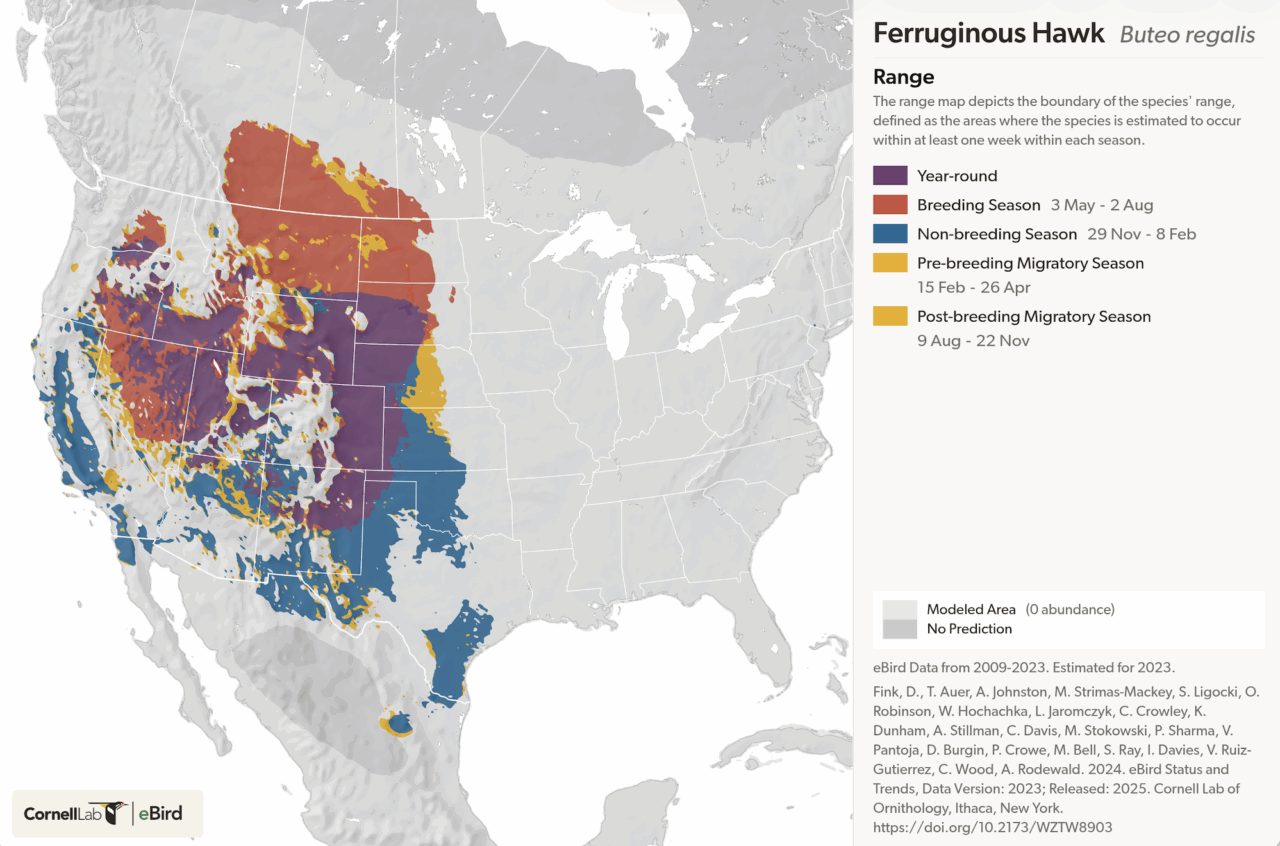
The Ferruginous Hawk’s range is widespread throughout most of the southern western and central U.S. The northern portion of the range only applies to breeding season, while the southern portion applies for the winter. These birds can be found year-round in very particular portions of Arizona, New Mexico, Colorado, Utah, and Nevada.
Additional Maps
Identification
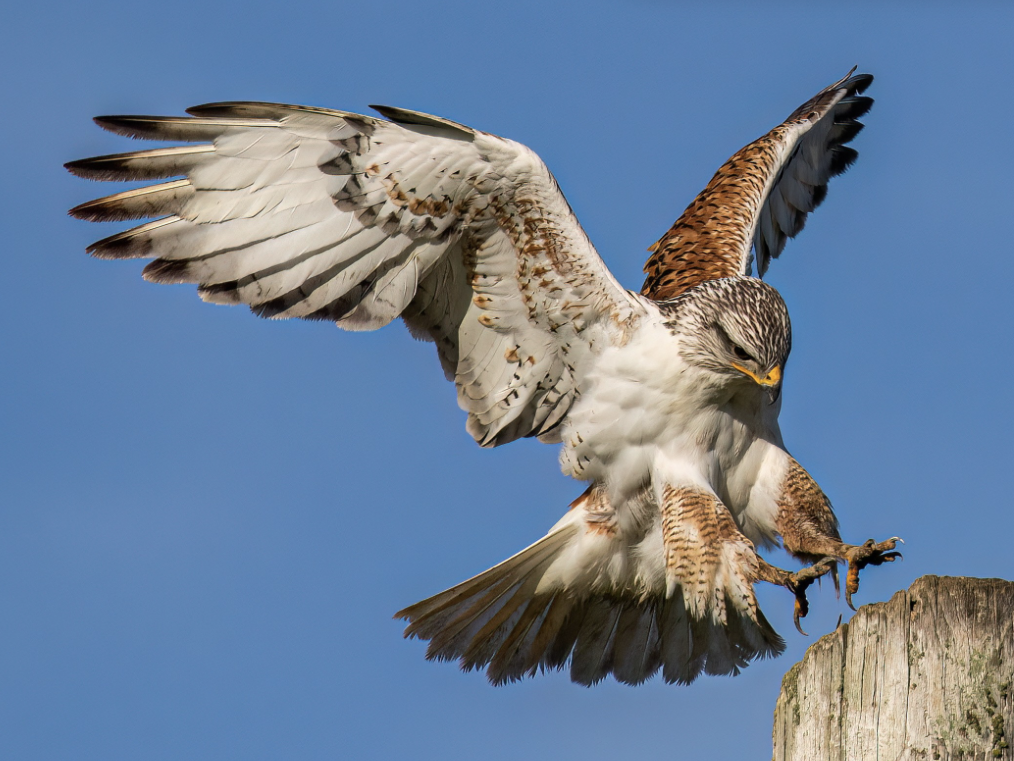
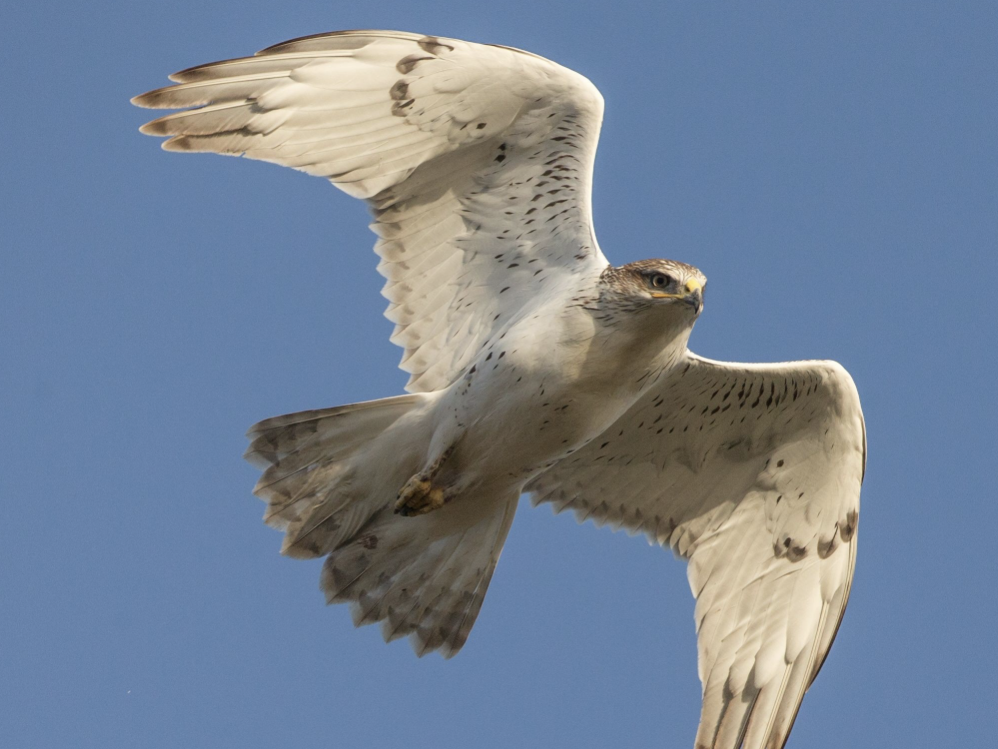
The Ferruginous Hawk is a large, stunning bird of prey, with gorgeous white, hazelnut, and dark brown feathers. Males and females appear the same, with the females usually larger than the males, while juveniles lack coloration and appear mostly white and pale brown. Adult Ferruginous Hawks have stunning dark and warm brown feathers on their wings and back, with the undersides of the wings mostly being white feathers with dark brown tips. The tan is a similar warm hazelnut color, as is the streaked head. They have a golden beak with a dark black tip, and similar colored legs. Due to the shape of their head, it appears that they have a dark streak across their eyes, but it is actually just a shadow from the bone above their eyes. These birds are commonly silent, but can give a piercing screech when alarmed.
Habitat
Ferruginous Hawks thrive in open, arid landscapes, particularly grasslands and shrub-steppe habitats, including pastures, hayland, and croplands.They avoid dense forests and prefer areas with short vegetation, often nesting on solitary trees, utility structures, or near the ground on hillsides or river cutbanks. The Ferruginous Hawk inhabits semiarid to arid western plains and intermountain regions. It occupies open country with scattered trees, primarily prairies, plains, and badlands.
Conservation Status
- Listed as Increasing by the International Union for Conservation of Nature
Status by State
- Listed as Vulnerable by Arizona State Species of Greatest Conservation Need (pg 133)
- Listed as Vulnerable by Colorado State Species of Greatest Conservation Need (pg 361)
- Listed as Vulnerable by Nevada State Species of Greatest Conservation Need (pg 7)
- Listed as Vulnerable by New Mexico State Species of Greatest Conservation Need
- Listed as Vulnerable by Oregon State Species of Greatest Conservation Need
- Listed as Vulnerable by Utah State Species of Greatest Conservation Need (pg 14)
- Listed as Vulnerable by Wyoming State Species of Greatest Conservation Need (pg i-8)
Threats to Conservation
Ferruginous Hawks face several threats to conservation, primarily stemming from habitat loss and human disturbance. These threats include the conversion of grasslands to agricultural land and urban development, which reduces their available habitat and prey base. Additionally, human activities like energy development, mining, and even recreational activities can disturb nesting sites and negatively impact breeding success.
Funding Opportunities
- America the Beautiful Challenge
- Community Forest Program
- ConocoPhillips Partnership for Public and Private Land Managers
- Conservation Nation Grant Program
- Conservation Reserve Program
- Environmental Quality Incentives Program (EQIP)
- Fish and Wildlife Grants List for California
- Hewlett Foundation- Western Conservation Grants
- Land Trust Bird Conservation Initiative Small Grant Program
- Neotropical Migratory Bird Conservation Act (NMBCA) Grant
- NFWF- America Restoration Grant
- Pacific Birds U.S. Partnership
- Partners for Fish and Wildlife
- Point Blue California Restoration Grant
- Regional Conservation Partnership Program (RCPP)
- Sacramento California Grant and Funding
- Sonoran Joint Venture Awards Program
- The Lawrence Foundation- Environmental Grants
- The Migratory Bird Program
- Tribal Wildlife Grants
- Western Habitat Grant Proposals
- Wildlife Conservation Grants for Species Conservation
- Wildlife Diversity Grant Program