
Grace’s Warbler (GRWA)
Setophaga graciae
Range
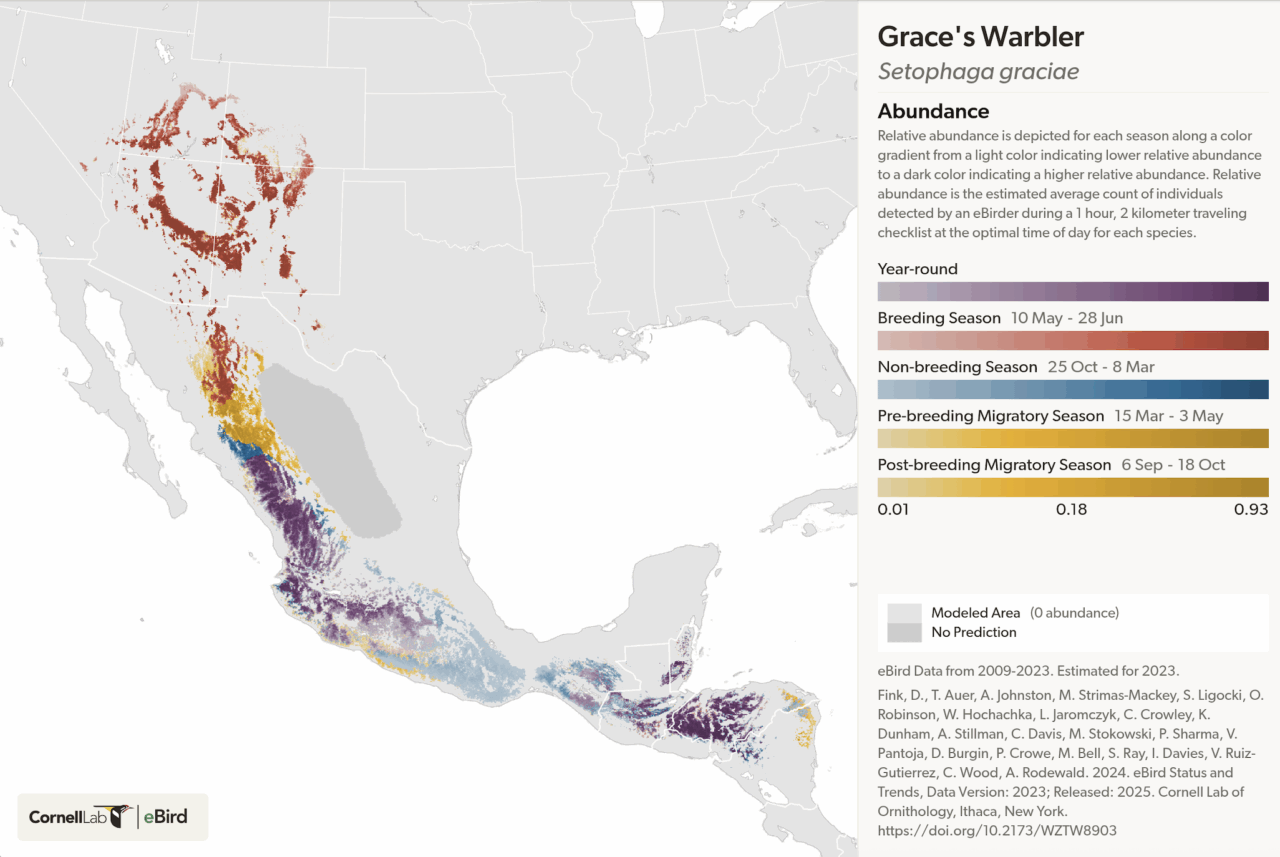
Grace’s Warblers are found when breeding in parts of Nevada, Colorado, New Mexico, and Arizona. They are found year-round in parts of Mexico and Central America. Their habitat ranges can drastically vary year to year depending on the type of forest available for them to breed in.
Additional Maps
Identification
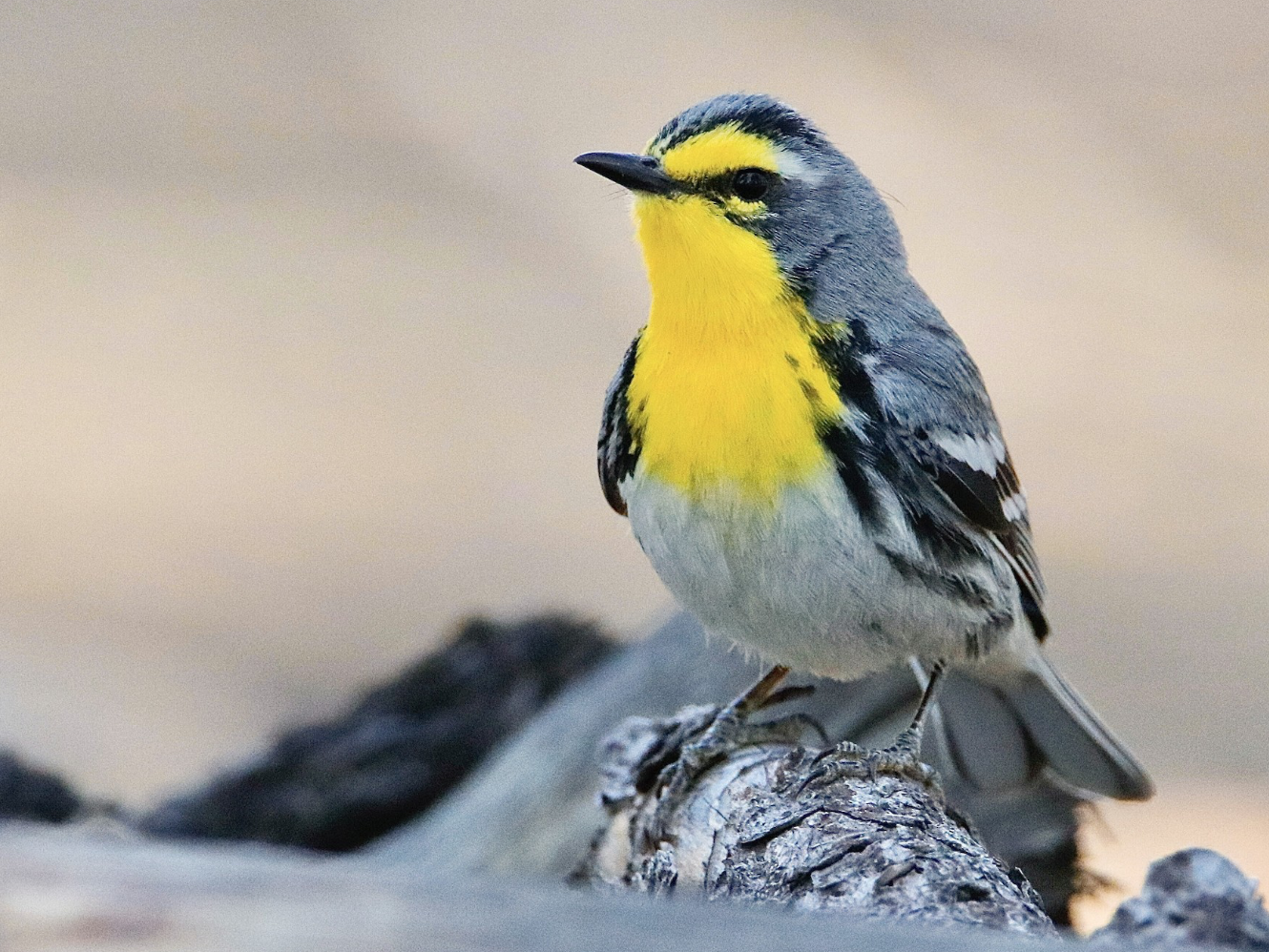
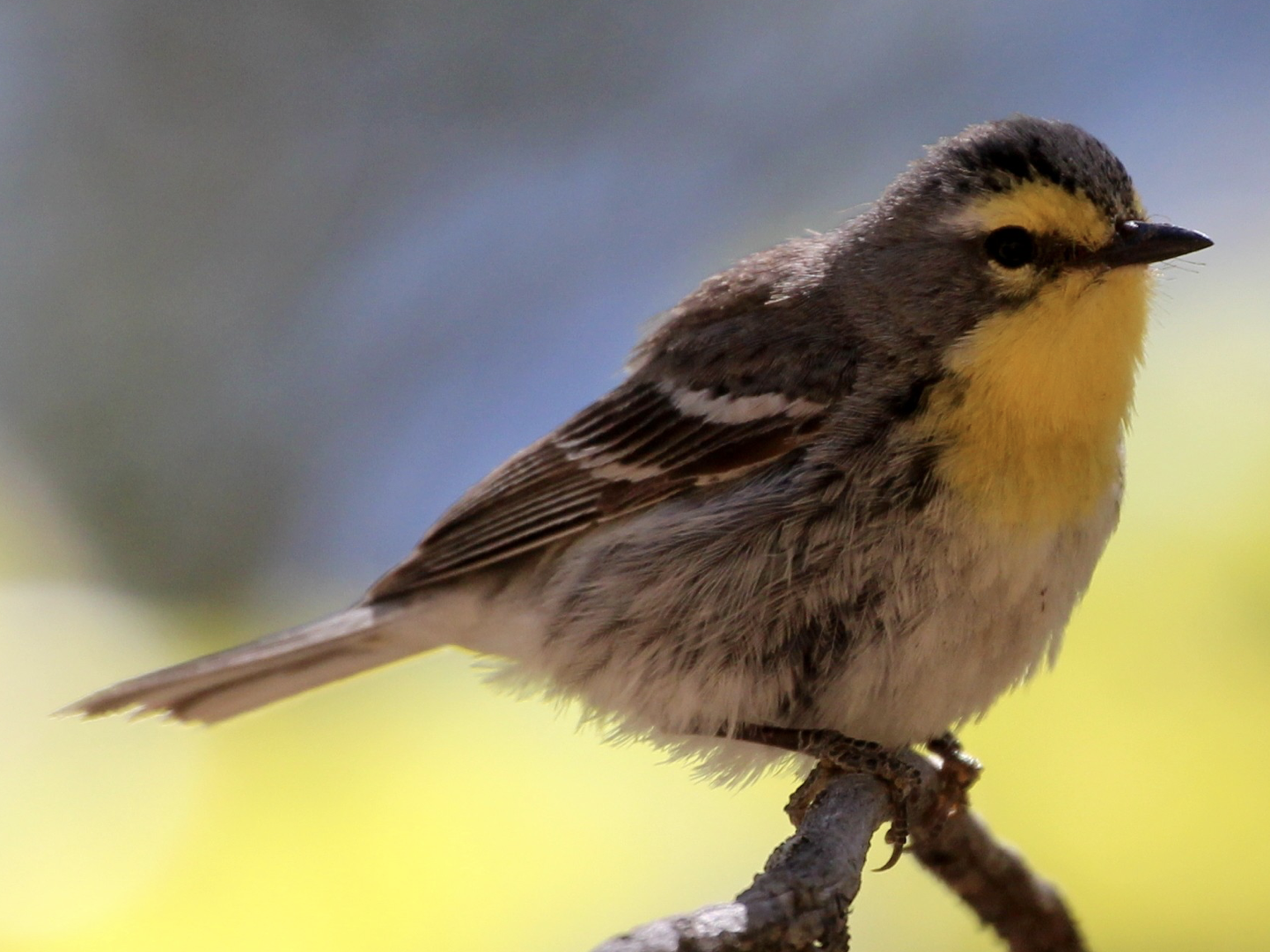
Grace’s Warblers are small, round songbirds with a distinct bright yellow face, throat, and chest. Adult males and females appear visually identical, and most juveniles also sport the same coloring and patterns, although their feathers usually appear more scruffy and disorganized. Adult birds, aside from their striking yellow fronts, are predominantly charcoal gray, with jet black streaking on their sides of chest, wings, and top of head. They have a pale gray underbelly and tail, with occasional gray or white coloring along the edges of wing or tail feathers. There is a dark streak connecting the bill to around their eyes that stands out even from a distance in contrast with the surrounding bright yellow; however, these birds might be difficult to identify from the back. The song of a Grace’s Warbler is a series of dainty notes that accelerates and rises in pitch, while the common call is a singular loud note.
Habitat
This bird can be found in different wooded areas but prefers mature pine or pine-oak forests in mountainous regions. It breeds in a great variety of habitats, from lowland savannas to northern spruce or white fir forests. When in forests, they usually stay higher up in the canopy, making the bird difficult to spot aside from a blur of their vibrant chest. The only time this bird might be spotted close to the ground is when they forage for insects in shrubbery.
Conservation Status
- Listed as Decreasing by BirdLife International
- Listed as Decreasing by the International Union for Conservation of Nature (IUCN)
- Listed as an Yellow-Alert Species by Road to Recovery
Status by State
- Listed as Vulnerable by Arizona State Species of Greatest Conservation Need (pg 314)
- Listed as Vulnerable by Colorado State Species of Greatest Conservation Need (pg 375)
- Listed as Vulnerable by Nevada State Species of Greatest Conservation Need (pg 39)
- Listed as Vulnerable by New Mexico State Species of Greatest Conservation Need
Threats to Conservation
Common threats to this species include habitat loss and deforestation of their pine or pine-oak forests. Since Grace’s Warbler prefers—and almost exclusively inhabits—mature forests, if they lose their remaining grounds, this species will have no where else to go, and by the time new trees reach the required age for these warblers, the species will have already likely gone extinct. Logging practices threaten this species the most, but fire suppression and other poor forest management practices also present threats.
Funding Opportunities
- America the Beautiful Challenge
- Community Forest Program
- ConocoPhillips Partnership for Public and Private Land Managers
- Conservation Nation Grant Program
- Conservation Reserve Program
- Environmental Quality Incentives Program (EQIP)
- Hewlett Foundation- Western Conservation Grants
- Land Trust Bird Conservation Initiative Small Grant Program
- Neotropical Migratory Bird Conservation Act (NMBCA) Grant
- NFWF- America Restoration Grant
- Pacific Birds U.S. Partnership
- Partners for Fish and Wildlife
- Regional Conservation Partnership Program (RCPP)
- Sonoran Joint Venture Awards Program
- The Lawrence Foundation- Environmental Grants
- The Migratory Bird Program
- Tribal Wildlife Grants
- Western Habitat Grant Proposals
- Wildlife Conservation Grants for Species Conservation
- Wildlife Diversity Grant Program