
Gray-crowned Rosy-Finch (GCRF)
Leucosticte tephrocotis

Range
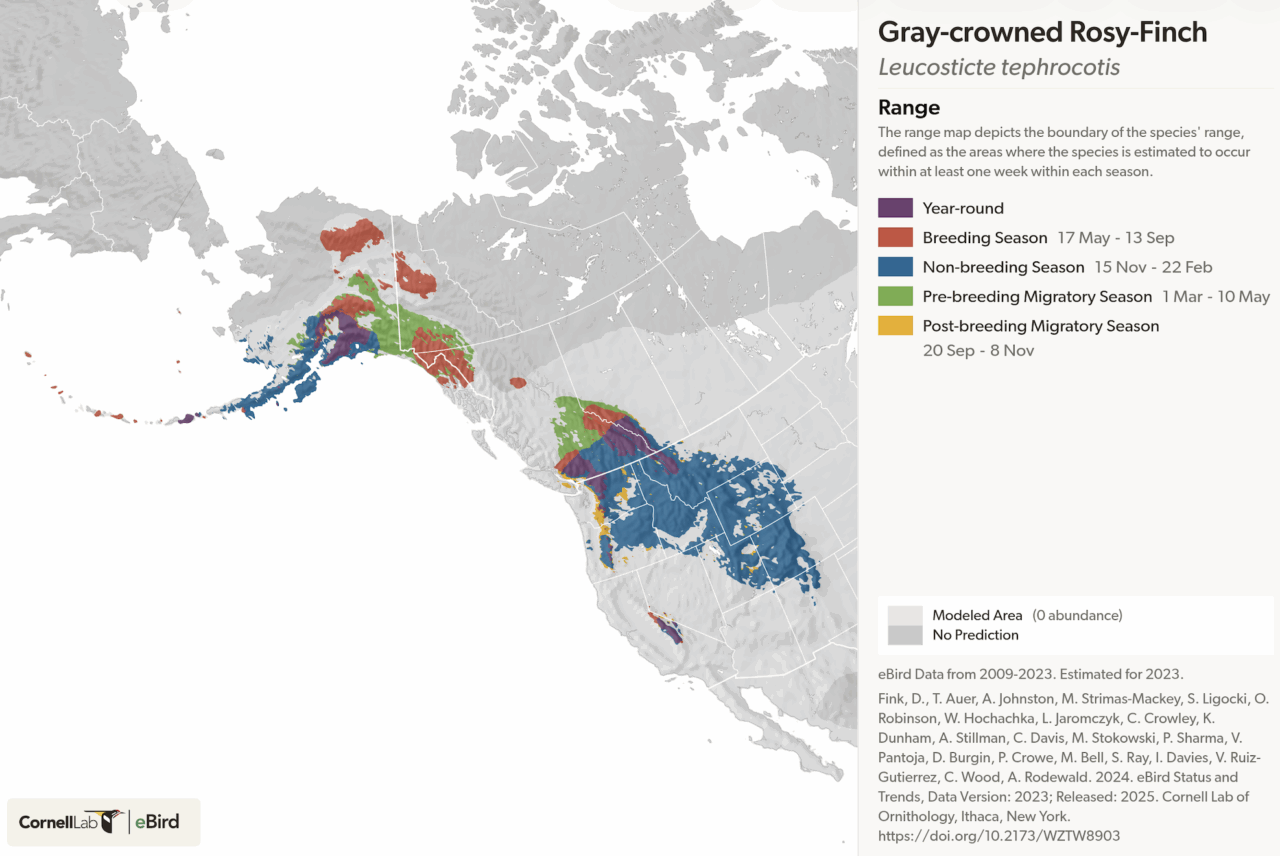
This species can be found wintering throughout most of the western U.S., with some year-round habitats in California, Oregon, Washington, Idaho, and Montana. These birds spend their breeding season primarily in northern Canada and Alaska, but parts of their southern breeding range extend nearly to the U.S./Canada border, suggesting there may be some habitats in northern Washington where Gray-crowned Rosy-Finches could be spotted during the spring.
Additional Maps
Identification
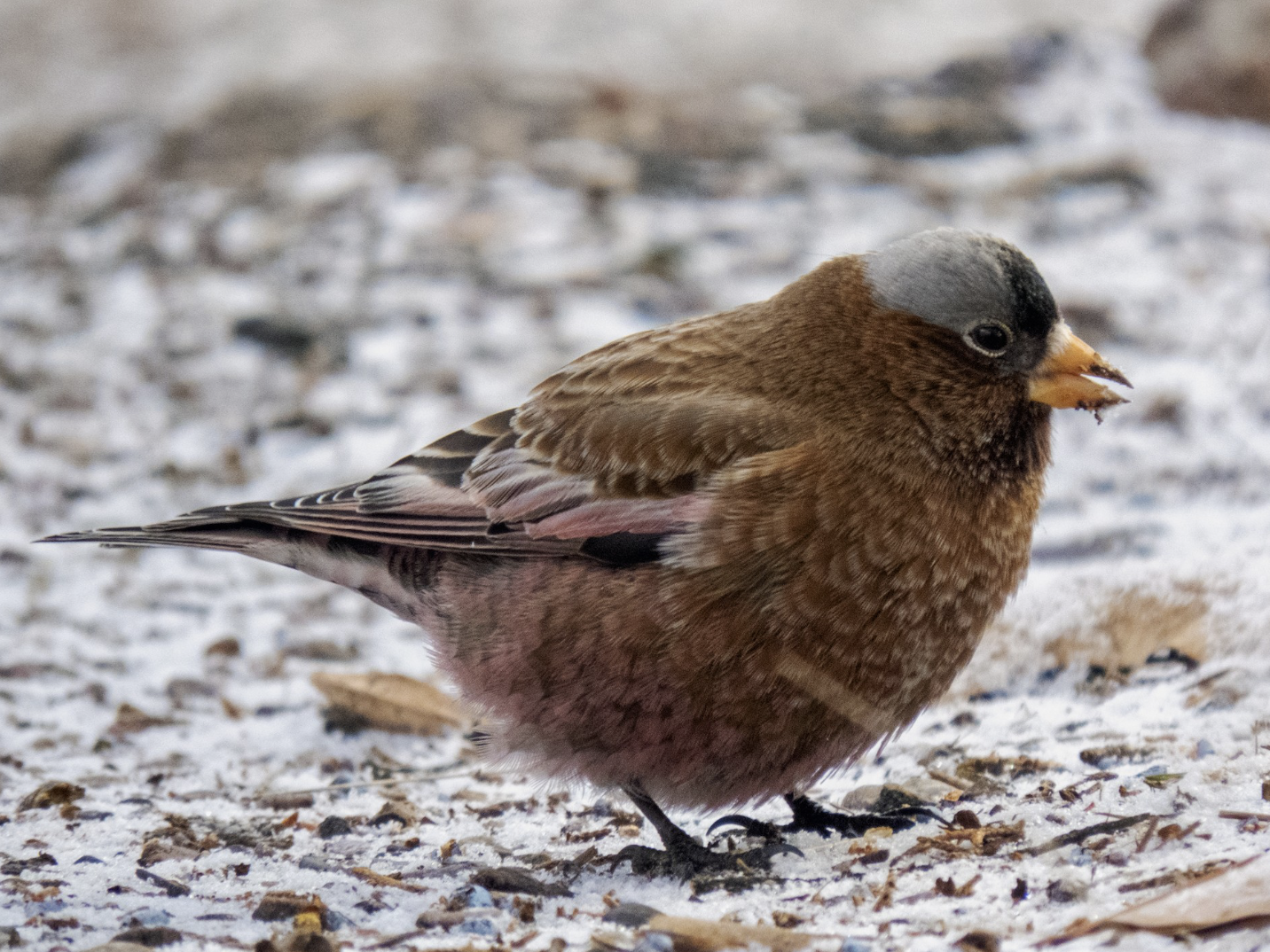
The Gray-crowned Rosy-Finch is a striking songbird of alpine regions, notable for its chunky build and rich colors. Adults have chocolate-brown bodies with warm pinkish tones on the wings, rump, and flanks, which are most vivid in breeding males. Its namesake feature is a pale gray crown and nape, contrasting with a dark brown face and throat. The bill is short, triangular, and turns bright yellow in winter. Females have less bright pink feathers on their wings, and their rump is more blush colored with brown mixed in. Juveniles appear similar to adults but lack the vivid chestnut, pink, black, and gray shades, usually appearing faded. The song of the males is a twittering carol of notes that vary in pitch and volume. Females occasionally sing as well.
Habitat
The Gray-crowned Rosy-Finch inhabits rugged alpine and subalpine environments, favoring areas above treeline where snowfields, talus slopes, rocky ridges, and alpine meadows dominate the landscape. During the breeding season, it nests in crevices among cliffs, boulders, or talus piles, often near lingering snowfields that provide access to meltwater and emerging insects. Outside of the breeding period, it descends to lower elevations, including open valleys, windswept ridges, grasslands, and even human settlements, especially in winter when it forages in flocks for seeds and leftover grain. Its reliance on high, exposed habitats makes it closely tied to cold, sparsely vegetated terrain, where seasonal movements track the availability of food and snow-free ground.
Conservation Status
- Listed as Stable by BirdLife International
- Listed as Least Concern by the International Union for Conservation of Nature (IUCN)
- Listed as Secure by Nature Serve Explorer
Status by State
- Listed as Vulnerable by California State Species of Greatest Conservation Need (C-24)
- Listed as Vulnerable by Nevada State Species of Greatest Conservation Need (pg 7)
- Listed as Vulnerable by New Mexico State Species of Greatest Conservation Need
- Listed as Vulnerable by Oregon State Species of Greatest Conservation Need
Threats to Conservation
The Gray-crowned Rosy-Finch faces several conservation threats linked to its specialized alpine and subalpine habitats. Climate change is the most significant, as warming temperatures reduce snowfields and glaciers, altering the high-elevation environments this species depends on for breeding and foraging. Earlier snowmelt and shifting vegetation zones may force birds to nest higher, shrinking the amount of suitable habitat. Human activities such as ski area expansion, hiking, and mining can disturb nesting sites or fragment fragile tundra. Additionally, increasing predator access to alpine zones, changes in insect availability, and extreme weather events may further stress populations, especially in isolated mountain ranges where small numbers make them vulnerable to local declines.
Funding Opportunities
- America the Beautiful Challenge
- Community Forest Program
- ConocoPhillips Partnership for Public and Private Land Managers
- Conservation Nation Grant Program
- Conservation Reserve Program
- Environmental Quality Incentives Program (EQIP)
- Hewlett Foundation- Western Conservation Grants
- Land Trust Bird Conservation Initiative Small Grant Program
- Neotropical Migratory Bird Conservation Act (NMBCA) Grant
- NFWF- America Restoration Grant
- Pacific Birds U.S. Partnership
- Partners for Fish and Wildlife
- Regional Conservation Partnership Program (RCPP)
- The Lawrence Foundation- Environmental Grants
- The Migratory Bird Program
- Tribal Wildlife Grants
- Western Habitat Grant Proposals
- Wildlife Conservation Grants for Species Conservation
- Wildlife Diversity Grant Program