Great Backyard Bird Count
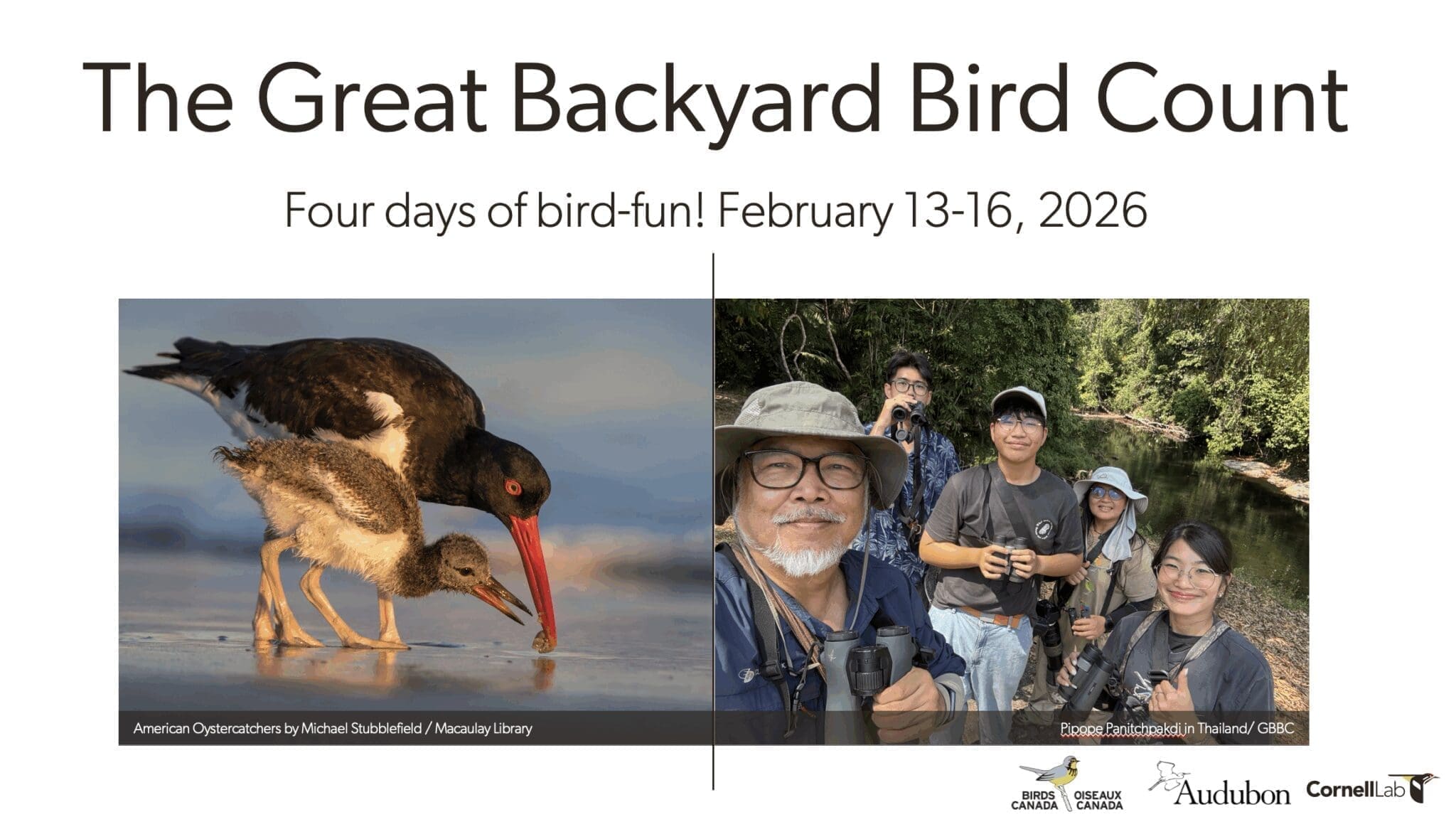
The Great Backyard Bird Count (GBBC) is a global, four-day event each February that invites people everywhere to count birds and share their observations online through eBird or the Merlin Bird ID app. Organized by the Cornell Lab of Ornithology, the National Audubon Society, and Birds Canada, the GBBC provides a snapshot of late-winter bird populations across the world.
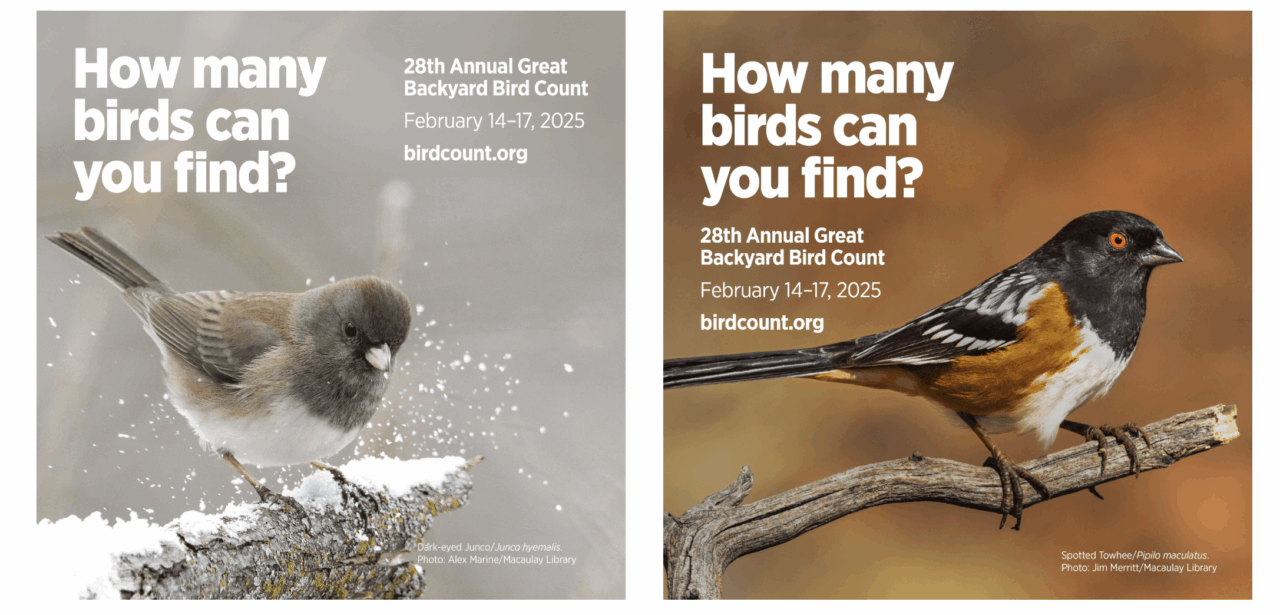
For land trusts, the GBBC offers a fun, low-barrier way to connect communities with conservation while collecting meaningful data. Staff, volunteers, and visitors can count birds at preserves, offices, and backyards—helping document which species are present in your region during the winter season. Find a map of community birding events each season on the GBBC website, and add yours to invite people to join your flock! A social media toolkit provides resources to help you get the word out to your community, and downloadable images are available for sharing on social media channels each year.
What can the Great Backyard Bird Count offer land trusts?
By participating in the GBBC, land trusts can inspire more people to notice and care about birds, strengthen connections with local communities, and contribute valuable information that supports larger-scale bird conservation efforts. Try these ideas for engaging your community during the GBBC:
- Host a count event: Invite volunteers or members to join a guided bird walk or feeder-watching session at one of your preserves.
- Engage the community: Encourage supporters and members to participate from home and share their checklists or photos with your organization. A slideshow about the program explains each step for participating in the count and features beautiful images from past GBBC events.
- Integrate with education and outreach: Host a complementary event to teach participants how to use Merlin Bird ID and eBird while sharing about your land trust’s wildlife habitat restoration work.
- Introduce participatory science and bird monitoring: GBBC is an easy way to get involved in a participatory science program, and it can help turn casual birders into active contributors, laying the groundwork for more structured bird monitoring efforts.