
Lawrence’s Goldfinch (LAGO)
Spinus lawrencei
Range
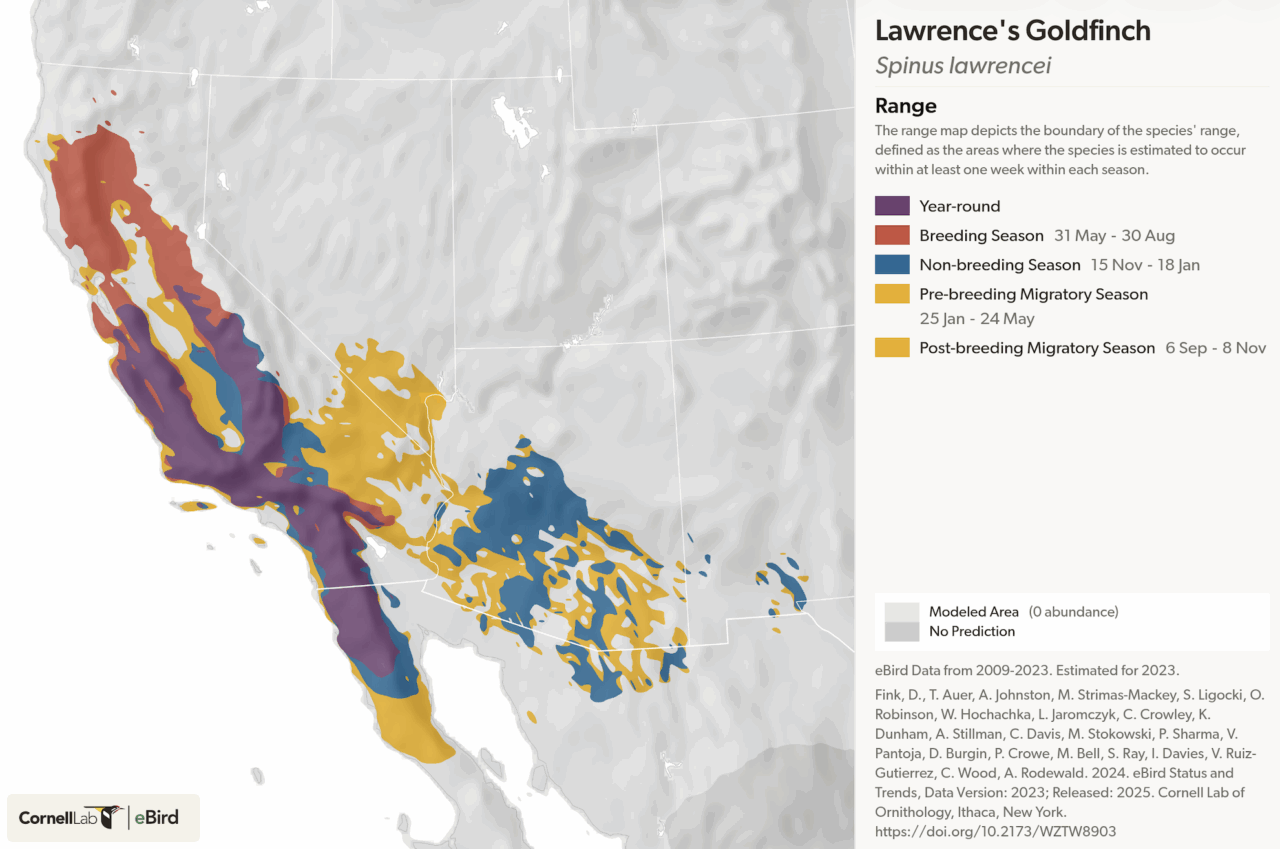
These birds can be found throughout most of California during their breeding season, and when wintering in parts of Arizona and New Mexico. Their range extends into northern Mexico.
Additional Maps
Identification
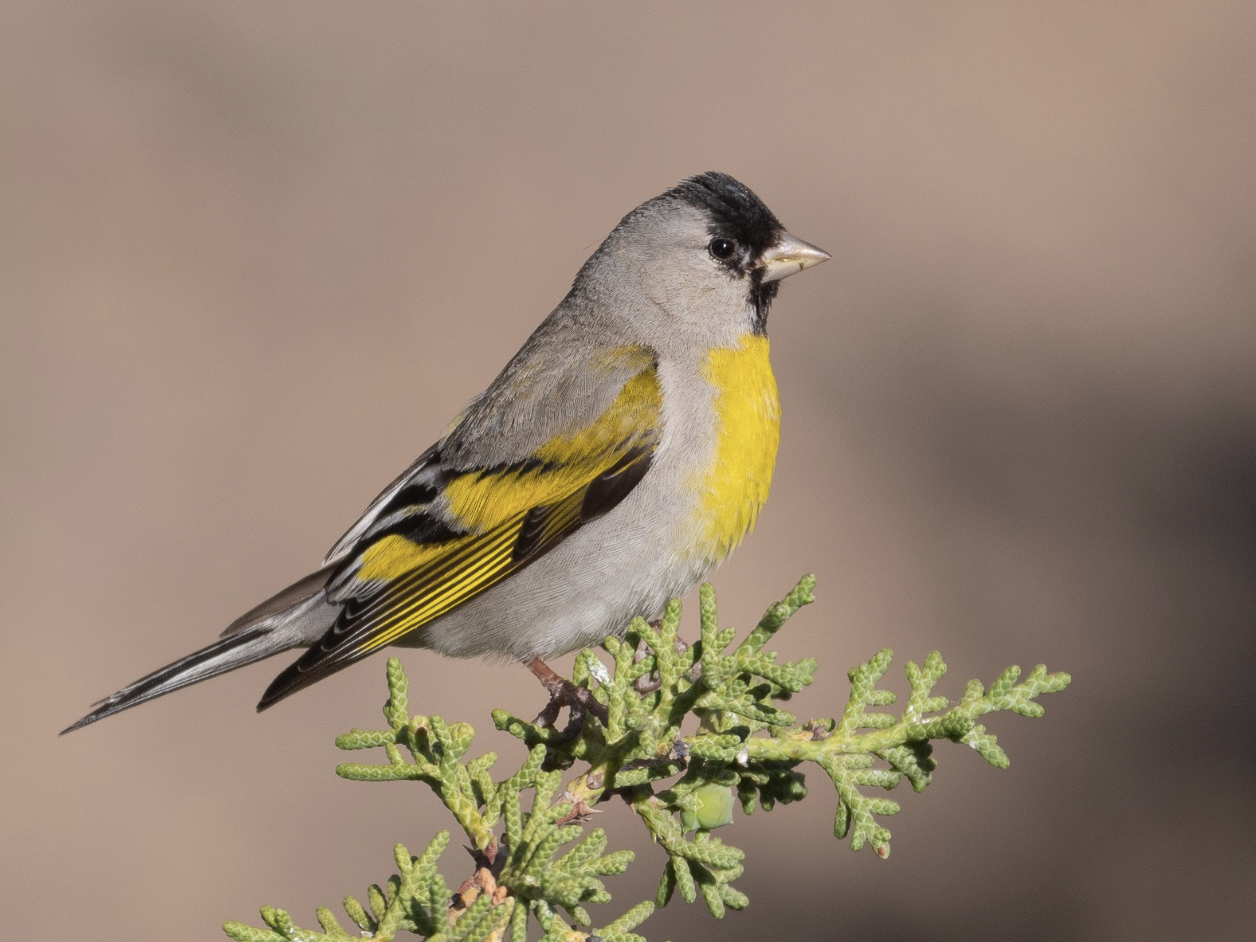
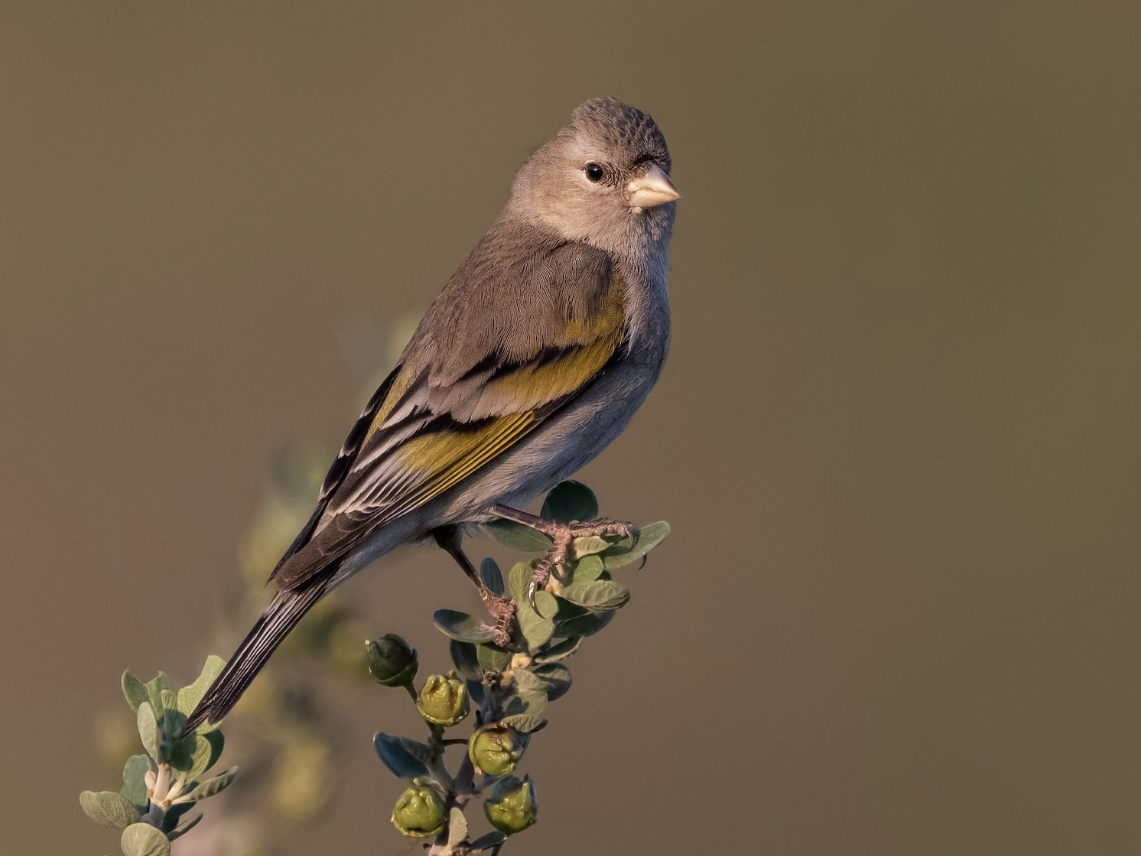
The Lawrence’s Goldfinch is a small songbird with appealing yellow markings on their wings. Males have a bright black ‘mask’ on their face and down their throat, a bright yellow patch on their chest, and a small gray beak. The rest of their body is a pale silver, with streaks of black and yellow on their wings and tail. Females lack the black mask and yellow chest patch, and are overall a more brownish shade of gray. Juveniles are duller and have patches of fluffy downy feathers sticking out. The song of these birds is a jumbled series of tinkling notes, usually thrown in with imitations of nearby bird species like flycatchers, wrens, and thrashers.
Habitat
Lawrence’s Goldfinches inhabit arid, open woodlands and chaparral with a nearby water source, such as streams, ponds, or lakes. They prefer habitats like tall annual weed fields and shrublands, in both breeding and wintering habitats.
Conservation Status
- Listed as Decreasing by BirdLife International
- Listed as Decreasing by the International Union for Conservation of Nature (IUCN)
- Listed as Vulnerable by Nature Serve Explorer
Threats to Conservation
The main threats to Lawrence’s Goldfinch include habitat loss and degradation from development, overgrazing, and invasive plants, as well as climate change, which is predicted to cause significant loss of their wintering grounds. The species’ restricted range coupled with its vulnerability to disturbance and potential impacts from pesticides and human activity also pose conservation concerns.
Funding Opportunities
- America the Beautiful Challenge
- Community Forest Program
- ConocoPhillips Partnership for Public and Private Land Managers
- Conservation Nation Grant Program
- Conservation Reserve Program
- Environmental Quality Incentives Program (EQIP)
- Fish and Wildlife Grants List for California
- Hewlett Foundation- Western Conservation Grants
- Land Trust Bird Conservation Initiative Small Grant Program
- Neotropical Migratory Bird Conservation Act (NMBCA) Grant
- NFWF- America Restoration Grant
- Pacific Birds U.S. Partnership
- Partners for Fish and Wildlife
- Point Blue California Restoration Grant
- Regional Conservation Partnership Program (RCPP)
- Sacramento California Grant and Funding
- Sonoran Joint Venture Awards Program
- The Lawrence Foundation- Environmental Grants
- The Migratory Bird Program
- Tribal Wildlife Grants
- Western Habitat Grant Proposals
- Wildlife Conservation Grants for Species Conservation
- Wildlife Diversity Grant Program