
LeConte’s Thrasher (LCTH)
Toxostoma lecontei
Range
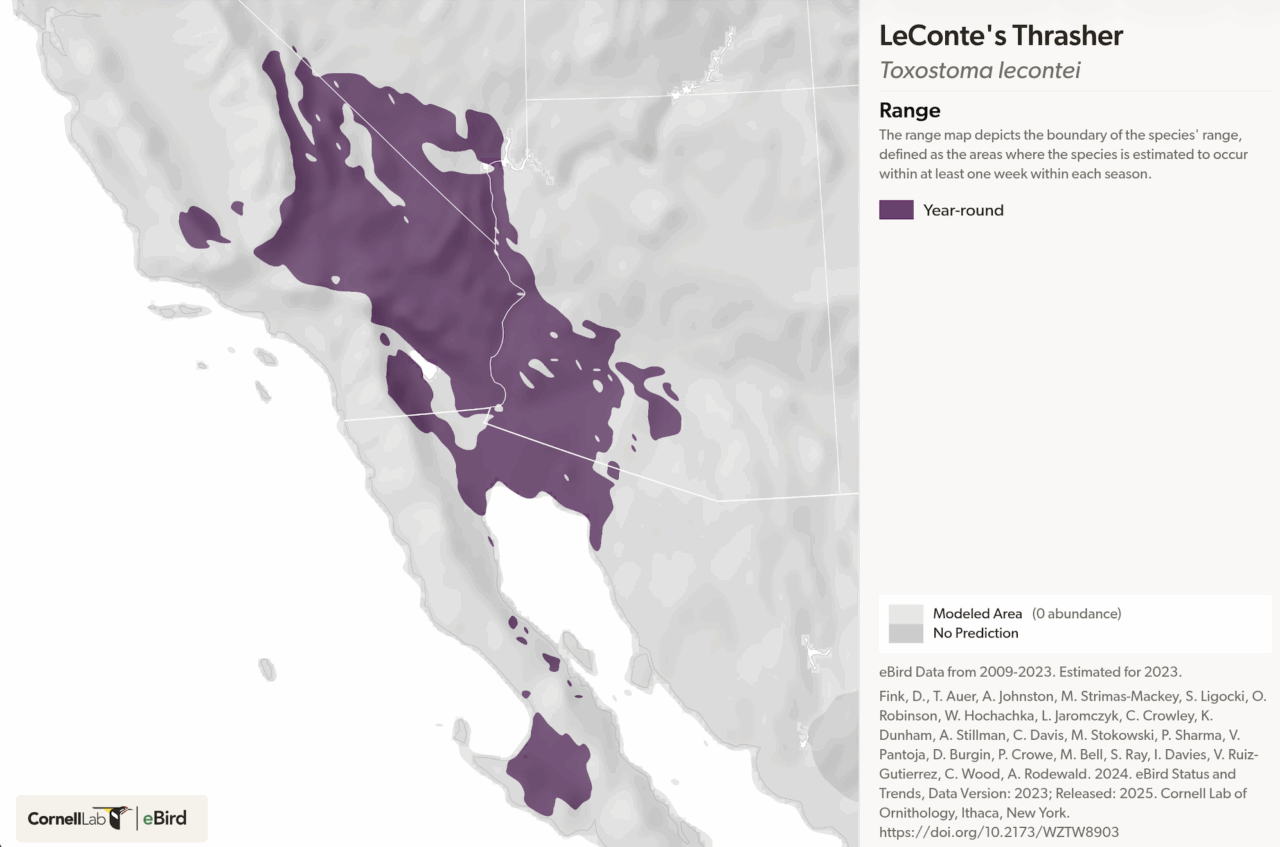
These birds are nonmigratory, with year-round habitats in California, Arizona, small parts of Nevada, and southwestern corner of Utah. Their range extends into Mexico.
Additional Maps
Identification
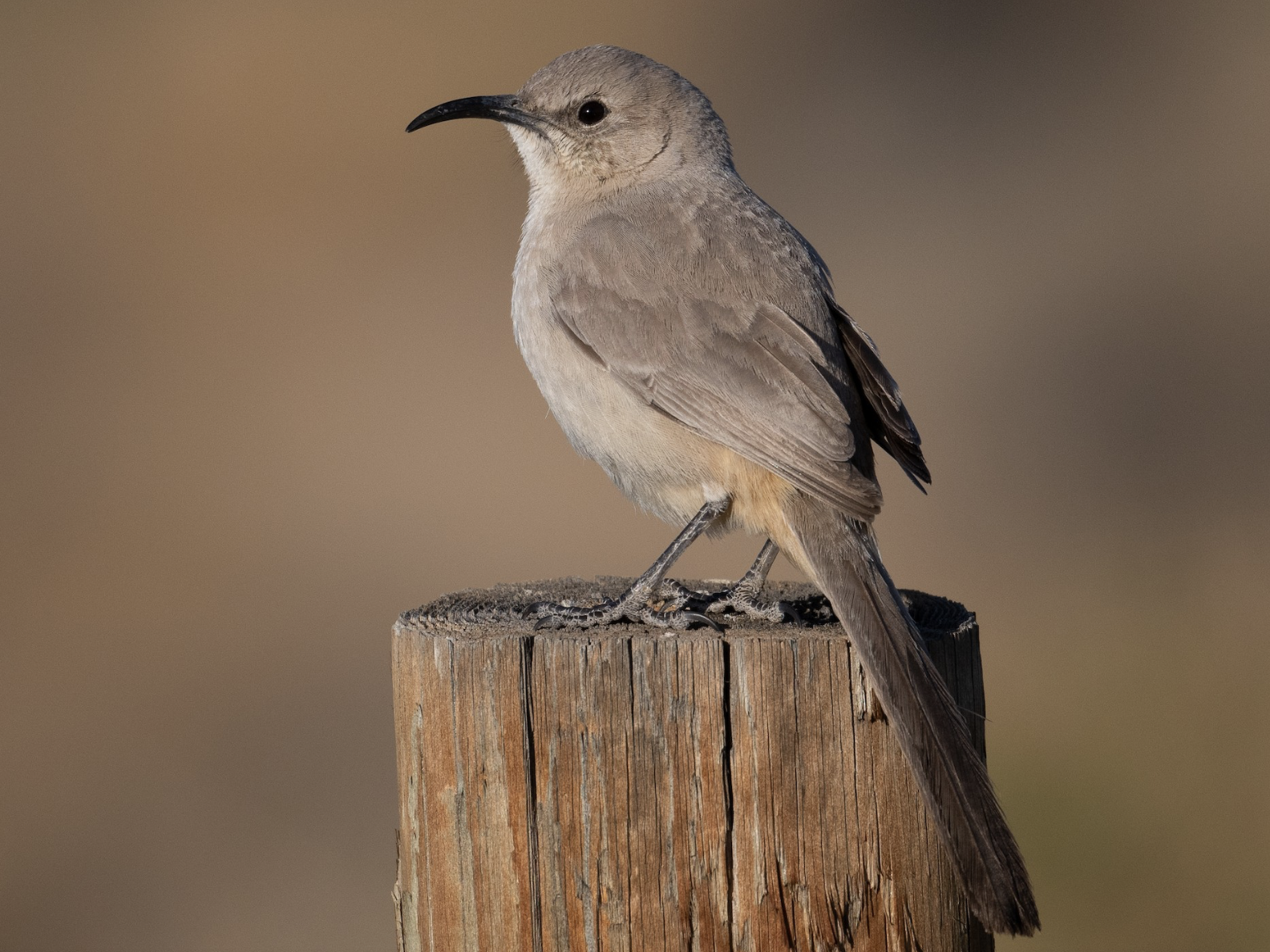
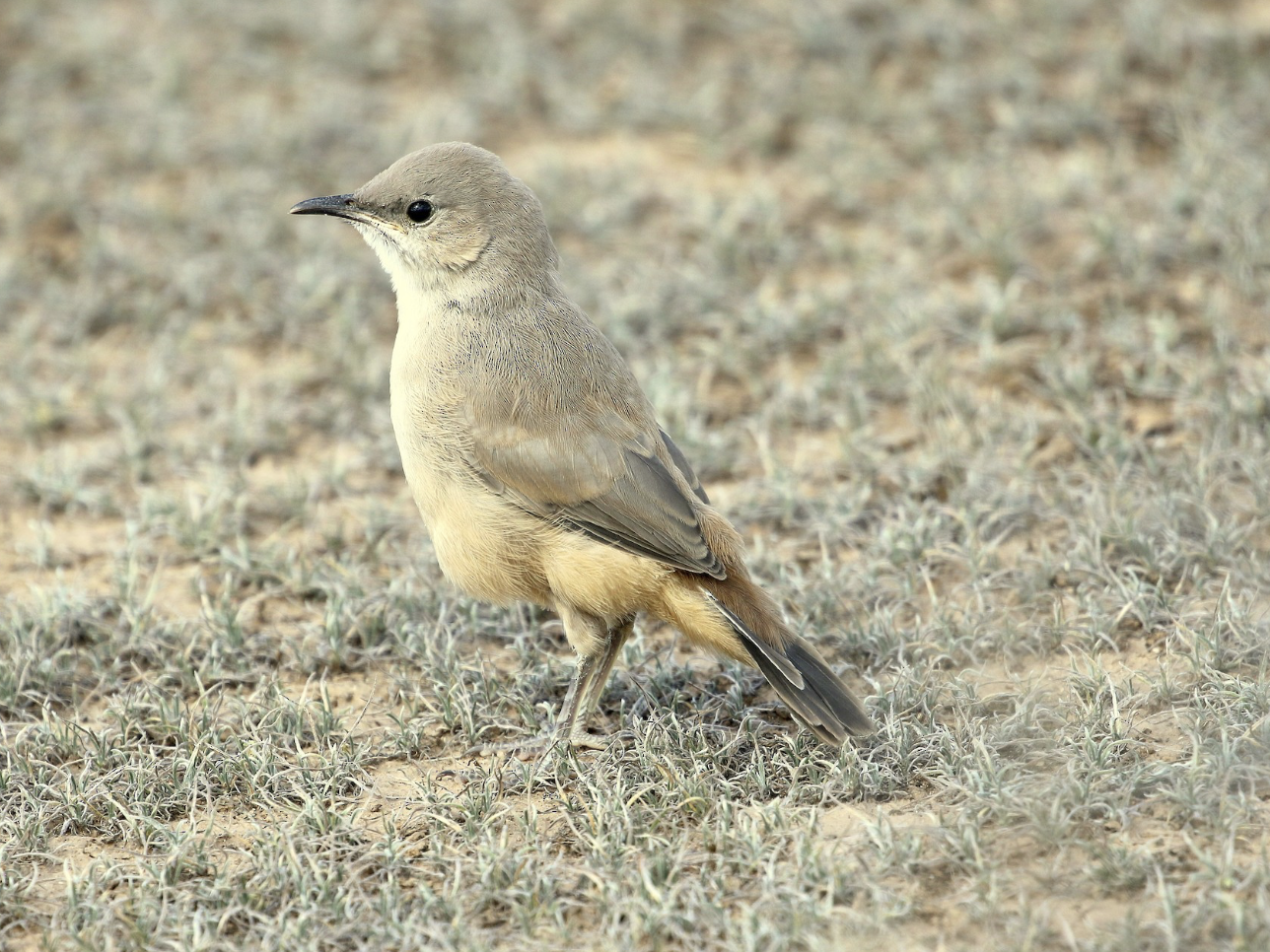
The LeConte’s Thrasher is a medium-sized bird with a stocky chest, a jet black bill that curves downward, and a body that is mostly a dusty gray shade that darkens towards the end of the tail. These birds have few markings aside from a slightly lighter colored throat and chest area, and some individuals have a yellow or orange tint to the feathers on their rump. Males and females appear the same visually, and juveniles have the same markings as adults, but can be identified by their much shorter and less curved bill. The song of this species is much higher-pitched and squeakier than other thrasher’s songs. Both males and females have been known to sing.
Habitat
The LeConte’s Thrasher inhabits sparsely vegetated, arid desert habitats, preferring open flats, dunes, and gently rolling hills. They prefer specific desert shrubs like saltbush, creosote, and cholla cactus. When breeding, they rely on the unique vegetation structure for cover and nesting in thorny shrubs or cacti.
Conservation Status
- Listed as Vulnerable by Arizona State Species of Greatest Conservation Need (pg 281)
- Listed as Least Concern by BirdLife International
- Listed as Least Concern by the International Union for Conservation of Nature (IUCN)
- Listed as Apparently Secure by Nature Serve Explorer
- Listed as Vulnerable by Nevada State Species of Greatest Conservation Need (pg 7)
- A Red-Alert Species by Road to Recovery
Threats to Conservation
LeConte’s Thrashers are mainly threatened by habitat loss, fragmentation, and degradation due to their unique preferred ecosystems. Agriculture, mining, urban development, and human activity all contribute to their decreasing populations and available habitat. Collisions with cars, especially off-road vehicles of people exploring their desert dunes and flatlands, are also a significant cause of death for this species. In addition to hitting unsuspecting birds, these vehicles also damage their food sources and run over nesting sites with possible eggs or young. Invasive plant species taking over their preferred shrubbery has also played a role in this bird species’ decline.
Funding Opportunities
- America the Beautiful Challenge
- Community Forest Program
- ConocoPhillips Partnership for Public and Private Land Managers
- Conservation Nation Grant Program
- Conservation Reserve Program
- Environmental Quality Incentives Program (EQIP)
- Fish and Wildlife Grants List for California
- Hewlett Foundation- Western Conservation Grants
- Land Trust Bird Conservation Initiative Small Grant Program
- Neotropical Migratory Bird Conservation Act (NMBCA) Grant
- NFWF- America Restoration Grant
- Pacific Birds U.S. Partnership
- Partners for Fish and Wildlife
- Point Blue California Restoration Grant
- Regional Conservation Partnership Program (RCPP)
- Sacramento California Grant and Funding
- Sonoran Joint Venture Awards Program
- The Lawrence Foundation- Environmental Grants
- The Migratory Bird Program
- Tribal Wildlife Grants
- Western Habitat Grant Proposals
- Wildlife Conservation Grants for Species Conservation
- Wildlife Diversity Grant Program