Northwest Arkansas Land Trust
Why Bird Conservation?
In Northwest Arkansas, birds offer a powerful, hopeful entry point for conservation. In a rapidly developing area of the region, birds help draw people outside and serve as a tool for teaching children about the natural world. Birds can also bring people together and inspire mindfulness. Watching a mixed flock forage can spark insights about cooperation, resource sharing, and community, making conservation feel relevant to everyday life.
The Northwest Arkansas Land Trust (NWALT) helps foster this type of awareness through Restorative Birding, a program designed to connect people to birds and, through birds, to the land. It’s intentionally not about listing as many species as possible, says Marson Nance, NWALT’s director of philanthropy. Instead, it emphasizes noticing behavior, habitat, and the roles birds play, then linking those observations back to our own lives. That shift—from identification to interpretation—welcomes newcomers, improves accessibility, and opens the door for people of all ages to see themselves in conservation.
Spotlight Resources: Volunteers, Collaborative Partnerships, eBird, Merlin Bird ID
After Evan Johnson, NWALT’s conservation easement manager, learned about the concept of Restorative Birding at a training for nature interpreters, he was inspired to bring the idea to Northwest Arkansas. With the support of a small grant from the Land Trust Initiative in 2024, Johnson adapted the Restorative Program developed by Orange County Parks and Recreation in California. NWALT staff then trained eight Master Naturalists in Restorative Birding methods and these volunteers now co-lead programs, allowing NWALT to serve more people while building a durable network of community educators.

Place-based experiences are the foundation of Restorative Birding outings: public hikes at preserves highlight seasonal rhythms—from fall migration to spring nesting—and invite participants to slow down and pay attention to their environment. Three spring field trips in 2024 brought rural, underserved middle school students to one of NWALT’s preserves, offering many their only field trip of the year and their first chance to use binoculars. Activities combined fun with learning—scavenger hunts, guided observation, and introductions to bird calls and behavior—helping students see how their curiosity connects to broader conservation efforts.
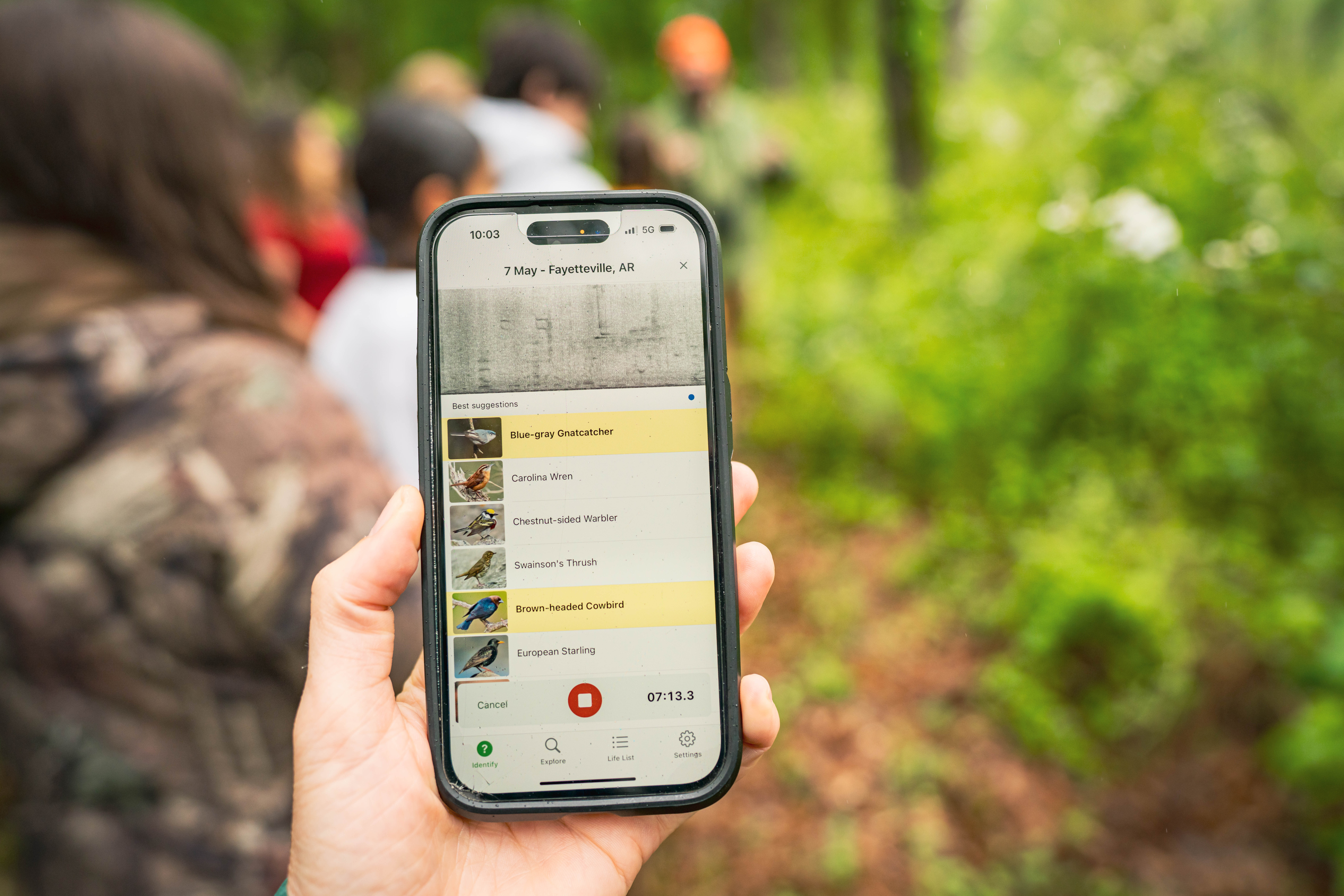
During Restorative Birding events, participants learned about eBird and Merlin, and students discovered how these apps turn curiosity into contribution. Framing the experience as a real-world version of collecting—like a nature-based game of Pokémon—helped students recognize themselves as part of a team that builds scientific knowledge. Hearing and then seeing calls and songs in real time coupled with bird ID through the Merlin app provides immediate gratification, strengthens engagement, and increases accessibility for all skill and age levels.
Partnerships gave the program depth and reach. A collaboration with the Walton Arts Center invited creative audiences and laid the groundwork for a recurring workshop series. The Ozark Natural Science Center provided support with volunteer training, and the Northwest Arkansas Audubon Society and the Northwest Arkansas Master Naturalists contributed time and expertise once trained as volunteers. Greenland Public Schools embraced the opportunity for hands-on learning that linked family farms and local landscapes to larger conservation goals. Together, these alliances expanded who was able to participate and how they engaged with one another
Making the Connection
Restorative Birding meets people where they are, whether that’s watching a backyard bird feeder, listening for birds during a quick walk at lunch, or experiencing the joy of looking through binoculars for the first time. Leaders keep language simple and avoid technical terms. They focus on relationships—between birds and plants, predators and prey, the flock and the landscape—and then draw parallels to human communities. Observing a flock’s communication or how different species share a habitat becomes a metaphor for how neighborhoods pool resources and work together.
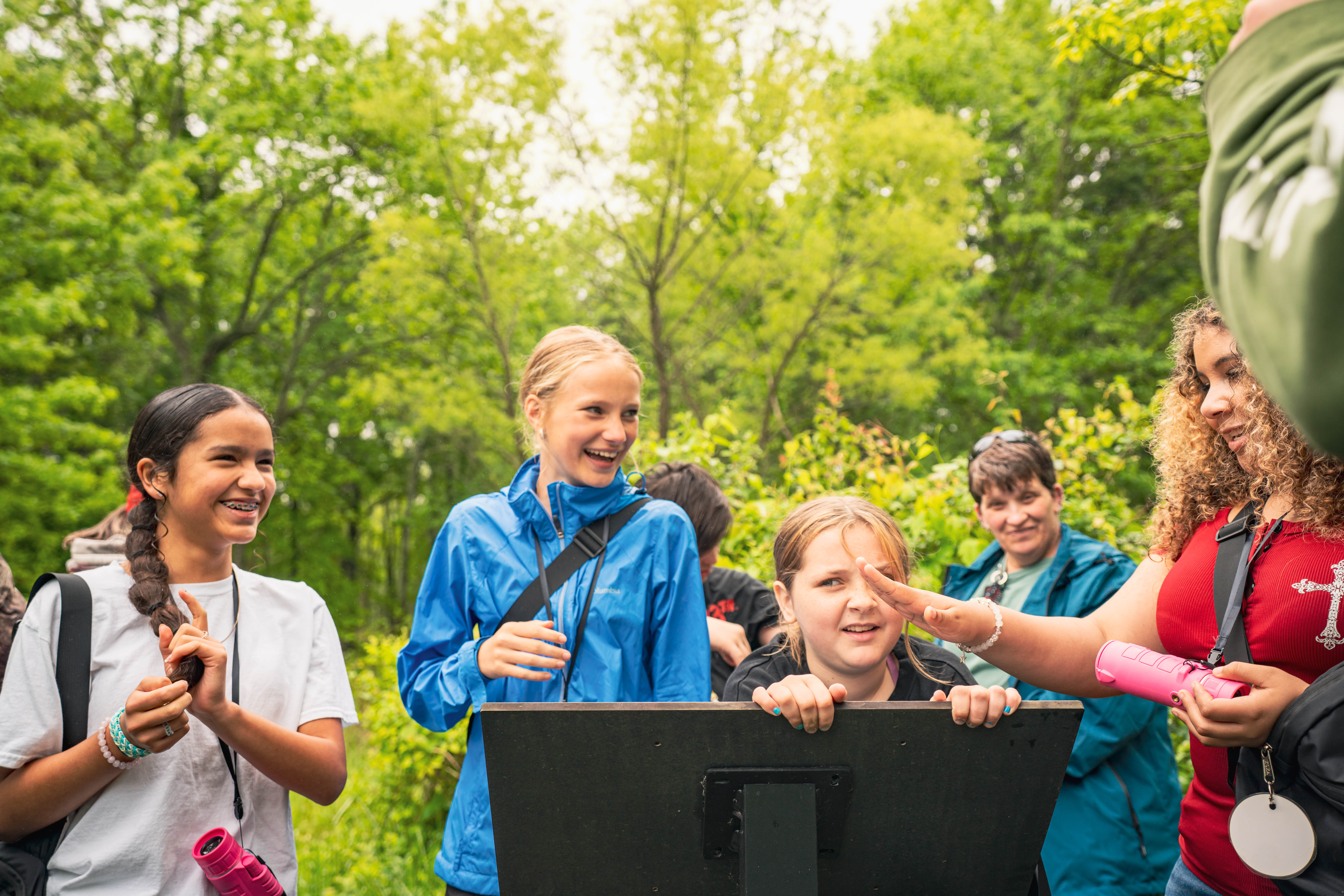
That approach has been especially powerful with students. Rural kids arrive with lived experience—stories from farms, forests, and creeks—that enrich the conversation, says Nance. When their observations are welcomed and valued by adults, a barrier falls. The message is clear: where you live is important, and what you notice matters. For many, using binoculars for the first time flips a switch from “nature is out there” to “I am part of this.”
Adults respond similarly. Public hikes often begin with quiet noticing—What are the birds doing? Why here? Why now?—and then build to hands-on participation using Merlin to help identify species, eBird to record observations, and field guides to support bird ID. People leave knowing not only the name of a species but also understanding why that bird needs a certain habitat and how their choices, from choosing native plants to becoming a volunteer, can make a difference.
Advice to Other Land Trusts
For land trusts looking to engage people through birds, start by keeping things simple and relatable. Lead with stories, behaviors, and connections rather than checklists or technical terms; communicate that the aim is to foster belonging and curiosity rather than to tally species. Birds make an excellent gateway to land conservation because once someone cares about a bird, they may be more open to talking about habitat, restoration, and why protecting places matters.
Schools are invaluable partners, says Nance, but they need programs that meet them where they are in terms of circumstances and capabilities. Begin planning with teachers early, make logistics easy, and design field trips that are hands-on and inclusive. Pair interpretation with participatory science by introducing tools like eBird and Merlin as ways to keep attention and demonstrate the ways that participants can contribute to conservation, not as an end unto themselves. Flexibility is essential; weather and school schedules will change, so clear communication and a friendly, adaptive mindset help keep things moving smoothly.
Let your preserves tell the story. If you’re restoring habitat, share before-and-after narratives and explain how bird communities responded. People are inspired by visible progress, like increases in wildlife habitat specialists that indicate healthier ecosystems. Finally, partner widely. Arts organizations, science centers, Audubon chapters, schools, and volunteer groups each open different doors and reach new audiences. These partnerships can lend credibility and resources, and they help make conservation a community-based mission.
Next Steps
The work is just beginning, says Nance, and several priorities will shape the next phase. Public programs will expand, with seasonal hikes continuing and new opportunities for beginners, such as winter outings featuring waterfowl and a Christmas Bird Count in December. Spring events will again spotlight nesting behavior, sound identification, and simple data collection.
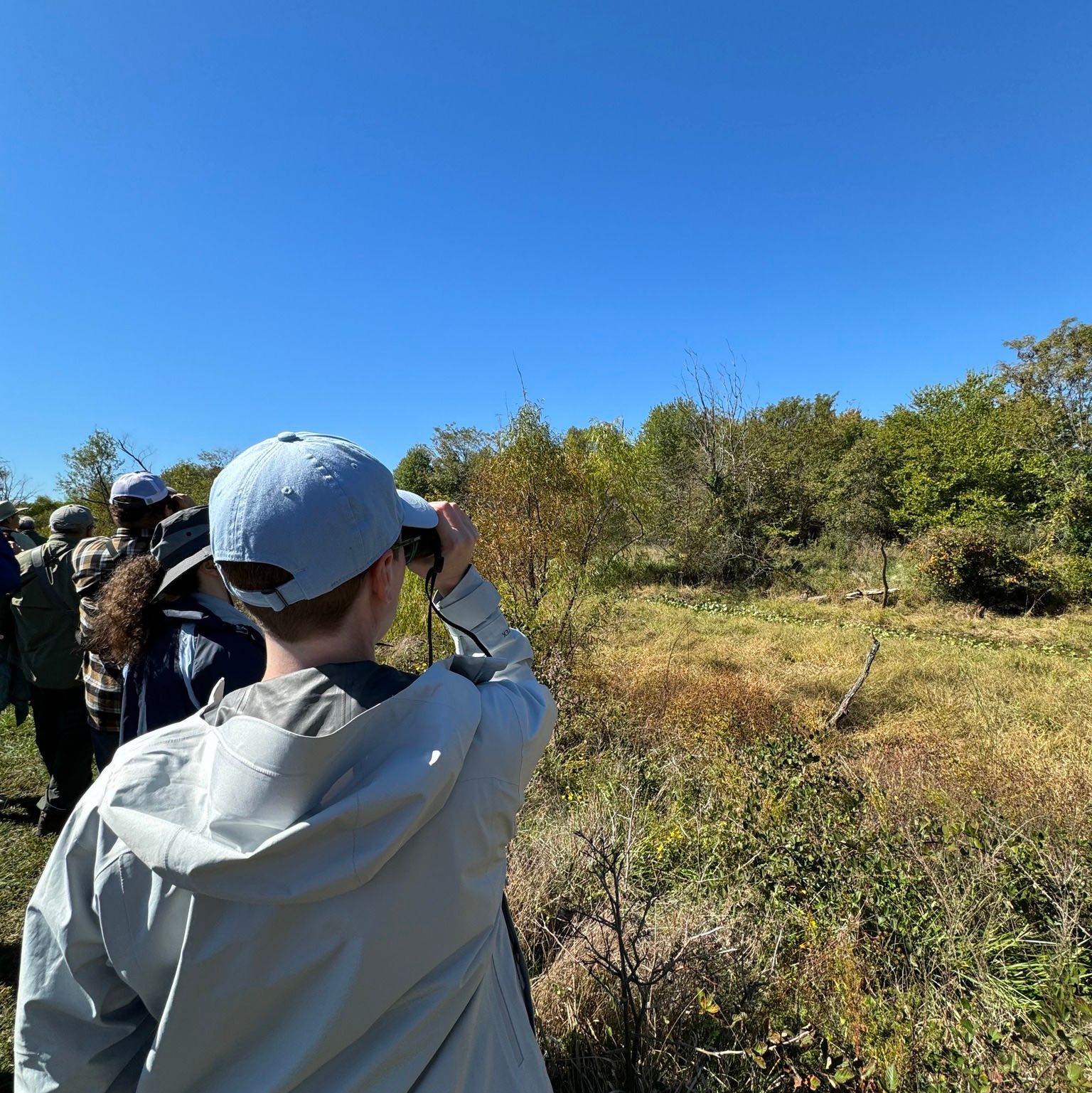
Field trips with Greenland School will repeat each spring, with a goal of making these visits a predictable part of the school year rather than a one-time treat, ensuring more rural students experience a living classroom where they can connect observation with action. Integrating Restorative Birding into partner field trips—such as those hosted by Ozark Natural Science Center—will help broaden the reach of the program across the region.
Strengthening partnerships remains a priority. A developing collaboration with the Walton Arts Center may become a recurring workshop series that blends creativity and nature, welcoming audiences who may not have previously engaged in birding. Continued coordination with Audubon, Master Naturalists, and local educators will help the program to grow.
Restorative Birding underscores a simple truth: when people slow down and really look, they begin to care; when they care, they act. In a rapidly growing region, that progression—from noticing to belonging to stewardship—is essential, and birds help make it possible. They invite us outside, teach us how ecosystems work, and point us toward what needs protecting. With thoughtful partnerships, inclusive programs, and a focus on connection, bird conservation becomes a community endeavor, one mixed flock at a time.