
Red-billed Pigeon (RBPI)
Patagioenas flavirostris
Range
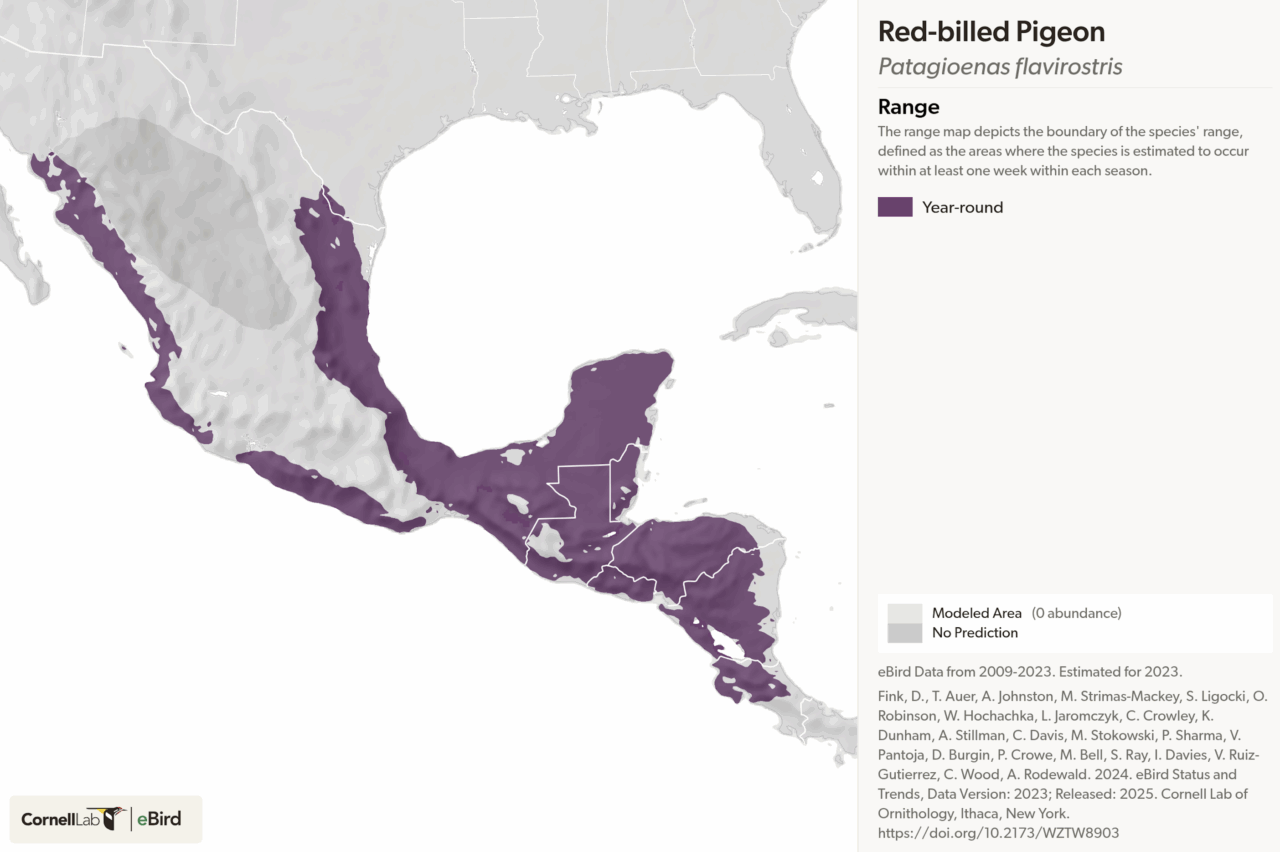
This pigeon is generally nonmigratory, with a range that spans both of Mexico’s coasts. Part of its range extends south into Central America, and a small sliver of the breeding range spans the very tip of the Texas/Mexico border.
Additional Maps
Identification
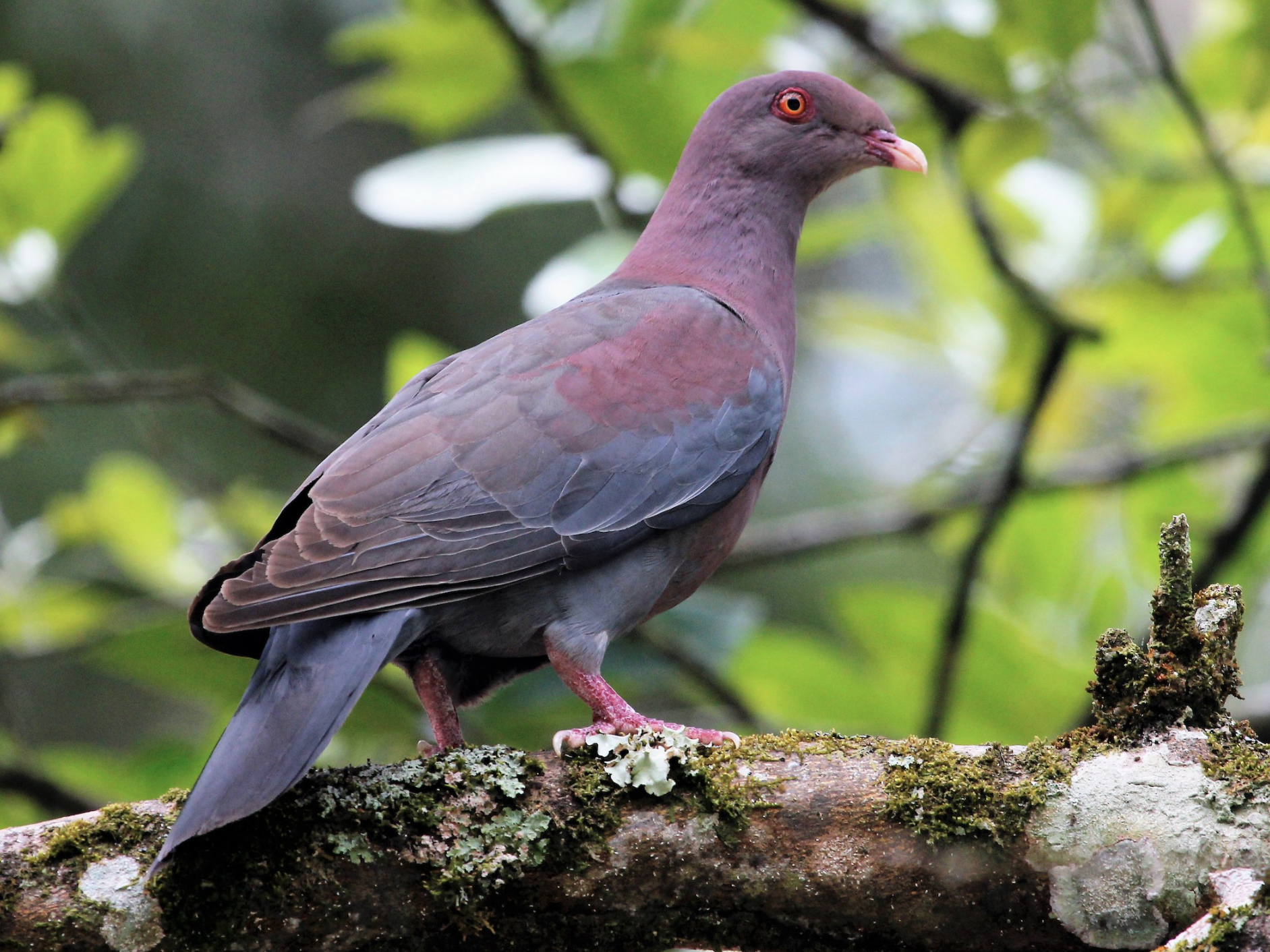
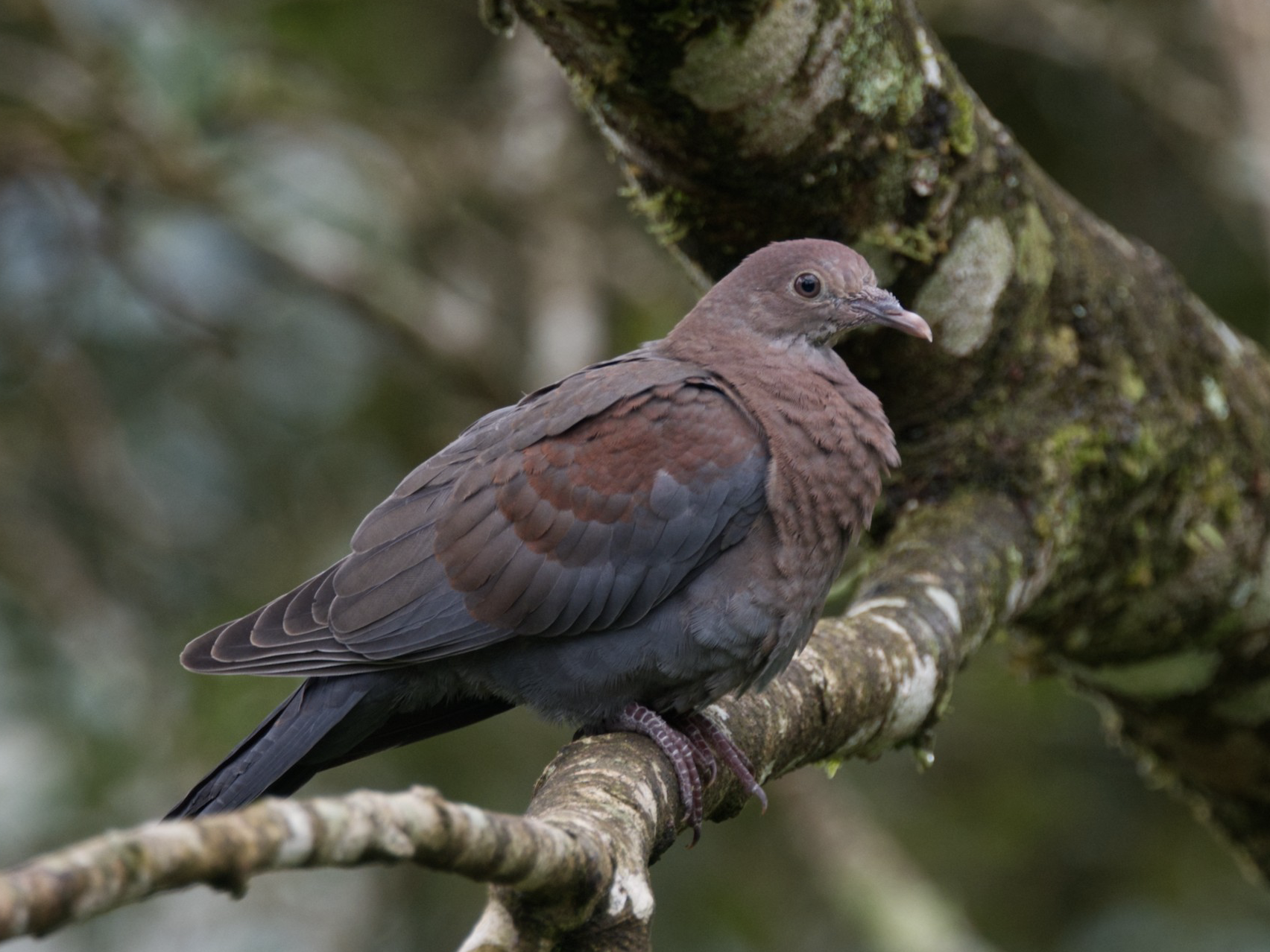
Red-billed Pigeons are attractive, medium-sized birds with a rounded tail and wings, a small curved bill, and striking red eyes. Their feet and bill are pink rather than red, while their body plumage is a striking mix of mauve, purple, grey, and pinkish hues. Females and males appear visually very similar, although sometimes the warmth and pigment of the feathers vary, while juveniles have the same patterning of colors but lack the brightness of the colors. Their eyes are black, and their bills and feet are a gray-purple shade rather than their adult counterpart’s bright pink. The song of the Red-billed Pigeon is a series of cooing sounds in various lengths, pitches, and notes. The beginning of the song is always a singular drawn out ‘cooo.’ The common call of these birds is a gruff sound usually called a ‘growl.’
Habitat
The Red-billed Pigeon inhabits tropical and subtropical forests, where it is most commonly found in lowland and foothill regions. It prefers dense, mature forests with tall trees that provide ample fruit, which makes up the majority of its diet. This species is often seen in forest canopies, forest edges, and occasionally in secondary growth or wooded agricultural areas, as long as fruiting trees are present. Red-billed Pigeons rely on large, continuous forest habitats for nesting and feeding, using tall trees both for roosting and for protection from predators.
Conservation Status
- Listed as Decreasing by BirdLife International
- Listed as Least Concern by the International Union for Conservation of Nature (IUCN)
- Listed as Secure by Nature Serve Explorer
Threats to Conservation
The Red-billed Pigeon faces several conservation threats, primarily due to habitat loss and degradation. Large areas of tropical forest are being cleared or fragmented for agriculture, logging, and urban development, reducing the availability of fruiting trees the species depends on for food and nesting. In some regions, the Red-billed Pigeon is also threatened by hunting, as it is targeted for food. These pressures can lead to population declines, especially where forest cover is limited or poorly protected.
Funding Opportunities
- America the Beautiful Challenge
- Community Forest Program
- ConocoPhillips Partnership for Public and Private Land Managers
- Conservation Nation Grant Program
- Environmental Quality Incentives Program (EQIP)
- Hewlett Foundation- Western Conservation Grants
- Land Trust Bird Conservation Initiative Small Grant Program
- Neotropical Migratory Bird Conservation Act (NMBCA) Grant
- NFWF- America Restoration Grant
- Pacific Birds U.S. Partnership
- Partners for Fish and Wildlife
- Regional Conservation Partnership Program (RCPP)
- Sonoran Joint Venture Awards Program
- The Lawrence Foundation- Environmental Grants
- The Migratory Bird Program
- Tribal Wildlife Grants
- Western Habitat Grant Proposals
- Wildlife Conservation Grants for Species Conservation
- Wildlife Diversity Grant Program
- Wildlife Conservation Grants for Species Conservation
- Wildlife Diversity Grant Program