
Ridgway’s Rail (RIRA)
Rallus obsoletus
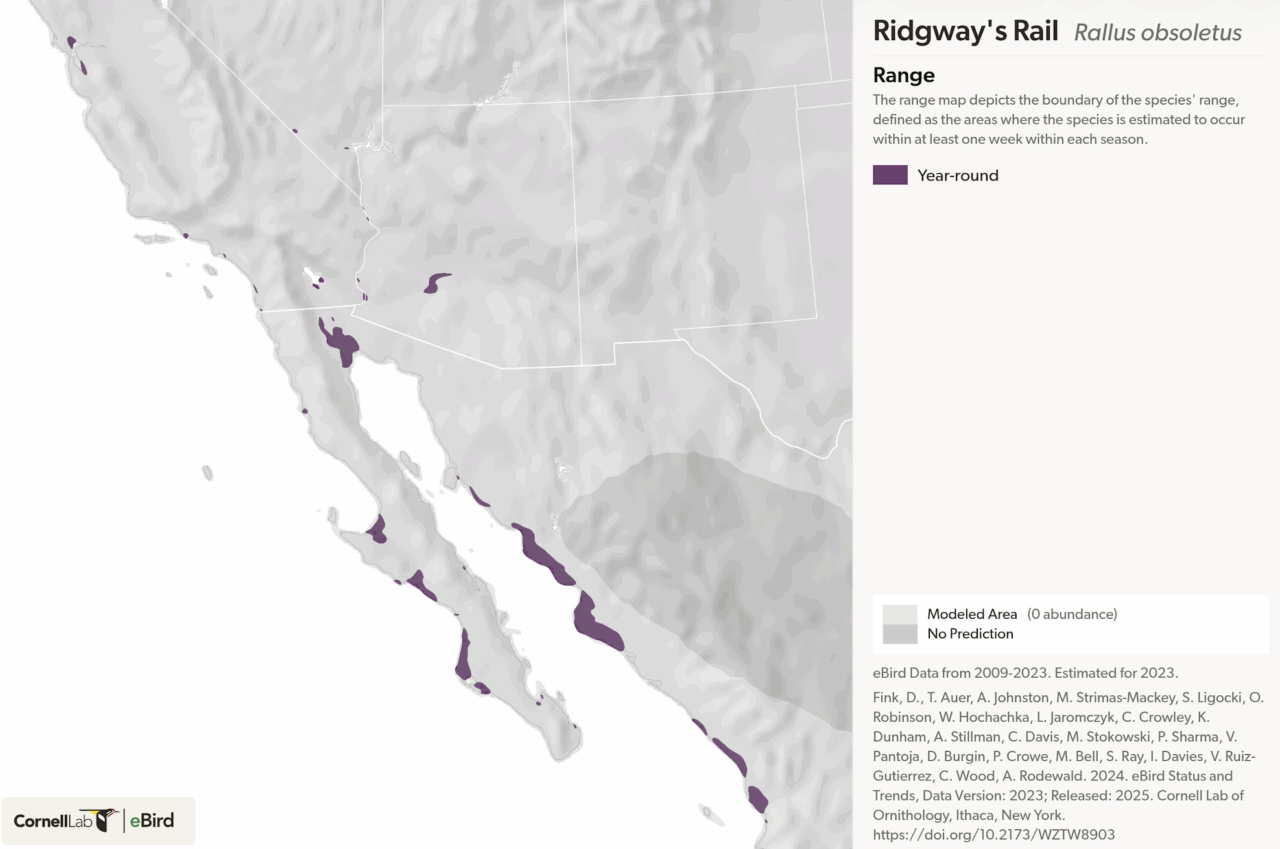
Range
The Ridgway’s Rail is nonmigratory, but spends its life in very specific areas in the Western U.S. and Mexico. California and Arizona are the only states where this species can currently be found, but in the past its range also included parts of Nevada and New Mexico.
Additional Maps
Identification
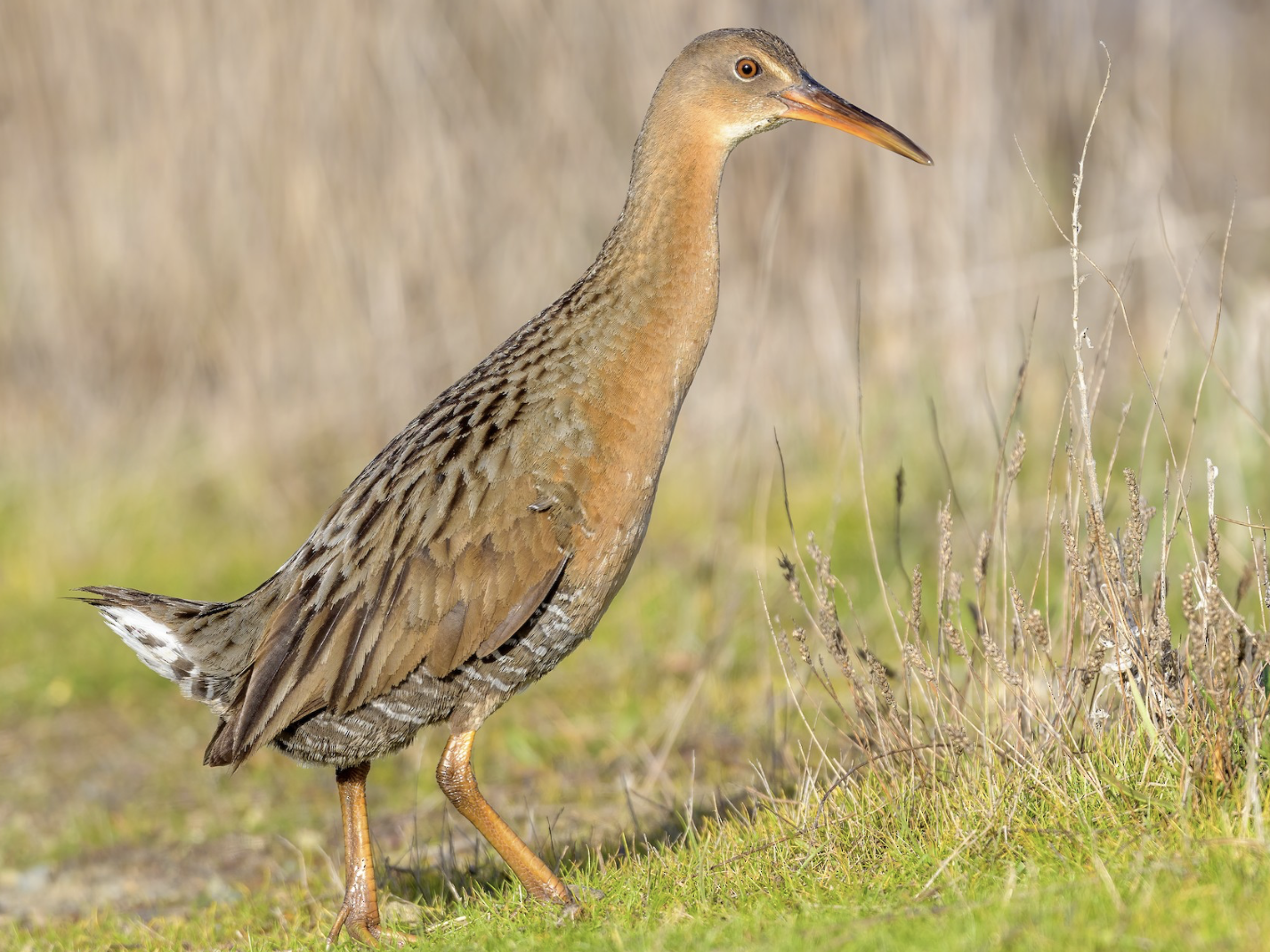
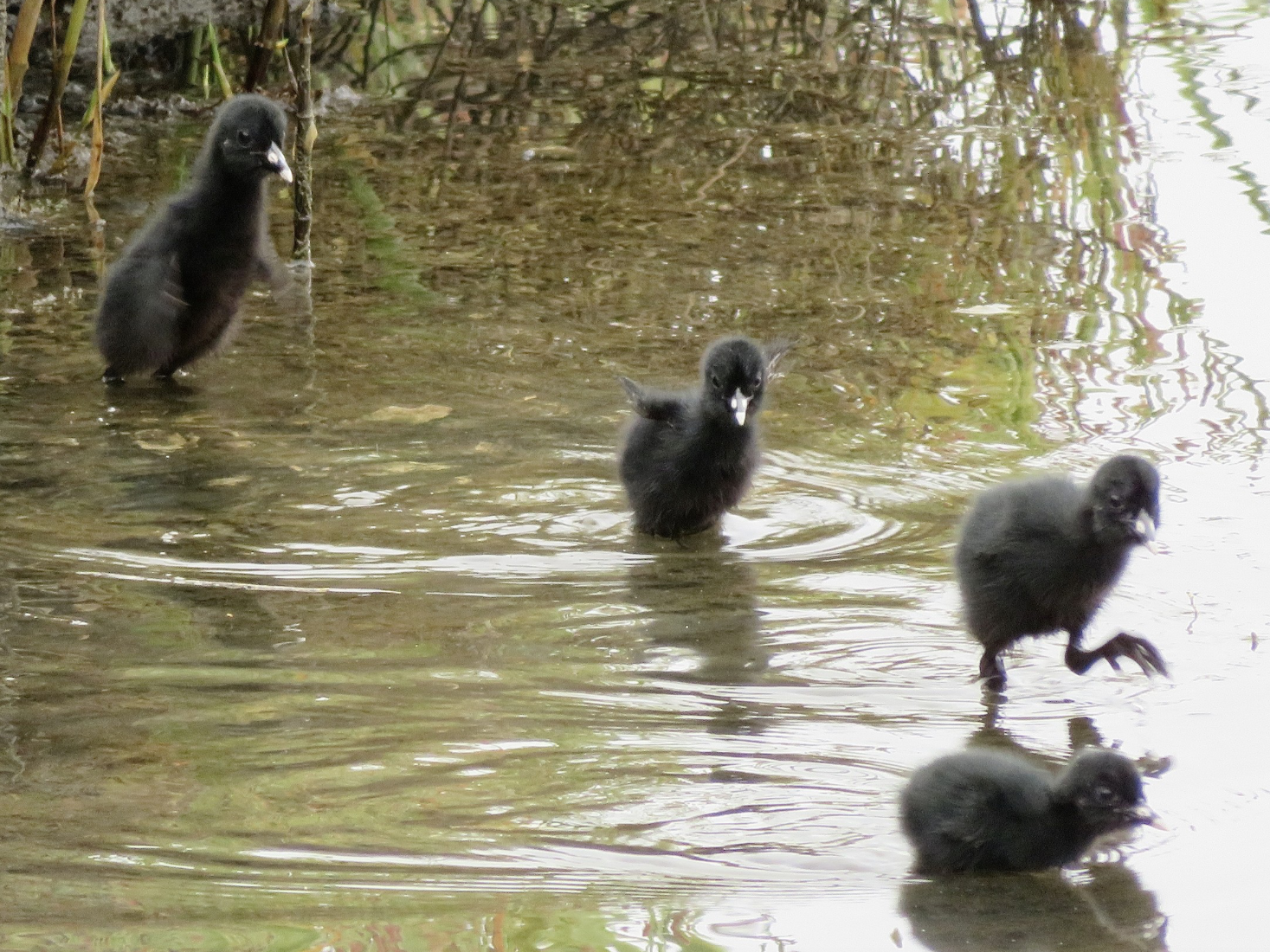
The Ridgway’s Rail is a medium-sized bird with a long neck, slender figure, and extended beak. Males and females appear visually identical with very little plumage differences, and juveniles also appear similar. However, when very young, juveniles are unrecognizable—entirely covered in fluffy black feathers with light gray bills. Adult Ridgway’s Rails have a warm orange-brown neck and chest, taupe backs and wings, and dark brown dapples on their wings. The underside of their stubby tail is bright white, as is the underside of their throats. These birds rarely make noise, but when they do it sounds like crackles and grunts.
Habitat
The Ridgway’s Rail lives in salt and freshwater marshes, mangrove swamps, and tidal wetlands, foraging in mudflats and creeks. They prefer to hide in dense vegetation, but will occasionally forage in more open areas, almost always near water.
Conservation Status
- Listed as Vulnerable by Arizona State Species of Greatest Conservation Need (pg 286)
- Listed as Decreasing by BirdLife International
- Listed as Vulnerable by California State Species of Greatest Conservation Need (C-21)
- Listed as Near Threatened by the International Union for Conservation of Nature
- Listed as a Critically Imperiled Species by NatureServe Explorer
Threats to Conservation
Due to this bird’s range being so specific and limited, habitat loss and degradation is the biggest threat this bird faces. Many wetlands and marshes have been destroyed for agricultural purposes or developmental uses, and those that remain are surrounded by urbanization, causing the birds constant stress. Due to these birds mainly living on the coast of California in the habitats located within U.S. borders, many tourists along those beaches are unintentionally also causing these birds panic and stress, whether it be during breeding season or in general. The natural dangers of being surrounded by humans—such as window and vehicle collisions—also play a major role in the dwindling numbers of these birds.
Funding Opportunities
- America the Beautiful Challenge
- Community Forest Program
- ConocoPhillips Partnership for Public and Private Land Managers
- Conservation Nation Grant Program
- Conservation Reserve Program
- Environmental Quality Incentives Program (EQIP)
- Hewlett Foundation- Western Conservation Grants
- Land Trust Bird Conservation Initiative Small Grant Program
- Neotropical Migratory Bird Conservation Act (NMBCA) Grant
- NFWF- America Restoration Grant
- Pacific Birds U.S. Partnership
- Partners for Fish and Wildlife
- Regional Conservation Partnership Program (RCPP)
- Sacramento California Grant and Funding
- Sonoran Joint Venture Awards Program
- The Lawrence Foundation- Environmental Grants
- The Migratory Bird Program
- Tribal Wildlife Grants
- Western Habitat Grant Proposals
- Wildlife Conservation Grants for Species Conservation
- Wildlife Diversity Grant Program