
Santa Fe Conservation Trust
Why Bird Conservation?
In an arid landscape such as New Mexico, water is a precious and limited resource. With infrequent rain events and microbursts sometimes bringing a year’s worth of water to an area in a matter of hours, the only thing land managers can plan for is uncertainty—especially as the weather becomes more extreme due to climate change. “We try to get water to soak into the ground when it does come,” says Melissa Houser, Stewardship Director at Santa Fe Conservation Trust (SFCT).
At SFCT’s 300-acre Dovetail property in the Galisteo Basin, addressing these water challenges requires both strategic planning and community involvement. With support from a 2024 small grant, the organization developed a Rangeland Restoration Implementation Plan focused on improving soil stabilization, water infiltration, and wildlife habitat. To inform the plan and assess current site conditions, SFCT first conducted Bullseye Monitoring with volunteers at Dovetail. The organization then used grant funding to plant native shrubs that help stabilize soils while providing food sources for birds and other wildlife. To build capacity for ongoing monitoring associated with the plan, SFCT also held three eBird and Merlin Bird ID training workshops for staff and volunteers during the grant period.
Spotlight Resources: Conservation Planning, Volunteers, Collaborative Partnerships, Bird-friendly Habitat Management
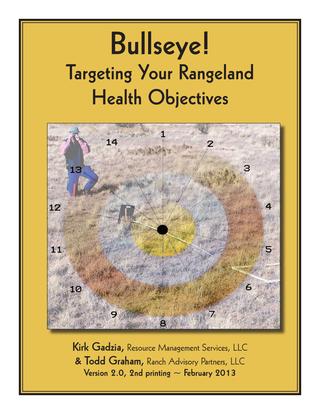
A former cattle ranch with serious erosion issues, including head cuts and gullies, the Dovetail property includes “many areas that need to be healed,” says Houser. Before restoration work began, SFCT hosted two Bullseye Monitoring surveys with volunteers at the site. Bullseye Monitoring provides a means of tracking changes on the land using 14 indicators of rangeland health, including measures of bare ground, nutrient cycling, and plant composition and health. The approach combines quantitative monitoring with qualitative assessment for a complete picture of rangeland health.
Houser says Bullseye Monitoring is more intuitive than other approaches, providing a visual representation of the effects of land management activities. At each monitoring point, a score is assigned for 14 qualitative indicators of rangeland health—such as erosion, litter amount, and plant vigor—which are plotted on a bullseye diagram. The goal is for the 14 indicator dots on the Bullseye Monitoring chart to move towards the center over time—eventually clustering around the bullseye to indicate a healthy ecosystem. With 20 permanent monitoring points now established at Dovetail, SFCT will conduct Bullseye Monitoring annually to track changes to the grasslands in the future.
To guide restoration efforts at Dovetail, SFCT worked with Ecotone Landscape Planning to draft a Rangeland Restoration Implementation Plan. Using the results from the Bullseye Monitoring surveys as a baseline, the plan provides direction for future activities to restore habitat for birds and other wildlife at the site. Recommended treatments for the meadows on the property include selective removal of junipers that have encroached on grasslands, grazing goats to suppress weeds, and planting native grasses and shrubs.
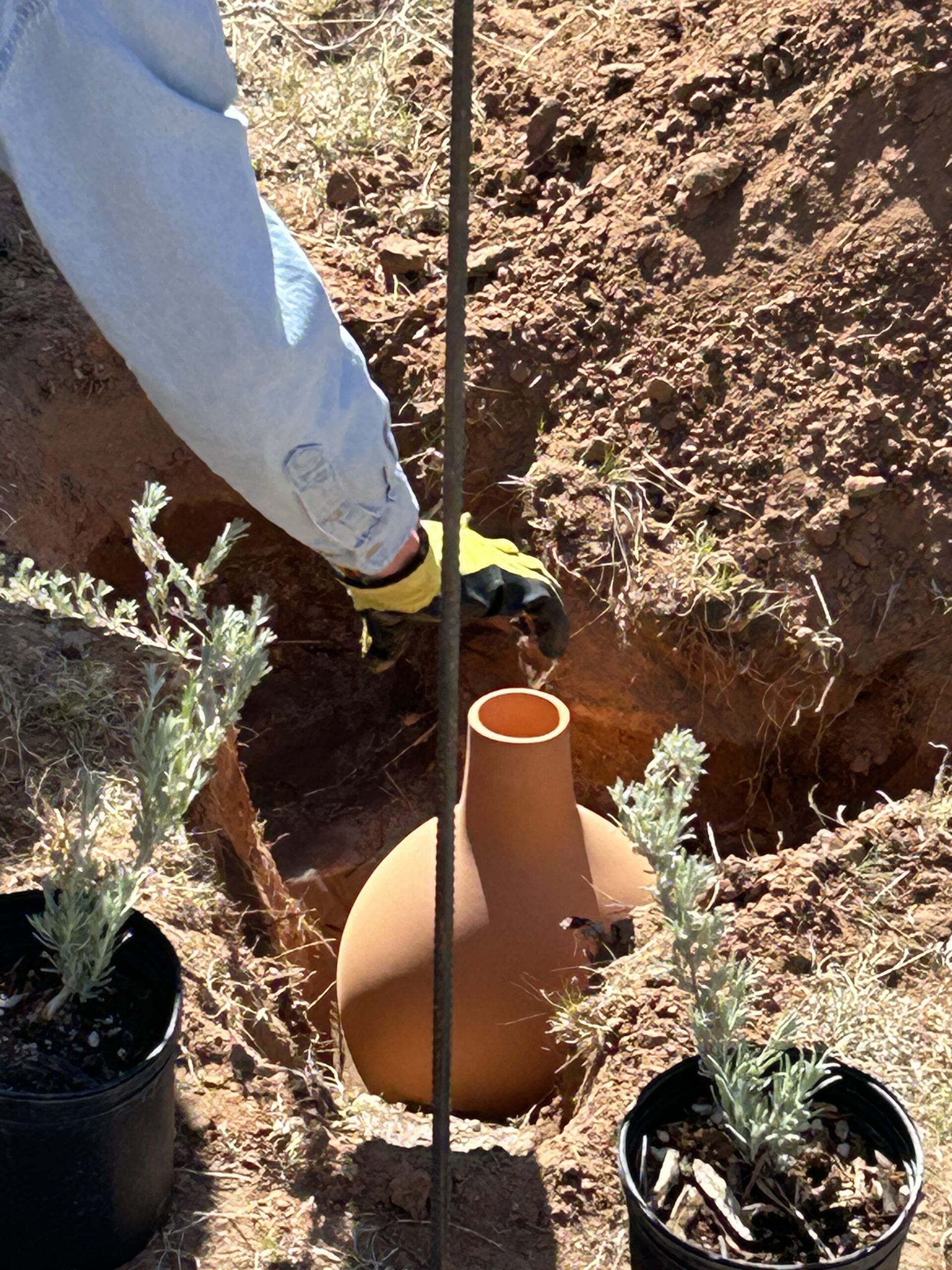
With the help of the Santa Fe Chapter of the New Mexico Native Plant Society, SFCT chose shrub species to begin this work. Along with 18 volunteers, SFCT staff planted 45 three-leaf sumac and winterfat shrubs to help stabilize soils and provide food for birds. Plants need all the help they can get to establish themselves in New Mexico, says Houser, so the shrubs were planted alongside Oya™ pots, which are slow-watering clay pots. So far, 100% of the shrubs have survived—thanks to the dedicated volunteers who filled the Oya™ pots with water every week from April to October.
To encourage Dovetail visitors to start documenting bird observations and track changes over time, SFCT conducted three eBird/Merlin workshops on site. Through this outreach, about 30 people learned how to use the apps. Using the explore feature of Merlin Bird ID, Houser created a “Bird Bingo” sheet to help participants identify species they were likely to find at Dovetail.
Making the Connection

Although no one called out “Bingo” at the eBird/Merlin workshop, the impacts were clear. One participant told Houser, “I have had these apps on my phone for two years, but I didn’t know how to use them, and now I do.” This response exemplifies SFCT’s intentional approach to both restoration and community engagement—education and outreach are not afterthoughts, but central to its mission.
“Part of the purpose of the Dovetail property is to use it as an educational demonstration site,” says Houser. While SFCT could often complete restoration workshops faster with trained crews like the Youth Conservation Corps, they deliberately involve some of their 280 volunteers instead. This approach may take longer, but it builds meaningful connections between community members and the land trust’s work.
These connections prove invaluable in multiple ways. They fuel SFCT’s successful fundraising efforts, including their record-breaking 2025 year-end appeal, while also helping participants become better stewards of their own properties. The workshops clearly make a lasting impression: after attending a Bullseye Monitoring session, one participant told Houser, “I can’t look at any piece of ground the same way anymore.”
Advice to Other Land Trusts
You don’t have to be a birder to show people how to use eBird and Merlin.
Melissa Houser

Houser learned a lot from running the workshops at Dovetail—including when to go birding, as it was bitter cold with very little bird activity during the first two early-morning workshops. People came out to all three workshops, but they saw more birds at the last event, which Houser scheduled later in the morning when birds began foraging once their prey, such as insects, became more active after being warmed by the sun.
These hands-on experiences with both the birding workshops and the Oya™ pots reflect Houser’s broader philosophy for land trust work: experiment and try new things. When it comes to property stewardship specifically, she recommends a strategic approach that starts with the big picture. “Consider your long-term goals first,” says Houser. “Next, develop projects that align with that vision, then pursue funding to support them.” This methodology—vision first, projects second, funding third—helped SFCT create a cohesive restoration plan that addresses both ecological needs and community engagement at Dovetail.
Next Steps

SFCT’s restoration work at Dovetail is far from over. With two recently installed wildlife drinkers at the site, birds and mammals are returning to Dovetail, says Houser. Deer, coyote, and bobcats are showing up on wildlife cameras, and birds are regularly seen drinking and foraging near the water sources. To make the drinkers more inviting to birds, SFCT plans to add more perches nearby.
Thanks to a gift from a private donor, the organization will bring goats to the site this summer to help manage weeds—just one of several initiatives guided by their comprehensive Rangeland Restoration Implementation Plan. Other upcoming projects include sowing grass along the edges of a newly constructed accessible trail to prevent erosion and partnering with a biologist to host identification walks and create an herbarium of native grass species.
Houser will also implement assisted migration, an experimental approach that involves planting different tree and shrub species to help them thrive as climate change shifts their current ranges. “We’re thinking about the future,” she explains, noting how Indigenous peoples across New Mexico have long invested in natural resource management for the health of their lands.
This long-term vision drives SFCT’s work at Dovetail: to restore the property to its highest potential of ecological function, moving those monitoring indicator dots closer to the bullseye every year—one species, one season, one restoration project at a time.