
Tricolored Blackbird (TRBL)
Agelaius tricolor


Range
These birds primarily live year-round in the Central Valley of California, but do have some small breeding ranges in northern California, parts of central Oregon, and a small bit of Washington.
Additional Maps
Identification
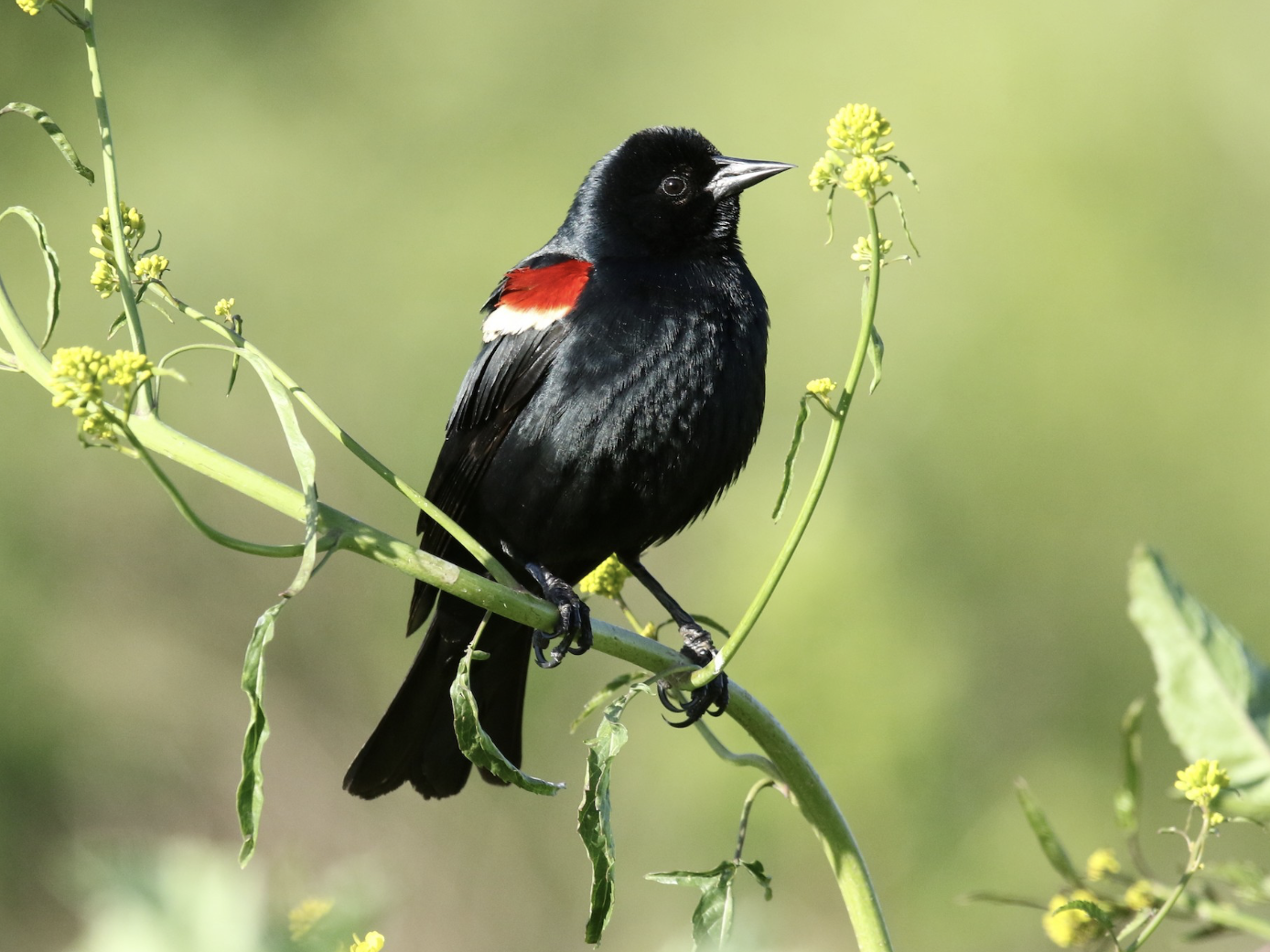
The Tricolored Blackbird is a small stocky songbird with glossy feathers, round head, and a short triangular beak. Males are a stunning jet black, with feathers that shine in the light. They have a patch of bright red on the top of their wings, with a line of bright yellow underneath the red, making these birds easy to spot even from great distances. Females are a dusty brown with mottled shades of tan and dark brown on their wings, back, and chest. They have pale brown streaks on their head, and a light tan throat. The songs of both males and females seem muffled, without any clear notes. The calls of these birds are nasally squeaks.
Habitat
Tricolored Blackbirds primarily breed in freshwater marshes and agricultural fields, particularly in wheat, rye, and other grain fields. They also forage in a variety of habitats including grasslands, pastures, and feedlots. Historically they nested in wetlands, but due to habitat loss, now utilize agricultural areas, which can create conflicts with farming practices.
Conservation Status
- Listed as Decreasing by BirdLife International
- Listed as Vulnerable by California State Species of Greatest Conservation Need (C-24)
- Listed as Endangered by the International Union for Conservation of Nature
- Listed as Critically Imperiled by NatureServe Explorer
- Listed as Vulnerable by Oregon State Species of Greatest Conservation Need
- An Red-Alert Species by Road to Recovery
Threats to Conservation
Tricolored Blackbirds face several significant threats to their conservation, primarily stemming from habitat loss and breeding disruptions. These include habitat loss due to development and agricultural practices, large-scale breeding failure in harvested agricultural fields, and vulnerability to human disturbance. Loss of historic wetlands and marshes limit the options parent birds have, even when faced with consistent failure to raise chicks in a particular location year after year.
Funding Opportunities
- America the Beautiful Challenge
- Community Forest Program
- ConocoPhillips Partnership for Public and Private Land Managers
- Conservation Nation Grant Program
- Conservation Reserve Program
- Environmental Quality Incentives Program (EQIP)
- Fish and Wildlife Grants List for California
- Hewlett Foundation- Western Conservation Grants
- Land Trust Bird Conservation Initiative Small Grant Program
- Neotropical Migratory Bird Conservation Act (NMBCA) Grant
- NFWF- America Restoration Grant
- Pacific Birds U.S. Partnership
- Partners for Fish and Wildlife
- Point Blue California Restoration Grant
- Regional Conservation Partnership Program (RCPP)
- Sacramento California Grant and Funding
- The Lawrence Foundation- Environmental Grants
- The Migratory Bird Program
- Tribal Wildlife Grants
- Western Habitat Grant Proposals
- Wildlife Conservation Grants for Species Conservation
- Wildlife Diversity Grant Program