Willistown Conservation Trust & The Grassland Bird Collaboration
Why Bird Conservation?
At Willistown Conservation Trust (WCT) in southeastern Pennsylvania, bird conservation is more than a program area—it’s a powerful way to connect people to the land. Birds are beautiful, ubiquitous, and easy for people to relate to, whether they breed in local farm fields or show up at banding stations. As Lisa Kiziuk, WCT’s Director of Bird Conservation, explains, “Birds are ecological indicators. They’re in every landscape, and they can be the bridge between humans and the wilderness.”
That bridge is especially important in the greater Doe Run area, about 40 miles west of Philadelphia, where private lands make up much of the conservation landscape. Protecting land from development is only the first step for land trusts; the challenge is helping landowners see how their property fits into a larger ecological network. Birds provide an accessible, engaging entry point into that conversation. When people hear a Bobolink singing or see a migration map of “their” birds tracked through the Motus Wildlife Tracking System, conservation becomes personal.
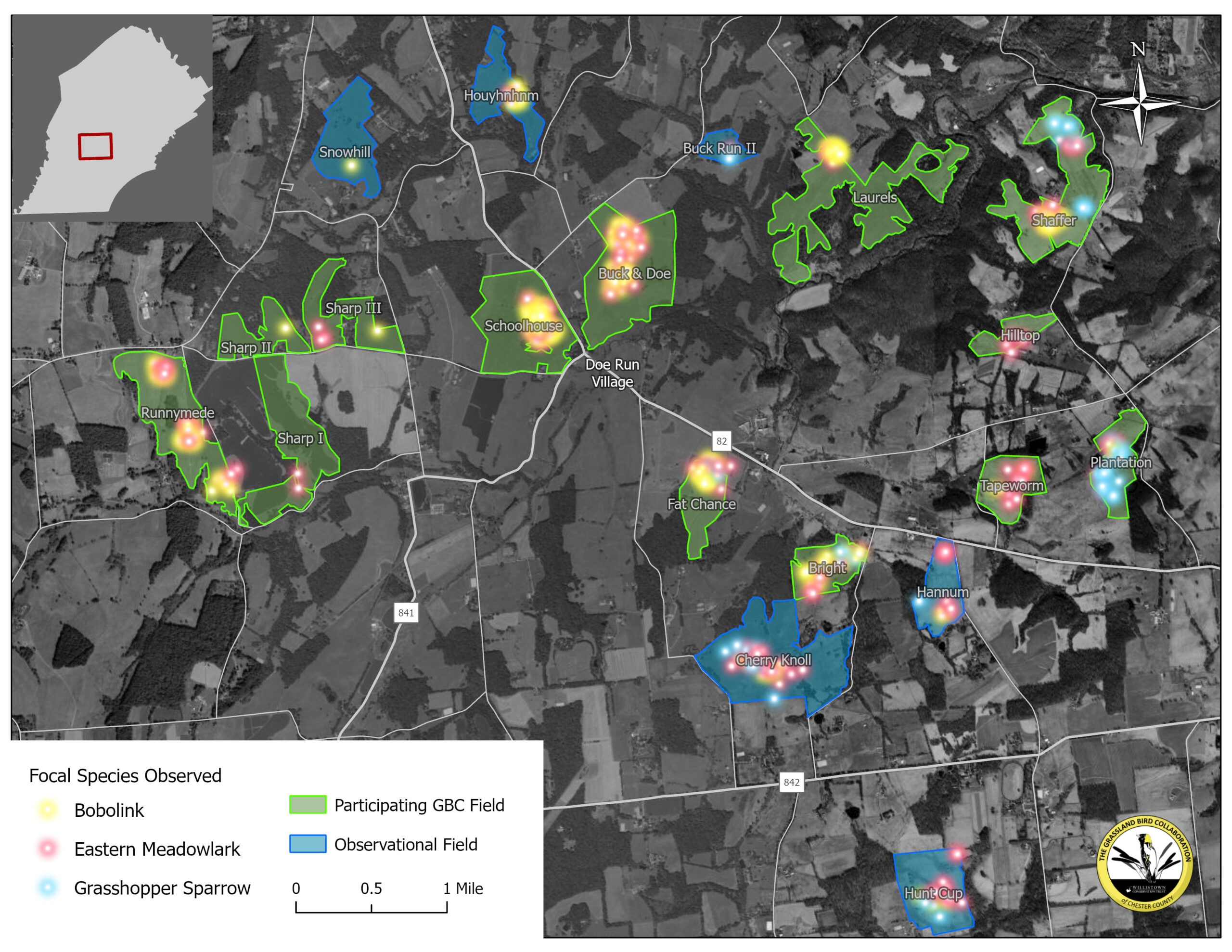
The Grassland Bird Collaboration (GBC), launched by WCT in 2022, harnesses that connection to address a troubling trend: steep population declines in species such as Bobolink, Eastern Meadowlark, and Grasshopper Sparrow. Grasslands are among the most imperiled bird habitats in the Northeast, and without the active management provided by farmers, essential acres of grassland bird habitat would not exist. The GBC functions within this working landscape, bringing together farmers, landowners, conservation organizations, and researchers to conserve critical breeding habitat.
With support of a small grant from the Land Trust Initiative in 2023 and another in 2024, the GBC enrolled about 1,600 acres in delayed mow management over the course of two years, with another 720 acres enrolled as observational fields where management was not altered but bird activity was observed. Additionally, the GBC partnered with the American Mushroom Institute to author an article, “For the Birds: How Compost Can Aid in Grassland Bird Conservation and Sustainability,” which was published in Mushroom News, a national trade publication. Other outreach included a radio story on a local NPR station and events focused on grassland bird conservation; the small grants also helped support research through bird surveys and the deployment of geolocators—light level sensors that detect a bird’s geographical location—placed on Bobolinks to fill data gaps regarding the species’ habitat use throughout its lifecycle.
Spotlight Resources: Collaborative Partnerships, Bird-friendly Habitat Management, Monitoring/eBird
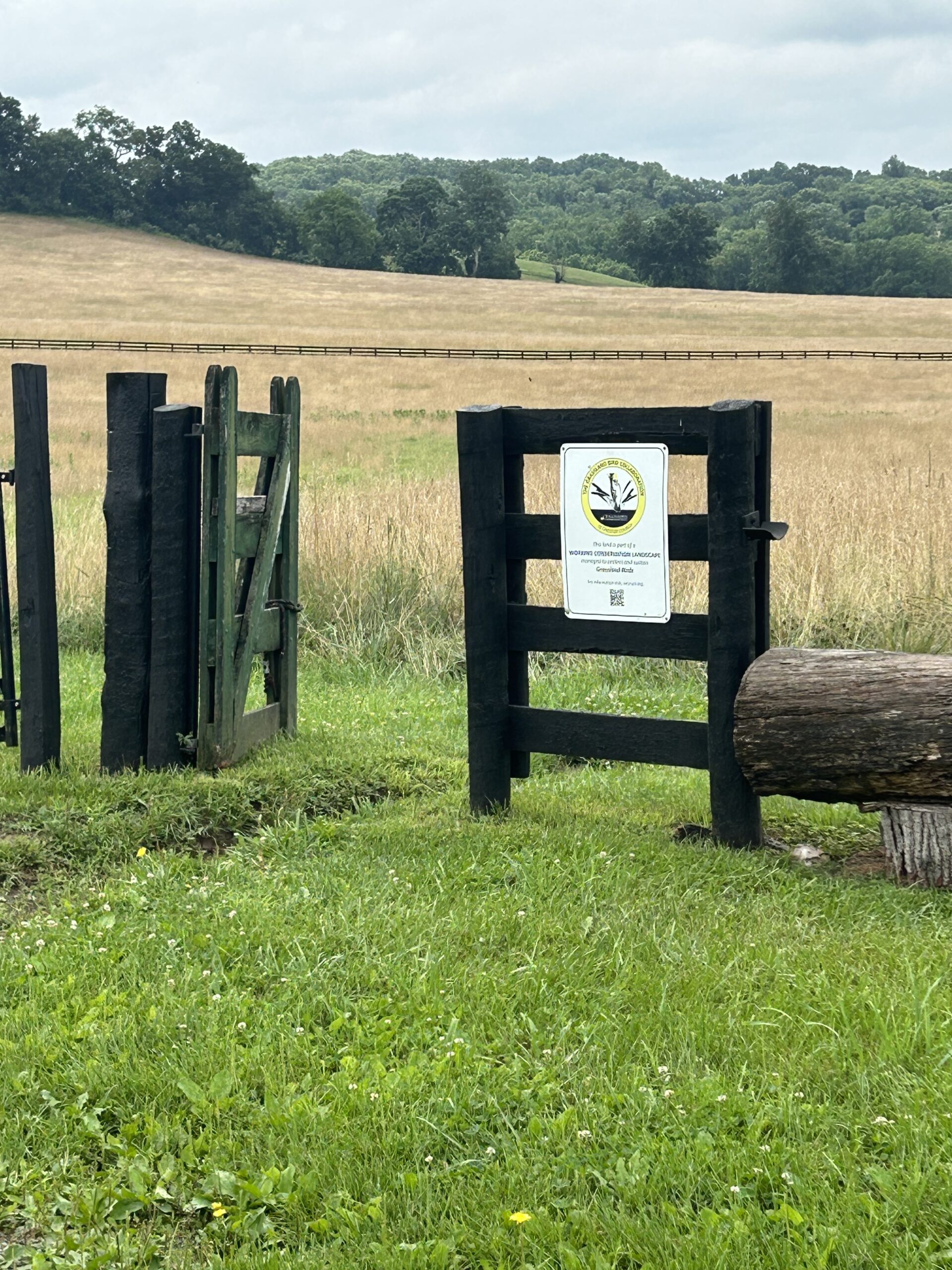
The GBC’s focal area is Chester County’s working farmland and preserved open spaces, where other conservation organizations, including Brandywine Conservancy and Natural Lands, partner with the GBC to help reach new landowners. Known as the “Mushroom Capital of the World,” Chester County dominates U.S. mushroom production, contributing approximately 60% of the country’s total output.
This niche industry prefers later-cut hay for mushroom compost, creating a unique opportunity for farm management alignment and implementation of delayed mowing, a practice that allows grassland birds to successfully reproduce before fields are cut.
Enrollment in GBC’s program starts with conversations. Zoe Warner, GBC’s program manager, emphasizes flexibility: “We’re not being prescriptive. We layer what the birds are telling us with feedback from farmers, and we adjust field by field.” That adaptive approach has led to creative management solutions—a patchwork of early- and late-mowed fields, hayfields left uncut until after breeding, and cattle pastures managed in ways that still support nesting birds.
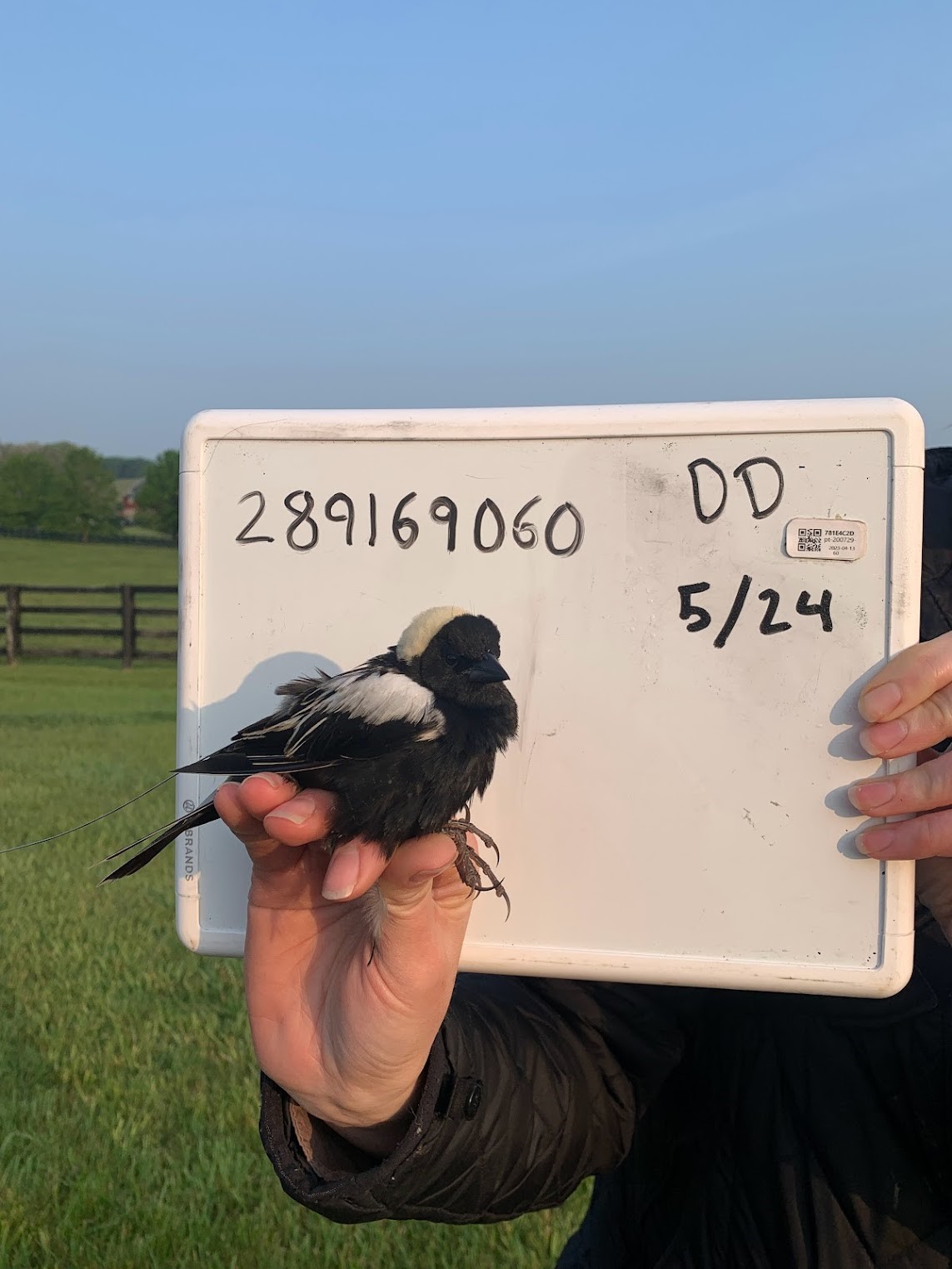
The GBC also invests in research tools. The Motus Wildlife Tracking System uses tiny nanotags to track birds during their full lifecycles, revealing local movements during the breeding season, annual migration routes, and both staging and stopover sites. When landowners see maps showing “their” Bobolinks connecting with birds tagged in Vermont and Maine, interest spikes. One supporter was so inspired he funded his own Motus station; another began referring to the returning Bobolinks as “my birds” and was inspired to take a more active stewardship role in conserving habitat for the species.
On-the-ground monitoring is equally important. Point-count surveys, led by skilled observers like Connor O’hea, document bird populations and breeding activity on the GBC’s enrolled fields throughout the season. Data is entered into GIS for analysis and shared with the public through eBird (with privacy protections for private lands), contributing to the broader scientific community’s understanding of grassland bird populations.
Making the Connection
The GBC’s success is built on relationships. In a region many landowners are not farming their own land and farmers have been on the land for generations, trust takes time to build. “We don’t tell them what to do,” says Kiziuk. “We listen, find common ground, and work from there.”
That listening has uncovered surprising alignments between agricultural needs and bird conservation. Delaying hay cutting can be beneficial for farmers who supply mushroom growers, as it helps spread out their workload. This is especially helpful during early summer when they face time constraints and must manage multiple fields that need mowing within a brief period. Cattle farmers may already provide excellent habitat without realizing it due to their rotational grazing practices. When drought or other pressures make delayed mowing impractical, the GBC adapts, shifting bird conservation efforts to other fields within the larger landscape.
Partnerships extend beyond local borders. Through Motus, WCT is connected to a network of 29 states and multiple countries tracking species such as Wood Thrush. Collaborations with researchers in Vermont and Maine have already revealed shared stopover sites for Bobolinks. These insights open the door to full annual cycle conservation, in which breeding, migration, and wintering needs may all be considered in management decisions and research findings shared with local landowners.
Perhaps the most compelling connection is the shift in how people view the land itself. “The preserved landscape isn’t just open space anymore,” says Warner. “It’s a working conservation landscape that supports agriculture and essential breeding grounds for grassland birds.”
Advice to Other Land Trusts
For land trusts looking to launch similar programs, both Kiziuk and Warner stress the importance of starting with listening. “Begin by hearing people’s experiences,” says Warner. “Think about how you can fit into what they’re already doing, instead of going right to limitations and constraints.”
WCT’s experience shows that conservation outcomes often emerge from collaboration and creativity. Farmers face global pressures like rising fertilizer costs, climate change, and shifting markets. “We’ve learned as much from the farmers and landowners as they’ve learned from us,” says Warner. A willingness to brainstorm together can lead to unexpected synergies—such as exploring worm casting soil amendments as a locally produced alternative to synthetic fertilizer, which may prove to be an organic supplement that improves agricultural productivity while supporting healthy grassland for birds.
Another key lesson is to embrace flexibility in management. Grasshopper Sparrows may thrive in early-mowed fields once regrowth occurs, while Eastern Meadowlarks can more often nest successfully in both early- and late-mowed areas. Recognizing these species-specific needs allows conservation organizations to create a mosaic of habitats across the landscape.
Finally, harness the power of technology and storytelling. Creating tangible experiences for the public—whether it’s sharing a migration map from Motus or releasing a Savannah Sparrow from a banding station—can deepen community engagement and foster an ethic of stewardship. “When people see birds up close, it changes the way they look at them,” says Kiziuk.
Next Steps

The GBC is looking ahead to several promising directions. Geolocator data tracking a full year of bird movements will soon provide richer insights into local habitat use, migration patterns, staging areas, and wintering grounds. Understanding where birds concentrate outside the breeding season could lead to targeted conservation partnerships with organizations in critical stopover or winter habitats.
Locally, the GBC is exploring the role of soil health in sustainable bird-friendly farming. Investigating questions about nitrogen loss from haying, pesticide use, invasive plants, and the potential benefits of organic amendments could shape future management recommendations.
There’s also interest in expanding the program geographically. Neighboring land trusts and towns have expressed interest in joining the effort, and the GBC sees itself as an umbrella organization offering guidance and coordination in the future. The long-term vision is a connected network of working conservation landscapes across the Northeast, each contributing to the survival of grassland birds.
Ultimately, the GBC’s work is about weaving together the threads of conservation, agriculture, and community. Through on-the-ground experimentation, research, and community building, the GBC is creating a model for how working lands can serve both farmers and grassland birds.