
Yellow-billed Magpie (YBMA)
Pica nuttalli
Range
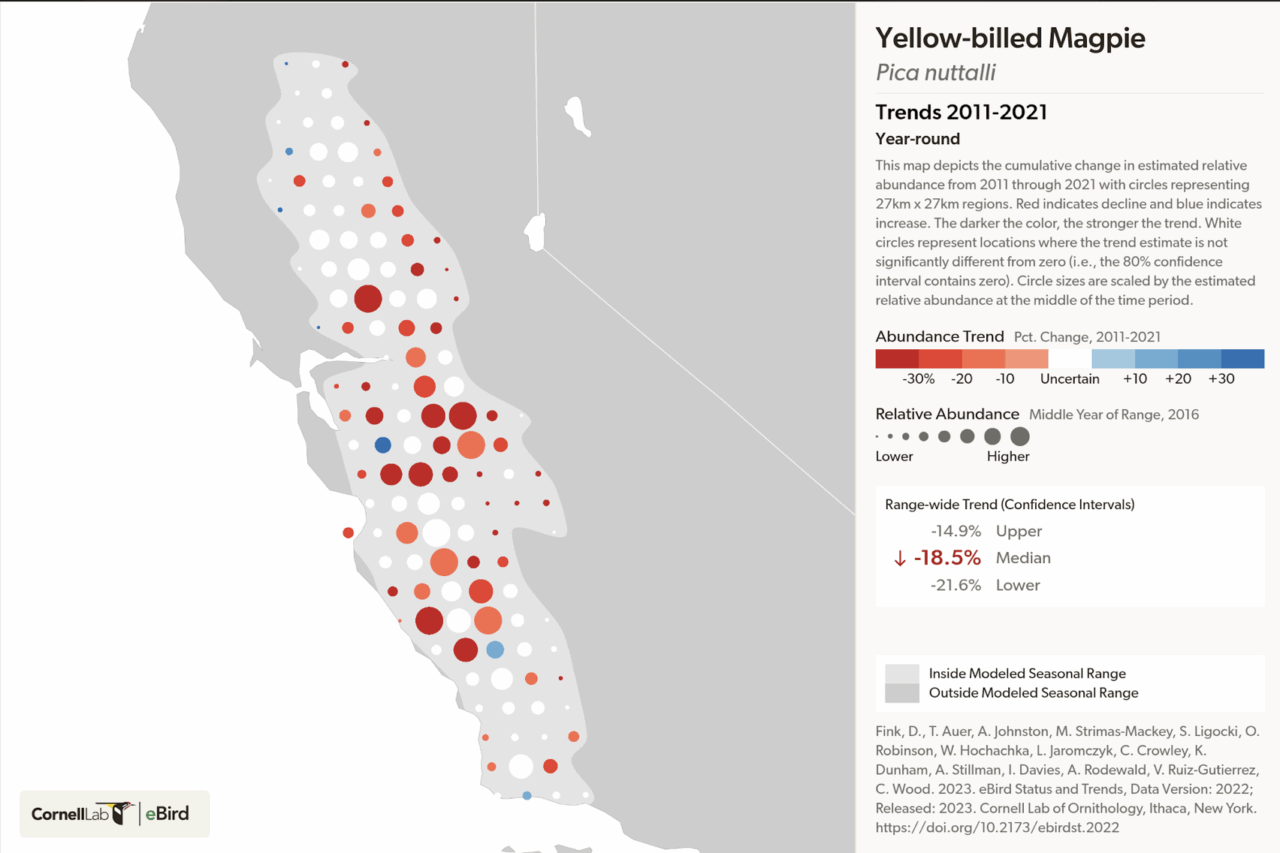
Yellow-billed Magpies are year-round residents in particular areas of California, particularly along the central coast and the Sierra Nevada Mountain range. They are non-migratory, and are not found anywhere else in the world.
Additional Maps
Identification
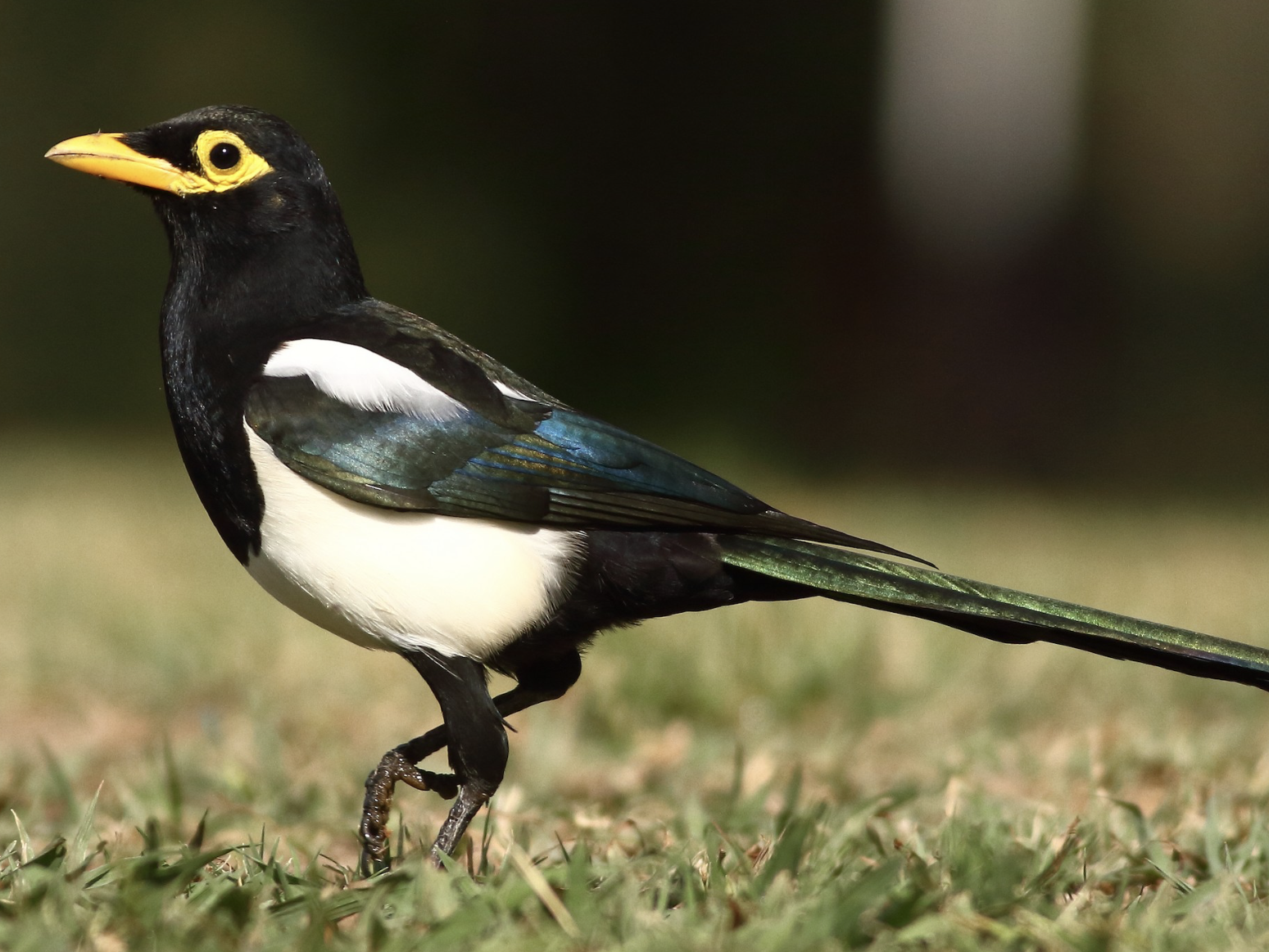
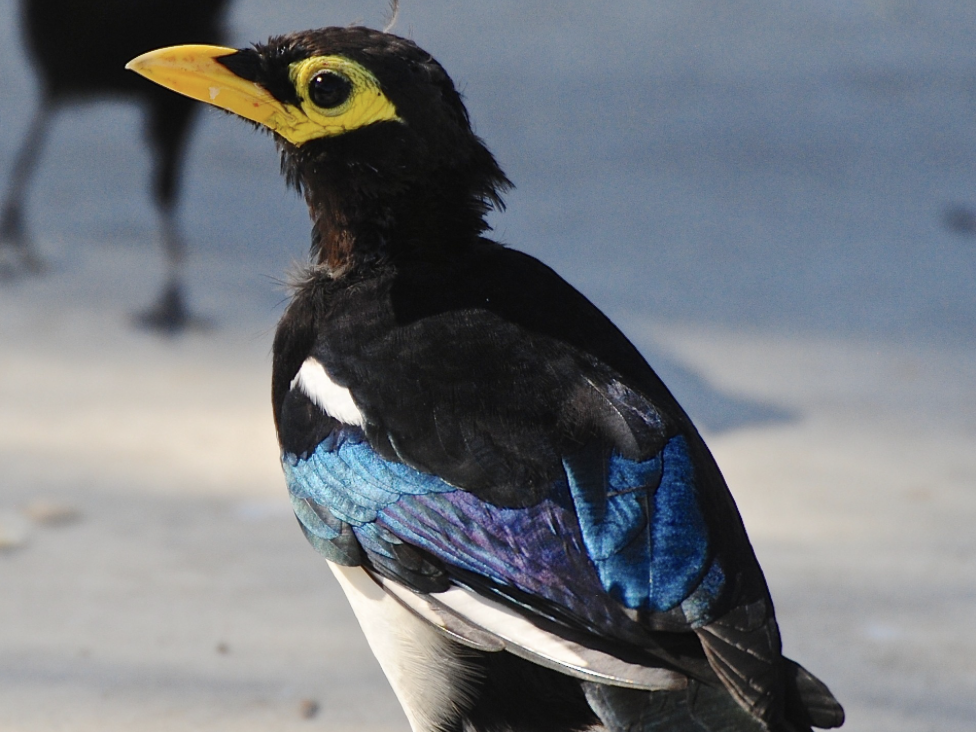
The Yellow-billed Magpie is most identifiable by the same feature that gave it its name: a bright, dandelion-yellow beak. The skin around its eyes is featherless and the same shade as its bill, making this bird easy to spot and identify from a great distance. In addition to its yellow facial features, the underbelly and top of its wings are a bright white, with the rest of the feathers being a beautiful black with holographic green, blue, and purple hues that shimmer in the light. The tail is similarly colored. The rest of the bird, including head, chest, back, and legs, are jet black. Juveniles appear similar to adults, with the exception of less white on the wings and belly, and usually being more gray than white. The call of a Yellow-billed Magpie is a harsh, rapid-fire, caw-like sound. Occasionally, their squawks sound like chickens clucking.
Habitat
Yellow-billed Magpies are endemic to California, and do not migrate, so they can only be seen along the state’s central coast and the foothills of the Sierra Nevada mountain range. They prefer oak woodlands or open savannas, but can also be spotted occasionally foraging in grasslands, pastures, orchards, and fields. They seem to prefer locations with oak, willow, and sycamore tree species.
Conservation Status
- Listed as Vulnerable by BirdLife International
- Listed as Decreasing by the International Union for Conservation of Nature (IUCN)
- Listed as a Red-Alert Species by Road to Recovery
Threats to Conservation
Yellow-billed Magpies face loss of habitat due to severe urbanization of their habitats across California. Due to their limited range and endemic nature, they cannot find other locations to live, breed, and nurture young. Agricultural development across California combined with the use of pesticides and rodenticides has also taken its toll on this species’ population over the years. Habitat degradation and disease is their main threat, as their small numbers and limited range would not be able to handle a widespread illness.
Funding Opportunities
- America the Beautiful Challenge
- Community Forest Program
- ConocoPhillips Partnership for Public and Private Land Managers
- Conservation Nation Grant Program
- Conservation Reserve Program
- Environmental Quality Incentives Program (EQIP)
- Fish and Wildlife Grants List for California
- Hewlett Foundation- Western Conservation Grants
- Land Trust Bird Conservation Initiative Small Grant Program
- Neotropical Migratory Bird Conservation Act (NMBCA) Grant
- NFWF- America Restoration Grant
- Pacific Birds U.S. Partnership
- Partners for Fish and Wildlife
- Point Blue California Restoration Grant
- Regional Conservation Partnership Program (RCPP)
- Sacramento California Grant and Funding
- The Lawrence Foundation- Environmental Grants
- The Migratory Bird Program
- Tribal Wildlife Grants
- Western Habitat Grant Proposals
- Wildlife Conservation Grants for Species Conservation
- Wildlife Diversity Grant Program