
Rediscovering Our Birds and Nature
The story of CONA Suruku’a (Suruku’a Nature watchers Club) began in 2021, in the midst of the chaos and uncertainty caused by the Covid-19 pandemic. As the world struggled to adapt to a new reality, a small group of young people decided to pause and observe what many were overlooking: the nature around them. In a city increasingly dominated by concrete, car horns and the haze of urban expansion, they realized that for much of the population of Itauguá, Paraguay, green spaces had become nearly invisible.
Driven by concern and a deep love for nature, these young people approached Professor Julio César Oviedo with a clear idea: to launch a project that would inspire people to reconnect with the nature. And so, CONA Suruku’a was born—rooted in the values of teaching, learning, discovering, loving, and ultimately protecting the Paraguayan wildlife. It was precisely this genuine passion for nature and its cultural roots that led them to be awarded a mini-grant by the Cornell Lab of Ornithology.
Their activities began at one of the city’s most important natural areas: Cerro Patiño (Patiño Hill). This green sanctuary not only dazzles with its natural beauty but also plays a vital role in maintaining the region’s environmental balance. It helps protect Lake Ypacaraí and underground water flow, regulates the local microclimate, and supports traditional crops such as wild berries. During their first visit, people of all ages walked the trails and were amazed by the rich bird diversity. One of the standout species was the Surucuá Aurora (Trogon surrucura), a vibrant, colorful bird that has become the symbol of the club. This outing was a turning point. Participants learned about threats facing the hill such as wildfires, stone extraction, and urban development. They then engaged in a collective reflection to spark awareness and love for this invaluable natural treasure.
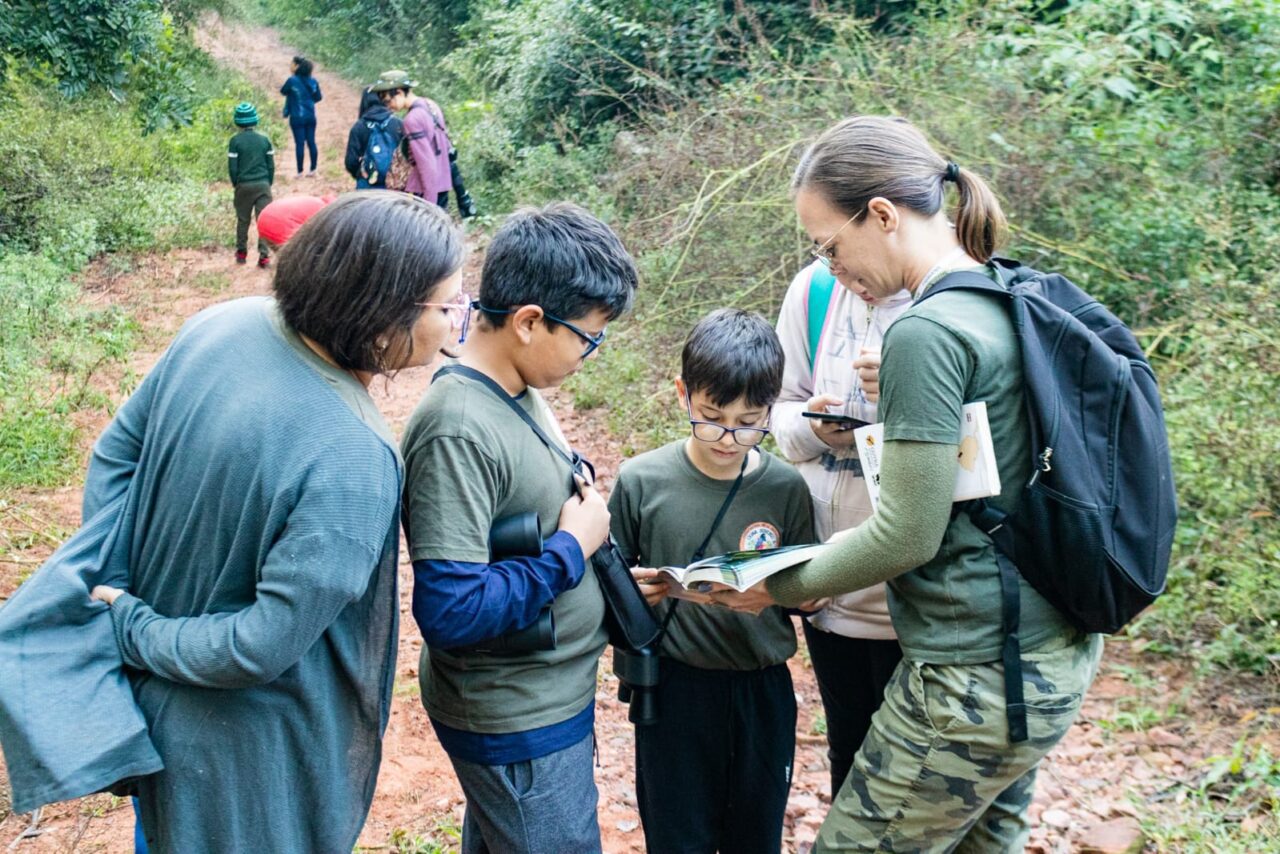


In another event, a group of students joined the team for a visit to Cerro Patiño as part of an educational project focused on protecting the area. This activity not only deepened participants’ connection with nature but also enriched their learning experience through the guidance of experts like Aníbal Domaniczky, Fernando Beconi, Dominic Oviedo, Patricia Sánchez, and José Sánchez, who generously shared their knowledge and commitment to conservation.


The group also explored the wetlands surrounding Lake Ypacaraí, guided by Edgar Romero and Francisco Capli. Fueled by enthusiasm, the team managed to record more than 50 bird species in a short time—a remarkable achievement for the region! Participants gained valuable insights into both migratory and resident birds, as well as the specific behaviors of certain species.


Later, CONA Suruku’a partnered with the Volunteer Park Rangers to organize a joint activity at Cerro Koi, a natural area recognized as a World Heritage Site. During this day of community-building and birdwatching participants deepened their knowledge and exchanged strategies for how volunteers can get involved and actively support environmental protection efforts. Once again, the club served as a source of inspiration for action in defense of nature. They also visited Cerro Naranjo (Naranjo Hill), a site that, despite human activity, still shelters valuable species such as native lizards found in the area.


In every field trip participants practiced using bird field guides and participatory science tools like eBird, connecting their observations to a global network of people dedicated to bird and habitat conservation. This knowledge was essential for participating in international events like Global Big Day and October Big Day. During these events, they recorded numerous bird species across diverse ecosystems—urban areas, wetlands, and the Cerro Patiño forest. Beyond the scientific learning these experiences left a lasting impact showing that environmental education can also be fun, inspiring, and truly transformative.
CONA Suruku’a thanks its coordinators and members for their dedication to the organization of each activity. Also, thanks to the experts and volunteers who joined this learning journey, and especially to the Cornell Lab of Ornithology, First Análisis y Estudios, and Francisco Capli for helping to make their vision a reality.
Photos courtesy of CONA Suruku’a.
Website developed by Elisa España Cordón.