Golden-chain Collaborative
Collaborative Overview

Driven by the geospatial and management work of Audubon Vermont, the Golden-chain Collaborative (GCC) connects land trusts, Regional Conservation Partnerships (RCPs), and bird conservation organizations to collaborate on habitat restoration projects that prioritize at-risk bird species, including the Golden-winged Warbler (GWWA).
In Vermont, the GWWA is a flagship species representing young forest and shrubland habitats and the many associated wildlife species. As the northeastern edge of the Golden-winged Warbler’s (GWWA) range, Vermont plays a vital role in efforts to halt or slow the species’ decline. The GCC unites the region’s land trusts and RCPs under the common goal of increasing habitat implementation and connectivity between protected lands critical to GWWAs and their associated species in these early successional habitats.
Program Outcomes
- Developed a habitat model and map prioritizing potential GWWA habitat in Champlain Valley
- Assessed 6,000+ acres and managed 800+ acres for GWWA and associated species since 2019
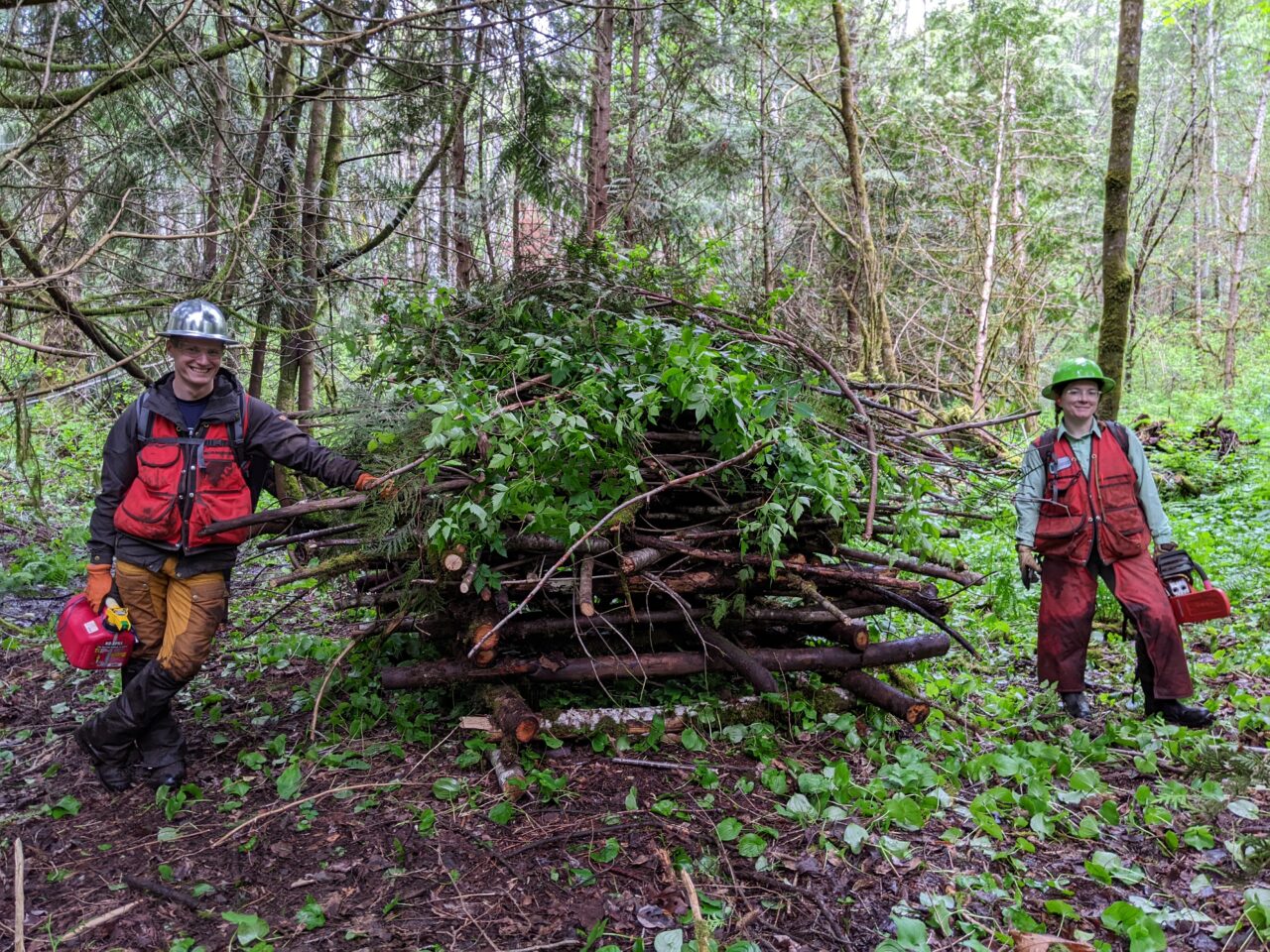
- Conducted early successional habitat/young forest management on 15 land trust and 20 public/private properties
- Hosted 20+ outreach events with eBird
- Ran bird surveys to identify GWWA/Blue-winged Warbler ratios in the Champlain Valley
Focal Species

Golden-winged Warbler

Blue-winged Warbler

Prairie Warbler

Eastern Towhee
Contact and Resources
Partners in Conservation


Goals
1) Prioritize, map, and identify areas in western Vermont that are important for the Golden-winged Warbler and associated young forest species through a series of mapping exercises that identify the area and distribution of young forest in western Vermont, the number and area of parcels that are best suited to support young forest bird species, the highest priority parcels for protection, and parcels that could be enhanced through management.
2) Build and implement workshops, events, and an outreach strategy with private landowners and land trust partners who can help to disseminate key messages, build capacity, and engage the public.
3) Conduct habitat assessments associated with the Natural Resources Conservation Services Young Forest Regional Conservation Partnership Program and USFWS Partners Program.
4) Develop and implement conservation strategies and management actions with flexible options on land trust lands to maintain and improve habitat, and inform landowners of incentive programs that will help achieve management goals.
Background
In Vermont, the Golden-winged Warbler (GWWA) is a flagship species representing young forest and shrubland habitats and the many associated wildlife species. Vermont comprises the northeastern most part of the Golden-winged Warbler’s range, thus the state is a key part of plans to stabilize the declining populations. Land trusts are important to this mission as a large portion of Golden-winged Warbler habitat in Vermont is in people’s backyards. Therefore, the GCC assists conservation efforts on private lands through education, outreach, and management when working with local land trusts.
The GCC helps land trusts access new grant funds and creates opportunities for landowner engagement to protect birds on their land. In 2020, VLT received a small grant to enhance Golden-winged Warbler habitat at a 400-acre property in Charlotte. In Middlebury, Audubon Vermont works with a local land trust to manage protected properties that support Golden-winged Warblers, including Wright Park. In southern Vermont, The Nature Conservancy actively manages two of its preserves for Golden-winged Warblers and other shrubland obligates.
More recently, Audubon Vermont is assisting two newly formed RCPs, the Champlain Valley RCP and Mid-Champlain Valley RCP. With funding from the National Fish and Wildlife Foundation, plantings on three properties were undertaken in 2022. These plantings are the first step in transitioning fallow agriculture land into the shrub habitat structure that Golden-winged Warblers prefer.
The GCC will continue to strengthen relationships between local land trusts and RCPs to connect bird conservation efforts in the region. This will allow land trusts to take a regional perspective when prioritizing new land parcels for protection as well as undertake management actions on lands currently under easement.
Support from Cornell Lab’s Land Trust Bird Conservation Initiative
| Year | Grant Track |
|---|---|
| 2017 | $5K Small Grant |
| 2020 | $20K Small Grant |
| 2023 | $25K Small Grant |
| 2025 | $50K Conservation Collaborative Grant |