Kent Land Trust
Why Bird Conservation?
Protecting wildlife habitat is core to the mission of Kent Land Trust (KLT), and birds help refine that focus while expanding its reach. Birds connect land trust properties in Kent, Connecticut, to a broader world—they visit neighboring fields and forests, migrate across continents, and remind us that local stewardship matters far beyond town lines. They are also powerful indicators of environmental health. Situated in the middle of the food chain, birds can respond relatively quickly to changes in habitat quality; thriving bird populations can signal functioning wetlands, intact forests, and resilient landscapes.
Birds help visitors see how a single restoration or planting is part of something larger. It is one thing to talk about habitat in the abstract; it is another to watch a Wood Duck shepherd eleven ducklings across an oxbow pond that was filled with invasive plants a few seasons earlier. Birds can make the effects of habitat management more visible and signal a successful outcome.
Birds also draw people in through different means. They invite curiosity on trail walks; a hummingbird hovering above a native plant, a brilliant blue Indigo Bunting singing from a hedgerow, an oriole weaving its intricate nest—these are moments that turn casual observers into advocates for bird conservation. Birds create opportunities to engage youth through school field projects and participatory science, building the next generation of stewards and connecting young people to nature.
Through a series of partnerships with the Land Trust Bird Conservation Initiative, KLT’s staff and board has become more science focused, integrating birds and bird data in everyday activities such as programming, stewardship, and project prioritization, says Connie Manes, executive director of KLT. The organization first received a Capacity and Partnership Grant in 2022 to help restore a trail and oxbow pond at the KLT farm and headquarters. After successfully completing this project, KLT was awarded a Management and Restoration Grant in 2023 for its Macedonia Forest Block Important Bird Area Management Plan Implementation Project, an effort that helped strengthen a regional network of partners that continue to collaborate on landscape-scale goals and set bird-friendly forestry work in motion.
Spotlight Resources: Northeast U.S. (NBHCI) Priority Breeding Bird Mapping Tool, eBird, Merlin, Collaborative Partnerships, Conservation Planning, Bird-friendly Habitat Management
Several tools and resources have been especially helpful in weaving birds into the land trust’s day-to-day work. When a 62-acre property in South Kent came under consideration for protection, KLT knew relatively little about it beyond soil types. The Northeast U.S. (NBHCI) Priority Breeding Bird Mapping Tool helped Manes and her staff predict what bird species might be found on the property, which included six birds that are both Species of Greatest Conservation Need and state-listed birds of concern. That insight helped KLT evaluate the property against its project selection criteria and think ahead about stewardship needs. It also strengthened the case for public investment; in fact, KLT secured a state award covering 65% of the purchase price, partly by demonstrating that the habitat could potentially support state-listed birds. The Mapping Tool also guided initial field scouting, giving staff a target list of species to watch for during site visits.
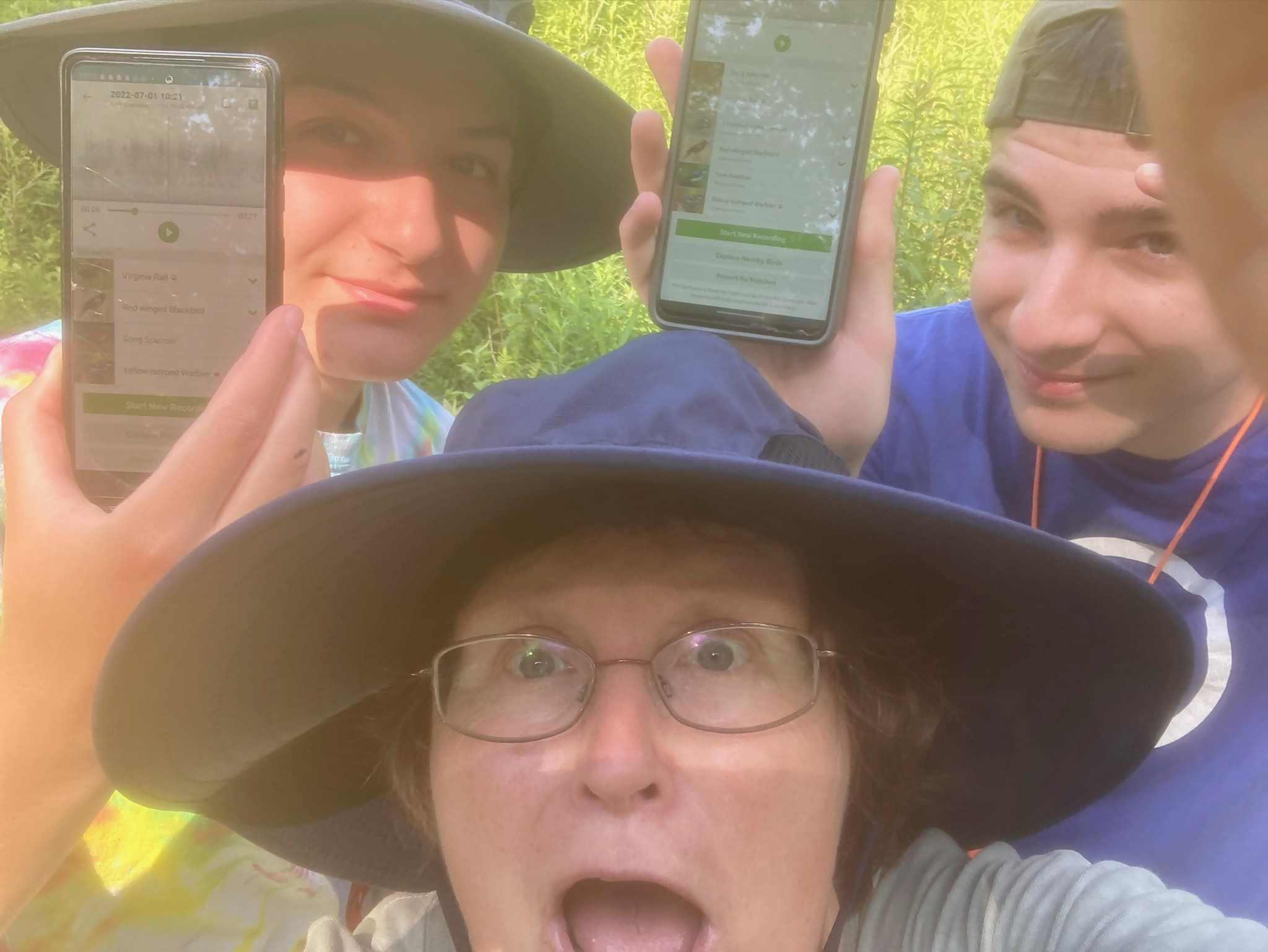
As part of KLT’s first small grant project in 2022, staff and volunteers learned how to submit eBird checklists, which enhanced field data collection and public engagement. KLT also created public hotspots on its preserves and began using the checklist data that was submitted by birders to track outcomes and guide future management. Merlin Bird ID complemented that effort by lowering barriers to participation, allowing newer birders, students, and community members to identify species more confidently and learn in the field.
At a landscape scale, KLT used its 2023 small grant to bring partners back together around the 2019 conservation plan for the Macedonia Forest Block Important Bird Area (MFBIBA), a science-based roadmap for collective action. The MFBIBA is approximately 22,500 acres, about 89% of which is forested, and contains a state park as well as thousands of acres of privately-owned lands. Guided by the plan for the MFBIBA, KLT worked with partners to align goals, share knowledge, and translate plan concepts into on-the-ground projects, including two bird-friendly habitat management demonstration sites.
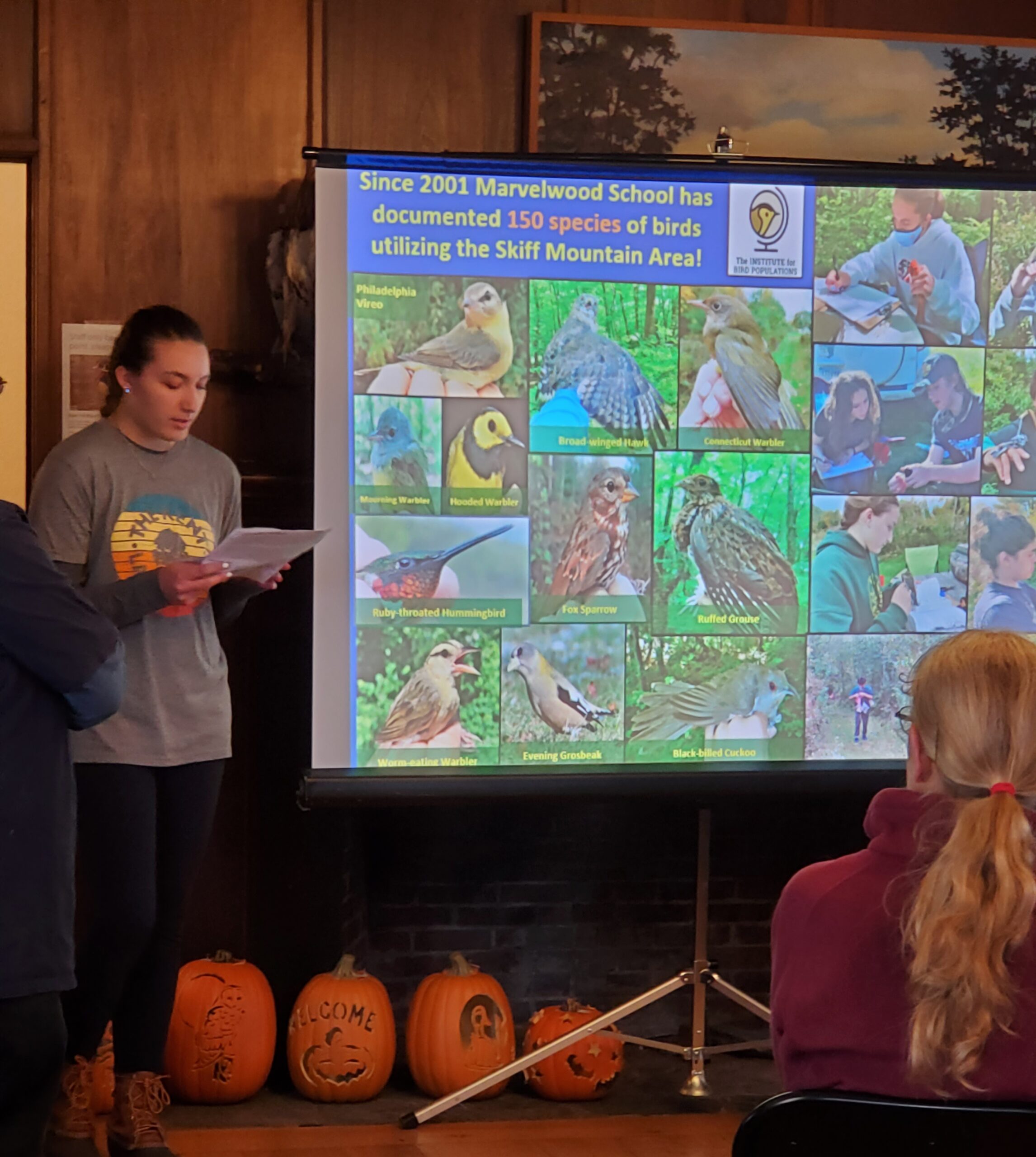
Youth partnerships and interpretation have also been a common thread throughout these projects. Students from neighboring Marvelwood School designed interpretive signs that turn stewardship sites into outdoor classrooms. Engaging youth is a deliberate goal in every project, reinforcing the connection between habitat improvements and the people who benefit from and care for them.
Making the Connection

On the ground, KLT is seeing the positive effects of improving habitat for birds. KLT used the first small grant to remove a hedge of invasive plants along an oxbow pond near the land trust’s headquarters and replace it with native species. The goal was to improve habitat and foraging opportunities for waterfowl and riparian birds, and the results have been immediate and gratifying. Wood Ducks nested successfully—resulting in a brood of eleven ducklings—and Green Herons, Great Blue Herons, and Belted Kingfishers offer staff a daily reminder that the environment is more alive than it was before the restoration project.
These anecdotal observations are supported by bird data. By creating eBird hotspots and encouraging regular submissions, KLT now has bird data from ten preserves that can be downloaded and analyzed. Training sessions, public programs, and interpretive signs introduce participants to eBird and Merlin, strengthening a community of participatory scientists and building capacity for KLT that extends beyond any one preserve. The feedback loop is tangible: data inform management choices, management improves habitat, and improved habitat is reflected in the data.
Equally important, KLT is advancing their partnership work. After the 2019 MFBIBA plan was completed, there was a lull in collaborative activity. The 2023 small grant provided the impetus to bring everyone back to the table. Partners met regularly, heard from experts on funding and technical assistance, and completed two habitat demonstration projects within the MFBIBA at the Sharon Audubon Center. Those projects serve as living examples, where landowners, foresters, and conservation professionals can see techniques in action, ask questions, and identify resources to replicate the work. The network became more unified and developed a shared identity—even creating a logo to help residents and community organizations recognize and join the broader effort.

Drawing inspiration from the Woodlots Toolkit developed by Cold Hollow to Canada, a Regional Conservation Partnership, KLT is also sharing bird-friendly forestry best management practices with private landowners. To support this effort, they are going to host a Conservation Speed-Dating workshop, an outreach program developed by the Virginia Grassland Bird Initiative, at an event this fall. KLT will provide property maps for each landowner attendee while many local technical service providers and conservation practitioners rotate from landowner to landowner, marking up their maps and teaching about conservation programs and specific techniques that are applicable to their property.
Advice to Other Land Trusts
For peers considering similar projects, one lesson stands out: start small and build. A modest, well-defined grant can be a powerful catalyst. By choosing a contained project that the current team can deliver with confidence—such as invasive removal and native plantings around a pond—you create visible results, learn what works on the ground, and build the credibility needed to scale. That early success also makes it easier to gain local visibility and support, then invite partners into the next phase and take on larger projects.
It is just as important to seek funding for projects that align with the broad mission and specific goals of your organization, says Manes. Grants that come with a clear brand and framework can be especially helpful, offering a common reference point for decision-makers and supporters, helping your staff, board, and community better understand and champion the work.
Invest in learning and inclusivity. Workshops that introduce eBird, guided bird walks that welcome beginners, and events that bring landowners together build capacity beyond your organization. And look for ways to engage youth—student-designed signs and service-learning projects help the next generation learn about stewardship and become invested in protecting and caring for their environment.
Next Steps

KLT is committed to deepening and extending this bird-centered approach across the MFBIBA. In the near term, the organization will continue to convene landowners and easement holders around the 2019 plan’s recommendations, strengthening land management capacity across this 22,500-acre landscape. The two habitat restoration projects at the Sharon Audubon Center will serve as hubs for learning, where best practices are demonstrated and opportunities for funding are shared. With continued support for the project from the Northeast Bird Habitat Conservation Initiative, additional demonstration sites on private property will be developed, allowing private landowners to learn from their neighbors.
On the ground, the restored oxbow pond and surrounding wetlands will continue to be monitored and maintained, with visitors encouraged to submit bird observations via eBird. The ultimate purpose of all this work is protecting land, which is supported by KLT’s commitment to bird conservation. Birds connect people to place, inspire collaboration across a complex landscape, and provide a feedback loop that enables land managers to better assess their stewardship activities and adjust strategies over time. With practical tools, trusted bird data, and a strong network of partners, KLT is improving the health and resilience of its preserves—and its community.