This section provides information about bird conservation partnerships and plans. Many, but not all, of these plans are split into four bird guilds: landbirds, shorebirds, waterbirds, and waterfowl. The plans provide information about the most important species, habitat needs, and necessary conservation actions at multiple scales. Further, the partnerships offer many other resources that may be useful to land trusts.
 NABCI Relevancy Toolkit
The North American Bird Conservation Initiative offers a relevancy toolkit that demonstrates how bird conservation can contribute to a diverse set of economic interests, human health, clean air, and clean water.
- ShorebirdViz: Track Shorebird Migration on Your Land
Example Black-necked Stilt map using ShorebirdViz What is ShorebirdViz? Shorebirds make some of the longest migratory trips in the bird world, with some species travelling from South America to Alaska every year and seeking wetland refuge throughout their journey. To…
- Land Trusts and Wildlife Crossing Structures Toolkit
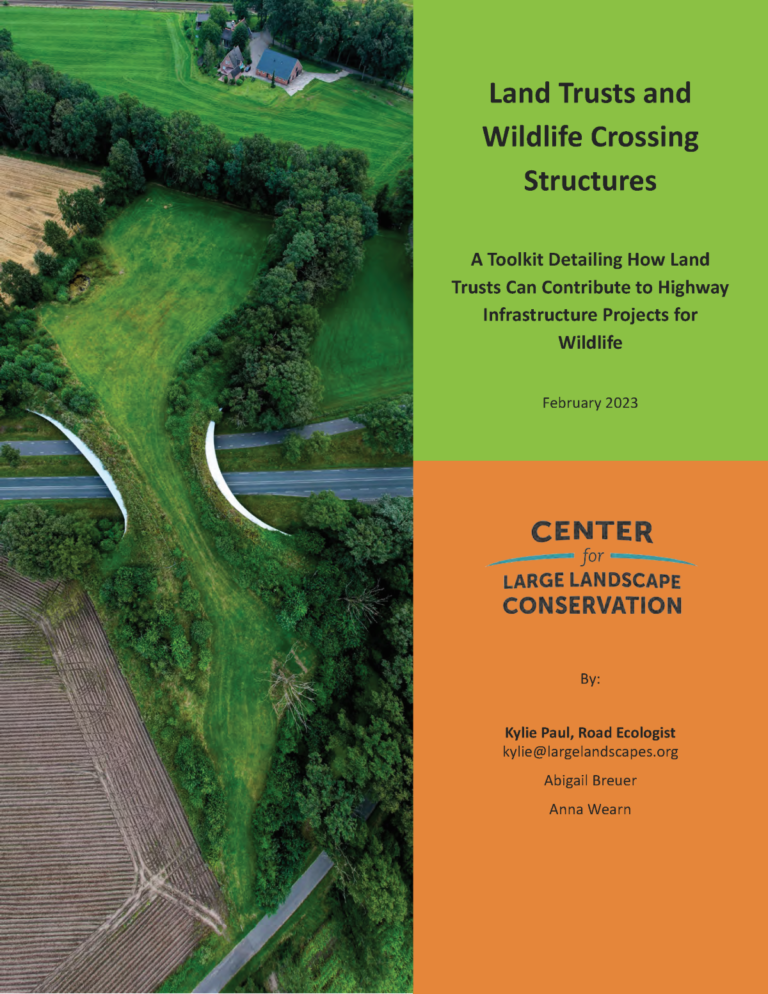
The Center for Large Landscape Conservation published a 29-page Land Trusts and Wildlife Crossing Structures Toolkit in 2023, which explores how land trusts can engage in wildlife crossing projects.
- State of the World’s Birds Report 2022
The fifth edition of BirdLife’s flagship State of the World’s Birds report summarizes what birds, as metrics for planetary health, can tell us about the state of nature, the pressures upon it, and the solutions in place and needed.
- Birds of the World
Birds of the World, a powerful new subscription-based resource, compiles the most comprehensive, up-to-date ornithological data into one platform through integration of four major ornithological works.
- Partners in Flight
Partners in Flight (PIF) focuses on the conservation of land bird species—both by protecting species in decline and by keeping common birds common. PIF is a cooperative partnership that strives to combine, coordinate, and increase resources of public and private organizations in the Western Hemisphere to achieve greater success in conserving bird populations.
- Migratory Bird Joint Ventures
Migratory Bird Joint Ventures (JVs) are cooperative, regional partnerships that work to conserve habitat for the benefit of birds, other wildlife, and people. JVs help connect many different partners for collaborative conservation by supporting planning and the most effective on-the-ground habitat conservation efforts.
- State Wildlife Action Plans
State Wildlife Actions Plans (SWAPs) are proactive strategies that assess the health of each state’s wildlife and habitats, identify the problems they face, and outline the actions that are needed to conserve them over the long term.
- Bird Conservation Regions
Bird Conservation Regions (BCRs) are ecologically distinct regions in North America with similar bird communities, habitats, and resource management issues.
- U.S. Shorebird Conservation Plan
The U.S Shorebird Conservation Plan was drafted by partners from state and federal agencies and non-governmental organizations from across the country who pooled their resources and expertise to develop a conservation strategy for migratory shorebirds and the habitats upon which they depend.