The existing network of bird conservation partners and resources provides an excellent opportunity for land trusts to engage in conservation at different scales. This Resource Directory is designed especially for land trusts, bringing many resources together in one place and helping navigate the resources to find what is pertinent to land trusts. The resources can be useful for land trusts’ funding proposals, community outreach, strategic conservation planning, land acquisition and easement justification, management plan development, and monitoring. The resources on these pages are organized by five categories: Engaging People, Management Guides, Planning, Belonging & Accessibility, and Cornell Lab Programs.
If there are additional resources that you’ve found helpful and would like added to the site, please email us with the resource name, category in which it should be listed, online link, and a description of how it’s useful to land trusts. We value your contributions!
 American Birding Association Code of Birding Ethics
Practice and promote respectful, enjoyable, and thoughtful birding as defined in this code published by the American Birding Association (ABA).
- Land Trust Bird Conservation Promotional Materials
The Cornell Lab of Ornithology has created a bookmark, power point slide, and press release to help land trusts promote and advertise the Land Trust Bird Conservation Initiative website and its resources.
- Forestland Ecosystem Guide
Guides in this section are representative of landscapes or natural woodland systems dominated by trees and other woody plants where tree cover typically ranges from 25% – 100% cover.
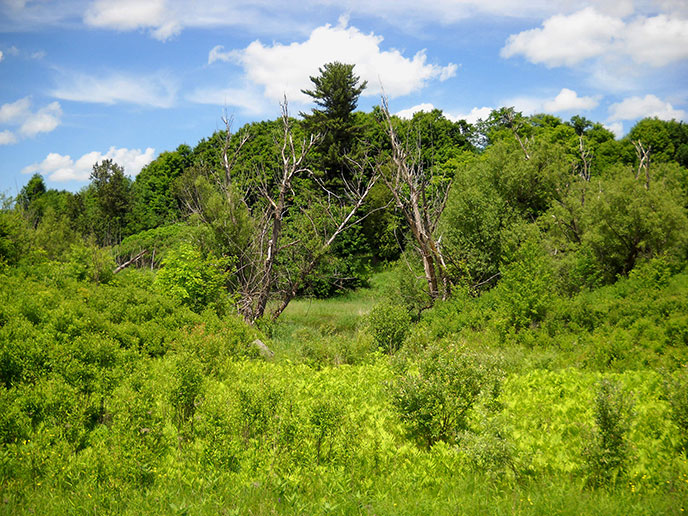
- Shrubland Ecosystem Guide
Guides in this section are representative of landscapes dominated by mostly woody shrub species, often mixed with forbs and grasses.
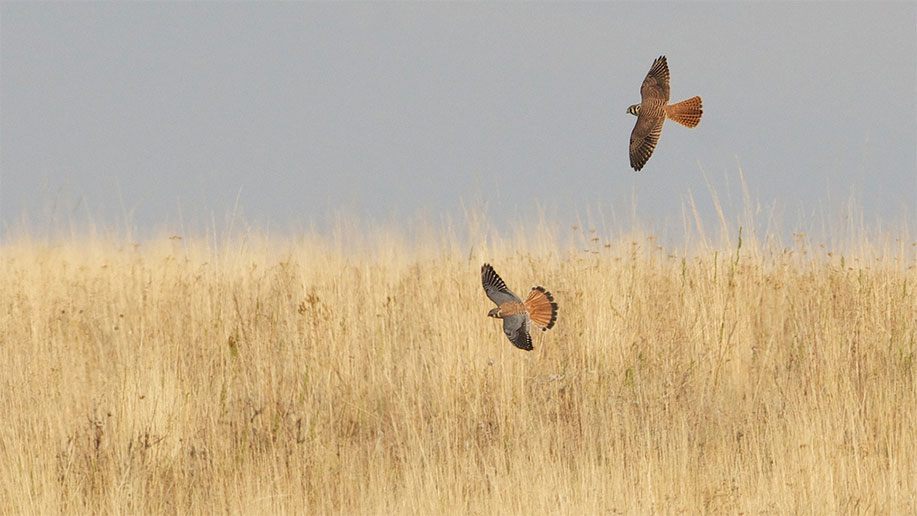
- Grassland Ecosystem Guide
Guides in this section are representative of landscapes dominated by grasses and other herbaceous species. Tree and shrub cover is typically less than 10%.
- Riparian Ecosystem Guide
Guides in this section are representative of landscapes consisting of plant communities contiguous to waterways or bodies of water with visible vegetation or physical characteristics that reflect permanent water. They are typically transitional zones between wetland and upland habitats.
- Multiple Species, Habitats and Miscellaneous Guides
This section represents miscellaneous guides, such as managing for farmland or multiple species, which could not be categorized by our chosen habitat types.
- Land Trust Initiative: National Results Presentation
A presentation on land trusts and bird conservation, including information and results from the Cornell Lab of Ornithology’s Land Trust Initiative survey, recommendations, and next steps.
- Land Trust Initiative: Western Results Presentation
A presentation on land trusts and bird conservation, including information and results from the Cornell Lab of Ornithology’s Land Trust Initiative survey from only those land trusts located in the West (AK, AZ, CA, CO, HI, ID, MT, NV, NM, OR, TX, UT, WA, WY), recommendations, and next steps.
- eBird: A Tool for Land Trusts Presentation
A presentation on eBird, what it is, how land trusts can best utilize it, and an introduction to its various features such as eBird’s Location Explorer, HotSpot Explorer, Species Distribution Maps, and Data Download.