Any Person, Any Study, Any Vision
More from the Report

Cornell University’s founding principle is “…any person… any study.” And our K–12 Education, higher education, and lifelong learning initiatives are constantly working to bring that vision to life.
“Each day, in countless ways, the Lab helps people discover the joy of birds and the wonders of nature,” says Mya Thompson, co-director of the Center for Engagement in Science and Nature. “We spark pathways for people of all ages to support their lifelong journeys, fueling a global movement across local landscapes to cherish and restore nature.”
The Lab’s offerings encompass every stage of learning:
Early Childhood
Spark a Love of Birds
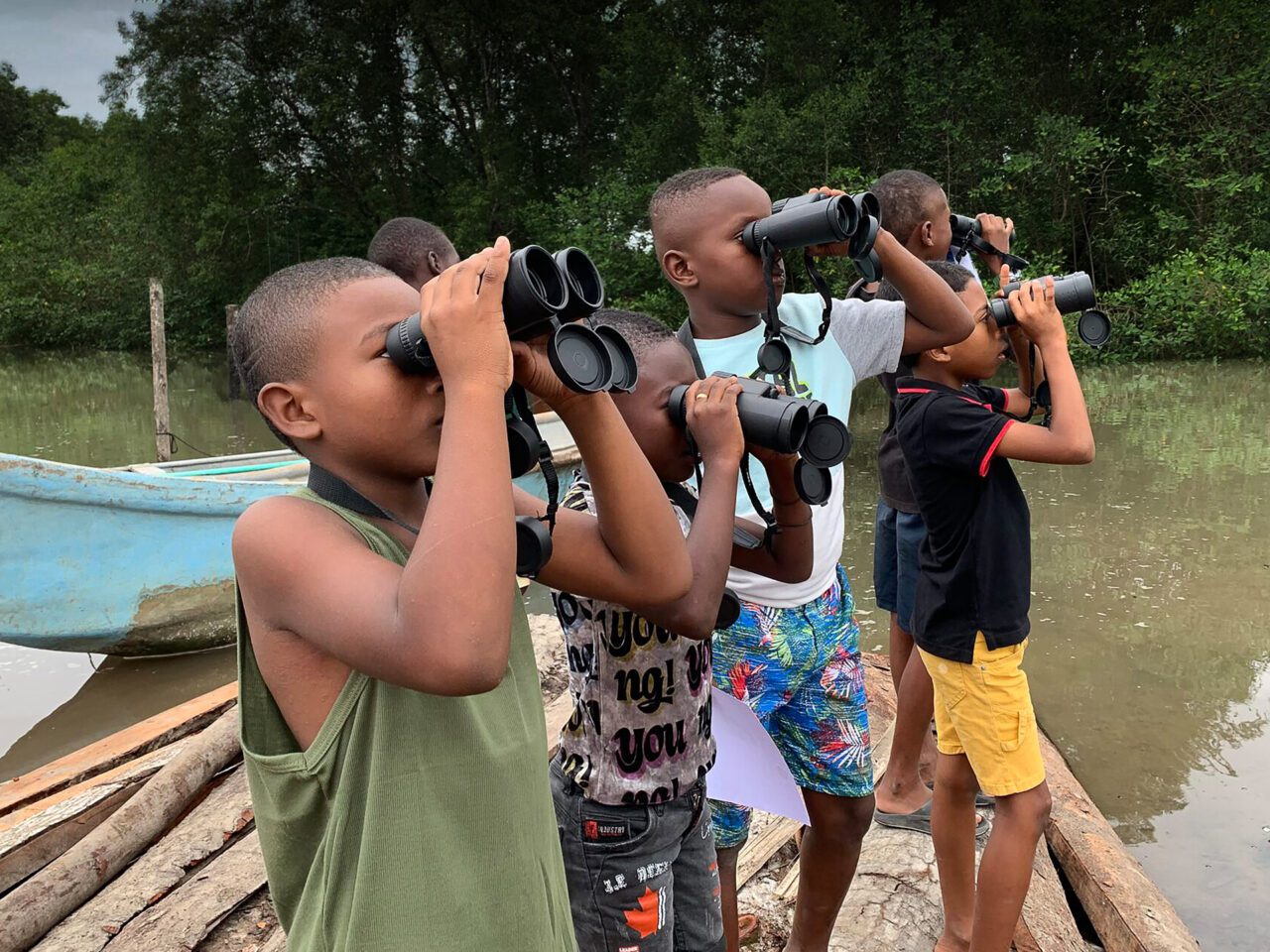
Children in Tumaco, Colombia, scan for birds such as Blue-and-white Swallows and Golden-hooded Tanagers to add to their eBird checklists. Five local organizations brought birding activities to the entire community, supported by a Cornell Lab mini-grant. This year, Lab staff collaborated with more than 100 educators to co-create educational materials that will be piloted this fall in 100 communities across Colombia.
Middle School
Connect the Dots
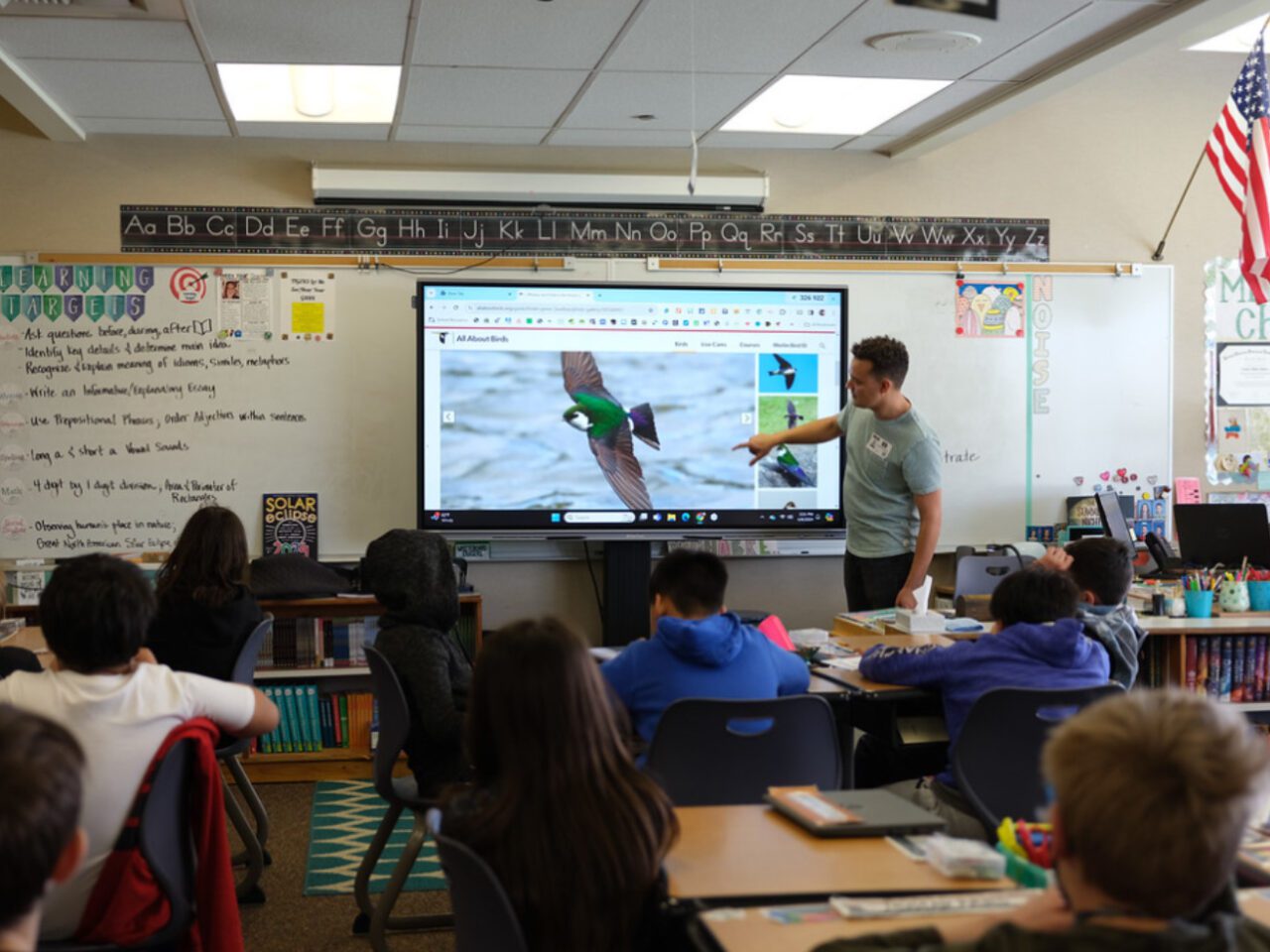
Fourth-grade students in Washington learn where 10 bird species migrate, including places where they and their families have connections across the Americas. Their community was one of 90 across the U.S., Latin America, and the Caribbean to receive a Cornell Lab mini-grant to engage youth with birds, birding, and improving habitats.
High School
See Possibilities
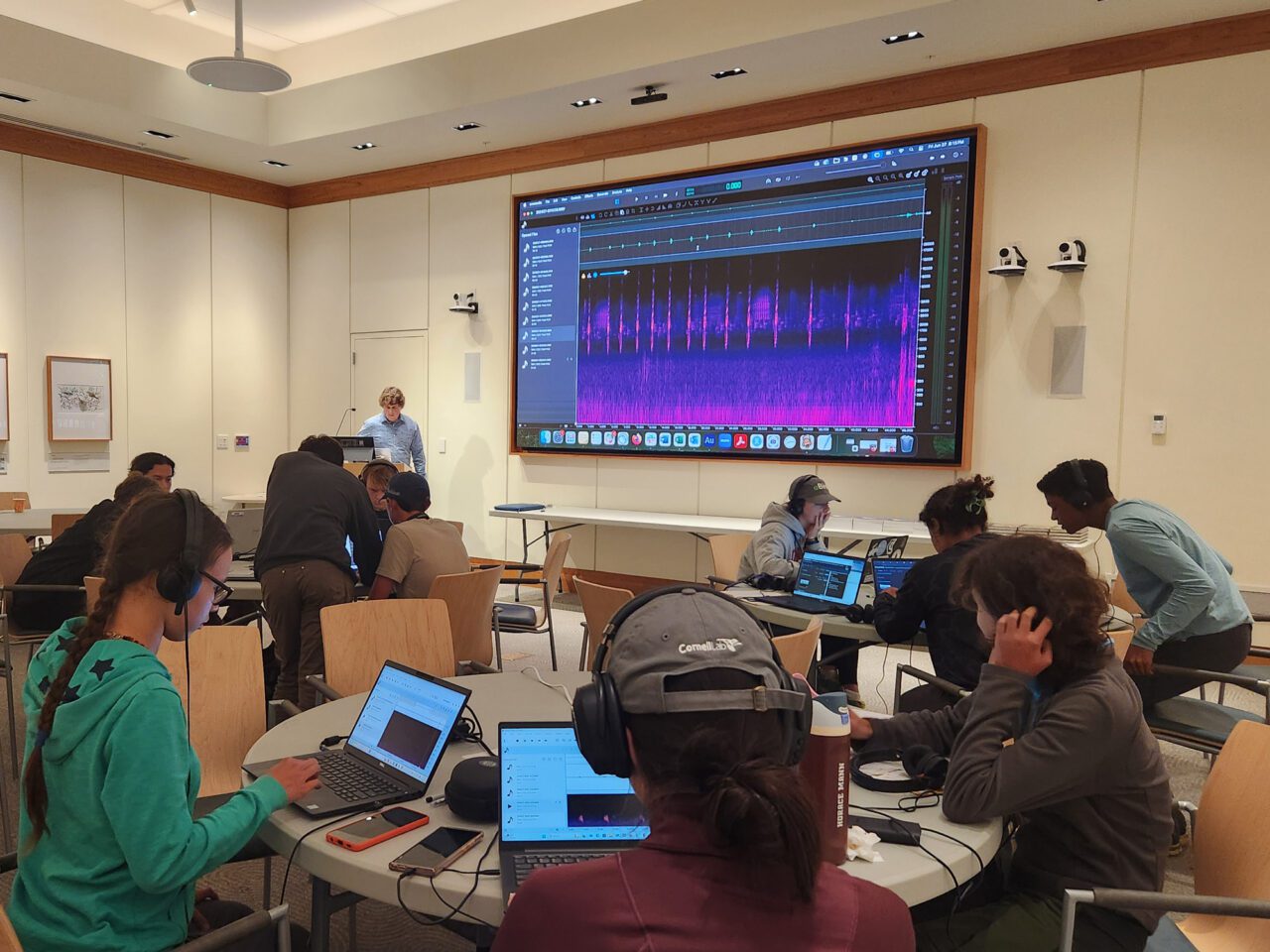
Sixteen high school students from seven countries joined the Young Birders event at the Cornell Lab this summer to immerse in birding, science, and conservation.
Reuben Shallom, from Tanzania, said a highlight was learning to record and study birdsong. “Back at the Lab, as we were going through our recordings, I saw sound for the first time in my life. I was completely captivated: the way the whistling tunes of warblers created ripples of music or the way junco chips made cheerful folds in the spectrogram.”
After annotating spectrograms, a process used to develop the Merlin app’s sound ID feature, he said, “I have never really been a tech guy, but being shown what to do, and how to do it, made me feel like I really could make a difference.”
Undergraduate
Try Solutions
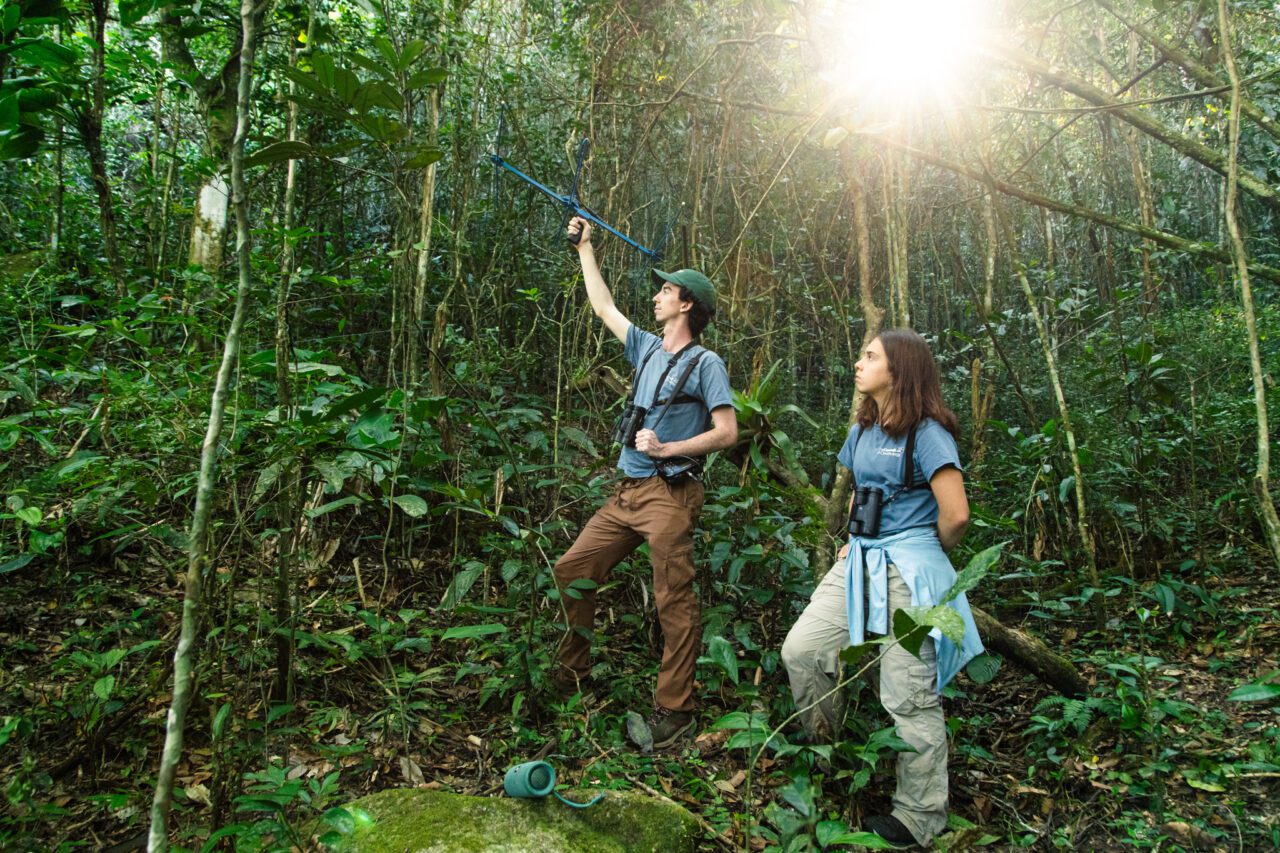
As a 16-year-old, Lorena Patrício Silva traveled from her home country of Brazil for the Lab’s Young Birders event. Seven years later, she’s a Cornell undergraduate, working with fellow student Brian Hofstetter and the conservation group AQUASIS to translocate Ceara Gnateaters to a “ghost forest” in Brazil where many species are extirpated.
“Being involved in this work gave me hope that areas that lost their biodiversity in Brazil, and all over the Neotropics, can have their species back,” Lorena said. “I hope to return someday to hear the calls of Ceara Gnateaters and all the birds that once lived there.” Lorena and Brian are two of more than 80 undergraduates at the Lab engaged in hands-on projects this year.
Graduate Study
Lead and Mentor
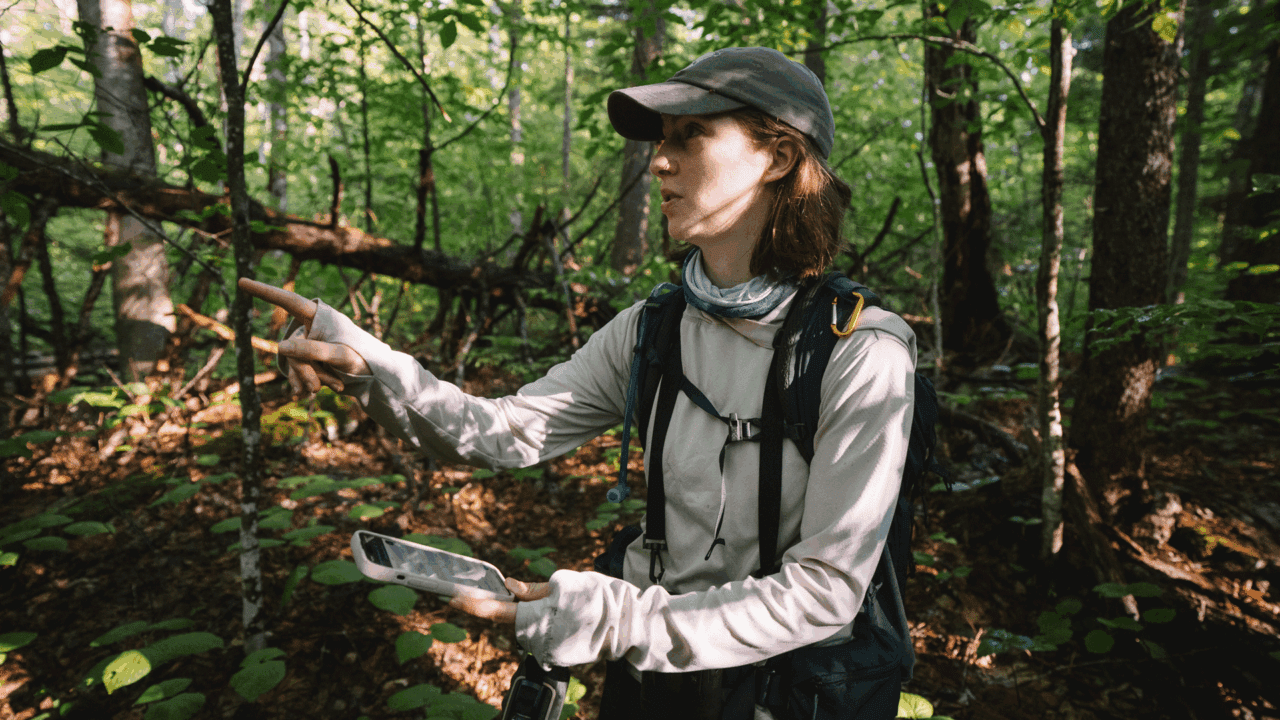
Graduate student Bridget Tweedie has spent the past three summers waking before dawn to study birdlife in the White Mountains of New Hampshire. She’s developing her own research project on Black-throated Blue Warblers at a location where birds and their ecology have been studied continuously for more than 50 years—the Hubbard Brook Experimental Forest.
This summer, Bridget mentored five undergraduates as they tracked nesting Black-throated Blue Warblers, adding to an uninterrupted thread of research on the species since 1982. As part of the Lab’s Field Ornithology program there, the students get a boost from Bridget’s experience and enthusiasm as they learn to set up mist nets, find nests, and track radio-tagged birds. “Entering the field can be intimidating…so I try to make sure students leave here with the right skills and a positive relationship with the work,” said Bridget. “It is really a privilege to be part of the broader bird research at Hubbard Brook, and to be able to share that experience with students who will go on to do their own work.”
Postdoc
Innovate and Illuminate
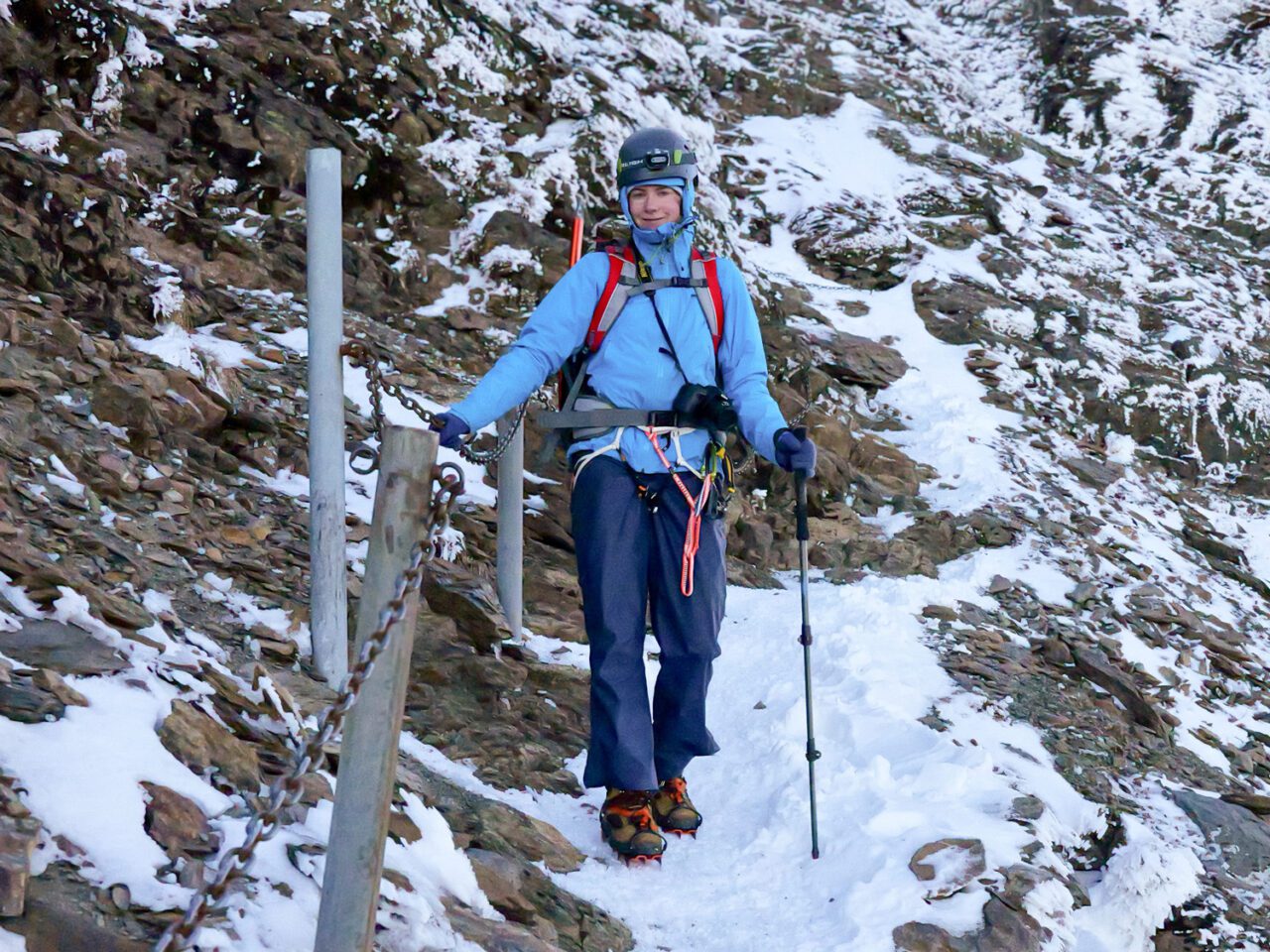
Irina Tolkova is trying to crack what computer scientists call a “cocktail party problem”: the challenge of discerning individual voices in a crowd. To identify the bird species singing in a dawn chorus, she is experimenting with a device that uses four microphones to distinguish sounds from different directions. Her goal is to improve the accuracy of biodiversity assessments and aid conservation efforts. Irina is part of a community of three dozen early-career scientists working on cutting-edge research and conservation in the Edward W. Rose Postdoctoral Scholars Program.
Early Career
Move Knowledge to Action
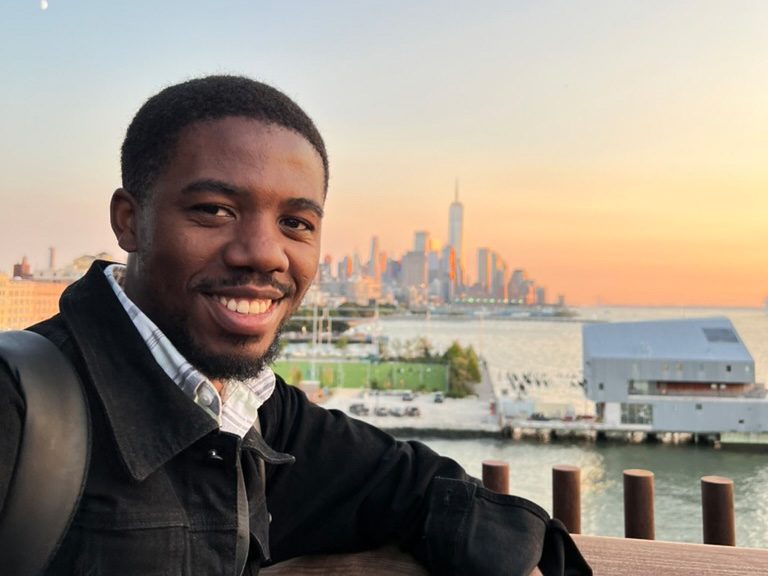
Vainqueur Kilindo Bulambo is an information technology professional from the Democratic Republic of the Congo where he worked with the Dian Fossey Gorilla Fund, monitoring gorillas by sound as well as images from camera traps. Now at the Cornell Lab, he is using AI neural networks to detect the chest beats and vocalizations of gorillas. This will reveal the behaviors and movement of gorillas, and increase the accuracy of monitoring. Vainqueur is one of four professionals in the inaugural year of the Katharine B. Payne Fellows Program, designed to foster the talent of leaders internationally in conservation bioacoustics.
Any Stage
Learn for a Lifetime
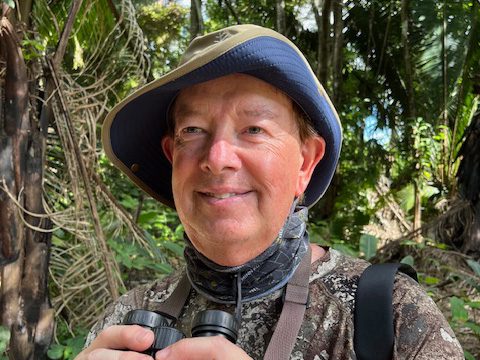
“The Lab’s lifelong learning programs are an amplifier,” says Irby Lovette, director of the Center for Biodiversity Studies and Higher Education. “By training people and sending them out with expanded skillsets, that’s where the scaling comes from. It’s not additive, it’s multiplicative.”
One example is Gene “Gino” Ellison, a pro angler and outdoorsman who got hooked on birding during the pandemic in 2020. He began using the Merlin Bird ID app, then took a Bird Academy course—followed by 19 more! Since then, he’s completed a Big Year with 802 bird species logged in eBird. He’s now a traveling educator for the Lab’s K–12 team.
Transforming Global Knowledge of Birds
The Cornell Lab’s scholarly online platform, Birds of the World, serves as a wellspring for ornithologists, students, conservationists, and bird enthusiasts to learn with unparalleled breadth and detail about every one of the world’s bird species.
Birds of the World “drives huge transformational advances by providing a one-stop shop for data to study evolution, biodiversity, bioinformatics, climate change, cultural ornithology, and more,” says Joe Tobias, professor of biodiversity and ecosystems at Imperial College London.
That mission is more urgent than ever. A 2025 analysis of more than 2,000 papers covering 10,000 ecological sites around the world found that humans are having negative impacts on animal biodiversity everywhere, from microbes to megafauna. The Birds of the World team is laser-focused on changing that narrative.
To become an even more powerful hub for bird research and conservation action, Birds of the World is transforming into a comprehensive science platform that pairs its rich, textual content with machine-readable, data-rich resources. This will create instant data access and large-scale analyses needed to accelerate timely, science-based decision-making as researchers and conservationists race to counter biodiversity loss and protect the world’s birds.
Join Our Email List
The Cornell Lab will send you updates about birds, birding, and opportunities to help bird conservation. Sign up for email and don’t miss a thing!
Golden-cheeked Warbler by Bryan Calk/Macaulay Library