Cornell Lab Annual Report 2025
Download the Full ReportA lot of people want to do something meaningful right now. And the opportunity now is to do this at scale with partners around the world.
Ian Owens, Executive Director of the Cornell Lab of Ornithology
The Lab Is an Accelerator
A Conversation with Our Director
What does the future look like for the Cornell Lab? In an urgent time for conservation, Lab director Ian Owens says, the Lab’s role is to step up, not step out. It’s a time to be bold.
That means leveraging the Lab’s role as an accelerator—creating tools and building expertise that our many partners can use in sophisticated ways to create continental-scale impact.
The Magic of Merlin
How Does the Lab Spark a Global Conservation Movement?
Back in 2008, the Lab’s director of communications, Miyoko Chu, noticed a trend: The most common search terms on the Lab’s All About Birds site were phrases like little brown bird. People were trying to use the site as an identification tool, but they didn’t know the names they needed to search for.
So why not build an identification tool?, was Miyoko’s next thought.
With help from a National Science Foundation grant, the tool that was to become Merlin Bird ID started to gain ground. Launching with 285 common bird species, it soon added a photo ID tool, expanded to nearly 11,000 species, and then cracked a notoriously hard software challenge: sound ID. All while remaining free to more than 10 million active users—connecting them with nature and opening up a world of participatory science.
Dig into the untold story of the rise and rise of the Merlin Bird ID app.

Inspiration/Activation
How Can We Multiply Everyday Actions That Save Birds?
Each year, billions of birds die from preventable causes. And yet millions of people love birds. By connecting people who care with solutions that work, we can jump-start their actions to help. That’s what Lab director Ian Owens means by viewing the Lab as an accelerator.

K–12 Education
4,500+
educators
116
trainings
NestWatch
4,000+
participants
139.4K
nests in 2024
Bird-Friendly Windows
3.5M
reached via social media
8,000
webinar views
Read more about the ways thousands of people are connecting passion to action.
Deep Listening
How Could Castoff Tech Become an Underwater Sound Revolution?
For four decades the Cornell Lab has used its bioacoustics expertise to demystify the world’s oceans, stop whale collisions, and tackle myriad other marine conservation issues.
Now, a new technique called distributed acoustic sensing is showing huge promise for detecting and monitoring arctic whales, through an ingenious use of old fiberoptic cables on the seafloor.
Find out how repurposed fiberoptics are revolutionizing underwater sound monitoring.

Any Person, Any Study, Any Vision
How Does the Lab Support Learners for a Lifetime?
Cornell University’s motto is “…any person…any study.” At the Lab, we cater to people of all ages around the world, supporting their vision, passion, skills, and lifelong pursuits with birds, nature, and conservation.
From sparking the imagination of elementary school children; to showing high-schoolers all that an ornithology career can encompass; to providing a collaborative, ambitious community of young scientists and beyond; we’re there for learners every step of the way.
Explore how the Lab opens doors for learners at all stages of life.

- early childhood Spark a Love of Birds
- middle school Connect the Dots
- high school See Possibilities
- undergraduate Try Solutions
- graduate Lead and Mentor
- postdoc Innovate and Illuminate
- early career Move Knowledge to Action
- any stage Learn for a Lifetime

Powering a New Era of Conservation
How Do Key Partnerships Accelerate the Lab’s Mission?
A new era of conservation is unfolding thanks to birders around the world. This year, eBird passed 2 billion observations—an unprecedented amount of data that can fundamentally change how we protect birds.
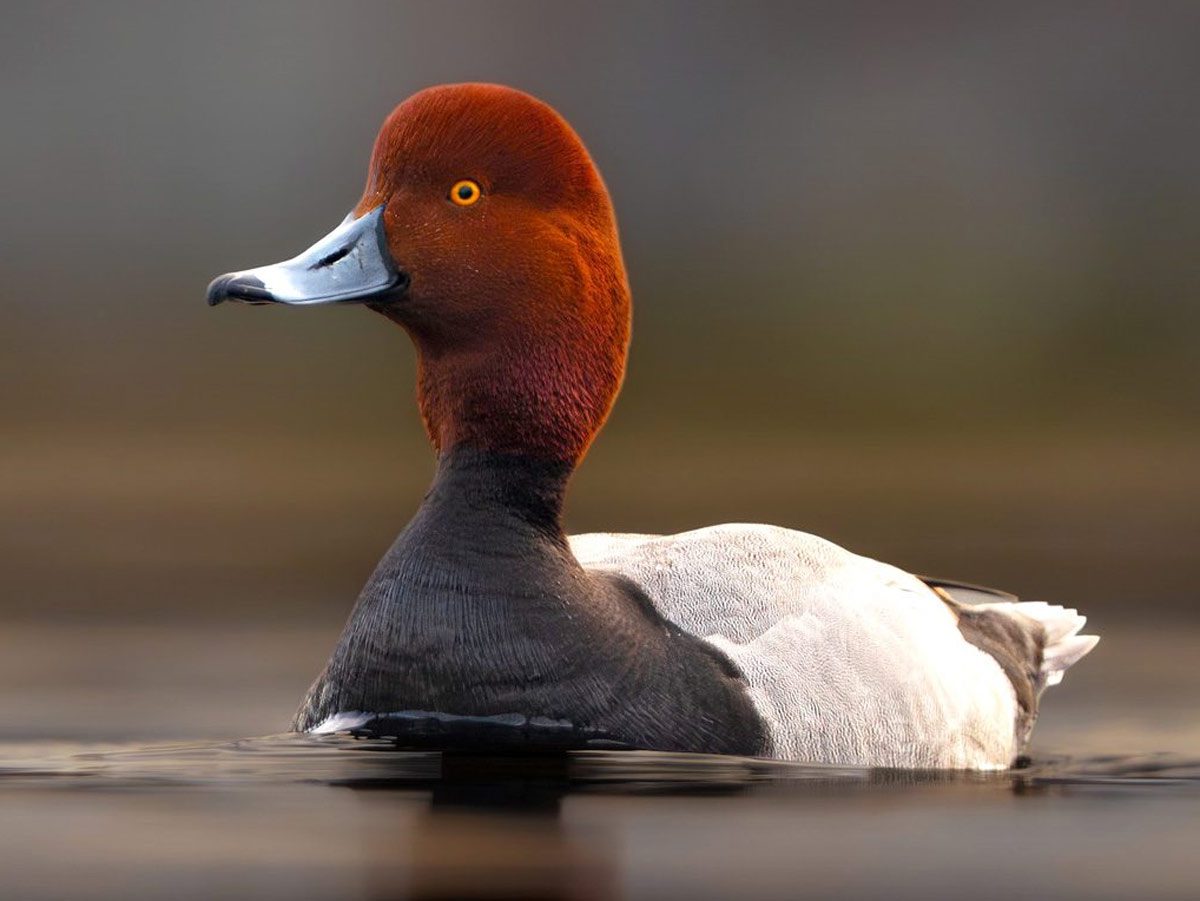
One way we’ve used that data is to create eBird Status and Trends, a next-gen tool that provides a detailed, county-level look at how birds are faring. Partners like the North American Waterfowl Management Plan can now use the tool for critical planning, answering questions like Where do waterfowl need habitat? and When do we need to be providing it?
Find out more about how eBird is helping supercharge waterfowl conservation and habitat protection.
Financial Report
2025 Fiscal Year:
July 1, 2024, to June 30, 2025
The Cornell Lab of Ornithology continues to thrive thanks to our dedicated community of supporters. During fiscal year 2025, generous contributions from more than 200,000 members and donors—representing more than 75% of our annual revenue and totaling $38.7 million—amplified our ability to advance conservation through research, education, and participatory science. Our unique position as a nonprofit organization within a world-class research institution allows us to maximize our impact, equipping individuals and organizations worldwide with the knowledge, tools, and inspiration needed to address declining bird populations and protect biodiversity. The steadfast philanthropic commitment from our supporters empowers us to nurture talent, embrace cutting-edge technology, and pursue bold solutions on behalf of birds and nature. We are deeply grateful for your partnership in this vital work.
Donors as Accelerators
Have you ever been lucky enough to watch a murmuration? Hundreds of thousands of starlings turn, swell, dive, and move as one. It’s breathtaking, in part, because this sinuous dance can happen only at a staggering scale.
The Cornell Lab of Ornithology has mobilized our own murmuration. Because of committed supporters like you, the Lab is extending our network of global partners, deepening our investment in data tools and tech, and expanding our efforts to activate millions of people around birds and biodiversity. Thank you for being part of a mighty and growing flock. By working together, we will bring about a healthier planet and a more hopeful future.
We’re pleased to recognize our Sapsucker Woods Society members and honor and memorial tributes here.
Download previous annual reports here: 2024, 2023, 2022, 2021, 2020, 2019, 2018, 2017, 2016, 2015, 2014, 2013, 2012, 2011, 2010, 2009.


Join Our Email List
The Cornell Lab will send you updates about birds, birding, and opportunities to help bird conservation. Sign up for email and don’t miss a thing!
Golden-cheeked Warbler by Bryan Calk/Macaulay Library