Powering a New Era of Conservation
You’ve seen the headlines. Three billion birds lost over the past 50 years. A 2019 study published in the journal Science painted a startling picture of how habitat loss, environmental degradation, and extreme weather events are impacting North American birds.
More from the Report

One bright spot has always been ducks. Since 1970, duck populations have rebounded thanks to decades-long conservation efforts with funding from sources like the North American Wetlands Conservation Act and sales of Federal Duck Stamps. This increase is a testament to what can happen when a coalition of allies—in this case, conservationists, hunters, and federal agencies—align around a shared interest: seeing waterfowl flourish in protected habitats.
But the 2025 State of the Birds report, released in March by the Cornell Lab of Ornithology and a consortium of more than a dozen conservation groups, shows that birds are declining in all habitats. In the past five years, even ducks are on a downward trend.
Tools Built for Conservation
Fortunately, there is an extraordinary new tool to help us understand and reverse these declines: eBird Status and Trends. It’s a tool that combines the treasure trove of eBird data with machine learning and supercomputing power, and it’s providing a detailed, county-level look at how birds are faring across the U.S.
“This is the first time we’ve had fine-scale information that allows us to understand the drivers of declines much better than we’ve ever been able to before,” says Amanda Rodewald, faculty director of the Cornell Lab’s Center for Avian Population Studies. “eBird Status and Trends gives us a new lens to detect and diagnose population declines and to respond to them in a way that’s strategic, precise, and flexible.”
Without federal protections, wetlands and waterways are subject to development or draining, which could reduce critical feeding and breeding grounds for waterfowl.
One group making heavy use of eBird Status and Trends is the North American Waterfowl Management Plan (NAWMP) partnership. This international partnership among the U.S., Canada, and Mexico outlines waterfowl management and conservation goals and works with regional Joint Ventures, a collection of federal and state agencies and nonprofit organizations, to conserve waterfowl.
Orin Robinson, a senior research associate at the Lab, has been working with Joint Ventures to use eBird Status and Trends to refine waterfowl population goals.
“It’s been rewarding to work with the North American Waterfowl Management Plan and Joint Ventures…to start using the eBird Status and Trends data in their models of waterfowl planning,” says Orin. “And the better we can make these tools, the easier it will be for more partners to use them.”
Engaging with duck hunters could provide much-needed support to bring awareness to the issues and help reverse population declines.
“The more hunters and duck enthusiasts can contribute to eBird, the better information we’ll have to conserve and manage populations,” says Amanda. “We know that over half of hunters are also birders, so there’s already a strong connection there.”
eBird Tools in Action

Joint Ventures are the regional planning and delivery arms of the North American Waterfowl Management Plan. Their job is to translate continental population objectives into regional habitat objectives that support target duck populations.
To do that, managers need estimates of duck numbers and their distributions for the entire year—during the breeding season, migration, and the nonbreeding season. According to Joe Lancaster, the biological team leader for the Gulf Coast Joint Venture, that kind of year-round data is hard to find. “We just didn’t have the data that derived contemporary migration chronologies we needed across our region,” says Joe, “so we started exploring using eBird data.”
“eBird Status and Trends are the only data available to understand the distribution and relative abundance of waterfowl at a species level across the entire continent,” says Michael Brasher, senior waterfowl scientist at Ducks Unlimited.
And a new study is showing just how credible eBird data are when used in combination with available waterfowl surveys to produce estimates of duck abundance throughout the year.
Michael says, “We’ve compared eBird Status and Trends to existing datasets from traditionally collected methods as a way of helping to verify, validate, and build confidence in eBird datasets. And for the areas where we looked, it does a pretty darn good job of it. It matches up with other datasets, and it matches up with our expectations and expert knowledge across the waterfowl management community.”
The results are now being implemented across Joint Ventures and at Ducks Unlimited to drive habitat priorities. “eBird Status and Trends products are being used to establish and guide habitat conservation objectives on the ground, like: Where do we need to be providing waterfowl habitat? When do we need to be providing it? And then how much?” says Michael.
In the South, the Gulf Coast Joint Venture uses this information to identify regions where a specific type of habitat may be lacking for duck populations. Then they start working with partners to put more habitat on the ground.
“Our information [with eBird data] basically shows that in Louisiana and on the Texas Chenier Plain, we have sufficient types of habitat to support our population objective, whereas in our Texas Mid-Coast region we have a deficit in that type of habitat. So, the Texas Prairie Wetland Program has shifted to focus more on the Texas Mid-Coast and improving habitats there to reduce the deficiencies in that region,” says Joe.
A Way Forward
“Our commitment to sharing the latest science with partners is making a difference, but the results from the 2025 U.S. State of the Birds Report remind us that we cannot be complacent,” says Amanda Rodewald.
According to the U.S. Fish and Wildlife Service, wetland habitat is being lost at an alarming rate. Loss of wetland habitat has increased by 50% since 2009. And new policy is about to accelerate those losses. The recent changes to the Clean Water Act and the Waters of the United States narrowed the definition of navigable waters, which, according to a recent study published in the journal Science, means that 690,000 stream miles and 35 million acres of wetlands will lose federal protections.
Amanda and environmental economists from the Dyson School of Applied Economics and Management at Cornell University are investigating what these changes mean to waterfowl populations. According to preliminary analysis using eBird data, Amanda says they estimate that waters supporting 20% of waterfowl populations in the contiguous U.S. will lose federal protection.
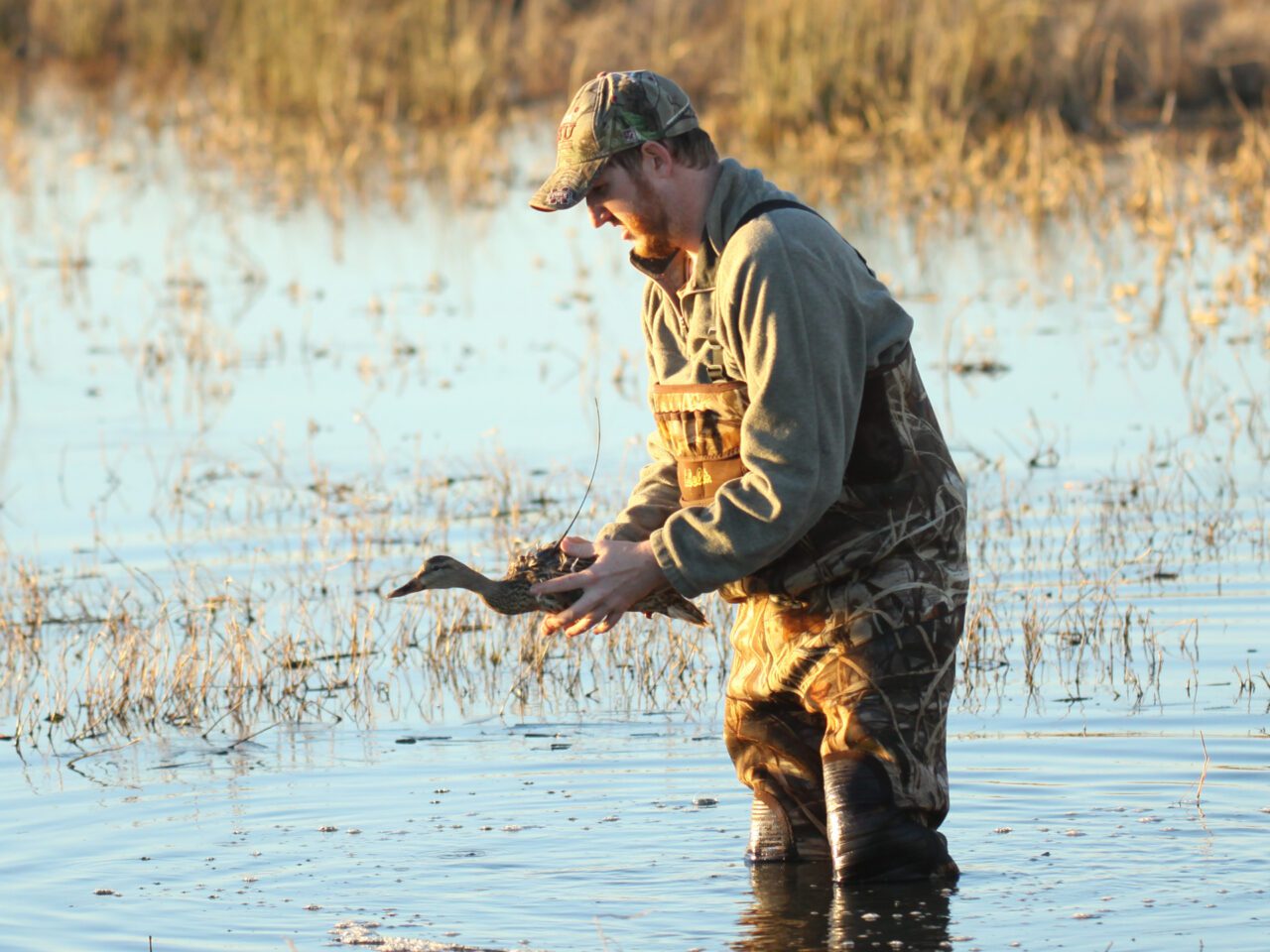
Without federal protections, wetlands and waterways are subject to development or draining, which could reduce critical feeding and breeding grounds for waterfowl. “Those waters,” says Amanda, “represent important breeding, migratory stopover, and nonbreeding areas for waterfowl and other bird species.” She adds, “eBirders are basically the eyes and ears of the environmental and conservation agencies working to make conditions better for birds.”
A new era of conservation that provides hope and a way forward is unfolding thanks to birders around the world. And eBird now holds more than two billion observations—an unprecedented amount of data that is fundamentally changing what we know about birds and how we protect them.
“The Lab’s investments in eBird Status and Trends are improving the ability of agencies and nongovernmental organizations to monitor changes in waterfowl populations and respond accordingly,” says Amanda. “The scientific expertise and credibility of the Lab, combined with its ability to engage birders around the world, make it uniquely suited to support agencies and nongovernmental organizations doing the frontline work to conserve waterfowl.”
Join Our Email List
The Cornell Lab will send you updates about birds, birding, and opportunities to help bird conservation. Sign up for email and don’t miss a thing!
Golden-cheeked Warbler by Bryan Calk/Macaulay Library