

Science & Nature Activities for Cooped Up Kids
Whether you’re a teacher who needs to share easy-to-implement content with your students, or you’re a parent striving to best engage and educate your child at home, you’ll find these materials relevant and fun! With engaging, self-paced slideshows, these activities can be self-guided for kids in grades 3-8, while K-2 learners will probably need an adult guide.
Being in nature decreases stress and boosts creativity, so encourage kids to complete the outside portions as much as possible.
To help students get the most out of the activities, we recommend you start with week one and complete the activities in order. But here are a few options for grouping if you have limited time.
- Life Cycles – Activities 2-4
- Backyard Birds – Activity 5 & 9
- Birds Around the World – Activity 1 & 8
Introduction to the Activities
Science and nature are naturally engaging! These resources have suggestions for engaging K-2, 3-5, and 6-8 grade students on the same theme. If you have students of different ages, we hope this will make facilitation easier on you. We’ve included quests that can be completed as a family and background information on the topic to get you up to speed quickly.
We know that not everyone has access to the outdoors. For those of you that do, our “Try It” activities and/or quests can be a great opportunity for the students to explore their neighborhood. While being in nature has been shown to decrease stress and boost creativity, use your best judgment and follow local recommendations for being outside.
Tips for Adult Guides: Which Grade Band Should I Choose?
The K-2 lessons are designed for an adult to sit alongside the student as a guide through the included slideshow, with some prompts for independent work. If the student struggles with reading, even if they are above second grade, you might want to choose the K-2 slides.
The 3-5 lesson plan and slides are designed as a more independent experience. If the student is able to read and work independently, you might want to select 3-5 even if they are younger.
The 6-8 slides are quite similar to those of 3-5, but have more content and text, more advanced vocabulary, and more challenging questions. If the student is “into” birds or really likes to read, you could always try out the 6-8 version, even with younger children.
I Wonder
Kids are curious and often excited to pursue their own interests and questions. Listen for their questions and watch for things that tickle their brains. Encourage the student to keep track of his or her questions during these activities (and throughout their at-home learning experience) on an “I Wonder” board or list. Help the student figure out ways to answer some of their questions. Can they: Look up some of the answers online? Watch a video? Do an experiment? Email an expert? Encourage them to explore and learn!
Activities
Exploring Diverse Birds
Background
From their dinosaur ancestors, birds have evolved into an amazingly diverse group. This week’s activities incorporate the online Wall of Birds interactive. This interactive bird map is based on a beautiful mural, entitled “From So Simple a Beginning,” which is painted on a large wall at the Cornell Lab of Ornithology located in Ithaca, New York. The mural showcases biodiversity and evolutionary change, featuring species from all 243 living bird families. These colorful birds are found alongside several extinct ancestors, including fishapods, feathered dinosaurs and more bird-like creatures, such as a giant owl. While living families are painted in color, these extinct ancestors are painted in black and white. The clickable map allows you and the students to bring up information, a range map, audio, and links to explore. What a cool way to explore the rich diversity of birds!
Family Quests
Choose activities to try out this week as a family, or challenge students to complete them on their own.
- See at least 5 different birds on a walk in your neighborhood.
- Visit the online Wall of Birds to find the: falcon, albatross, hummingbird, and owl.
- Go outdoors and try not to come back in until you hear a bird.
- Look at videos of birds on Macaulay Library, and try to act out some bird moves.
“Teaching is not about answering questions but about raising questions – opening doors for them in places that they could not imagine.” ~ Yawar Baig
Lessons
- Internet access with the associated slideshow
- Blank paper or construction paper
- Scissors
- Art supplies (colored pencils, watercolor paints, etc.)
- Gather materials and access the slideshow to guide the student’s investigation. You may wish to print or prepare the bird shapes on Slide 5. (Alternatively, the student will create them at that time.)
- On Slide 2, play some or all of the Cornell feeder cam video. ASK: What do you notice? What type of animal are we watching? What do you know about birds? Do you recognize any of these birds?
- Use Slide 3-5 to review bird body parts. Challenge the student to compare bird bodies to human bodies.
- Show Slide 6. Work with the student to draw and cut out the shapes. Challenge students to use the shapes to make a bird using what they learned about bird body parts. How many birds can they create? When they are happy with their arrangement, show Slide 7 and compare their bird to the one on the screen.
- Show Slide 8. Share with the student that birds live all over the world, and that their bodies are adapted to live in many different places. Bird’s bodies fit their habitats–like the webbed feet of a duck, or the long neck and legs of a heron. Bird bodies can look really different even though they have the same body parts. Compare the Great Blue Heron and Mourning Dove.
- Explore the Wall of Birds video and mural interactive and the questions on slides 9-14. Share that this mural shows a member of every bird family, or closely related group of birds. Each bird is standing at a place it lives in the world. Do a “scavenger hunt” of birds with the student using the prompts on the slides. Encourage the student to notice similarities and differences between the birds they see. Clicking on birds and their extinct relatives will bring up information, a range map, audio, and links to explore.
- Slide 15: Invite the student to create a whole new bird. What body parts does the bird need? Does it need any special adaptations for where it lives or what it eats? Have fun & be creative!
- Give the student as much time as they’d like to continue exploring the Wall of Birds interactive.
- Depending on their skills and interests and using the species they created, have them draw or write about their bird’s habitat.
- Ask the student to share their bird creation. ASK: What inspired you to create this kind of bird? Where does your bird live? What does it eat?
- Chat about what the student learned and encourage them to investigate any questions they might have. For example, you might wonder:
- What did you learn about how birds’ bodies are different from ours? How are they the same?
- What did you learn about how birds are similar and different?
- What surprised you about the different kinds of birds shown on the mural?
- If you could be any bird you learned about today, which would you be and why?
- If you can, go outside for a walk and observe your local birds. How many different kinds can you find?
- Internet access with the associated slideshow
- Blank and lined paper
- Pen or pencil
- Art supplies (colored pencils, watercolor paints, etc.)
- Have a conversation with the student about the birds you might find in your area. ASK: What do you already know about birds?
- Open the slideshow and look at the video on Slide 2 together. Chat about similarities and differences. You may wish to encourage the student to begin recording their questions on an “I wonder” list. Consider using these questions to encourage independent research investigations later.
- Encourage the student to explore the readings, videos, and websites within the slideshow. This can be done independently or together. Expect that the materials might take about 30 minutes to work through, plus additional time for writing and drawing (which will vary according to the interest level of the student). The slideshow provides support for the student to create:
- A collage of birds that shows the diversity of colors in birds.
- A list of comparisons between the Great Blue Heron and Mourning Dove.
- A list of interesting birds they find on the Wall of Birds interactive (for example, the most colorful, their favorite, the largest); and
- A drawing or computer-generated never-before-seen bird species.
Give the student the materials they need, and access to the slideshow to guide them. Have the student write about the questions presented and to do the activities suggested in the slides.
Depending on your needs and the student’s interest, you might also suggest one or more of the following assignments for them to complete independently.
- Watch this video about how Jane Kim created the Wall of Birds. https://youtu.be/uL2WKjEnOlA. Then have them look at the All About Birds online bird guide. Choose a bird to draw. Make a science sketch or painting of the species, like Jane Kim did.
- Have the student go outside, find a bird, and try to sketch it. ASK: How is drawing a bird from a specimen or photograph different than trying to sketch a bird in the wild?
- Have them go outside and complete a rainbow scavenger hunt for local birds and other nature items (similar to Slide 6). Note: depending on your location finding birds in all the colors of the rainbow may be very difficult so expanding it to all of nature is likely to be needed.
- Have them research different bird eggs and discover the great diversity of eggs colors that occur naturally.
- Research the many different types of nests that birds build.
- Research the different types of feathers.
- Ask the student to share:
- What is the main idea of the activity? What details from the activity support the main idea?
- How do different colored feathers and beaks help different birds survive?
- Their rainbow scavenger hunt of birds.
- ASK: Did they learn about a bird they have never seen or heard about?
- Their comparisons between the heron and dove.
- ASK: What do all birds have in common? (feathers, lay eggs, beaks) How do birds differ? (color, shape and size of body and body parts, where they live, what they eat, etc.)
- Why did Jane Kim, the artist/scientific illustrator, create the Wall of Birds? Have you ever thought about how artists can help protect nature? Are there other ways an artist could help protect nature?
- Their list of interesting birds
- ASK: Which bird did you think was the most colorful, the largest and smallest on your continent, your favorite? Why?
- Their answers to the “What do you think?” questions:
- How do the sizes of birds differ?
- What colors do you see? How are the color patterns different?
- How are the prehistoric bird relatives (in grey) different from today’s birds (in color)? (Many of them are quite large and bulky. Some appear to have beaks but some of the beaks have teeth. Some wings still have claws and are not feathered like modern birds. The feathers look rudimentary.)
- Why are birds so diverse?
- Their rendering of a never-before-seen bird species
- ASK: What inspired you to create this kind of bird? Where does your bird live? How does your species survive and thrive in its habitat?
- Finally, chat about discoveries and encourage the student to investigate any questions they might have. For example, you might wonder:
- What did you learn about how birds are similar and different?
- What questions do you have, and how might you explore them?
- Internet access with the associated slideshow
- Blank and lined paper
- Pen or pencil
- Art supplies (colored pencils, watercolor paints, etc.)
- Have a conversation with the student about the birds they might find in your area. ASK: What do you already know about birds? What questions do you have about birds? Add questions to an “I wonder” list. These questions could lead to independent research investigations later.
- Have the student explore the readings, videos, and websites within the slideshow. Expect that the materials might take about 45 minutes to work through, plus additional time for writing and drawing (which will vary according to the interest level of the student). The slideshow provides support for the student to create:
- A collage of birds that explore the diversity of color and feathers in birds.
- A list of interesting birds they find on the Wall of Birds interactive (for example, the most colorful, their favorite, the most dangerous);
- A drawing or computer-generated never-before-seen bird species;
Give the student the materials they need, and access to the slideshow to guide them. Have the student write about the questions presented and complete the activities suggested in the slides.
Depending on your needs and the student’s interest, you might also suggest one or more of the following assignments for them to complete independently.
- Watch this video about how Jane Kim created the Wall of Birds. https://youtu.be/uL2WKjEnOlA. Then have them look at the All About Birds online bird guide. Choose a bird to draw. Make a science sketch or painting of the species, like Jane Kim did.
- Have the student go outside, find a bird, and try to sketch it. ASK: How is drawing a bird from a specimen or photograph different than trying to sketch a bird in the wild?
- Have them go outside and complete a rainbow scavenger hunt for local birds and other nature items (similar to Slide 6). Note: depending on your location finding birds in all the colors of the rainbow may be very difficult so expanding it to all of nature is likely to be needed.
- Explore the connection between birds and dinosaurs further, such as eggs, anatomy, and their scales . Here is one place to start https://www.nhm.ac.uk/discover/why-are-birds-the-only-surviving-dinosaurs.htm, but what other resources can they find?
- Ask the student to share:
- If they think the Great Blue Heron reminds them of a dinosaur at all & why or why not?
- What they learned about feathers through the “Feathers Through Time” interactive.
- What are the functions of the feathers on modern birds? (Camouflage, flight, warmth/insulation, courtship/display.)
- Rainbow collage of birds. What bird were
- List of interesting birds
- ASK: Which bird did you think was the most colorful, the smallest and largest on your continent, the one you’d most like to see in the wild? Why?
- Rendering of a never-before-seen bird species
- ASK: What inspired you to create this kind of bird? Where does your bird live? How does your species survive and thrive in its habitat?
- Answer to why do you think birds are so diverse?
- ASK: What are the main ideas from this activity? What details from the activity support the main ideas?
- Finally, chat about what the student learned and encourage them to investigate any questions they might have. For example, you might wonder:
- What did you learn about how birds are similar and different?
- How are the prehistoric bird relatives different from modern birds? (Many of them are quite large and bulky. Some appear to have beaks but some of the beaks have teeth. Some wings still have claws and are not feathered like modern birds. The feathers look rudimentary.)
- What questions do you have, and how might you explore them? (Add questions to the “I wonder” list and encourage the student to explore some of them independently.)
Please note that these identified standards are based on the student completing the slideshow and answering questions from the adult-guided document. However, learning standards from the “Independent Exploration” section are not included. If a student completes any of the “Independent Explorations,” additional standards may apply.
- K-LS1-1: Use observations to describe patterns of what plants and animals (including humans) need to survive.
- K-ESS3-1: Use a model to represent the relationship between the needs of different plants and animals (including humans) and the places they live.
- K-2-ETS1-2: Develop a simple sketch, drawing, or physical model to illustrate how the shape of an object helps it function as needed to solve a given problem.
- CCSS.MATH.CONTENT.K.G.B.5: Model shapes in the world by building shapes from components (e.g., sticks and clay balls) and drawing shapes.
- CCSS.ELA-LITERACY.RI.K.1: With prompting and support, ask and answer questions about key details in a text.
- CCSS.ELA-LITERACY.RI.K.2: With prompting and support, identify the main topic and retell key details of a text.
- CCSS.ELA-LITERACY.W.K.1: Use a combination of drawing, dictating, and writing to compose opinion pieces in which they tell a reader the topic or the name of the book they are writing about and state an opinion or preference about the topic or book (e.g., My favorite book is…).
- CCSS.ELA-LITERACY.W.K.8: With guidance and support from adults, recall information from experiences or gather information from provided sources to answer a question.
- CCSS.ELA-LITERACY.SL.K.2: Confirm understanding of a text read aloud or information presented orally or through other media by asking and answering questions about key details and requesting clarification if something is not understood.
- CCSS.ELA-LITERACY.SL.K.4: Describe familiar people, places, things, and events and, with prompting and support, provide additional detail.
- CCSS.ELA-LITERACY.SL.K.6: Speak audibly and express thoughts, feelings, and ideas clearly.
- 1-LS1-2: Read texts and use media to determine patterns in behavior of parents and offspring that help offspring survive.
- K-2-ETS1-2: Develop a simple sketch, drawing, or physical model to illustrate how the shape of an object helps it function as needed to solve a given problem.
- CCSS.MATH.CONTENT.1.G.A.2: Compose two-dimensional shapes (rectangles, squares, trapezoids, triangles, half-circles, and quarter-circles) or three-dimensional shapes (cubes, right rectangular prisms, right circular cones, and right circular cylinders) to create a composite shape, and compose new shapes from the composite shape.
- CCSS.ELA-LITERACY.RI.1.1: Ask and answer questions about key details in a text.
- CCSS.ELA-LITERACY.RI.1.2: Identify the main topic and retell key details of a text.
- CCSS.ELA-LITERACY.W.1.8: With guidance and support from adults, recall information from experiences or gather information from provided sources to answer a question.
- CCSS.ELA-LITERACY.SL.1.2: Ask and answer questions about key details in a text read aloud or information presented orally or through other media.
- CCSS.ELA-LITERACY.SL.1.3: Ask and answer questions about what a speaker says in order to gather additional information or clarify something that is not understood.
- CCSS.ELA-LITERACY.SL.1.4: Describe people, places, things, and events with relevant details, expressing ideas and feelings clearly.
- 2-LS4-1: Make observations of plants and animals to compare the diversity of life in different habitats.
- 2-PS1-1: Plan and conduct an investigation to describe and classify different kinds of materials by their observable properties.
- K-2-ETS1-2: Develop a simple sketch, drawing, or physical model to illustrate how the shape of an object helps it function as needed to solve a given problem.
- CCSS.MATH.CONTENT.2.G.A.1: Recognize and draw shapes having specified attributes, such as a given number of angles or a given number of equal faces. Identify triangles, quadrilaterals, pentagons, hexagons, and cubes.
- CCSS.ELA-LITERACY.RI.2.1: Ask and answer such questions as who, what, where, when, why, and how to demonstrate understanding of key details in a text.
- CCSS.ELA-LITERACY.W.2.8: Recall information from experiences or gather information from provided sources to answer a question.
- CCSS.ELA-LITERACY.SL.2.2: Recount or describe key ideas or details from a text read aloud or information presented orally or through other media.
- CCSS.ELA-LITERACY.SL.2.3: Ask and answer questions about what a speaker says in order to clarify comprehension, gather additional information, or deepen understanding of a topic or issue.
- CCSS.ELA-LITERACY.SL.2.6: Produce complete sentences when appropriate to task and situation in order to provide requested detail or clarification.
- CCSS.ELA-LITERACY.L.2.1: Demonstrate command of the conventions of standard English grammar and usage when writing or speaking.
- CCSS.ELA-LITERACY.L.2.4: Determine or clarify the meaning of unknown and multiple-meaning words and phrases based on grade 2 reading and content, choosing flexibly from an array of strategies.
- CCSS.ELA-LITERACY.L.2.6: Use words and phrases acquired through conversations, reading and being read to, and responding to texts, including using adjectives and adverbs to describe.
- 3-LS1-1: Develop models to describe that organisms have unique and diverse life cycles but all have in common birth, growth, reproduction, and death.
- 3-LS3-2: Use evidence to support the explanation that traits can be influenced by the environment.
- 3-LS4-1: Analyze and interpret data from fossils to provide evidence of the organisms and the environments in which they lived long ago.
- 3-LS4-2: Use evidence to construct an explanation for how the variations in characteristics among individuals of the same species may provide advantages in surviving, finding mates, and reproducing.
- 3-LS4-3: Construct an argument with evidence that in a particular habitat some organisms can survive well, some survive less well, and some cannot survive at all.
- CCSS.ELA-LITERACY.RI.3.1: Ask and answer questions to demonstrate understanding of a text, referring explicitly to the text as the basis for the answers.
- CCSS.ELA-LITERACY.RI.3.2: Determine the main idea of a text; recount the key details and explain how they support the main idea.
- CCSS.ELA-LITERACY.RI.3.3: Describe the relationship between a series of historical events, scientific ideas or concepts, or steps in technical procedures in a text, using language that pertains to time, sequence, and cause/effect.
- CCSS.ELA-LITERACY.RI.3.4: Determine the meaning of general academic and domain-specific words and phrases in a text relevant to a grade 3 topic or subject area.
- CCSS.ELA-LITERACY.RI.3.7: Use information gained from illustrations (e.g., maps, photographs) and the words in a text to demonstrate understanding of the text (e.g., where, when, why, and how key events occur).
- CCSS.ELA-LITERACY.RF.3.3: Know and apply grade-level phonics and word analysis skills in decoding words.
- CCSS.ELA-LITERACY.W.3.8: Recall information from experiences or gather information from print and digital sources; take brief notes on sources and sort evidence into provided categories.
- CCSS.ELA-LITERACY.SL.3.2: Determine the main ideas and supporting details of a text read aloud or information presented in diverse media and formats, including visually, quantitatively, and orally.
- CCSS.ELA-LITERACY.SL.3.4: Report on a topic or text, tell a story, or recount an experience with appropriate facts and relevant, descriptive details, speaking clearly at an understandable pace.
- CCSS.ELA-LITERACY.SL.3.6: Speak in complete sentences when appropriate to task and situation in order to provide requested detail or clarification.
- CCSS.ELA-LITERACY.L.3.1: Demonstrate command of the conventions of standard English grammar and usage when writing or speaking.
- CCSS.ELA-LITERACY.L.3.4: Determine or clarify the meaning of unknown and multiple-meaning words and phrases based on grade 3 reading and content, choosing flexibly from a range of strategies.
- CCSS.ELA-LITERACY.L.3.5: Demonstrate understanding of figurative language, word relationships and nuances in word meanings.
- CCSS.ELA-LITERACY.L.3.6: Acquire and use accurately grade-appropriate conversational, general academic, and domain-specific words and phrases, including those that signal spatial and temporal relationships.
- 4-LS1-1: Construct an argument that plants and animals have internal and external structures that function to support survival, growth, behavior, and reproduction.
- CCSS.ELA-LITERACY.RI.4.1: Refer to details and examples in a text when explaining what the text says explicitly and when drawing inferences from the text.
- CCSS.ELA-LITERACY.RI.4.2: Determine the main idea of a text and explain how it is supported by key details; summarize the text.
- CCSS.ELA-LITERACY.RI.4.3: Explain events, procedures, ideas, or concepts in a historical, scientific, or technical text, including what happened and why, based on specific information in the text.
- CCSS.ELA-LITERACY.RI.4.4: Determine the meaning of general academic and domain-specific words or phrases in a text relevant to a grade 4 topic or subject area.
- CCSS.ELA-LITERACY.RI.4.9: Integrate information from two texts on the same topic in order to write or speak about the subject knowledgeably.
- CCSS.ELA-LITERACY.RF.4.3: Know and apply grade-level phonics and word analysis skills in decoding words.
- CCSS.ELA-LITERACY.RF.4.4: Read with sufficient accuracy and fluency to support comprehension.
- CCSS.ELA-LITERACY.W.4.8: Recall relevant information from experiences or gather relevant information from print and digital sources; take notes and categorize information, and provide a list of sources.
- CCSS.ELA-LITERACY.W.4.9: Draw evidence from literary or informational texts to support analysis, reflection, and research.
- CCSS.ELA-LITERACY.SL.4.3: Identify the reasons and evidence a speaker provides to support particular points.
- CCSS.ELA-LITERACY.SL.4.4: Report on a topic or text, tell a story, or recount an experience in an organized manner, using appropriate facts and relevant, descriptive details to support main ideas or themes; speak clearly at an understandable pace.
- CCSS.ELA-LITERACY.L.4.1: Demonstrate command of the conventions of standard English grammar and usage when writing or speaking.
- CCSS.ELA-LITERACY.L.4.3: Use knowledge of language and its conventions when writing, speaking, reading, or listening.
- CCSS.ELA-LITERACY.L.4.4: Determine or clarify the meaning of unknown and multiple-meaning words and phrases based on grade 4 reading and content, choosing flexibly from a range of strategies.
- CCSS.ELA-LITERACY.L.4.5: Demonstrate understanding of figurative language, word relationships, and nuances in word meanings.
- CCSS.ELA-LITERACY.L.4.6: Acquire and use accurately grade-appropriate general academic and domain-specific words and phrases, including those that signal precise actions, emotions, or states of being (e.g., quizzed, whined, stammered) and that are basic to a particular topic.
- 5-ESS3-1: Obtain and combine information about ways individual communities use science ideas to protect the Earth’s resources and environment.
- CCSS.ELA-LITERACY.RI.5.1: Quote accurately from a text when explaining what the text says explicitly and when drawing inferences from the text.
- CCSS.ELA-LITERACY.RI.5.2: Determine two or more main ideas of a text and explain how they are supported by key details; summarize the text.
- CCSS.ELA-LITERACY.RI.5.3: Explain the relationships or interactions between two or more individuals, events, ideas, or concepts in a historical, scientific, or technical text based on specific information in the text.
- CCSS.ELA-LITERACY.RI.5.4: Determine the meaning of general academic and domain-specific words and phrases in a text relevant to a grade 5 topic or subject area.
- CCSS.ELA-LITERACY.RF.5.3: Know and apply grade-level phonics and word analysis skills in decoding words.
- CCSS.ELA-LITERACY.RF.5.4: Read with sufficient accuracy and fluency to support comprehension.
- CCSS.ELA-LITERACY.W.5.2: Write informative/explanatory texts to examine a topic and convey ideas and information clearly.
- CCSS.ELA-LITERACY.W.5.9: Draw evidence from literary or informational texts to support analysis, reflection, and research.
- CCSS.ELA-LITERACY.L.5.1: Demonstrate command of the conventions of standard English grammar and usage when writing or speaking.
- CCSS.ELA-LITERACY.L.5.2: Demonstrate command of the conventions of standard English capitalization, punctuation, and spelling when writing.
- CCSS.ELA-LITERACY.L.5.4: Determine or clarify the meaning of unknown and multiple-meaning words and phrases based on grade 5 reading and content, choosing flexibly from a range of strategies.
- CCSS.ELA-LITERACY.L.5.5: Demonstrate understanding of figurative language, word relationships, and nuances in word meanings.
- CCSS.ELA-LITERACY.L.5.6: Acquire and use accurately grade-appropriate general academic and domain-specific words and phrases, including those that signal contrast, addition, and other logical relationships.
- MS-LS1-4: Use argument based on empirical evidence and scientific reasoning to support an explanation for how characteristic animal behaviors and specialized plant structures affect the probability of successful reproduction of animals and plants respectively.
- MS-LS1-5: Construct a scientific explanation based on evidence for how environmental and genetic factors influence the growth of organisms.
- MS-LS4-1: Analyze and interpret data for patterns in the fossil record that document the existence, diversity, extinction, and change of life forms throughout the history of life on Earth under the assumption that natural laws operate today as in the past.
- MS-LS4-2: Apply scientific ideas to construct an explanation for the anatomical similarities and differences among modern organisms and between modern and fossil organisms to infer evolutionary relationships.
- CCSS.ELA-LITERACY.RI.6.1: Cite textual evidence to support analysis of what the text says explicitly as well as inferences drawn from the text.
- CCSS.ELA-LITERACY.RI.6.4: Determine the meaning of words and phrases as they are used in a text, including figurative, connotative, and technical meanings.
- CCSS.ELA-LITERACY.RI.6.7: Integrate information presented in different media or formats (e.g., visually, quantitatively) as well as in words to develop a coherent understanding of a topic or issue.
- CCSS.ELA-LITERACY.W.6.1: Write arguments to support claims with clear reasons and relevant evidence.
- CCSS.ELA-LITERACY.W.6.4: Produce clear and coherent writing in which the development, organization, and style are appropriate to task, purpose, and audience.
- CCSS.ELA-LITERACY.W.6.9: Draw evidence from literary or informational texts to support analysis, reflection, and research.
- CCSS.ELA-LITERACY.SL.6.2: Interpret information presented in diverse media and formats (e.g., visually, quantitatively, orally) and explain how it contributes to a topic, text, or issue under study.
- CCSS.ELA-LITERACY.L.6.1: Demonstrate command of the conventions of standard English grammar and usage when writing or speaking.
- CCSS.ELA-LITERACY.L.6.2: Demonstrate command of the conventions of standard English capitalization, punctuation, and spelling when writing.
- CCSS.ELA-LITERACY.L.6.3: Use knowledge of language and its conventions when writing, speaking, reading, or listening.
- CCSS.ELA-LITERACY.L.6.4: Determine or clarify the meaning of unknown and multiple-meaning words and phrases based on grade 6 reading and content, choosing flexibly from a range of strategies.
- CCSS.ELA-LITERACY.L.6.5: Demonstrate understanding of figurative language, word relationships, and nuances in word meanings.
- CCSS.ELA-LITERACY.L.6.6: Acquire and use accurately grade-appropriate general academic and domain-specific words and phrases; gather vocabulary knowledge when considering a word or phrase important to comprehension or expression.
- MS-LS1-4: Use argument based on empirical evidence and scientific reasoning to support an explanation for how characteristic animal behaviors and specialized plant structures affect the probability of successful reproduction of animals and plants respectively.
- MS-LS1-5: Construct a scientific explanation based on evidence for how environmental and genetic factors influence the growth of organisms.
- MS-LS4-1: Analyze and interpret data for patterns in the fossil record that document the existence, diversity, extinction, and change of life forms throughout the history of life on Earth under the assumption that natural laws operate today as in the past.
- MS-LS4-2: Apply scientific ideas to construct an explanation for the anatomical similarities and differences among modern organisms and between modern and fossil organisms to infer evolutionary relationships.
- CCSS.ELA-LITERACY.RI.7.1: Cite several pieces of textual evidence to support analysis of what the text says explicitly as well as inferences drawn from the text.
- CCSS.ELA-LITERACY.RI.7.4: Determine the meaning of words and phrases as they are used in a text, including figurative, connotative, and technical meanings; analyze the impact of a specific word choice on meaning and tone.
- CCSS.ELA-LITERACY.W.7.1: Write arguments to support claims with clear reasons and relevant evidence.
- CCSS.ELA-LITERACY.W.7.9: Draw evidence from literary or informational texts to support analysis, reflection, and research.
- CCSS.ELA-LITERACY.SL.7.2: Analyze the main ideas and supporting details presented in diverse media and formats (e.g., visually, quantitatively, orally) and explain how the ideas clarify a topic, text, or issue under study.
- CCSS.ELA-LITERACY.L.7.1: Demonstrate command of the conventions of standard English grammar and usage when writing or speaking.
- CCSS.ELA-LITERACY.L.7.2: Demonstrate command of the conventions of standard English capitalization, punctuation, and spelling when writing.
- CCSS.ELA-LITERACY.L.7.3: Use knowledge of language and its conventions when writing, speaking, reading, or listening.
- CCSS.ELA-LITERACY.L.7.4: Determine or clarify the meaning of unknown and multiple-meaning words and phrases based on grade 7 reading and content, choosing flexibly from a range of strategies.
- CCSS.ELA-LITERACY.L.7.5: Demonstrate understanding of figurative language, word relationships, and nuances in word meanings.
- MS-LS1-4: Use argument based on empirical evidence and scientific reasoning to support an explanation for how characteristic animal behaviors and specialized plant structures affect the probability of successful reproduction of animals and plants respectively.
- MS-LS1-5: Construct a scientific explanation based on evidence for how environmental and genetic factors influence the growth of organisms.
- MS-LS4-1: Analyze and interpret data for patterns in the fossil record that document the existence, diversity, extinction, and change of life forms throughout the history of life on Earth under the assumption that natural laws operate today as in the past.
- MS-LS4-2: Apply scientific ideas to construct an explanation for the anatomical similarities and differences among modern organisms and between modern and fossil organisms to infer evolutionary relationships.
- CCSS.ELA-LITERACY.RI.8.1: Cite the textual evidence that most strongly supports an analysis of what the text says explicitly as well as inferences drawn from the text.
- CCSS.ELA-LITERACY.RI.8.4: Determine the meaning of words and phrases as they are used in a text, including figurative, connotative, and technical meanings; analyze the impact of specific word choices on meaning and tone, including analogies or allusions to other texts.
- CCSS.ELA-LITERACY.W.8.1: Write arguments to support claims with clear reasons and relevant evidence.
- CCSS.ELA-LITERACY.W.8.9: Draw evidence from literary or informational texts to support analysis, reflection, and research.
- CCSS.ELA-LITERACY.L.8.1: Demonstrate command of the conventions of standard English grammar and usage when writing or speaking.
- CCSS.ELA-LITERACY.L.8.2: Demonstrate command of the conventions of standard English capitalization, punctuation, and spelling when writing.
- CCSS.ELA-LITERACY.L.8.3: Use knowledge of language and its conventions when writing, speaking, reading, or listening.
- CCSS.ELA-LITERACY.L.8.4: Determine or clarify the meaning of unknown and multiple-meaning words or phrases based on grade 8 reading and content, choosing flexibly from a range of strategies.
- CCSS.ELA-LITERACY.L.8.5: Demonstrate understanding of figurative language, word relationships, and nuances in word meanings.
- CCSS.ELA-LITERACY.L.8.6: Acquire and use accurately grade-appropriate general academic and domain-specific words and phrases; gather vocabulary knowledge when considering a word or phrase important to comprehension or expression.
Why is Spring so Noisy?
Background
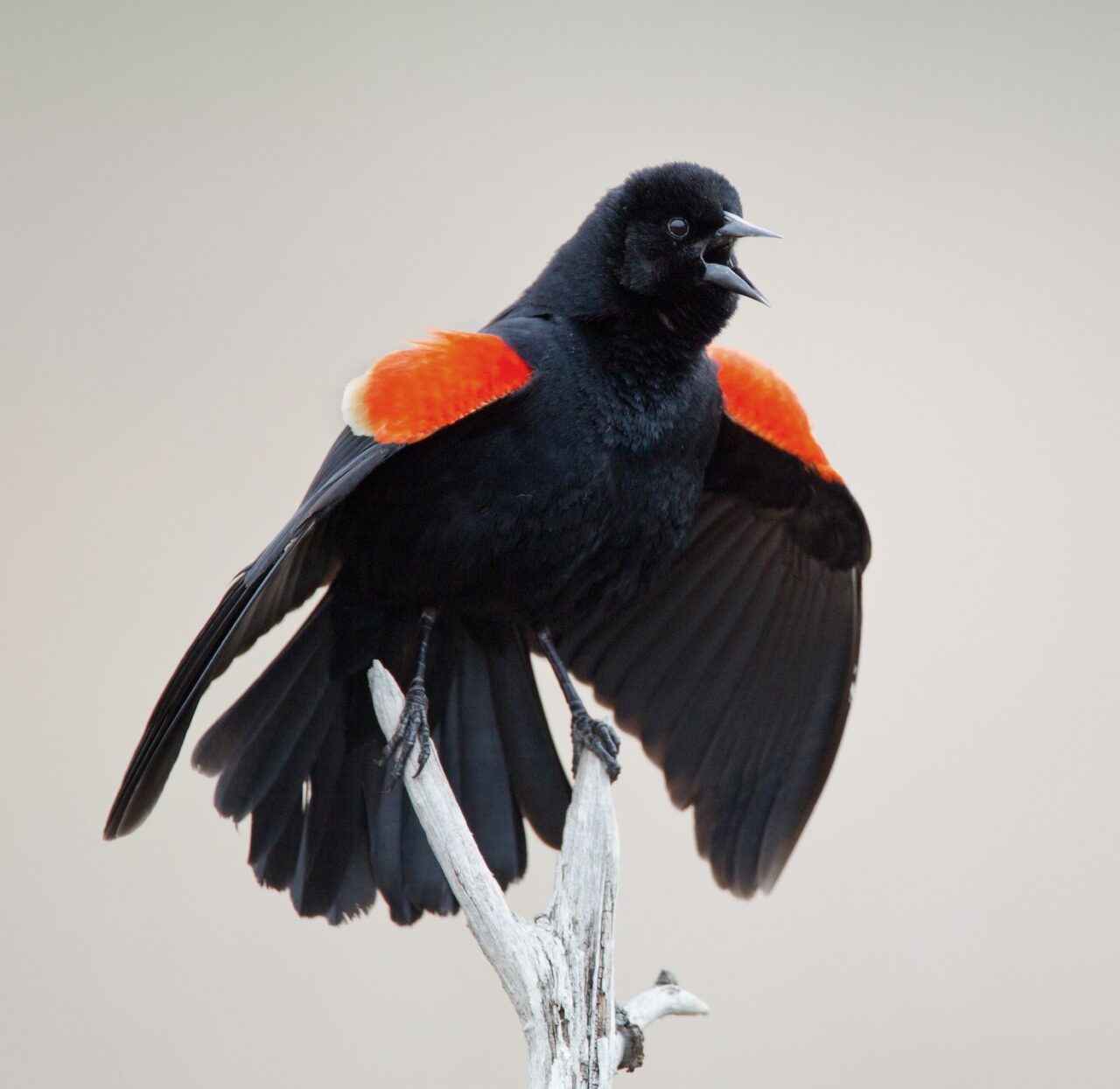
Known for their glorious songs and early dawn choruses, birds rely heavily on sound. Whether singing, chirping, squawking, or knocking on wood, sound is a prominent component of bird communication. During springtime, birds sing for two main reasons: to defend a territory and to find a mate, which marks the start of the nesting cycle. Male birds might also attract mates through dazzling colors, extravagant feathers, and even jaw-dropping courtship displays and dances.
Courtship displays, great colors, and sustained singing are ways for males to demonstrate their potential as a good breeding partner.
Family Quests
Choose activities to try out this week as a family, or challenge students to complete them on their own.
- Sit together outdoors as a family and create individual sound maps. Did anyone hear any sounds that no one else noticed? Share your maps with us on our Facebook page!
- Take your family outside, listen for bird songs and calls, and try to imitate them. Which family member sounds most like a bird?
- Find a bird sound you find weird or surprising on Macaulay Library.
- Strut your stuff! Lead your family in a bird-of-paradise dance, a pigeon strut, or an eagle soar.
“You cannot make people learn. You can only provide the right conditions for learning to happen.” – Vince Gowmon
Lessons
- Internet access with the associated slideshow
- Blank paper and assorted construction paper
- Paper plate (optional)
- Pencil or pen
- Scissors
- Glue
- Art supplies (colored pencils, watercolor paints, etc.)
- Gather materials and access the slideshow to guide the student’s investigation. You may wish to cut a paper plate or piece of construction paper into a bird mask in advance for the student. See Slide 17 for an example. Alternatively, you and the student can create the mask base at that time.
- On Slide 2, play the video. ASK: What was your favorite bird song in the video? Can you imitate any of the bird sounds in the video? How is bird song like music?
- Show Slides 3-4 to review why birds sing. Challenge the student to brainstorm some ideas of why they think birds might sing. If they get stuck, prompt them to think of reasons humans talk or sing. Would birds want to say the same things? They can write down or draw pictures to represent their ideas.
- Show Slides 5-8 to introduce the nesting cycle and how bird song helps males defend their territories.
- Show Slide 9-10. On Slide 9 share with the student that male birds listen to the other birds around them to learn who his neighbors are and make sure no one is sneaking onto his territory. Gather a pen or pencil and a blank piece of paper and head outside to make a sound map. Put an X in the center of the page to mark where you are standing. Challenge the student to make a map of all the sounds they hear using words or drawings to mark the sound’s location. Try to determine both distance and direction. You can talk through the placement together.
- Show Slides 11-15 to explore how singing, being fancy, and dancing help males find a mate.
- Show Slide 16 and let the student pick a video to watch. Once they’ve watched the video, encourage the student to recreate some of the dance moves. Revisit the video as necessary. Challenge the student to make up their own bird dance routine.
Bring out the art materials and challenge the student to create their own fancy bird mask. Work with the student to cut out the mask base or provide them with the one you prepared. Encourage them to think about the birds they saw today as they design their mask. Give them time to decorate their mask.
Depending on their age and ability, you might also consider asking the student to write, draw, or record themselves sharing on the following prompts:
- Think about the bird their mask represents. What is it called? What does it like to do? Is it a good singer? How did it learn to dance?
- What happens when a fancy male bird discovers he isn’t a good dancer?
- How are winter and spring different? Which do you like better, and why? Which do you think birds like better?
- Why are birds so noisy in spring?
- Summarize learning, then encourage the student to record and investigate any questions they might have. You might ask:
- What did you learn about why birds sing? (To attract a mate and defend their territory.)
- What are some things male birds do to find a mate? (Sing, have colorful feathers, dance, find good territories.)
- What questions do you have about birds?
- If you can, go outside for a walk and observe your local birds. How many singing males or colorful birds can you find?
- Internet access with the associated slideshow
- Blank paper
- Pencil or pen
- Have a conversation with the student about the birds you might hear singing in your area in the spring. ASK: What do you already know about bird songs and why birds sing? What questions do you have? Add any questions to an “I wonder” list. These questions could lead to independent research investigations later.
- Encourage the student to explore the readings, videos, and websites within the slideshow. Expect that the materials might take about 45 minutes to work through, including one outdoor activity. Additional time will be needed for optional independent work suggestions. The slideshow will prompt the student to ask for adult permission before going outside and provides alternatives if they are not able to go out. The slideshow provides support for the student to create:
- A list of reasons birds make sounds
- A sound map of your yard or neighborhood
- A bird courtship dance routine
Give the student the materials they need, and access to the slideshow to guide them. Have the student write about the questions presented and do the activities suggested in the slides.
Depending on your needs and the student’s interest and abilities, you might also assign one or more of the following activities for them to complete independently.
- Go outside, listen for a bird sound, try to imitate it, and try to draw a spectrogram of the sound (like the ones in Bird Song Hero).
- Write a story on the following prompt: Consider how winter and spring are different in your area. How do these differences impact you? How do you think they impact birds?
- If you could be any bird you learned about today, which would you be? Describe at least three reasons for your choice.
- Create a cartoon about a fancy male bird who isn’t a good dancer.
- Ask the student to share their:
- List of reasons birds make sounds
- ASK: Do any of these ideas remind you of reasons that you make sounds? Why?
- Sound map of their yard or neighborhood
- ASK: What did you hear? What could you tell about the area around you by listening? What do you think this area might sound like to a bird who uses sound to find and claim territory?
- Bird courtship dance moves
- ASK: Which species’ dance did you choose to imitate? Why? What was the most challenging part of the dance?
- List of reasons birds make sounds
- Chat about what the student learned and encourage them to investigate any questions they might have. For example, you might wonder:
- What is the main idea of the activity? What details from the activity support the main idea?
- Why is spring so noisy? What did you learn about how birds claim territory and find mates?
- What are different strategies or adaptations birds can have for attracting a mate? How do these strategies support birds’ survival and reproduction? (Song, colorful feathers, courtship dance/display, claiming and defending good territory.)
- Which species are you likely to hear singing in your area this spring, and what do they sound like? (See how many you can think of! If you want to research more, you can look up birds and listen to their sounds in the Cornell Lab’s free online Bird Guide or the free Merlin Bird ID app.)
- What questions do you have, and how might you explore them? (Add questions to the “I wonder” list and encourage the student to explore some of them independently.)
- Internet access with the associated slideshow
- Blank paper
- Pencil or pen
- Have a conversation with the student about the birds they might hear singing in your area in the spring. ASK: What do you already know about bird songs and why birds sing? What questions do you have? Add questions to an “I wonder” list. These questions could lead to independent research investigations later.
- Encourage the student to explore the readings, videos, and websites within the slideshow. Expect that the materials might take about 45 minutes to work through, including one outdoor activity. Additional time will be needed for optional independent work suggestions. Note that the slideshow will prompt the student to ask an adult’s permission before going outside and provides alternatives if they are not able to go out. The slideshow provides support for the student to create:
- A list of reasons birds make sounds
- A sound map of their yard or neighborhood
- A bird courtship dance routine
Give the student the materials they need, and access to the slideshow to guide them. Have the student write about the questions presented and complete each of the activities suggested in the slides.
Depending on your needs and the student’s interest, you might also assign one or more of the following activities for them to complete independently.
- Go outside to listen for a bird song or call. Draw a spectrogram of the sound (like the ones in Bird Song Hero).
- Research and write a report or create a slideshow that describes why a good territory is so important to a bird during the nesting season.
- Write a story: Consider how winter and spring are different in your area. How do these differences impact you? How do you think they impact birds?
- Draw a cartoon about a fancy male bird facing a problem or challenge.
- Create a report, video, or show to describe: “Why is spring so noisy?”
- Ask the student to share their:
- List of reasons birds make sounds
- ASK: Do any of these ideas remind you of reasons that you make sounds? Why?
- Sound map of their yard or neighborhood
- ASK: What did you hear? What could you tell about the area around you by sound alone? What do you think this area might sound like to a bird who uses sound to find and claim territory?
- Bird courtship dance moves
- ASK: Which species’ dance did you choose to imitate? Why? What was the most challenging part of the dance?
- List of reasons birds make sounds
- Chat about what the student learned and encourage them to investigate any questions they might have. For example, you might ask:
- What are the main ideas from this activity? What details from the activity support the main ideas?
- What did you learn about how birds claim territory and find mates?
- What are different strategies or adaptations birds have for attracting a mate? How do these adaptations support the increased chances of survival and reproduction for some birds? (Song, colorful feathers, courtship dance/display, claiming and defending good territory.)
- Which species are you likely to hear singing in your area this spring, and what do they sound like? (See how many you can think of! If you want to research more, you can look up birds and listen to their sounds in the Cornell Lab’s free online Bird Guide or the free Merlin Bird ID app.)
- What questions do you have, and how might you explore them? (Add questions to the “I wonder” list and encourage the student to explore some of them independently.)
Please note that these identified standards are based on the student completing the slideshow and answering questions from the adult-guided document. However, learning standards from the “Independent Exploration” section are not included. If a student completes any of the “Independent Explorations,” additional standards may apply.
- K-LS1-1: Use observations to describe patterns of what plants and animals (including humans) need to survive.
- K-ESS3-1: Use a model to represent the relationship between the needs of different plants and animals (including humans) and the places they live.
- CCSS.MATH.CONTENT.K.G.A.1: Describe objects in the environment using names of shapes, and describe the relative positions of these objects using terms such as above, below, beside, in front of, behind, and next to.
- CCSS.ELA-LITERACY.RI.K.1: With prompting and support, ask and answer questions about key details in a text.
- CCSS.ELA-LITERACY.RI.K.2: With prompting and support, identify the main topic and retell key details of a text.
- CCSS.ELA-LITERACY.RI.K.3: With prompting and support, describe the connection between two individuals, events, ideas, or pieces of information in a text.
- CCSS.ELA-LITERACY.W.K.1: Use a combination of drawing, dictating, and writing to compose opinion pieces in which they tell a reader the topic or the name of the book they are writing about and state an opinion or preference about the topic or book (e.g., My favorite book is…).
- CCSS.ELA-LITERACY.W.K.8: With guidance and support from adults, recall information from experiences or gather information from provided sources to answer a question.
- CCSS.ELA-LITERACY.SL.K.2: Confirm understanding of a text read aloud or information presented orally or through other media by asking and answering questions about key details and requesting clarification if something is not understood.
- CCSS.ELA-LITERACY.SL.K.4: Describe familiar people, places, things, and events and, with prompting and support, provide additional detail.
- CCSS.ELA-LITERACY.SL.K.6: Speak audibly and express thoughts, feelings, and ideas clearly.
- 1-LS1-2: Read texts and use media to determine patterns in behavior of parents and offspring that help offspring survive.
- CCSS.ELA-LITERACY.RI.1.1: Ask and answer questions about key details in a text.
- CCSS.ELA-LITERACY.RI.1.2: Identify the main topic and retell key details of a text.
- CCSS.ELA-LITERACY.W.1.8: With guidance and support from adults, recall information from experiences or gather information from provided sources to answer a question.
- CCSS.ELA-LITERACY.SL.1.2: Ask and answer questions about key details in a text read aloud or information presented orally or through other media.
- CCSS.ELA-LITERACY.SL.1.3: Ask and answer questions about what a speaker says in order to gather additional information or clarify something that is not understood.
- CCSS.ELA-LITERACY.SL.1.4: Describe people, places, things, and events with relevant details, expressing ideas and feelings clearly.
- 2-LS4-1: Make observations of plants and animals to compare the diversity of life in different habitats.
- CCSS.MATH.CONTENT.2.G.A.1: Recognize and draw shapes having specified attributes, such as a given number of angles or a given number of equal faces. Identify triangles, quadrilaterals, pentagons, hexagons, and cubes.
- CCSS.ELA-LITERACY.RI.2.1: Ask and answer such questions as who, what, where, when, why, and how to demonstrate understanding of key details in a text.
- CCSS.ELA-LITERACY.W.2.8: Recall information from experiences or gather information from provided sources to answer a question.
- CCSS.ELA-LITERACY.SL.2.2: Recount or describe key ideas or details from a text read aloud or information presented orally or through other media.
- CCSS.ELA-LITERACY.SL.2.3: Ask and answer questions about what a speaker says in order to clarify comprehension, gather additional information, or deepen understanding of a topic or issue.
- CCSS.ELA-LITERACY.SL.2.6: Produce complete sentences when appropriate to task and situation in order to provide requested detail or clarification.
- CCSS.ELA-LITERACY.L.2.1: Demonstrate command of the conventions of standard English grammar and usage when writing or speaking.
- CCSS.ELA-LITERACY.L.2.4: Determine or clarify the meaning of unknown and multiple-meaning words and phrases based on grade 2 reading and content, choosing flexibly from an array of strategies.
- CCSS.ELA-LITERACY.L.2.6: Use words and phrases acquired through conversations, reading and being read to, and responding to texts, including using adjectives and adverbs to describe.
- 3-LS4-2: Use evidence to construct an explanation for how the variations in characteristics among individuals of the same species may provide advantages in surviving, finding mates, and reproducing.
- 3-LS2-1: Construct an argument that some animals form groups that help members survive.
- CCSS.ELA-LITERACY.RI.3.1: Ask and answer questions to demonstrate understanding of a text, referring explicitly to the text as the basis for the answers.
- CCSS.ELA-LITERACY.RI.3.2: Determine the main idea of a text; recount the key details and explain how they support the main idea.
- CCSS.ELA-LITERACY.RI.3.3: Describe the relationship between a series of historical events, scientific ideas or concepts, or steps in technical procedures in a text, using language that pertains to time, sequence, and cause/effect.
- CCSS.ELA-LITERACY.RI.3.4: Determine the meaning of general academic and domain-specific words and phrases in a text relevant to a grade 3 topic or subject area.
- CCSS.ELA-LITERACY.RI.3.7: Use information gained from illustrations (e.g., maps, photographs) and the words in a text to demonstrate understanding of the text (e.g., where, when, why, and how key events occur).
- CCSS.ELA-LITERACY.RF.3.3: Know and apply grade-level phonics and word analysis skills in decoding words.
- CCSS.ELA-LITERACY.W.3.8: Recall information from experiences or gather information from print and digital sources; take brief notes on sources and sort evidence into provided categories.
- CCSS.ELA-LITERACY.SL.3.2: Determine the main ideas and supporting details of a text read aloud or information presented in diverse media and formats, including visually, quantitatively, and orally.
- CCSS.ELA-LITERACY.SL.3.4: Report on a topic or text, tell a story, or recount an experience with appropriate facts and relevant, descriptive details, speaking clearly at an understandable pace.
- CCSS.ELA-LITERACY.SL.3.6: Speak in complete sentences when appropriate to task and situation in order to provide requested detail or clarification.
- CCSS.ELA-LITERACY.L.3.1: Demonstrate command of the conventions of standard English grammar and usage when writing or speaking.
- CCSS.ELA-LITERACY.L.3.4: Determine or clarify the meaning of unknown and multiple-meaning words and phrases based on grade 3 reading and content, choosing flexibly from a range of strategies.
- CCSS.ELA-LITERACY.L.3.5: Demonstrate understanding of figurative language, word relationships and nuances in word meanings.
- CCSS.ELA-LITERACY.L.3.6: Acquire and use accurately grade-appropriate conversational, general academic, and domain-specific words and phrases, including those that signal spatial and temporal relationships.
- 4-LS1-1: Construct an argument that plants and animals have internal and external structures that function to support survival, growth, behavior, and reproduction.
- CCSS.ELA-LITERACY.RI.4.1: Refer to details and examples in a text when explaining what the text says explicitly and when drawing inferences from the text.
- CCSS.ELA-LITERACY.RI.4.2: Determine the main idea of a text and explain how it is supported by key details; summarize the text.
- CCSS.ELA-LITERACY.RI.4.3: Explain events, procedures, ideas, or concepts in a historical, scientific, or technical text, including what happened and why, based on specific information in the text.
- CCSS.ELA-LITERACY.RI.4.4: Determine the meaning of general academic and domain-specific words or phrases in a text relevant to a grade 4 topic or subject area.
- CCSS.ELA-LITERACY.RI.4.9: Integrate information from two texts on the same topic in order to write or speak about the subject knowledgeably.
- CCSS.ELA-LITERACY.RF.4.3: Know and apply grade-level phonics and word analysis skills in decoding words.
- CCSS.ELA-LITERACY.RF.4.4: Read with sufficient accuracy and fluency to support comprehension.
- CCSS.ELA-LITERACY.W.4.8: Recall relevant information from experiences or gather relevant information from print and digital sources; take notes and categorize information, and provide a list of sources.
- CCSS.ELA-LITERACY.W.4.9: Draw evidence from literary or informational texts to support analysis, reflection, and research.
- CCSS.ELA-LITERACY.SL.4.3: Identify the reasons and evidence a speaker provides to support particular points.
- CCSS.ELA-LITERACY.SL.4.4: Report on a topic or text, tell a story, or recount an experience in an organized manner, using appropriate facts and relevant, descriptive details to support main ideas or themes; speak clearly at an understandable pace.
- CCSS.ELA-LITERACY.L.4.1: Demonstrate command of the conventions of standard English grammar and usage when writing or speaking.
- CCSS.ELA-LITERACY.L.4.3: Use knowledge of language and its conventions when writing, speaking, reading, or listening.
- CCSS.ELA-LITERACY.L.4.4: Determine or clarify the meaning of unknown and multiple-meaning words and phrases based on grade 4 reading and content, choosing flexibly from a range of strategies.
- CCSS.ELA-LITERACY.L.4.5: Demonstrate understanding of figurative language, word relationships, and nuances in word meanings.
- CCSS.ELA-LITERACY.L.4.6: Acquire and use accurately grade-appropriate general academic and domain-specific words and phrases, including those that signal precise actions, emotions, or states of being (e.g., quizzed, whined, stammered) and that are basic to a particular topic.
- CCSS.ELA-LITERACY.RI.5.1: Quote accurately from a text when explaining what the text says explicitly and when drawing inferences from the text.
- CCSS.ELA-LITERACY.RI.5.2: Determine two or more main ideas of a text and explain how they are supported by key details; summarize the text.
- CCSS.ELA-LITERACY.RI.5.3: Explain the relationships or interactions between two or more individuals, events, ideas, or concepts in a historical, scientific, or technical text based on specific information in the text.
- CCSS.ELA-LITERACY.RI.5.4: Determine the meaning of general academic and domain-specific words and phrases in a text relevant to a grade 5 topic or subject area.
- CCSS.ELA-LITERACY.RF.5.3: Know and apply grade-level phonics and word analysis skills in decoding words.
- CCSS.ELA-LITERACY.RF.5.4: Read with sufficient accuracy and fluency to support comprehension.
- CCSS.ELA-LITERACY.W.5.2: Write informative/explanatory texts to examine a topic and convey ideas and information clearly.
- CCSS.ELA-LITERACY.W.5.9: Draw evidence from literary or informational texts to support analysis, reflection, and research.
- CCSS.ELA-LITERACY.L.5.1: Demonstrate command of the conventions of standard English grammar and usage when writing or speaking.
- CCSS.ELA-LITERACY.L.5.2: Demonstrate command of the conventions of standard English capitalization, punctuation, and spelling when writing.
- CCSS.ELA-LITERACY.L.5.4: Determine or clarify the meaning of unknown and multiple-meaning words and phrases based on grade 5 reading and content, choosing flexibly from a range of strategies.
- CCSS.ELA-LITERACY.L.5.5: Demonstrate understanding of figurative language, word relationships, and nuances in word meanings.
- CCSS.ELA-LITERACY.L.5.6: Acquire and use accurately grade-appropriate general academic and domain-specific words and phrases, including those that signal contrast, addition, and other logical relationships.
- MS-LS1-4: Use argument based on empirical evidence and scientific reasoning to support an explanation for how characteristic animal behaviors and specialized plant structures affect the probability of successful reproduction of animals and plants respectively.
- MS-LS4-4: Construct an explanation based on evidence that describes how genetic variations of traits in a population increase some individuals’ probability of surviving and reproducing in a specific environment.
- CCSS.ELA-LITERACY.RI.6.1: Cite textual evidence to support analysis of what the text says explicitly as well as inferences drawn from the text.
- CCSS.ELA-LITERACY.RI.6.4: Determine the meaning of words and phrases as they are used in a text, including figurative, connotative, and technical meanings.
- CCSS.ELA-LITERACY.RI.6.7: Integrate information presented in different media or formats (e.g., visually, quantitatively) as well as in words to develop a coherent understanding of a topic or issue.
- CCSS.ELA-LITERACY.W.6.1: Write arguments to support claims with clear reasons and relevant evidence.
- CCSS.ELA-LITERACY.W.6.4: Produce clear and coherent writing in which the development, organization, and style are appropriate to task, purpose, and audience.
- CCSS.ELA-LITERACY.W.6.9: Draw evidence from literary or informational texts to support analysis, reflection, and research.
- CCSS.ELA-LITERACY.SL.6.2: Interpret information presented in diverse media and formats (e.g., visually, quantitatively, orally) and explain how it contributes to a topic, text, or issue under study.
- CCSS.ELA-LITERACY.L.6.1: Demonstrate command of the conventions of standard English grammar and usage when writing or speaking.
- CCSS.ELA-LITERACY.L.6.2: Demonstrate command of the conventions of standard English capitalization, punctuation, and spelling when writing.
- CCSS.ELA-LITERACY.L.6.3: Use knowledge of language and its conventions when writing, speaking, reading, or listening.
- CCSS.ELA-LITERACY.L.6.4: Determine or clarify the meaning of unknown and multiple-meaning words and phrases based on grade 6 reading and content, choosing flexibly from a range of strategies.
- CCSS.ELA-LITERACY.L.6.5: Demonstrate understanding of figurative language, word relationships, and nuances in word meanings.
- CCSS.ELA-LITERACY.L.6.6: Acquire and use accurately grade-appropriate general academic and domain-specific words and phrases; gather vocabulary knowledge when considering a word or phrase important to comprehension or expression.
- MS-LS1-4: Use argument based on empirical evidence and scientific reasoning to support an explanation for how characteristic animal behaviors and specialized plant structures affect the probability of successful reproduction of animals and plants respectively.
- MS-LS4-4: Construct an explanation based on evidence that describes how genetic variations of traits in a population increase some individuals’ probability of surviving and reproducing in a specific environment.
- CCSS.ELA-LITERACY.RI.7.1: Cite several pieces of textual evidence to support analysis of what the text says explicitly as well as inferences drawn from the text.
- CCSS.ELA-LITERACY.RI.7.4: Determine the meaning of words and phrases as they are used in a text, including figurative, connotative, and technical meanings; analyze the impact of a specific word choice on meaning and tone.
- CCSS.ELA-LITERACY.W.7.1: Write arguments to support claims with clear reasons and relevant evidence.
- CCSS.ELA-LITERACY.W.7.9: Draw evidence from literary or informational texts to support analysis, reflection, and research.
- CCSS.ELA-LITERACY.SL.7.2: Analyze the main ideas and supporting details presented in diverse media and formats (e.g., visually, quantitatively, orally) and explain how the ideas clarify a topic, text, or issue under study.
- CCSS.ELA-LITERACY.L.7.1: Demonstrate command of the conventions of standard English grammar and usage when writing or speaking.
- CCSS.ELA-LITERACY.L.7.2: Demonstrate command of the conventions of standard English capitalization, punctuation, and spelling when writing.
- CCSS.ELA-LITERACY.L.7.3: Use knowledge of language and its conventions when writing, speaking, reading, or listening.
- CCSS.ELA-LITERACY.L.7.4: Determine or clarify the meaning of unknown and multiple-meaning words and phrases based on grade 7 reading and content, choosing flexibly from a range of strategies.
- CCSS.ELA-LITERACY.L.7.5: Demonstrate understanding of figurative language, word relationships, and nuances in word meanings.
- MS-LS1-4: Use argument based on empirical evidence and scientific reasoning to support an explanation for how characteristic animal behaviors and specialized plant structures affect the probability of successful reproduction of animals and plants respectively.
- MS-LS4-4: Construct an explanation based on evidence that describes how genetic variations of traits in a population increase some individuals’ probability of surviving and reproducing in a specific environment.
- CCSS.ELA-LITERACY.RI.8.1: Cite the textual evidence that most strongly supports an analysis of what the text says explicitly as well as inferences drawn from the text.
- CCSS.ELA-LITERACY.RI.8.4: Determine the meaning of words and phrases as they are used in a text, including figurative, connotative, and technical meanings; analyze the impact of specific word choices on meaning and tone, including analogies or allusions to other texts.
- CCSS.ELA-LITERACY.W.8.1: Write arguments to support claims with clear reasons and relevant evidence.
- CCSS.ELA-LITERACY.W.8.9: Draw evidence from literary or informational texts to support analysis, reflection, and research.
- CCSS.ELA-LITERACY.L.8.1: Demonstrate command of the conventions of standard English grammar and usage when writing or speaking.
- CCSS.ELA-LITERACY.L.8.2: Demonstrate command of the conventions of standard English capitalization, punctuation, and spelling when writing.
- CCSS.ELA-LITERACY.L.8.3: Use knowledge of language and its conventions when writing, speaking, reading, or listening.
- CCSS.ELA-LITERACY.L.8.4: Determine or clarify the meaning of unknown and multiple-meaning words or phrases based on grade 8 reading and content, choosing flexibly from a range of strategies.
- CCSS.ELA-LITERACY.L.8.5: Demonstrate understanding of figurative language, word relationships, and nuances in word meanings.
- CCSS.ELA-LITERACY.L.8.6: Acquire and use accurately grade-appropriate general academic and domain-specific words and phrases; gather vocabulary knowledge when considering a word or phrase important to comprehension or expression.
Life Cycles: Nests and Eggs
Background
Every year, the Cornell Lab of Ornithology Bird Cams provide exciting, up-close views of nesting birds. At different times, you might catch hawks, owls, or albatross building nests, incubating eggs, and feeding young. This week’s activities are inspired by these cameras and feature archived highlights and active cams. In these activities, we focus on the early parts of the nesting cycle: building a nest and laying and incubating eggs. Nests are quite diverse. You might first think of the cup nest (such as the American Robin’s bowl-shaped nest with “robin blue” eggs). Baltimore Orioles build a hanging pendant nest. Ospreys and Bald Eagles build large platform nests, while many woodpeckers and some songbirds nest in tree holes or bird houses. Killdeers hardly build nests at all, they just clear a space on the ground and create a shallow depression called a scrape.
We hope that you’ll explore nests via our nest cams, and explore the amazing diversity of nests, eggs, young, and parental behavior. Please keep in mind that the cam footage captures real life so it’s possible to see things like mating, predation, fighting, injury, or death. For example, if you watch a raptor’s nest, you will most likely see small animals being eaten. Chat about what you may see, why these things occur, and think about how to respond to surprising or “yucky” things on camera. Thoughtful discussion might make the difference between a shocking sight and an “ah ha!” moment.
We aim to provide fun, hands-on experiences to get kids active and keep them engaged. If you have supplies and time, please consider doing as many of the hands-on activities as possible.
Family Quests
Choose activities to try out this week as a family, or challenge students to complete them on their own.
- Go on a nest search! Look in bushes, trees, and building eaves for nests used last year or this spring’s nests. Please be careful not to disturb nesting birds. If you find an active nest, share it with NestWatch, a Cornell Lab participatory-science project that monitors nesting birds.
- Find out which birds use nest boxes (also called bird houses) where you live using the Right Bird, Right House Guide from NestWatch.
- Build a nest that fits your family! Go outside and use natural materials or stay indoors and use things from around the house such as pillows and blankets.
“Education is not the filling of a pot but the lighting of a fire.” – W.B. Yeats
Lessons
- Internet access with the associated slideshow
- Blank paper
- Art supplies (colored pencils, watercolor paints, etc.)
- Ruler
- For egg dissection
- One egg
- One bowl
- A spoon
- A paper towel or dishcloth
- A magnifying glass (if you have one)
- For shell-less egg
- One egg
- Cup
- White vinegar
- Water with 2-3 drops of food coloring
- Gather materials and access the slideshow (use “presentation” mode) to guide the student’s investigation.
- On the title slide, ASK: What kind of bird is this? What do you think the bird is doing? What is the nest made out of?
- On the second slide, view the video with the student and talk about the video. For example, you might ASK: Why did the herons have sticks? What was the heron doing to the eggs? Why? Why was the heron upset when the owl came near? What was the parent heron feeding its babies?
- Help the student decode the nesting cycle shown on slides 3-4.
- On slide 5, review what a nest is and when the nesting season occurs.
- After viewing the Red-tailed Hawk video on slide 6, ASK: Why do you think the birds switched places? What colors did you see on the eggs? What did you notice about the nest (colors, materials, size etc.)?
- While looking at slides 7-9, ask the student to notice diversity in nests and materials.
- Hands-on Activity: Build a bird nest (slides 11-12). Once they’ve built the nest, guide the student through measuring the height and the width of their nest. Adult tip: give the student a bag to collect materials in, or they might come back with a GIANT pile.
- For slides 13-18, highlight any concepts and vocabulary.
- Hands-on Activity: Design an egg (slide 19).
- Hands-on Activity: Guide the student through the egg dissection on slides 20-26. End by drawing a scientific sketch of the egg, inside and out (shell).
- Hands-on Activity: Consider doing the shell-less egg exploration presented in the final slides 27-31, if you’re interested in experimenting more.
Allow the student to let their creativity free in designing their own bird nest (slide 10) and egg (slide 19). Before sending them on their own, encourage them to consider what materials they can use for a nest and how they might successfully assemble it.
The student can start and keep a Bird Cam journal, updating it every few days, as a writing and observation exercise.
Challenge the student to design paper eggs that would be camouflaged on various surfaces inside or outside your house (for example, you might ask them to color an egg that would be hard to see on different tree trunks, on a yard/driveway, on the side of a cabinet, or an a patterned countertop). Have the student create the eggs and have you guess which egg goes where. Place them next to the surface and see how close the match is!
Depending on their age and ability, you might also consider asking the student to create a stories, drawings, or videos inspired by the following prompts:
- In our neighborhood/yard, where do you think the best spot to build a bird nest is? Why?
- If you were a bird, how might you keep your eggs safe?
- How are bird families different from human families?
- Research the tiniest eggs and largest eggs. Draw a life-sized version of each.
- Encourage the student to present a mini art showcase of their egg and nest creations. ASK: Where could I find this nest? What is the nest made of?
- Chat about what the student learned and encourage them to investigate any questions they might have. For example, in addition to the questions above, you might wonder:
- How do birds make more birds? What different colors and sizes can eggs be? What things can nests be made of? How do birds keep their eggs warm?
- What questions do you have? How could we find the answers to those questions? (Add questions to the “I Wonder” list and encourage the student to explore some of them independently.)
- Internet access with the associated slideshow
- Blank and lined paper
- Pen or pencil
- Art supplies (colored pencils, watercolor paints, etc.)
- Ruler
- For egg dissection
- One egg
- One bowl
- A spoon
- A paper towel or dishcloth
- A magnifying glass (if you have one)
- For shell-less egg
- One egg
- Cups
- White Vinegar
- Water with 2-3 drops of food coloring
- Have a conversation with the student about what they already know about birds, especially nesting birds. Ask:
- Have you seen a bird’s nest? Where? What kind of bird? Could you see eggs or chicks?
- What questions do you have about birds? Add questions to an “I Wonder” list. These questions could lead to independent research investigations later.
- Have the student explore the videos and websites within the slideshow (use “presentation” mode for the best view). There are also a number of activities they can do that you can help them prepare for. Expect that the materials might take about an hour to work through, plus additional time for writing, drawing, and extra projects (which will vary according to the interest level of the student.). The slideshow provides support for the student to:
- Create a nest and measure it, justifying which materials they used and why.
- Explain different types of nests, and their pros and cons.
- Describe what an egg is and the meaning/importance of incubation.
- Design an egg, considering size, shape, and color.
- Complete an egg dissection.
- Do a shell-less egg experiment to gain a better understanding of egg structure (note: this takes about 2-3 days to complete).
Give the student the materials they need, and access to the slideshow to guide them. Have the student write about the questions presented within the show, and complete the activities suggested in the slides.
Depending on your needs and the student’s interest and abilities, you might also assign one or more of the following activities for them to complete independently.
- Write a report or create a poster: How do the eggs of birds differ from those of insects, reptiles (snakes, turtles, lizards), and amphibians (such as frogs and salamanders)?
- Create a cartoon about a bird who builds the perfect nest.
- Design paper eggs that would be camouflaged on various surfaces inside or outside your house (for example, you might ask them to color an egg that would be hard to see on different tree trunks, on a yard/driveway, on the side of a cabinet, or on a patterned countertop). After they’ve created the eggs, have an adult guess where the eggs match. Place them next to the surface and see how close the match is!
- Write a story or research a report about how birds keep their eggs safe.
- Ask the student to share their:
- Nest design
- ASK: How did you make this nest? What units did you use to measure your nest? Why did you choose those units and not a larger or smaller unit? How difficult do you think it is for a bird to make a nest using its beak?
- Egg design
- ASK: What inspired you to create this egg? Why is it this shape and color?
- Sketch of a dissected egg
- ASK: Is it challenging to create a scientifically-accurate drawing? What parts did you observe in the egg?
- Nest design
- Talk about: Why don’t all birds nest in nest boxes or tree cavities? (Each species of bird has evolved to build nests with specific materials (such as sticks, mud, pine needles, or grass), and in a certain nest site and habitat. Selecting a diversity of nesting materials and locations is an advantage for birds. Imagine how hard it would be for all birds to build nests from the same material in the same location!)
- ASK: What is the main idea of the activity? What details from the activity support the main idea?
- Finally, chat about what the student learned and encourage them to investigate any questions they might have. For example, you might wonder:
- What are the functions of nests and eggs?
- What questions do you have, and how might you explore them? (Add questions to the “I Wonder” list and encourage the student to explore some of them independently.)
- Internet access with the associated slideshow
- Blank and lined paper
- Pen or pencil
- Art supplies (colored pencils, watercolor paints, etc.)
- For egg dissection
- One egg
- One bowl
- A spoon
- A paper towel or dishcloth
- A magnifying glass (if you have one)
- For shell-less egg
- Three eggs
- Three cups
- White vinegar
- Water with 2-3 drops of food coloring
- Have a conversation with the student about what they already know about birds, especially nesting birds. Ask:
- Have you seen a bird’s nest? Where? What kind of bird? Could you see eggs or chicks?
- What questions do you have about birds? Add questions to an “I Wonder” list. These questions could lead to independent research investigations later.
- Have the student explore the videos and websites within the slideshow (use “presentation” mode for the best view). There are also a number of activities the student can do that you can help them prepare for. Expect that the materials might take about an hour to work through, plus additional time for writing, drawing, and extra projects (which will vary according to the interest level of the student). The slideshow provides support for the student to:
- Describe nest diversity (size and shape, materials used).
- Create a nest, justifying which materials they used and why.
- Describe what an egg is and the meaning/importance of incubation.
- Design an egg, considering size, shape and color.
- Complete an egg dissection.
- Do a shell-less egg experiment to gain a better understanding of egg structure (note: this takes about 2-3 days to complete).
Give the student the materials they need, and access to the slideshow to guide them. Have the student write about the questions presented and complete each of the activities suggested in the slides.
Depending on your needs and the student’s interest, you might also assign one or more of the following activities for them to complete independently.
- Write a report or create a poster: How do the eggs of birds differ from those of insects, reptiles (snakes, turtles, lizards), and amphibians (such as frogs and salamanders)?
- Find pictures of the embryological development of different species. Find similarities in the embryological development across multiple species that show relationships that are not evident in the fully formed anatomy.
- Research and write a report or create a slideshow that describes why a good territory is so important to a bird during the nesting season.
- Draw a cartoon about a nesting bird that faces a problem or challenge.
- Create an illustrated report or video to describe amazing bird nests.
- Write an illustrated report to describe how seeds (such as a bean seed) and eggs (such as a chicken egg) are similar and different.
- Ask the student to share their:
- Nest design
- ASK: How did you make this nest? How difficult do you think it is for a bird to make a nest using its beak?
- Egg design
- ASK: What inspired you to create this egg? Why is it this shape and color?
- Sketch of a dissected egg
- ASK: Is it challenging to create scientifically-accurate drawing? What parts did you observe in the egg?
- Nest design
- ASK: What are the main ideas from this activity? What details from the activity support the main ideas?
- Finally, chat about what the student learned and encourage them to investigate any questions they might have. For example, you might wonder:
- What are the functions of nests and eggs?
- What questions do you have, and how might you explore them? (Add questions to the “I Wonder” list and encourage the student to explore some of them independently.)
Please note that these identified standards are based on the student completing the slideshow and answering questions from the adult-guided document. However, learning standards from the “Independent Exploration” section are not included. If a student completes any of the “Independent Explorations,” additional standards may apply.
- K-LS1-1: Use observations to describe patterns of what plants and animals (including humans) need to survive.
- K-ESS3-1: Use a model to represent the relationship between the needs of different plants and animals (including humans) and the places they live.
- K-2-ETS1-2: Develop a simple sketch, drawing, or physical model to illustrate how the shape of an object helps it function as needed to solve a given problem.
- CCSS.MATH.CONTENT.K.MD.A.1: Describe measurable attributes of objects, such as length or weight. Describe several measurable attributes of a single object.
- CCSS.MATH.CONTENT.K.G.A.1: Describe objects in the environment using names of shapes, and describe the relative positions of these objects using terms such as above, below, beside, in front of, behind, and next to.
- CCSS.MATH.CONTENT.K.G.B.5: Model shapes in the world by building shapes from components (e.g., sticks and clay balls) and drawing shapes.
- CCSS.ELA-LITERACY.RI.K.1: With prompting and support, ask and answer questions about key details in a text.
- CCSS.ELA-LITERACY.RI.K.2: With prompting and support, identify the main topic and retell key details of a text.
- CCSS.ELA-LITERACY.RI.K.3: With prompting and support, describe the connection between two individuals, events, ideas, or pieces of information in a text.
- CCSS.ELA-LITERACY.W.K.1: Use a combination of drawing, dictating, and writing to compose opinion pieces in which they tell a reader the topic or the name of the book they are writing about and state an opinion or preference about the topic or book (e.g., My favorite book is…).
- CCSS.ELA-LITERACY.W.K.8: With guidance and support from adults, recall information from experiences or gather information from provided sources to answer a question.
- CCSS.ELA-LITERACY.SL.K.2: Confirm understanding of a text read aloud or information presented orally or through other media by asking and answering questions about key details and requesting clarification if something is not understood.
- CCSS.ELA-LITERACY.SL.K.4: Describe familiar people, places, things, and events and, with prompting and support, provide additional detail.
- CCSS.ELA-LITERACY.SL.K.6: Speak audibly and express thoughts, feelings, and ideas clearly.
- 1-LS1-2: Read texts and use media to determine patterns in behavior of parents and offspring that help offspring survive.
- 1-LS3-1: Make observations to construct an evidence-based account that young plants and animals are like, but not exactly like, their parents.
- K-2-ETS1-2: Develop a simple sketch, drawing, or physical model to illustrate how the shape of an object helps it function as needed to solve a given problem.
- CCSS.MATH.CONTENT.K.G.A.1: Describe objects in the environment using names of shapes, and describe the relative positions of these objects using terms such as above, below, beside, in front of, behind, and next to.
- CCSS.ELA-LITERACY.RI.1.1: Ask and answer questions about key details in a text.
- CCSS.ELA-LITERACY.RI.1.2: Identify the main topic and retell key details of a text.
- CCSS.ELA-LITERACY.W.1.8: With guidance and support from adults, recall information from experiences or gather information from provided sources to answer a question.
- CCSS.ELA-LITERACY.SL.1.2: Ask and answer questions about key details in a text read aloud or information presented orally or through other media.
- CCSS.ELA-LITERACY.SL.1.3: Ask and answer questions about what a speaker says in order to gather additional information or clarify something that is not understood.
- CCSS.ELA-LITERACY.SL.1.4: Describe people, places, things, and events with relevant details, expressing ideas and feelings clearly.
- 2-PS1-2: Analyze data obtained from testing different materials to determine which materials have the properties that are best suited for an intended purpose.
- K-2-ETS1-2: Develop a simple sketch, drawing, or physical model to illustrate how the shape of an object helps it function as needed to solve a given problem.
- CCSS.MATH.CONTENT.2.MD.A.1: Measure the length of an object by selecting and using appropriate tools such as rulers, yardsticks, meter sticks, and measuring tapes.
- CCSS.MATH.CONTENT.2.MD.A.3: Estimate lengths using units of inches, feet, centimeters, and meters.
- CCSS.ELA-LITERACY.RI.2.1: Ask and answer such questions as who, what, where, when, why, and how to demonstrate understanding of key details in a text.
- CCSS.ELA-LITERACY.W.2.8: Recall information from experiences or gather information from provided sources to answer a question.
- CCSS.ELA-LITERACY.SL.2.2: Recount or describe key ideas or details from a text read aloud or information presented orally or through other media.
- CCSS.ELA-LITERACY.SL.2.3: Ask and answer questions about what a speaker says in order to clarify comprehension, gather additional information, or deepen understanding of a topic or issue.
- CCSS.ELA-LITERACY.SL.2.6: Produce complete sentences when appropriate to task and situation in order to provide requested detail or clarification.
- CCSS.ELA-LITERACY.L.2.1: Demonstrate command of the conventions of standard English grammar and usage when writing or speaking.
- CCSS.ELA-LITERACY.L.2.4: Determine or clarify the meaning of unknown and multiple-meaning words and phrases based on grade 2 reading and content, choosing flexibly from an array of strategies.
- CCSS.ELA-LITERACY.L.2.6: Use words and phrases acquired through conversations, reading and being read to, and responding to texts, including using adjectives and adverbs to describe.
- 3-LS1-1: Develop models to describe that organisms have unique and diverse life cycles but all have in common birth, growth, reproduction, and death.
- 3-LS4-3: Construct an argument with evidence that in a particular habitat some organisms can survive well, some survive less well, and some cannot survive at all.
- 3-5-ETS1-1: Define a simple design problem reflecting a need or a want that includes specified criteria for success and constraints on materials, time, or cost.
- CCSS.ELA-LITERACY.RI.3.1: Ask and answer questions to demonstrate understanding of a text, referring explicitly to the text as the basis for the answers.
- CCSS.ELA-LITERACY.RI.3.2: Determine the main idea of a text; recount the key details and explain how they support the main idea.
- CCSS.ELA-LITERACY.RI.3.3: Describe the relationship between a series of historical events, scientific ideas or concepts, or steps in technical procedures in a text, using language that pertains to time, sequence, and cause/effect.
- CCSS.ELA-LITERACY.RI.3.4: Determine the meaning of general academic and domain-specific words and phrases in a text relevant to a grade 3 topic or subject area.
- CCSS.ELA-LITERACY.RI.3.7: Use information gained from illustrations (e.g., maps, photographs) and the words in a text to demonstrate understanding of the text (e.g., where, when, why, and how key events occur).
- CCSS.ELA-LITERACY.RF.3.3: Know and apply grade-level phonics and word analysis skills in decoding words.
- CCSS.ELA-LITERACY.W.3.8: Recall information from experiences or gather information from print and digital sources; take brief notes on sources and sort evidence into provided categories.
- CCSS.ELA-LITERACY.SL.3.2: Determine the main ideas and supporting details of a text read aloud or information presented in diverse media and formats, including visually, quantitatively, and orally.
- CCSS.ELA-LITERACY.SL.3.4: Report on a topic or text, tell a story, or recount an experience with appropriate facts and relevant, descriptive details, speaking clearly at an understandable pace.
- CCSS.ELA-LITERACY.SL.3.6: Speak in complete sentences when appropriate to task and situation in order to provide requested detail or clarification.
- CCSS.ELA-LITERACY.L.3.1: Demonstrate command of the conventions of standard English grammar and usage when writing or speaking.
- CCSS.ELA-LITERACY.L.3.4: Determine or clarify the meaning of unknown and multiple-meaning words and phrases based on grade 3 reading and content, choosing flexibly from a range of strategies.
- CCSS.ELA-LITERACY.L.3.5: Demonstrate understanding of figurative language, word relationships and nuances in word meanings.
- CCSS.ELA-LITERACY.L.3.6: Acquire and use accurately grade-appropriate conversational, general academic, and domain-specific words and phrases, including those that signal spatial and temporal relationships.
- 4-LS1-1: Construct an argument that plants and animals have internal and external structures that function to support survival, growth, behavior, and reproduction.
- 3-5-ETS1-1: Define a simple design problem reflecting a need or a want that includes specified criteria for success and constraints on materials, time, or cost.
- CCSS.MATH.CONTENT.4.MD.A.1: Know relative sizes of measurement units within one system of units including km, m, cm; kg, g; lb, oz.; l, ml; hr, min, sec.
- CCSS.ELA-LITERACY.RI.4.1: Refer to details and examples in a text when explaining what the text says explicitly and when drawing inferences from the text.
- CCSS.ELA-LITERACY.RI.4.2: Determine the main idea of a text and explain how it is supported by key details; summarize the text.
- CCSS.ELA-LITERACY.RI.4.3: Explain events, procedures, ideas, or concepts in a historical, scientific, or technical text, including what happened and why, based on specific information in the text.
- CCSS.ELA-LITERACY.RI.4.4: Determine the meaning of general academic and domain-specific words or phrases in a text relevant to a grade 4 topic or subject area.
- CCSS.ELA-LITERACY.RI.4.9: Integrate information from two texts on the same topic in order to write or speak about the subject knowledgeably.
- CCSS.ELA-LITERACY.RF.4.3: Know and apply grade-level phonics and word analysis skills in decoding words.
- CCSS.ELA-LITERACY.RF.4.4: Read with sufficient accuracy and fluency to support comprehension.
- CCSS.ELA-LITERACY.W.4.8: Recall relevant information from experiences or gather relevant information from print and digital sources; take notes and categorize information, and provide a list of sources.
- CCSS.ELA-LITERACY.W.4.9: Draw evidence from literary or informational texts to support analysis, reflection, and research.
- CCSS.ELA-LITERACY.SL.4.3: Identify the reasons and evidence a speaker provides to support particular points.
- CCSS.ELA-LITERACY.SL.4.4: Report on a topic or text, tell a story, or recount an experience in an organized manner, using appropriate facts and relevant, descriptive details to support main ideas or themes; speak clearly at an understandable pace.
- CCSS.ELA-LITERACY.L.4.1: Demonstrate command of the conventions of standard English grammar and usage when writing or speaking.
- CCSS.ELA-LITERACY.L.4.3: Use knowledge of language and its conventions when writing, speaking, reading, or listening.
- CCSS.ELA-LITERACY.L.4.4: Determine or clarify the meaning of unknown and multiple-meaning words and phrases based on grade 4 reading and content, choosing flexibly from a range of strategies.
- CCSS.ELA-LITERACY.L.4.5: Demonstrate understanding of figurative language, word relationships, and nuances in word meanings.
- CCSS.ELA-LITERACY.L.4.6: Acquire and use accurately grade-appropriate general academic and domain-specific words and phrases, including those that signal precise actions, emotions, or states of being (e.g., quizzed, whined, stammered) and that are basic to a particular topic.
- 5-LS1-1: Support an argument that plants get the materials they need for growth chiefly from air and water.
- 3-5-ETS1-1: Define a simple design problem reflecting a need or a want that includes specified criteria for success and constraints on materials, time, or cost.
- CCSS.ELA-LITERACY.RI.5.1: Quote accurately from a text when explaining what the text says explicitly and when drawing inferences from the text.
- CCSS.ELA-LITERACY.RI.5.2: Determine two or more main ideas of a text and explain how they are supported by key details; summarize the text.
- CCSS.ELA-LITERACY.RI.5.3: Explain the relationships or interactions between two or more individuals, events, ideas, or concepts in a historical, scientific, or technical text based on specific information in the text.
- CCSS.ELA-LITERACY.RI.5.4: Determine the meaning of general academic and domain-specific words and phrases in a text relevant to a grade 5 topic or subject area.
- CCSS.ELA-LITERACY.RF.5.3: Know and apply grade-level phonics and word analysis skills in decoding words.
- CCSS.ELA-LITERACY.RF.5.4: Read with sufficient accuracy and fluency to support comprehension.
- CCSS.ELA-LITERACY.W.5.2: Write informative/explanatory texts to examine a topic and convey ideas and information clearly.
- CCSS.ELA-LITERACY.W.5.9: Draw evidence from literary or informational texts to support analysis, reflection, and research.
- CCSS.ELA-LITERACY.L.5.1: Demonstrate command of the conventions of standard English grammar and usage when writing or speaking.
- CCSS.ELA-LITERACY.L.5.2: Demonstrate command of the conventions of standard English capitalization, punctuation, and spelling when writing.
- CCSS.ELA-LITERACY.L.5.4: Determine or clarify the meaning of unknown and multiple-meaning words and phrases based on grade 5 reading and content, choosing flexibly from a range of strategies.
- CCSS.ELA-LITERACY.L.5.5: Demonstrate understanding of figurative language, word relationships, and nuances in word meanings.
- CCSS.ELA-LITERACY.L.5.6: Acquire and use accurately grade-appropriate general academic and domain-specific words and phrases, including those that signal contrast, addition, and other logical relationships.
- MS-LS4-3: Analyze displays of pictorial data to compare patterns of similarities in the embryological development across multiple species to identify relationships not evident in the fully formed anatomy.
- MS-LS1-4: Use argument based on empirical evidence and scientific reasoning to support an explanation for how characteristic animal behaviors and specialized plant structures affect the probability of successful reproduction of animals and plants respectively.
- MS-LS1-5: Construct a scientific explanation based on evidence for how environmental and genetic factors influence the growth of organisms.
- MS-ETS1-2: Evaluate competing design solutions using a systematic process to determine how well they meet the criteria and constraints of the problem.
- CCSS.ELA-LITERACY.RI.6.1: Cite textual evidence to support analysis of what the text says explicitly as well as inferences drawn from the text.
- CCSS.ELA-LITERACY.RI.6.4: Determine the meaning of words and phrases as they are used in a text, including figurative, connotative, and technical meanings.
- CCSS.ELA-LITERACY.RI.6.7: Integrate information presented in different media or formats (e.g., visually, quantitatively) as well as in words to develop a coherent understanding of a topic or issue.
- CCSS.ELA-LITERACY.W.6.1: Write arguments to support claims with clear reasons and relevant evidence.
- CCSS.ELA-LITERACY.W.6.4: Produce clear and coherent writing in which the development, organization, and style are appropriate to task, purpose, and audience.
- CCSS.ELA-LITERACY.W.6.9: Draw evidence from literary or informational texts to support analysis, reflection, and research.
- CCSS.ELA-LITERACY.SL.6.2: Interpret information presented in diverse media and formats (e.g., visually, quantitatively, orally) and explain how it contributes to a topic, text, or issue under study.
- CCSS.ELA-LITERACY.L.6.1: Demonstrate command of the conventions of standard English grammar and usage when writing or speaking.
- CCSS.ELA-LITERACY.L.6.2: Demonstrate command of the conventions of standard English capitalization, punctuation, and spelling when writing.
- CCSS.ELA-LITERACY.L.6.3: Use knowledge of language and its conventions when writing, speaking, reading, or listening.
- CCSS.ELA-LITERACY.L.6.4: Determine or clarify the meaning of unknown and multiple-meaning words and phrases based on grade 6 reading and content, choosing flexibly from a range of strategies.
- CCSS.ELA-LITERACY.L.6.5: Demonstrate understanding of figurative language, word relationships, and nuances in word meanings.
- CCSS.ELA-LITERACY.L.6.6: Acquire and use accurately grade-appropriate general academic and domain-specific words and phrases; gather vocabulary knowledge when considering a word or phrase important to comprehension or expression.
- MS-LS1-4: Use argument based on empirical evidence and scientific reasoning to support an explanation for how characteristic animal behaviors and specialized plant structures affect the probability of successful reproduction of animals and plants respectively.
- MS-LS1-5: Construct a scientific explanation based on evidence for how environmental and genetic factors influence the growth of organisms.
- MS-ETS1-2: Evaluate competing design solutions using a systematic process to determine how well they meet the criteria and constraints of the problem.
- CCSS.ELA-LITERACY.RI.7.1: Cite several pieces of textual evidence to support analysis of what the text says explicitly as well as inferences drawn from the text.
- CCSS.ELA-LITERACY.RI.7.4: Determine the meaning of words and phrases as they are used in a text, including figurative, connotative, and technical meanings; analyze the impact of a specific word choice on meaning and tone.
- CCSS.ELA-LITERACY.W.7.1: Write arguments to support claims with clear reasons and relevant evidence.
- CCSS.ELA-LITERACY.W.7.9: Draw evidence from literary or informational texts to support analysis, reflection, and research.
- CCSS.ELA-LITERACY.SL.7.2: Analyze the main ideas and supporting details presented in diverse media and formats (e.g., visually, quantitatively, orally) and explain how the ideas clarify a topic, text, or issue under study.
- CCSS.ELA-LITERACY.L.7.1: Demonstrate command of the conventions of standard English grammar and usage when writing or speaking.
- CCSS.ELA-LITERACY.L.7.2: Demonstrate command of the conventions of standard English capitalization, punctuation, and spelling when writing.
- CCSS.ELA-LITERACY.L.7.3: Use knowledge of language and its conventions when writing, speaking, reading, or listening.
- CCSS.ELA-LITERACY.L.7.4: Determine or clarify the meaning of unknown and multiple-meaning words and phrases based on grade 7 reading and content, choosing flexibly from a range of strategies.
- CCSS.ELA-LITERACY.L.7.5: Demonstrate understanding of figurative language, word relationships, and nuances in word meanings.
- MS-LS1-4: Use argument based on empirical evidence and scientific reasoning to support an explanation for how characteristic animal behaviors and specialized plant structures affect the probability of successful reproduction of animals and plants respectively.
- MS-LS1-5: Construct a scientific explanation based on evidence for how environmental and genetic factors influence the growth of organisms.
- MS-ETS1-2: Evaluate competing design solutions using a systematic process to determine how well they meet the criteria and constraints of the problem.
- CCSS.ELA-LITERACY.RI.8.1: Cite the textual evidence that most strongly supports an analysis of what the text says explicitly as well as inferences drawn from the text.
- CCSS.ELA-LITERACY.RI.8.4: Determine the meaning of words and phrases as they are used in a text, including figurative, connotative, and technical meanings; analyze the impact of specific word choices on meaning and tone, including analogies or allusions to other texts.
- CCSS.ELA-LITERACY.W.8.1: Write arguments to support claims with clear reasons and relevant evidence.
- CCSS.ELA-LITERACY.W.8.9: Draw evidence from literary or informational texts to support analysis, reflection, and research.
- CCSS.ELA-LITERACY.L.8.1: Demonstrate command of the conventions of standard English grammar and usage when writing or speaking.
- CCSS.ELA-LITERACY.L.8.2: Demonstrate command of the conventions of standard English capitalization, punctuation, and spelling when writing.
- CCSS.ELA-LITERACY.L.8.3: Use knowledge of language and its conventions when writing, speaking, reading, or listening.
- CCSS.ELA-LITERACY.L.8.4: Determine or clarify the meaning of unknown and multiple-meaning words or phrases based on grade 8 reading and content, choosing flexibly from a range of strategies.
- CCSS.ELA-LITERACY.L.8.5: Demonstrate understanding of figurative language, word relationships, and nuances in word meanings.
- CCSS.ELA-LITERACY.L.8.6: Acquire and use accurately grade-appropriate general academic and domain-specific words and phrases; gather vocabulary knowledge when considering a word or phrase important to comprehension or expression.
Life Cycles: Birds Growing Up
Background
Every year, the Cornell Lab of Ornithology Bird Cams provide exciting up-close views of nesting birds. At different times, you might catch hawks, owls, or albatrosses building nests, incubating eggs, and feeding young. This week’s activities are inspired by these cameras and feature archived highlights and active live cams. In these activities, we focus on parental care and life for young birds. Some bird parents have it easier: their nestlings are precocial. They are covered in warm, fuzzy down and they are able to follow the parent and eat on their own almost immediately. Most continue to stay with their family for some time, being protected by their parents as they learn and discover more about the world around them. Other nestlings are completely dependent on their parents. These altricial young are naked, helpless, and blind, and they remain in the nest, completely dependent on their parents for food, warmth, and protection, for some period of time. Nestlings are young birds that have no feathers, or very few. Fledglings have some or all of their flight feathers. Fledglings might leave the nest just before they can fly, and unlike nestlings they can also perch, hop and walk.
We hope that you’ll explore nests via our nest cams, and explore the amazing diversity of nests, eggs, young, and parental behavior. Note that the cameras capture real life, so alongside the amazingly intimate view of bird families successfully raising young in their nests, it’s also possible to see their struggles (including fighting, injury, or death).
Family Quests
Choose activities to try out this week as a family, or challenge students to complete them on their own.
- Learn about the features of a good birdhouse. Sketch your ideal birdhouse. How does it keep birds safe?
- Baby birds are fed a diet with nutrients that help them grow. Gather ingredients from your kitchen or from outside and create a “meal” that would make a baby bird beg for more! Share a picture of your tasty treats with our Facebook group.
- Go on a Nature Rainbow hike. Challenge yourself or your family to find all the colors in the rainbow, all in natural items. Which colors are easy to find? Which are more challenging?
- Gather “bugs” (dry beans, rice, pennies) and two bowls. Place bugs in one bowl and place the empty “nest” bowl across your house or yard. Take turns pretending you are a bird parent. Who can move the most bugs (moving only one bug at a time) to the hungry babies in the nest in 1 minute?
“Children have a real understanding only of that which they invent themselves.” – Jean Piaget
Lessons
- Internet access with the associated slideshow
- Blank paper
- Art supplies (colored pencils, watercolor paints, etc.)
- For Hungry Baby Bird Challenge
- For shell-less egg
- Two bowls
- “Bugs” (dry beans, rice, or pennies)
- Gather materials and access the slideshow (use “presentation” mode) to guide the student’s investigation.
- On the title slide, ASK: What kind of bird is this? Where is it and what do you think these birds are doing? (Note: the image is of a Great Horned Owl and chick, within a tree hole nest cavity.)
- On slides 2-3, help the student decode the nesting cycle and think about life for young humans and young birds.
- On slides 4-9, view a series of short videos that feature birds growing up. (Content warning: birds poop, a lot!)
- On slide 10, chat about the needs of baby birds and humans. If the student is interested, you might have them draw or describe some similarities and differences.
- On slides 11-15, continue conversation by viewing photos, videos, and written content. Encourage the student to notice similarities and differences between the robin (an altricial bird that hatches feather-less and blind) and the albatross (which is a semi-precocial bird that hatches with downy feathers but stays in the nest a long time). Talk about differences between nestlings, fledglings, and adults.
- Pause on slide 16, to talk about challenges nesting birds face. Highlight two challenges (bad weather and parasitic birds) on slides 17-18.
- Hands-on Activity: Birds bring their babies lots of food (slide 19). Get moving with this activity! Gather materials and play the Hungry Baby Bird Challenge on slide 20.
- Slides 21-28: Do the “who’s the parent” matching activity. Chat about what clues the student used to match parents with young.
- Hands-on Activity: Encourage the student to get creative and draw a chick and its parent. (Slide 29)
- Review nesting best practices on slides 30-32. Chat about or research any questions the student has.
- Do the True/False quizzes on slides 33-40. Chat about any misconceptions and be sure to define any unknown vocabulary.
- Hands-on Activity: Use directions on slide 41 to draw a chick that hatched from an egg, and decorate both as in the photos.
- Slides 42-43. Choose a Bird Cam to monitor, if you are not already monitoring one from the Week 3 lesson.
Allow the student to set their creativity free in creating a matched mom and baby (slide 29) and designing a hatchling (slide 41). The student can start and keep a Bird Cam journal, updating it every few days, as a writing and observation exercise.
Depending on their age and ability, consider asking the student to create stories, drawings, or videos inspired by the following prompts:
- In our neighborhood/yard, where do you think the best spot to build a bird nest is? Why?
- If you were a bird, how might you keep your babies safe?
- How are young birds different from human babies and children? How are they similar?
- Chat about what the student learned and encourage them to investigate any questions they might have. For example, in addition to the questions above, you might wonder:
- How do birds make more birds? What different colors and sizes can eggs be? What things can nests be made of? How do birds keep their eggs warm?
- What questions do you have? How could we find the answers to those questions? (Add questions to the “I Wonder” list and encourage the student to explore some of them independently.)
- Internet access with the associated slideshow
- Blank and lined paper
- Pen or pencil
- Art supplies (colored pencils, watercolor paints, etc.)
- For Hungry Baby Bird Challenge
- Two bowls
- “Bugs” (dry beans, rice, or pennies)
- As you begin the slideshow, have a conversation with the student about what they already know about birds, especially nesting birds. Ask:
- What do bird chicks look like? Have you ever found one? Would you know what to do if you found a chick on the ground?
- What do you think life is like for baby birds?
- What questions do you have about birds? Add questions to an “I Wonder” list. These questions could lead to independent research investigations later.
- Encourage the student to explore the videos and websites within the slideshow (use “presentation” mode for the best view). There are also art activities they can do that you can help them prepare for. Expect that the materials might take about 45 minutes to review, plus art projects (which will vary according to the interest level of the student). The slideshow provides support for the student to:
- Describe similarities and differences between life for young humans and young birds.
- Try a “Hungry Baby Bird Challenge.” (Slide 20)
- Draw a surprise hatchling. (Slide 23)
- Match bird parents with their offspring, by looking at similar characteristics.
- Review what they’ve learned about baby birds in a Fact/Fiction quiz.
- Create a life cycle poster of a favorite bird. (Slide 47)
- Observe a nest cam and keep a journal. (Slides 48-49)
Give the student the materials they need, and access to the slideshow to guide them. Have the student write about the questions presented within the show, and complete the activities suggested in the slides.
Depending on your needs and the student’s interest and abilities, you might also assign one or more of the following activities for them to complete independently.
- Write a report or create a poster: How are baby birds and baby humans similar in their needs? How are they different?
- Create an “unboxing” video of their surprise chick.
- Create a cartoon about a young bird who worries he left his nest too early.
- Create a cartoon or story about what a bird might need to learn if she went to “bird school.”
- Write a story or research report about how birds keep their young safe.
- Ask the student to share their:
- Surprise Hatchling
- ASK: Where would this bird live? What made you decide to design/color this bird and egg in these ways?
- Life Cycle
- ASK: What stages of the life cycle did you represent? How does the bird “grow up” or change over time? Throughout their life, how do birds rely on matter such as air, water, and soil?
- Surprise Hatchling
- Talk about:
- What traits do baby birds get from their parents? What are some traits of baby birds that differ across species?
- How is a young bird’s life similar to (and different than) life for you and your friends?
- What are internal and external body parts that help birds survive that you don’t need?
- What is the main idea of the activity? What details from the activity support the main idea?
- ASK: What is the main idea of the activity? What details from the activity support the main idea?
- Finally, chat about what the student learned and encourage them to investigate any questions they might have. For example, you might wonder:
- Do you think it is hard to be a parent bird? Why or why not?
- Do you think it is hard to be a nestling? Why or why not?
- What questions do you have, and how might you explore them? (Add questions to the “I Wonder” list and encourage the student to explore some of them independently.)
- Internet access with the associated slideshow
- Blank and lined paper
- Art supplies (colored pencils, watercolor paints, etc.)
- For Hungry Baby Bird Challenge
- Two bowls
- “Bugs” (dry beans, rice, or pennies)
- Have a conversation with the student about what they already know about birds, especially nesting birds. Ask:
- What do bird chicks look like? Have you ever found one? Would you know what to do if you found a chick on the ground?
- What do you think life is like for baby birds?
- What questions do you have about birds? Add questions to an “I Wonder” list; they can lead to independent research investigations later.
- Encourage the student to explore the videos and websites within the slideshow (use “presentation” mode for the best view). Expect that the materials might take about an hour to review, plus art projects (which will vary according to the interest level of the student). The slideshow provides support for the student to:
- Describe similarities and differences between life for young humans and young birds.
- Try a “Hungry Baby Bird Challenge.” (Slide 22)
- Draw an egg and hatchling. (Slide 25)
- Match bird parents with their offspring, by looking at similar characteristics.
- Review what they’ve learned about baby birds in a Fact/Fiction quiz.
- Create a life cycles poster of a favorite bird. (Slide 49)
- Observe a nest cam and keep a journal. (Slides 50-51)
Give the student the materials they need, and access to the slideshow to guide them. Have the student write about the questions presented within the show, and complete the activities suggested in the slides.
Depending on your needs and the student’s interest, you might also assign one or more of the following activities for them to complete independently.
- Write a report or create a poster about the challenges that nesting birds face.
- Draw a cartoon about a young bird that faces a problem or challenge.
- Create a cartoon, video, or story to describe an amazingly protective bird parent or a surprisingly tough bird baby.
- Write a report or create a poster: How are baby birds and baby humans similar in their needs? How are they different?
- Create a cartoon about a young bird who wonders if he left his nest too early.
- Ask the student to share their:
- Egg and Hatchling
- ASK: Where would this bird live? What made you decide to design/color this bird and egg in these ways?
- Life Cycle
- ASK: What stages of the life cycle did you represent? How does the bird grow up or change over time? What are the environmental and genetic factors that influence the growth of baby birds?
- Egg and Hatchling
- Talk about:
- What are the main ideas from this activity? What details from the activity support the main ideas?
- How is a young bird’s life similar to (and different than) life for you and your friends?
- How are parents and young similar to each other?
- Finally, chat about what the student learned and encourage them to investigate any questions they might have. For example, you might wonder:
- Do you think it is hard to be a parent bird? Why or why not?
- Do you think it is hard to be a nestling? Why or why not?
- What questions do you have, and how might you explore them? (Add questions to the “I Wonder” list and encourage the student to explore some of them independently.)
Please note that these identified standards are based on the student completing the slideshow and answering questions from the adult-guided document. However, learning standards from the “Independent Exploration” section are not included. If a student completes any of the “Independent Explorations,” additional standards may apply.
- CCSS.ELA-LITERACY.RI.K.1: With prompting and support, ask and answer questions about key details in a text.
- CCSS.ELA-LITERACY.RI.K.2: With prompting and support, identify the main topic and retell key details of a text.
- CCSS.ELA-LITERACY.RI.K.3: With prompting and support, describe the connection between two individuals, events, ideas, or pieces of information in a text.
- CCSS.ELA-LITERACY.W.K.1: Use a combination of drawing, dictating, and writing to compose opinion pieces in which they tell a reader the topic or the name of the book they are writing about and state an opinion or preference about the topic or book (e.g., My favorite book is…).
- CCSS.ELA-LITERACY.W.K.8: With guidance and support from adults, recall information from experiences or gather information from provided sources to answer a question.
- CCSS.ELA-LITERACY.SL.K.2: Confirm understanding of a text read aloud or information presented orally or through other media by asking and answering questions about key details and requesting clarification if something is not understood.
- CCSS.ELA-LITERACY.SL.K.4: Describe familiar people, places, things, and events and, with prompting and support, provide additional detail.
- CCSS.ELA-LITERACY.SL.K.6: Speak audibly and express thoughts, feelings, and ideas clearly.
- CCSS.ELA-LITERACY.RI.1.1: Ask and answer questions about key details in a text.
- CCSS.ELA-LITERACY.RI.1.2: Identify the main topic and retell key details of a text.
- CCSS.ELA-LITERACY.W.1.8: With guidance and support from adults, recall information from experiences or gather information from provided sources to answer a question.
- CCSS.ELA-LITERACY.SL.1.2: Ask and answer questions about key details in a text read aloud or information presented orally or through other media.
- CCSS.ELA-LITERACY.SL.1.3: Ask and answer questions about what a speaker says in order to gather additional information or clarify something that is not understood.
- CCSS.ELA-LITERACY.SL.1.4: Describe people, places, things, and events with relevant details, expressing ideas and feelings clearly.
- 2-LS4-1: Make observations of plants and animals to compare the diversity of life in different habitats.
- CCSS.ELA-LITERACY.RI.2.1: Ask and answer such questions as who, what, where, when, why, and how to demonstrate understanding of key details in a text.
- CCSS.ELA-LITERACY.W.2.8: Recall information from experiences or gather information from provided sources to answer a question.
- CCSS.ELA-LITERACY.SL.2.2: Recount or describe key ideas or details from a text read aloud or information presented orally or through other media.
- CCSS.ELA-LITERACY.SL.2.3: Ask and answer questions about what a speaker says in order to clarify comprehension, gather additional information, or deepen understanding of a topic or issue.
- CCSS.ELA-LITERACY.SL.2.6: Produce complete sentences when appropriate to task and situation in order to provide requested detail or clarification.
- CCSS.ELA-LITERACY.L.2.1: Demonstrate command of the conventions of standard English grammar and usage when writing or speaking.
- CCSS.ELA-LITERACY.L.2.4: Determine or clarify the meaning of unknown and multiple-meaning words and phrases based on grade 2 reading and content, choosing flexibly from an array of strategies.
- CCSS.ELA-LITERACY.L.2.6: Use words and phrases acquired through conversations, reading and being read to, and responding to texts, including using adjectives and adverbs to describe.
- 3-LS1-1: Develop models to describe that organisms have unique and diverse life cycles but all have in common birth, growth, reproduction, and death.
- 3-LS3-1: Analyze and interpret data to provide evidence that plants and animals have traits inherited from parents and that variation of these traits exists in a group of similar organisms.
- CCSS.ELA-LITERACY.RI.3.1: Ask and answer questions to demonstrate understanding of a text, referring explicitly to the text as the basis for the answers.
- CCSS.ELA-LITERACY.RI.3.2: Determine the main idea of a text; recount the key details and explain how they support the main idea.
- CCSS.ELA-LITERACY.RI.3.3: Describe the relationship between a series of historical events, scientific ideas or concepts, or steps in technical procedures in a text, using language that pertains to time, sequence, and cause/effect.
- CCSS.ELA-LITERACY.RI.3.4: Determine the meaning of general academic and domain-specific words and phrases in a text relevant to a grade 3 topic or subject area.
- CCSS.ELA-LITERACY.RI.3.7: Use information gained from illustrations (e.g., maps, photographs) and the words in a text to demonstrate understanding of the text (e.g., where, when, why, and how key events occur).
- CCSS.ELA-LITERACY.RF.3.3: Know and apply grade-level phonics and word analysis skills in decoding words.
- CCSS.ELA-LITERACY.W.3.8: Recall information from experiences or gather information from print and digital sources; take brief notes on sources and sort evidence into provided categories.
- CCSS.ELA-LITERACY.SL.3.2: Determine the main ideas and supporting details of a text read aloud or information presented in diverse media and formats, including visually, quantitatively, and orally.
- CCSS.ELA-LITERACY.SL.3.4: Report on a topic or text, tell a story, or recount an experience with appropriate facts and relevant, descriptive details, speaking clearly at an understandable pace.
- CCSS.ELA-LITERACY.SL.3.6: Speak in complete sentences when appropriate to task and situation in order to provide requested detail or clarification.
- CCSS.ELA-LITERACY.L.3.1: Demonstrate command of the conventions of standard English grammar and usage when writing or speaking.
- CCSS.ELA-LITERACY.L.3.4: Determine or clarify the meaning of unknown and multiple-meaning words and phrases based on grade 3 reading and content, choosing flexibly from a range of strategies.
- CCSS.ELA-LITERACY.L.3.5: Demonstrate understanding of figurative language, word relationships and nuances in word meanings.
- CCSS.ELA-LITERACY.L.3.6: Acquire and use accurately grade-appropriate conversational, general academic, and domain-specific words and phrases, including those that signal spatial and temporal relationships.
- 4-LS1-1: Construct an argument that plants and animals have internal and external structures that function to support survival, growth, behavior, and reproduction.
- CCSS.ELA-LITERACY.RI.4.1: Refer to details and examples in a text when explaining what the text says explicitly and when drawing inferences from the text.
- CCSS.ELA-LITERACY.RI.4.2: Determine the main idea of a text and explain how it is supported by key details; summarize the text.
- CCSS.ELA-LITERACY.RI.4.3: Explain events, procedures, ideas, or concepts in a historical, scientific, or technical text, including what happened and why, based on specific information in the text.
- CCSS.ELA-LITERACY.RI.4.4: Determine the meaning of general academic and domain-specific words or phrases in a text relevant to a grade 4 topic or subject area.
- CCSS.ELA-LITERACY.RI.4.9: Integrate information from two texts on the same topic in order to write or speak about the subject knowledgeably.
- CCSS.ELA-LITERACY.RF.4.3: Know and apply grade-level phonics and word analysis skills in decoding words.
- CCSS.ELA-LITERACY.RF.4.4: Read with sufficient accuracy and fluency to support comprehension.
- CCSS.ELA-LITERACY.W.4.8: Recall relevant information from experiences or gather relevant information from print and digital sources; take notes and categorize information, and provide a list of sources.
- CCSS.ELA-LITERACY.W.4.9: Draw evidence from literary or informational texts to support analysis, reflection, and research.
- CCSS.ELA-LITERACY.SL.4.3: Identify the reasons and evidence a speaker provides to support particular points.
- CCSS.ELA-LITERACY.SL.4.4: Report on a topic or text, tell a story, or recount an experience in an organized manner, using appropriate facts and relevant, descriptive details to support main ideas or themes; speak clearly at an understandable pace.
- CCSS.ELA-LITERACY.L.4.1: Demonstrate command of the conventions of standard English grammar and usage when writing or speaking.
- CCSS.ELA-LITERACY.L.4.3: Use knowledge of language and its conventions when writing, speaking, reading, or listening.
- CCSS.ELA-LITERACY.L.4.4: Determine or clarify the meaning of unknown and multiple-meaning words and phrases based on grade 4 reading and content, choosing flexibly from a range of strategies.
- CCSS.ELA-LITERACY.L.4.5: Demonstrate understanding of figurative language, word relationships, and nuances in word meanings.
- CCSS.ELA-LITERACY.L.4.6: Acquire and use accurately grade-appropriate general academic and domain-specific words and phrases, including those that signal precise actions, emotions, or states of being (e.g., quizzed, whined, stammered) and that are basic to a particular topic.
- 5-LS2-1: Develop a model to describe the movement of matter among plants, animals, decomposers, and the environment.
- CCSS.ELA-LITERACY.RI.5.1: Quote accurately from a text when explaining what the text says explicitly and when drawing inferences from the text.
- CCSS.ELA-LITERACY.RI.5.2: Determine two or more main ideas of a text and explain how they are supported by key details; summarize the text.
- CCSS.ELA-LITERACY.RI.5.3: Explain the relationships or interactions between two or more individuals, events, ideas, or concepts in a historical, scientific, or technical text based on specific information in the text.
- CCSS.ELA-LITERACY.RI.5.4: Determine the meaning of general academic and domain-specific words and phrases in a text relevant to a grade 5 topic or subject area.
- CCSS.ELA-LITERACY.RF.5.3: Know and apply grade-level phonics and word analysis skills in decoding words.
- CCSS.ELA-LITERACY.RF.5.4: Read with sufficient accuracy and fluency to support comprehension.
- CCSS.ELA-LITERACY.W.5.2: Write informative/explanatory texts to examine a topic and convey ideas and information clearly.
- CCSS.ELA-LITERACY.W.5.9: Draw evidence from literary or informational texts to support analysis, reflection, and research.
- CCSS.ELA-LITERACY.L.5.1: Demonstrate command of the conventions of standard English grammar and usage when writing or speaking.
- CCSS.ELA-LITERACY.L.5.2: Demonstrate command of the conventions of standard English capitalization, punctuation, and spelling when writing.
- CCSS.ELA-LITERACY.L.5.4: Determine or clarify the meaning of unknown and multiple-meaning words and phrases based on grade 5 reading and content, choosing flexibly from a range of strategies.
- CCSS.ELA-LITERACY.L.5.5: Demonstrate understanding of figurative language, word relationships, and nuances in word meanings.
- CCSS.ELA-LITERACY.L.5.6: Acquire and use accurately grade-appropriate general academic and domain-specific words and phrases, including those that signal contrast, addition, and other logical relationships.
- MS-LS1-5: Construct a scientific explanation based on evidence for how environmental and genetic factors influence the growth of organisms.
- CCSS.ELA-LITERACY.RI.6.1: Cite textual evidence to support analysis of what the text says explicitly as well as inferences drawn from the text.
- CCSS.ELA-LITERACY.RI.6.4: Determine the meaning of words and phrases as they are used in a text, including figurative, connotative, and technical meanings.
- CCSS.ELA-LITERACY.RI.6.7: Integrate information presented in different media or formats (e.g., visually, quantitatively) as well as in words to develop a coherent understanding of a topic or issue.
- CCSS.ELA-LITERACY.W.6.1: Write arguments to support claims with clear reasons and relevant evidence.
- CCSS.ELA-LITERACY.W.6.4: Produce clear and coherent writing in which the development, organization, and style are appropriate to task, purpose, and audience.
- CCSS.ELA-LITERACY.W.6.9: Draw evidence from literary or informational texts to support analysis, reflection, and research.
- CCSS.ELA-LITERACY.SL.6.2: Interpret information presented in diverse media and formats (e.g., visually, quantitatively, orally) and explain how it contributes to a topic, text, or issue under study.
- CCSS.ELA-LITERACY.L.6.1: Demonstrate command of the conventions of standard English grammar and usage when writing or speaking.
- CCSS.ELA-LITERACY.L.6.2: Demonstrate command of the conventions of standard English capitalization, punctuation, and spelling when writing.
- CCSS.ELA-LITERACY.L.6.3: Use knowledge of language and its conventions when writing, speaking, reading, or listening.
- CCSS.ELA-LITERACY.L.6.4: Determine or clarify the meaning of unknown and multiple-meaning words and phrases based on grade 6 reading and content, choosing flexibly from a range of strategies.
- CCSS.ELA-LITERACY.L.6.5: Demonstrate understanding of figurative language, word relationships, and nuances in word meanings.
- CCSS.ELA-LITERACY.L.6.6: Acquire and use accurately grade-appropriate general academic and domain-specific words and phrases; gather vocabulary knowledge when considering a word or phrase important to comprehension or expression.
- MS-LS1-5: Construct a scientific explanation based on evidence for how environmental and genetic factors influence the growth of organisms.
- CCSS.ELA-LITERACY.RI.7.1: Cite several pieces of textual evidence to support analysis of what the text says explicitly as well as inferences drawn from the text.
- CCSS.ELA-LITERACY.RI.7.4: Determine the meaning of words and phrases as they are used in a text, including figurative, connotative, and technical meanings; analyze the impact of a specific word choice on meaning and tone.
- CCSS.ELA-LITERACY.W.7.1: Write arguments to support claims with clear reasons and relevant evidence.
- CCSS.ELA-LITERACY.W.7.9: Draw evidence from literary or informational texts to support analysis, reflection, and research.
- CCSS.ELA-LITERACY.SL.7.2: Analyze the main ideas and supporting details presented in diverse media and formats (e.g., visually, quantitatively, orally) and explain how the ideas clarify a topic, text, or issue under study.
- CCSS.ELA-LITERACY.L.7.1: Demonstrate command of the conventions of standard English grammar and usage when writing or speaking.
- CCSS.ELA-LITERACY.L.7.2: Demonstrate command of the conventions of standard English capitalization, punctuation, and spelling when writing.
- CCSS.ELA-LITERACY.L.7.3: Use knowledge of language and its conventions when writing, speaking, reading, or listening.
- CCSS.ELA-LITERACY.L.7.4: Determine or clarify the meaning of unknown and multiple-meaning words and phrases based on grade 7 reading and content, choosing flexibly from a range of strategies.
- CCSS.ELA-LITERACY.L.7.5: Demonstrate understanding of figurative language, word relationships, and nuances in word meanings.
- MS-LS1-5: Construct a scientific explanation based on evidence for how environmental and genetic factors influence the growth of organisms.
- CCSS.ELA-LITERACY.RI.8.1: Cite the textual evidence that most strongly supports an analysis of what the text says explicitly as well as inferences drawn from the text.
- CCSS.ELA-LITERACY.RI.8.4: Determine the meaning of words and phrases as they are used in a text, including figurative, connotative, and technical meanings; analyze the impact of specific word choices on meaning and tone, including analogies or allusions to other texts.
- CCSS.ELA-LITERACY.W.8.1: Write arguments to support claims with clear reasons and relevant evidence.
- CCSS.ELA-LITERACY.W.8.9: Draw evidence from literary or informational texts to support analysis, reflection, and research.
- CCSS.ELA-LITERACY.L.8.1: Demonstrate command of the conventions of standard English grammar and usage when writing or speaking.
- CCSS.ELA-LITERACY.L.8.2: Demonstrate command of the conventions of standard English capitalization, punctuation, and spelling when writing.
- CCSS.ELA-LITERACY.L.8.3: Use knowledge of language and its conventions when writing, speaking, reading, or listening.
- CCSS.ELA-LITERACY.L.8.4: Determine or clarify the meaning of unknown and multiple-meaning words or phrases based on grade 8 reading and content, choosing flexibly from a range of strategies.
- CCSS.ELA-LITERACY.L.8.5: Demonstrate understanding of figurative language, word relationships, and nuances in word meanings.
- CCSS.ELA-LITERACY.L.8.6: Acquire and use accurately grade-appropriate general academic and domain-specific words and phrases; gather vocabulary knowledge when considering a word or phrase important to comprehension or expression.
Who’s that Bird? The Basics of Bird ID
Background
Millions of people all over the world enjoy watching and identifying birds. Learning to identify your neighborhood birds is a great way to connect to nature while building observation skills. These activities introduce students to the four clues to bird ID: size and shape, color pattern, behavior, and habitat. It’s fun to be able to name unknown birds, and even the most novice birders can enjoy success from the start!
Merlin Bird ID App
These activities rely on figuring out what are the most common birds in your neighborhood and then identifying them. The easiest way to do this is using the free Merlin Bird ID app. We think you and your students will find that Merlin makes identifying mystery birds easy and intuitive! The app helps you narrow down a mystery bird to a few most likely possibilities for your exact location and date.
Ideally, you’ll need to download the app on a smartphone or tablet. Please note that the download is a two-step process. Once the app installs, open it and then select a bird pack to download. This download can take awhile, so you’ll want to start it before you start the slideshow.
If you aren’t able to download the app on a mobile device, there are other resources you can try. For creating a list of local birds later in the lesson, consider using the Birds Near Me page. Type your city, ZIP code, or state/province, and a list of the most recent bird sightings will be displayed. The student can choose their “focus bird” from this list (Slide 27 for K-2, Slide 26 for 3-5, Slide 28 for 6-8).
Family Quests
Choose activities to try out this week as a family, or challenge students to complete them on their own.
- Go on a bird walk in your neighborhood or a local park. How many birds can you find and identify with the help of the Merlin Bird ID app?
- Play Bird Bingo as a family. You can use our Bird Bingo cards or make your own.
- Play Bird Pictionary. Take turns drawing birds that live near you (from memory or using the Merlin app or AllAboutBirds.org for photos) and challenge your family members to identify each other’s drawings.
- Find a “sit spot,” a quiet place to sit outside or by a window to observe birds. Visit your spot at different times of day. How does bird activity change?
“We must teach our children to smell the earth, to taste the rain, to touch the wind, to see things grow, to hear the sun rise and night fall-to care.” – John Cleal
Lessons
- Internet access with the associated slideshow
- Blank paper
- Art supplies (colored pencils, watercolor paints, etc.)
- Merlin Bird ID app
- Pencil or pen
- Print out the Bird Count Data Sheet or blank paper to create their own data sheet
- Binoculars, if available to help with bird walk
- Gather materials and access the slideshow (use “presentation” mode) to guide the student’s investigation. Make sure you have Merlin access (see the introduction for information).
- On Slide 1, ASK: When was the last time you saw a wild bird? Did you know what kind of bird it is? Would you like to learn how to identify, or figure out what kind of bird you are looking at?
- On Slide 3, chat with the student about some of the reasons people might enjoy watching birds.
- On Slide 4, before reading the information on the left side, have the student take a look at the book cover in the still image from the video. ASK: What do you think this book is about? Then read the info and watch the video to enjoy a read along of Crow Not Crow by Jane Yolen and Adam Stemple. Use the questions on Slide 5 to reflect on the story.
- Slides 6-7 introduce the four clues to bird ID and begin exploring size and shape. Take a moment to help the student understand what a silhouette is.
- On Slide 8, review the bird silhouettes of four bird groups. Encourage the student to look at the overall shape of each bird, and ask about features that stand out, like a long neck or ear tufts. Advance to Slide 9 to reveal the bird groups. ASK: Which bird groups did we guess right? What clues did you use to make your guess?
- On Slide 10, point out the features of the Blue Jay. Encourage the student to look for those same features in the silhouette. Advance to Slide 11 to reveal the answer.
- Use Slides 12-13 to introduce color pattern as a key to bird ID. ASK: Can you think of any other red and black birds? How are they different from the Red-winged Blackbird and Scarlet Tanager?
- Slides 15-16 introduce bird behavior as an ID clue. Watch the videos on Slide 15 and see if the student can pick out the Eastern Phoebe based on how it bobs its tail.
- Slides 17-18 introduce habitat and range as the final clue to bird ID.
- Slides 19-25 introduce the Merlin Bird ID app and identify a mystery bird.
- Watch the video on Slide 26. Be sure to have your own Merlin app ready to follow along with the steps and get your own list of likely birds for use on Slide 27.
- Hands-on Activity: Draw a local bird (Slide 28)
- Hands-on Activity: Introduce the idea of a Crow Not Crow inspired bird walk (Slide 29). Go on a bird walk with the student or sit near the window and observe birds together. You may wish to take the Merlin Bird ID app with you to try it on your walk.
- Have the student count how many birds they see that are bigger than, smaller than, or the same size as a crow and record their observations using the Bird Count Data Sheet (found on next page).
- After the walk, use the data sheet to help the student create a picture graph (example is included on slide 29).
Gather the art supplies listed in the materials and encourage the student to draw their focus bird using the prompts on the screen.
Depending on their age and ability, consider asking the student to create stories, drawings, or videos inspired by the following prompts:
- What is the most colorful bird you have ever seen? What color was each part of its body?
- What would happen to a bird that finds itself in the wrong habitat, like a tiny hummingbird swimming, or a goose perched high in a tree? How might they find their way home?
- Which are your favorite birds, and why?
- Have the student share their focus bird drawing. Encourage them to describe the size, shape, and color pattern of their bird to you. ASK: How would you recognize this bird if you saw it outside?
- Have the student discuss their findings from their bird walk. ASK: How many birds were bigger than a crow? How many were smaller? Which did you see more of – birds bigger than or smaller than a crow? How many more?
- Chat about what the student learned and encourage them to investigate any questions they might have. For example, in addition to the questions above, you might wonder:
- What are the four keys to bird ID? How would you explain them to a friend?
- Which key to bird ID do you think is the most important and why?
- What questions do you have? How could we find the answers to those questions? (Add questions to the “I Wonder” list and encourage the student to explore some of them independently.)
Instructions: While on the Crow Not Crow-inspired walk, have the student keep track of the number of birds they see that are bigger than, smaller than, or the same size as a Crow. After the walk, have the student summarize their data using a picture graph.
| Bigger than a Crow | Same size as a Crow | Smaller than a Crow |
- Internet access with the associated slideshow
- Merlin Bird ID app
- Blank and lined paper
- Art supplies (colored pencils, watercolor paints, etc.)
- Print out the Bird Spy Bingo cards
- Before getting started, make sure you download the free Merlin Bird ID app on a smartphone or tablet (see the introduction for information).
- Have a conversation with the student about why people enjoy watching birds. Ask:
- Why do you think so many people enjoy watching birds?
- What do you like about birds?
- Do you think birds can teach us anything about our world?
- Open the slideshow and review the first three slides. Watch the video on Slide 3. Ask: Did you agree with the ideas in the video? Were there any reasons for why people enjoy watching birds that you hadn’t considered before?
- Encourage the student to explore the videos and websites within the slideshow (use “presentation” mode for the best view). Expect that the materials might take about 45 minutes to review, plus time for an art project. The slideshow provides support for the student to:
- Try several bird ID challenges, including using behavior as an ID clue and using Merlin to identify mystery birds.
- Create a list of five locally common birds using Merlin. (Slide 27)
- Draw and describe a focus bird of their choice. (Slide 28)
- Build their observation skills by playing Bird Spy Bingo. (Slide 29)
Give the student the materials they need, and access to the slideshow to guide them. Have the student write about the questions presented within the show, and complete the activities suggested in the slides.
Depending on your needs and the student’s interest and abilities, you might also assign one or more of the following activities for them to complete independently.
- Create a cartoon or video all about your focus bird. What does it eat? Where does it live? Where did it spend the winter?
- Create a personalized field guide to local birds by illustrating the other four birds on your top five list from Merlin.
- Use All About Birds to explore and learn more about each of your top 5 birds that you discovered through the Merlin Bird ID app. Then gather measurement data (there’s measurement data in ID Info and Life History tabs) for each of your top 5 birds. Create a bar graph of these data.
- Create a poster about the four keys to bird ID: size and shape, color pattern, behavior, and habitat and range.
- Use Merlin or All About Birds to listen to the sounds of your top five birds. Write down descriptions of the sounds or practice imitating them. Have you heard any of these sounds outside?
- Watch the Cornell FeederWatch Cam and practice using Merlin to identify the birds that visit this feeder in Ithaca, NY. Write down a list of the birds you see.
- Ask the student to:
- Show you how to use Merlin
- ASK: How do you identify a bird with Merlin? How can you find the most likely birds for your area?
- Share their focus bird drawing
- ASK: How would you describe the size, shape, and color pattern of your focus bird? Do you think that drawing your focus bird helps you remember what it looks like? Why or why not?
- Share their bar graph and discuss their findings regarding the comparison of the sizes of the four reference birds.
- Discuss the importance of habitats. For example, why could Mallards be found on ponds and not in the middle of the forest? What factors in a Mallard’s habitat help them survive?
- Show you how to use Merlin
- Finally, chat about what the student learned and encourage them to investigate any questions they might have. For example:
- What is the main idea of the activity? What details from the activity support the main idea?
- Which of the four keys to bird ID do you think is the most important? Why?
- Which of the four keys to bird ID do you think is the most challenging? Why?
- What do you think is the hardest part of learning to identify birds?
- What questions do you have, and how might you explore them? (Add questions to the “I Wonder” list and encourage the student to explore some of them independently.)
- Internet access with the associated slideshow
- Merlin Bird ID app
- Blank and lined paper
- Art supplies (colored pencils, watercolor paints, etc.)
- Print out the Bird Spy Bingo cards
- Pencil or pen
- Print out the Bird Count Data Sheet (at the end of this section) or blank paper to create their own data sheet
- Before getting started, make sure you download the free Merlin Bird ID app on a smartphone or tablet (see the introduction for information).
- Have a conversation with the student about why people enjoy watching birds. Ask:
- Why do you think so many people enjoy watching birds?
- What do you like about birds?
- Do you think birds can teach us anything about our world?
- Open the slideshow and review the first three slides. Watch the video on Slide 3. Ask: Did you agree with the ideas in the video? Were there any reasons for why people enjoy watching birds that you hadn’t considered before?
- Encourage the student to explore the videos and websites within the slideshow (use “presentation” mode for the best view). Expect that the materials might take about 45 minutes to review, plus time for an art project. The slideshow provides support for the student to:
- Try several bird ID challenges, including using behavior as an ID clue and using Merlin to identify a mystery bird.
- Create a list of five locally common birds using Merlin. (Slide 28)
- Draw and describe a focus bird of their choice. (Slide 29)
- Build their observation skills by playing Bird Spy Bingo (Slides 30)
Give the student the materials they need, and access to the slideshow to guide them. Have the student write about the questions presented within the show, and complete the activities suggested in the slides.
Depending on your needs and the student’s interest, you might also assign one or more of the following activities for them to complete independently.
- Research your focus bird on All About Birds and write a story about it. What does it eat? Where does it live? Does it live in the same part of the country year-round?
- Create a personalized field guide to local birds by illustrating the other four birds on your top five list from Merlin. Include details about what kind of habitats they prefer. Which would you be most likely to see around your home or neighborhood?
- Continue conducting bird counts using the data sheet provided and conduct bird counts for at least 3 mornings and 3 afternoons. Using the data collected, determine if they will see more total number of birds and/or more total number of species in the morning or afternoon. Also analyze what, if any, impact weather had on the total number of birds or species that they observed throughout their experiment.
- Create a poster about the four keys to bird ID: size and shape, color pattern, behavior, and habitat and range.
- Use Merlin or All About Birds to listen to the sounds of your top five birds. Write down descriptions of the sounds or practice imitating them. Have you heard any of these sounds outside?
- Watch the Cornell FeederWatch Cam and practice using Merlin to identify the birds that visit this feeder in Ithaca, NY. Write down a list of the birds you see.
- Ask the student to:
- Show you how to use Merlin
- ASK: How do you identify a bird with Merlin? How can you find the most likely birds for your area?
- Share their focus bird drawing
- ASK: How would you describe the size and shape, and color pattern of your focus bird? Do you think that drawing your focus bird helps you remember what it looks like? Why or why not?
- Show you how to use Merlin
- Have the student discuss their findings from the bird walk.
- ASK: How many birds did you see in each 10 minute period? Consider the mean and range. Based on your observations, what was the most common bird species in your environment?
- ASK: Now, compare your observed most common bird to the Merlin Bird Id app’s list of most common birds. Merlin Bird Id is using millions of data points to create the list of the most common birds in your area. Is your sample data representative of the most common birds from the app? If not, what may be some reasons that your most common birds are different from the app?
- ASK: What do you notice about the bird habitat in your area? Why do you think that the birds that you saw are able to survive in this habitat?
- Finally, chat about what the student learned and encourage them to investigate any questions they might have. For example:
- What are the main ideas from this activity? What details from the activity support the main ideas?
- Which of the four keys to bird ID do you think is the most important? Why?
- Which of the four keys to bird ID do you think is the most challenging? Why?
- What do you think is the hardest part of learning to identify birds?
- Discuss the importance of habitats. For example, why could Mallards be found on ponds and not in the middle of the forest or on the ocean? What factors in a Mallard’s habitat help them survive?
- What questions do you have, and how might you explore them? (Add questions to the “I Wonder” list and encourage the student to explore some of them independently.)
Please note that these identified standards are based on the student completing the slideshow and answering questions from the adult-guided document. However, learning standards from the “Independent Exploration” section are not included. If a student completes any of the “Independent Explorations,” additional standards may apply.
- K-LS1-1: Use observations to describe patterns of what plants and animals (including humans) need to survive.
- CCSS.MATH.CONTENT.K.MD.A.1: Describe measurable attributes of objects, such as length or weight. Describe several measurable attributes of a single object.
- CCSS.MATH.CONTENT.K.MD.A.2: Directly compare two objects with a measurable attribute in common, to see which object has “more of”/”less of” the attribute, and describe the difference. For example, directly compare the heights of two children and describe one child as taller/shorter.
- CCSS.ELA-LITERACY.RI.K.1: With prompting and support, ask and answer questions about key details in a text.
- CCSS.ELA-LITERACY.RI.K.2: With prompting and support, identify the main topic and retell key details of a text.
- CCSS.ELA-LITERACY.W.K.1: Use a combination of drawing, dictating, and writing to compose opinion pieces in which they tell a reader the topic or the name of the book they are writing about and state an opinion or preference about the topic or book (e.g., My favorite book is…).
- CCSS.ELA-LITERACY.W.K.8: With guidance and support from adults, recall information from experiences or gather information from provided sources to answer a question.
- CCSS.ELA-LITERACY.SL.K.2: Confirm understanding of a text read aloud or information presented orally or through other media by asking and answering questions about key details and requesting clarification if something is not understood.
- CCSS.ELA-LITERACY.SL.K.4: Describe familiar people, places, things, and events and, with prompting and support, provide additional detail.
- CCSS.ELA-LITERACY.SL.K.6: Speak audibly and express thoughts, feelings, and ideas clearly.
- 1-LS1-2: Read texts and use media to determine patterns in behavior of parents and offspring that help offspring survive.
- CCSS.MATH.CONTENT.1.MD.A.1: Order three objects by length; compare the lengths of two objects indirectly by using a third object.
- CCSS.MATH.CONTENT.1.MD.C.4: Organize, represent, and interpret data with up to three categories; ask and answer questions about the total number of data points, how many in each category, and how many more or less are in one category than in another.
- CCSS.ELA-LITERACY.RI.1.1: Ask and answer questions about key details in a text.
- CCSS.ELA-LITERACY.RI.1.2: Identify the main topic and retell key details of a text.
- CCSS.ELA-LITERACY.W.1.8: With guidance and support from adults, recall information from experiences or gather information from provided sources to answer a question.
- CCSS.ELA-LITERACY.SL.1.2: Ask and answer questions about key details in a text read aloud or information presented orally or through other media.
- CCSS.ELA-LITERACY.SL.1.3: Ask and answer questions about what a speaker says in order to gather additional information or clarify something that is not understood.
- CCSS.ELA-LITERACY.SL.1.4: Describe people, places, things, and events with relevant details, expressing ideas and feelings clearly.
- 2-LS4-1: Make observations of plants and animals to compare the diversity of life in different habitats.
- CCSS.MATH.CONTENT.2.MD.D.10: Draw a picture graph and a bar graph (with single-unit scale) to represent a data set with up to four categories. Solve simple put-together, take-apart, and compare problems using information presented in a bar graph.
- CCSS.ELA-LITERACY.RI.2.1: Ask and answer such questions as who, what, where, when, why, and how to demonstrate understanding of key details in a text.
- CCSS.ELA-LITERACY.W.2.8: Recall information from experiences or gather information from provided sources to answer a question.
- CCSS.ELA-LITERACY.SL.2.2: Recount or describe key ideas or details from a text read aloud or information presented orally or through other media.
- CCSS.ELA-LITERACY.SL.2.3: Ask and answer questions about what a speaker says in order to clarify comprehension, gather additional information, or deepen understanding of a topic or issue.
- CCSS.ELA-LITERACY.SL.2.6: Produce complete sentences when appropriate to task and situation in order to provide requested detail or clarification.
- CCSS.ELA-LITERACY.L.2.1: Demonstrate command of the conventions of standard English grammar and usage when writing or speaking.
- CCSS.ELA-LITERACY.L.2.4: Determine or clarify the meaning of unknown and multiple-meaning words and phrases based on grade 2 reading and content, choosing flexibly from an array of strategies.
- CCSS.ELA-LITERACY.L.2.6: Use words and phrases acquired through conversations, reading and being read to, and responding to texts, including using adjectives and adverbs to describe.
- CCSS.MATH.CONTENT.3.MD.B.3: Draw a scaled picture graph and a scaled bar graph to represent a data set with several categories. Solve one- and two-step “how many more” and “how many less” problems using information presented in scaled bar graphs.
- CCSS.ELA-LITERACY.RI.3.1: Ask and answer questions to demonstrate understanding of a text, referring explicitly to the text as the basis for the answers.
- CCSS.ELA-LITERACY.RI.3.2: Determine the main idea of a text; recount the key details and explain how they support the main idea.
- CCSS.ELA-LITERACY.RI.3.3: Describe the relationship between a series of historical events, scientific ideas or concepts, or steps in technical procedures in a text, using language that pertains to time, sequence, and cause/effect.
- CCSS.ELA-LITERACY.RI.3.4: Determine the meaning of general academic and domain-specific words and phrases in a text relevant to a grade 3 topic or subject area.
- CCSS.ELA-LITERACY.RI.3.7: Use information gained from illustrations (e.g., maps, photographs) and the words in a text to demonstrate understanding of the text (e.g., where, when, why, and how key events occur).
- CCSS.ELA-LITERACY.RF.3.3: Know and apply grade-level phonics and word analysis skills in decoding words.
- CCSS.ELA-LITERACY.W.3.8: Recall information from experiences or gather information from print and digital sources; take brief notes on sources and sort evidence into provided categories.
- CCSS.ELA-LITERACY.SL.3.2: Determine the main ideas and supporting details of a text read aloud or information presented in diverse media and formats, including visually, quantitatively, and orally.
- CCSS.ELA-LITERACY.SL.3.4: Report on a topic or text, tell a story, or recount an experience with appropriate facts and relevant, descriptive details, speaking clearly at an understandable pace.
- CCSS.ELA-LITERACY.SL.3.6: Speak in complete sentences when appropriate to task and situation in order to provide requested detail or clarification.
- CCSS.ELA-LITERACY.L.3.1: Demonstrate command of the conventions of standard English grammar and usage when writing or speaking.
- CCSS.ELA-LITERACY.L.3.4: Determine or clarify the meaning of unknown and multiple-meaning words and phrases based on grade 3 reading and content, choosing flexibly from a range of strategies.
- CCSS.ELA-LITERACY.L.3.5: Demonstrate understanding of figurative language, word relationships and nuances in word meanings.
- CCSS.ELA-LITERACY.L.3.6: Acquire and use accurately grade-appropriate conversational, general academic, and domain-specific words and phrases, including those that signal spatial and temporal relationships.
- 4-LS1-1: Construct an argument that plants and animals have internal and external structures that function to support survival, growth, behavior, and reproduction.
- CCSS.ELA-LITERACY.RI.4.1: Refer to details and examples in a text when explaining what the text says explicitly and when drawing inferences from the text.
- CCSS.ELA-LITERACY.RI.4.2: Determine the main idea of a text and explain how it is supported by key details; summarize the text.
- CCSS.ELA-LITERACY.RI.4.3: Explain events, procedures, ideas, or concepts in a historical, scientific, or technical text, including what happened and why, based on specific information in the text.
- CCSS.ELA-LITERACY.RI.4.4: Determine the meaning of general academic and domain-specific words or phrases in a text relevant to a grade 4 topic or subject area.
- CCSS.ELA-LITERACY.RI.4.9: Integrate information from two texts on the same topic in order to write or speak about the subject knowledgeably.
- CCSS.ELA-LITERACY.RF.4.3: Know and apply grade-level phonics and word analysis skills in decoding words.
- CCSS.ELA-LITERACY.RF.4.4: Read with sufficient accuracy and fluency to support comprehension.
- CCSS.ELA-LITERACY.W.4.8: Recall relevant information from experiences or gather relevant information from print and digital sources; take notes and categorize information, and provide a list of sources.
- CCSS.ELA-LITERACY.W.4.9: Draw evidence from literary or informational texts to support analysis, reflection, and research.
- CCSS.ELA-LITERACY.SL.4.3: Identify the reasons and evidence a speaker provides to support particular points.
- CCSS.ELA-LITERACY.SL.4.4: Report on a topic or text, tell a story, or recount an experience in an organized manner, using appropriate facts and relevant, descriptive details to support main ideas or themes; speak clearly at an understandable pace.
- CCSS.ELA-LITERACY.L.4.1: Demonstrate command of the conventions of standard English grammar and usage when writing or speaking.
- CCSS.ELA-LITERACY.L.4.3: Use knowledge of language and its conventions when writing, speaking, reading, or listening.
- CCSS.ELA-LITERACY.L.4.4: Determine or clarify the meaning of unknown and multiple-meaning words and phrases based on grade 4 reading and content, choosing flexibly from a range of strategies.
- CCSS.ELA-LITERACY.L.4.5: Demonstrate understanding of figurative language, word relationships, and nuances in word meanings.
- CCSS.ELA-LITERACY.L.4.6: Acquire and use accurately grade-appropriate general academic and domain-specific words and phrases, including those that signal precise actions, emotions, or states of being (e.g., quizzed, whined, stammered) and that are basic to a particular topic.
- 5-ESS3-1: Obtain and combine information about ways individual communities use science ideas to protect the Earth’s resources and environment.
- CCSS.ELA-LITERACY.RI.5.1: Quote accurately from a text when explaining what the text says explicitly and when drawing inferences from the text.
- CCSS.ELA-LITERACY.RI.5.2: Determine two or more main ideas of a text and explain how they are supported by key details; summarize the text.
- CCSS.ELA-LITERACY.RI.5.3: Explain the relationships or interactions between two or more individuals, events, ideas, or concepts in a historical, scientific, or technical text based on specific information in the text.
- CCSS.ELA-LITERACY.RI.5.4: Determine the meaning of general academic and domain-specific words and phrases in a text relevant to a grade 5 topic or subject area.
- CCSS.ELA-LITERACY.RF.5.3: Know and apply grade-level phonics and word analysis skills in decoding words.
- CCSS.ELA-LITERACY.RF.5.4: Read with sufficient accuracy and fluency to support comprehension.
- CCSS.ELA-LITERACY.W.5.2: Write informative/explanatory texts to examine a topic and convey ideas and information clearly.
- CCSS.ELA-LITERACY.W.5.9: Draw evidence from literary or informational texts to support analysis, reflection, and research.
- CCSS.ELA-LITERACY.L.5.1: Demonstrate command of the conventions of standard English grammar and usage when writing or speaking.
- CCSS.ELA-LITERACY.L.5.2: Demonstrate command of the conventions of standard English capitalization, punctuation, and spelling when writing.
- CCSS.ELA-LITERACY.L.5.4: Determine or clarify the meaning of unknown and multiple-meaning words and phrases based on grade 5 reading and content, choosing flexibly from a range of strategies.
- CCSS.ELA-LITERACY.L.5.5: Demonstrate understanding of figurative language, word relationships, and nuances in word meanings.
- CCSS.ELA-LITERACY.L.5.6: Acquire and use accurately grade-appropriate general academic and domain-specific words and phrases, including those that signal contrast, addition, and other logical relationships.
- MS-LS1-5: Construct a scientific explanation based on evidence for how environmental and genetic factors influence the growth of organisms.
- CCSS.MATH.CONTENT.6.SP.A.1: Recognize a statistical question as one that anticipates variability in the data related to the question and accounts for it in the answers.
- CCSS.MATH.CONTENT.6.SP.A.2: Understand that a set of data collected to answer a statistical question has a distribution which can be described by its center, spread, and overall shape.
- CCSS.MATH.CONTENT.6.SP.B.4: Display numerical data in plots on a number line, including dot plots, histograms, and box plots.
- CCSS.MATH.CONTENT.6.SP.B.5: Summarize numerical data sets in relation to their context.
- CCSS.ELA-LITERACY.RI.6.1: Cite textual evidence to support analysis of what the text says explicitly as well as inferences drawn from the text.
- CCSS.ELA-LITERACY.RI.6.4: Determine the meaning of words and phrases as they are used in a text, including figurative, connotative, and technical meanings.
- CCSS.ELA-LITERACY.RI.6.7: Integrate information presented in different media or formats (e.g., visually, quantitatively) as well as in words to develop a coherent understanding of a topic or issue.
- CCSS.ELA-LITERACY.W.6.1: Write arguments to support claims with clear reasons and relevant evidence.
- CCSS.ELA-LITERACY.W.6.4: Produce clear and coherent writing in which the development, organization, and style are appropriate to task, purpose, and audience.
- CCSS.ELA-LITERACY.W.6.9: Draw evidence from literary or informational texts to support analysis, reflection, and research.
- CCSS.ELA-LITERACY.SL.6.2: Interpret information presented in diverse media and formats (e.g., visually, quantitatively, orally) and explain how it contributes to a topic, text, or issue under study.
- CCSS.ELA-LITERACY.L.6.1: Demonstrate command of the conventions of standard English grammar and usage when writing or speaking.
- CCSS.ELA-LITERACY.L.6.2: Demonstrate command of the conventions of standard English capitalization, punctuation, and spelling when writing.
- CCSS.ELA-LITERACY.L.6.3: Use knowledge of language and its conventions when writing, speaking, reading, or listening.
- CCSS.ELA-LITERACY.L.6.4: Determine or clarify the meaning of unknown and multiple-meaning words and phrases based on grade 6 reading and content, choosing flexibly from a range of strategies.
- CCSS.ELA-LITERACY.L.6.5: Demonstrate understanding of figurative language, word relationships, and nuances in word meanings.
- CCSS.ELA-LITERACY.L.6.6: Acquire and use accurately grade-appropriate general academic and domain-specific words and phrases; gather vocabulary knowledge when considering a word or phrase important to comprehension or expression.
- MS-LS1-5: Construct a scientific explanation based on evidence for how environmental and genetic factors influence the growth of organisms.
- CCSS.MATH.CONTENT.7.SP.A.1: Understand that statistics can be used to gain information about a population by examining a sample of the population; generalizations about a population from a sample are valid only if the sample is representative of that population.
- CCSS.MATH.CONTENT.7.SP.A.2: Use data from a random sample to draw inferences about a population with an unknown characteristic of interest.
- CCSS.ELA-LITERACY.RI.7.1: Cite several pieces of textual evidence to support analysis of what the text says explicitly as well as inferences drawn from the text.
- CCSS.ELA-LITERACY.RI.7.4: Determine the meaning of words and phrases as they are used in a text, including figurative, connotative, and technical meanings; analyze the impact of a specific word choice on meaning and tone.
- CCSS.ELA-LITERACY.W.7.1: Write arguments to support claims with clear reasons and relevant evidence.
- CCSS.ELA-LITERACY.W.7.9: Draw evidence from literary or informational texts to support analysis, reflection, and research.
- CCSS.ELA-LITERACY.SL.7.2: Analyze the main ideas and supporting details presented in diverse media and formats (e.g., visually, quantitatively, orally) and explain how the ideas clarify a topic, text, or issue under study.
- CCSS.ELA-LITERACY.L.7.1: Demonstrate command of the conventions of standard English grammar and usage when writing or speaking.
- CCSS.ELA-LITERACY.L.7.2: Demonstrate command of the conventions of standard English capitalization, punctuation, and spelling when writing.
- CCSS.ELA-LITERACY.L.7.3: Use knowledge of language and its conventions when writing, speaking, reading, or listening.
- CCSS.ELA-LITERACY.L.7.4: Determine or clarify the meaning of unknown and multiple-meaning words and phrases based on grade 7 reading and content, choosing flexibly from a range of strategies.
- CCSS.ELA-LITERACY.L.7.5: Demonstrate understanding of figurative language, word relationships, and nuances in word meanings.
- MS-LS1-5: Construct a scientific explanation based on evidence for how environmental and genetic factors influence the growth of organisms.
- CCSS.ELA-LITERACY.RI.8.1: Cite the textual evidence that most strongly supports an analysis of what the text says explicitly as well as inferences drawn from the text.
- CCSS.ELA-LITERACY.RI.8.4: Determine the meaning of words and phrases as they are used in a text, including figurative, connotative, and technical meanings; analyze the impact of specific word choices on meaning and tone, including analogies or allusions to other texts.
- CCSS.ELA-LITERACY.W.8.1: Write arguments to support claims with clear reasons and relevant evidence.
- CCSS.ELA-LITERACY.W.8.9: Draw evidence from literary or informational texts to support analysis, reflection, and research.
- CCSS.ELA-LITERACY.L.8.1: Demonstrate command of the conventions of standard English grammar and usage when writing or speaking.
- CCSS.ELA-LITERACY.L.8.2: Demonstrate command of the conventions of standard English capitalization, punctuation, and spelling when writing.
- CCSS.ELA-LITERACY.L.8.3: Use knowledge of language and its conventions when writing, speaking, reading, or listening.
- CCSS.ELA-LITERACY.L.8.4: Determine or clarify the meaning of unknown and multiple-meaning words or phrases based on grade 8 reading and content, choosing flexibly from a range of strategies.
- CCSS.ELA-LITERACY.L.8.5: Demonstrate understanding of figurative language, word relationships, and nuances in word meanings.
- CCSS.ELA-LITERACY.L.8.6: Acquire and use accurately grade-appropriate general academic and domain-specific words and phrases; gather vocabulary knowledge when considering a word or phrase important to comprehension or expression.
Flight and Migration
Background
In this lesson, we will explore bird flight and the adaptations that birds have for flight. Students will build paper airplanes and explore how things like wing shape and weight affect how high and how far their planes glide. The student will explore the four forces of flight: lift, thrust, drag, and weight. Everything that flies or glides, from planes, to baseballs, to birds, to Frisbees®, are impacted by these forces. Lift is an upward force that is generated due to the way air moves over wings or a flight surface. Thrust is forward motion that might come from your arm, from fuel-power, or from flight muscles. Drag from air resistance makes them slow down, and without input of more thrust, weight brings objects back to Earth again.
Birds are one of three groups of animals that have evolved the ability to fly (along with insects and bats). Birds are impressive flyers due to their speed, maneuverability, and the distances they can travel, especially during migration. Not all birds migrate, but those that do take advantage of good nesting locations with abundant food supplies during their life cycle. Besides migration, we explore other ways that flight helps birds succeed: finding food, escaping predators, and courting mates, to name a few.
Note: Students are encouraged to build a migration obstacle course—a fun, active, and engaging activity for all ages. Support the student in brainstorming and gathering supplies. Be creative! Indoors, you might use stuffed animals or family members for predators, cardboard boxes for buildings, sheets or tarps for windows, chairs for windmills, yarn across two chairs for power lines, and a bowl of water for pollution or storms. Outdoors, use natural items in addition to things like boxes and yarn to help build the course.
Note: the slideshow will function best in “presentation” mode.
Family Quests
Choose activities to try out this week as a family, or challenge students to complete them on their own.
- Observe flight patterns outdoors or online in bird flight videos in the Macaulay Library.
- Play Flap to the Future, a free science game. Start as an earthbound dinosaur and explore the stages of flight through modern birds and beyond.
- Hold a Paper Airplane Olympics! Create and test a variety of airplanes. Give awards for the plane that flies the farthest, straightest, and craziest!
- Set up a family bird migration obstacle course and race each other through the course.
“There is an art, it says, or rather, a knack to flying. The knack lies in learning how to throw yourself at the ground and miss” – The Hitchhiker’s Guide to the Galaxy, Douglas Adams
Lessons
- Internet access with the associated slideshow
- Blank paper
- Tape
- Migration Obstacle Course supplies (see introduction)
- Colored pencils or markers (optional)
- Gather materials and access the slideshow (use “presentation” mode) to guide the student’s investigation.
- On the title slide, ASK: What do you know about how and why birds fly?
- On slide 2, watch videos of bird flight and share observations.
- Hands-on Activity: Test out your flapping “wings” and chat about which flight style takes more energy. (slide 3)
- On slide 4, notice how the Golden Eagle maneuvers using its legs, wings, and tail.
- On slide 5, brainstorm a list of things that fly. Then, on slides 6-8 discover non-living and living things that fly.
- On slide 9, chat about wing types. Encourage the student to talk about the ways the wings differ and how that might impact the way each bird flies.
- Hands-on Activity: Help the student create and test paper airplanes. There are many plans for planes and instructions online if you need help. (slide 10)
- On slides 11-14, explore some of the reasons birds fly with the help of several videos. You may also wish to chat about the differences in the flight styles of the birds.
- On slides 15-17, begin to explore bird migration and discover some amazing migratory birds.
- On slide 18 and 19, discuss the challenges that migrating birds face.
- Hands-on Activity: Encourage the student to get creative and build a migration obstacle course (slide 20).
- Hands-on Activity: Head outside to observe birds in flight! If you can not go outside or look out a window, you can explore bird flight videos in the Macaulay Library.
The student might enjoy working independently on paper airplanes and setting up the obstacle course. You might also encourage them to decorate paper airplanes to look like birds.
Depending on their age and ability, consider asking the student to create stories, drawings, or videos inspired by the following prompts:
- What would it be like to fly like a bird? Would you like to fly if you could?
- Draw a cartoon about a migrating bird that faces a problem or challenge.
- Which paper airplane traveled the farthest? Why is its design the best?
Chat about what the student learned during this lesson. Encourage the student to write down and investigate any questions they have.
- Internet access with the associated slideshow
- Blank and lined paper
- Tape
- Pen or pencil
- Migration Obstacle Course supplies (see introduction)
- Art supplies (colored pencils, watercolor paints, etc.)
- Before you begin the show, have a conversation with the student about bird flight. ASK:
- What adaptations (features) help birds fly? Do all birds fly?
- What do you know about bird migration?
- What questions do you have about birds? (Add questions to an “I Wonder” list. These questions could lead to independent research investigations later.)
- There are also two activities within the show that you can help them prepare for in advance: making paper airplanes and creating a migration obstacle course. The slideshow will take approximately 30 minutes to complete, plus extra time for hands-on activities (timing will vary according to the interest level of the student). The slideshow provides support for the student to:
- Describe similarities and differences between things that fly.
- Explore the forces of flight.
- Create and test paper airplanes.
- Explore the challenges that migrating birds face, and create a migration obstacle course.
Give the student the materials they need, and access to the slideshow to guide them (use “presentation” mode). Have the student write about the questions presented within the show, and complete the activities suggested in the slides.
Depending on your needs and the student’s interest, you might also suggest one or more of the following assignments for them to complete independently.
- Write a short creative story about a migratory bird and the obstacles it encounters along the way.
- Brainstorm how they think birds find their way (navigate) during migration, then do the research and write a report.
- Draw a cartoon about a migrating bird that faces a problem or challenge.
- Create a cartoon, video, or story that envisions the future of bird flight.
- Write a reflection about what it would be like to be able to fly.
- Measure how far paper airplanes go, making a chart to visualize how far each type of plane traveled.
- Birds are not the only kind of animal that migrates. Research and write about animal migration. How do non-bird migrants travel, and where do they go?
- Ask the student to share their:
- Paper airplane designs
- ASK: Which paper airplane design seems to be the best flier? Why?
- How did wing shape and the length of the wings seem to change how the airplanes fly?
- Migration obstacle course
- ASK: What do the obstacles in your course represent? What obstacles do you think are the most challenging for birds?
- Paper airplane designs
- Talk about:
- What is the main idea of the activity? What details from the activity support the main idea?
- What are some reasons that birds fly?
- What are some similarities and differences between birds and other animals that fly?
- What was your favorite part of this activity, and why?
- Finally, chat about what the student learned and encourage them to investigate any questions they might have. For example, you might wonder:
- What did you learn about flight? About birds?
- Which of the migration dangers that face wild birds might be reduced by people? People can use alternatives to pesticides, keep their cats indoors, mark their windows to reduce bird collisions, and turn off artificial lights during migration times.
- Why is the well-being of migratory birds an issue that must be addressed internationally? Migrating birds travel great distances, often crossing into many countries. It is important to conserve bird habitats, but often, these habitats are found in several countries along the migration routes. In order for conservation to be effective, habitat protection must occur in all the places where a migrating bird finds food, water, and shelter.
- What questions do you have, and how might you explore them? (Add questions to the “I Wonder” list and encourage the student to explore some of them independently.)
- Internet access with the associated slideshow
- Blank and lined paper
- Tape
- Pen or pencil
- Migration Obstacle Course supplies (see introduction)
- Art supplies such as colored pencils and markers (optional)
- Have a conversation with the student about what they already know about bird flight and migration. ASK:
- What adaptations (features) help birds fly? Do all birds fly?
- Do you know anything about bird migration?
- What questions do you have about birds? Add questions to an “I Wonder” list. These questions could lead to independent research investigations later.
- Encourage the student to explore the videos and websites within the slideshow (use “presentation” mode). There are also two activities that you can help them prepare for (creating paper airplanes and a migration obstacle course). Expect that the materials might take about 30-45 minutes to review, plus additional time for the paper airplane and migration obstacle course projects (timing depends on the interest level of the student). The slideshow provides support for the student to:
- Describe similarities and differences between things that fly.
- Explore the forces of flight.
- Create and test paper airplanes.
- Explore the challenges that migrating birds face, and create a migration obstacle course.
Give the student the materials they need, and access to the slideshow to guide them. Have the student write about the questions presented within the show and complete the activities suggested in the slides.
Depending on your needs and the student’s interest, you might also assign one or more of the following activities for them to complete independently.
- Write a short creative story about a migratory bird and the obstacles it encounters along the way.
- Brainstorm how they think birds find their way (navigate) during migration, then do the research and write a report.
- Draw a cartoon about a migrating bird that faces a problem or challenge.
- Create a cartoon, video, or story that envisions the future of bird flight.
- Ask the student to share their:
- Paper airplane designs
- ASK: Which paper airplane design seems to be the best flier? Why?
- How did wing shape and the length of the wings seem to change how the airplanes fly?
- Migration obstacle course
- ASK: What do the obstacles in your course represent? What obstacles do you think are the most challenging for birds?
- Paper airplane designs
- Talk about:
- What are the main ideas from this activity? What details from the activity support the main ideas?
- What are some reasons that birds fly?
- What are some similarities and differences between birds and other animals that fly?
- Finally, chat about what the student learned and encourage them to investigate any questions they might have. For example, you might wonder:
- What did you learn about flight? About birds?
- Which of the migration dangers that face wild birds might be reduced by people? People can use alternatives to pesticides, keep their cats indoors, mark their windows to reduce bird collisions, and turn off artificial lights during migration times.
- Why is the well-being of migratory birds an issue that must be addressed internationally? Migrating birds travel great distances, often crossing into many countries. It is important to conserve bird habitats, but often, these habitats are found in several countries along the migration routes. In order for conservation to be effective, habitat protection must occur in all the places where a migrating bird finds food, water, and shelter.
- What questions do you have, and how might you explore them? (Add questions to the “I Wonder” list and encourage the student to explore some of them independently.)
Please note that these identified standards are based on the student completing the slideshow and answering questions from the adult-guided document. However, learning standards from the “Independent Exploration” section are not included. If a student completes any of the “Independent Explorations,” additional standards may apply.
- K-ESS3-3: Communicate solutions that will reduce the impact of humans on the land, water, air, and/or other living things in the local environment.
- CCSS.MATH.CONTENT.K.CC.C.6: Identify whether the number of objects in one group is greater than, less than, or equal to the number of objects in another group, e.g., by using matching and counting strategies.
- CCSS.MATH.CONTENT.K.MD.A.2: Directly compare two objects with a measurable attribute in common, to see which object has “more of”/”less of” the attribute, and describe the difference.
- CCSS.MATH.CONTENT.K.G.B.5: Model shapes in the world by building shapes from components (e.g., sticks and clay balls) and drawing shapes.
- CCSS.ELA-LITERACY.RI.K.1: With prompting and support, ask and answer questions about key details in a text.
- CCSS.ELA-LITERACY.RI.K.2: With prompting and support, identify the main topic and retell key details of a text.
- CCSS.ELA-LITERACY.RI.K.3: With prompting and support, describe the connection between two individuals, events, ideas, or pieces of information in a text.
- CCSS.ELA-LITERACY.W.K.1: Use a combination of drawing, dictating, and writing to compose opinion pieces in which they tell a reader the topic or the name of the book they are writing about and state an opinion or preference about the topic or book (e.g., My favorite book is…).
- CCSS.ELA-LITERACY.W.K.8: With guidance and support from adults, recall information from experiences or gather information from provided sources to answer a question.
- CCSS.ELA-LITERACY.SL.K.2: Confirm understanding of a text read aloud or information presented orally or through other media by asking and answering questions about key details and requesting clarification if something is not understood.
- CCSS.ELA-LITERACY.SL.K.4: Describe familiar people, places, things, and events and, with prompting and support, provide additional detail.
- CCSS.ELA-LITERACY.SL.K.6: Speak audibly and express thoughts, feelings, and ideas clearly.
- 1-LS1-1: Use materials to design a solution to a human problem by mimicking how plants and/or animals use their external parts to help them survive, grow, and meet their needs.
- CCSS.ELA-LITERACY.RI.1.1: Ask and answer questions about key details in a text.
- CCSS.ELA-LITERACY.RI.1.2: Identify the main topic and retell key details of a text.
- CCSS.ELA-LITERACY.W.1.8: With guidance and support from adults, recall information from experiences or gather information from provided sources to answer a question.
- CCSS.ELA-LITERACY.SL.1.2: Ask and answer questions about key details in a text read aloud or information presented orally or through other media.
- CCSS.ELA-LITERACY.SL.1.3: Ask and answer questions about what a speaker says in order to gather additional information or clarify something that is not understood.
- CCSS.ELA-LITERACY.SL.1.4: Describe people, places, things, and events with relevant details, expressing ideas and feelings clearly.
- CCSS.ELA-LITERACY.RI.2.1: Ask and answer such questions as who, what, where, when, why, and how to demonstrate understanding of key details in a text.
- CCSS.ELA-LITERACY.W.2.8: Recall information from experiences or gather information from provided sources to answer a question.
- CCSS.ELA-LITERACY.SL.2.2: Recount or describe key ideas or details from a text read aloud or information presented orally or through other media.
- CCSS.ELA-LITERACY.SL.2.3: Ask and answer questions about what a speaker says in order to clarify comprehension, gather additional information, or deepen understanding of a topic or issue.
- CCSS.ELA-LITERACY.SL.2.6: Produce complete sentences when appropriate to task and situation in order to provide requested detail or clarification.
- CCSS.ELA-LITERACY.L.2.1: Demonstrate command of the conventions of standard English grammar and usage when writing or speaking.
- CCSS.ELA-LITERACY.L.2.4: Determine or clarify the meaning of unknown and multiple-meaning words and phrases based on grade 2 reading and content, choosing flexibly from an array of strategies.
- CCSS.ELA-LITERACY.L.2.6: Use words and phrases acquired through conversations, reading and being read to, and responding to texts, including using adjectives and adverbs to describe.
- 3-5-ETS1-3: Plan and carry out fair tests in which variables are controlled and failure points are considered to identify aspects of a model or prototype that can be improved.
- CCSS.ELA-LITERACY.RI.3.1: Ask and answer questions to demonstrate understanding of a text, referring explicitly to the text as the basis for the answers.
- CCSS.ELA-LITERACY.RI.3.2: Determine the main idea of a text; recount the key details and explain how they support the main idea.
- CCSS.ELA-LITERACY.RI.3.3: Describe the relationship between a series of historical events, scientific ideas or concepts, or steps in technical procedures in a text, using language that pertains to time, sequence, and cause/effect.
- CCSS.ELA-LITERACY.RI.3.4: Determine the meaning of general academic and domain-specific words and phrases in a text relevant to a grade 3 topic or subject area.
- CCSS.ELA-LITERACY.RI.3.7: Use information gained from illustrations (e.g., maps, photographs) and the words in a text to demonstrate understanding of the text (e.g., where, when, why, and how key events occur).
- CCSS.ELA-LITERACY.RF.3.3: Know and apply grade-level phonics and word analysis skills in decoding words.
- CCSS.ELA-LITERACY.W.3.8: Recall information from experiences or gather information from print and digital sources; take brief notes on sources and sort evidence into provided categories.
- CCSS.ELA-LITERACY.SL.3.2: Determine the main ideas and supporting details of a text read aloud or information presented in diverse media and formats, including visually, quantitatively, and orally.
- CCSS.ELA-LITERACY.SL.3.4: Report on a topic or text, tell a story, or recount an experience with appropriate facts and relevant, descriptive details, speaking clearly at an understandable pace.
- CCSS.ELA-LITERACY.SL.3.6: Speak in complete sentences when appropriate to task and situation in order to provide requested detail or clarification.
- CCSS.ELA-LITERACY.L.3.1: Demonstrate command of the conventions of standard English grammar and usage when writing or speaking.
- CCSS.ELA-LITERACY.L.3.4: Determine or clarify the meaning of unknown and multiple-meaning words and phrases based on grade 3 reading and content, choosing flexibly from a range of strategies.
- CCSS.ELA-LITERACY.L.3.5: Demonstrate understanding of figurative language, word relationships and nuances in word meanings.
- CCSS.ELA-LITERACY.L.3.6: Acquire and use accurately grade-appropriate conversational, general academic, and domain-specific words and phrases, including those that signal spatial and temporal relationships.
- 4-LS1-1: Construct an argument that plants and animals have internal and external structures that function to support survival, growth, behavior, and reproduction.
- 3-5-ETS1-3: Plan and carry out fair tests in which variables are controlled and failure points are considered to identify aspects of a model or prototype that can be improved.
- CCSS.ELA-LITERACY.RI.4.1: Refer to details and examples in a text when explaining what the text says explicitly and when drawing inferences from the text.
- CCSS.ELA-LITERACY.RI.4.2: Determine the main idea of a text and explain how it is supported by key details; summarize the text.
- CCSS.ELA-LITERACY.RI.4.3: Explain events, procedures, ideas, or concepts in a historical, scientific, or technical text, including what happened and why, based on specific information in the text.
- CCSS.ELA-LITERACY.RI.4.4: Determine the meaning of general academic and domain-specific words or phrases in a text relevant to a grade 4 topic or subject area.
- CCSS.ELA-LITERACY.RI.4.9: Integrate information from two texts on the same topic in order to write or speak about the subject knowledgeably.
- CCSS.ELA-LITERACY.RF.4.3: Know and apply grade-level phonics and word analysis skills in decoding words.
- CCSS.ELA-LITERACY.RF.4.4: Read with sufficient accuracy and fluency to support comprehension.
- CCSS.ELA-LITERACY.W.4.8: Recall relevant information from experiences or gather relevant information from print and digital sources; take notes and categorize information, and provide a list of sources.
- CCSS.ELA-LITERACY.W.4.9: Draw evidence from literary or informational texts to support analysis, reflection, and research.
- CCSS.ELA-LITERACY.SL.4.3: Identify the reasons and evidence a speaker provides to support particular points.
- CCSS.ELA-LITERACY.SL.4.4: Report on a topic or text, tell a story, or recount an experience in an organized manner, using appropriate facts and relevant, descriptive details to support main ideas or themes; speak clearly at an understandable pace.
- CCSS.ELA-LITERACY.L.4.1: Demonstrate command of the conventions of standard English grammar and usage when writing or speaking.
- 5-ESS3-1: Obtain and combine information about ways individual communities use science ideas to protect the Earth’s resources and environment.
- 3-5-ETS1-3: Plan and carry out fair tests in which variables are controlled and failure points are considered to identify aspects of a model or prototype that can be improved.
- CCSS.ELA-LITERACY.RI.5.1: Quote accurately from a text when explaining what the text says explicitly and when drawing inferences from the text.
- CCSS.ELA-LITERACY.RI.5.2: Determine two or more main ideas of a text and explain how they are supported by key details; summarize the text.
- CCSS.ELA-LITERACY.RI.5.3: Explain the relationships or interactions between two or more individuals, events, ideas, or concepts in a historical, scientific, or technical text based on specific information in the text.
- CCSS.ELA-LITERACY.RI.5.4: Determine the meaning of general academic and domain-specific words and phrases in a text relevant to a grade 5 topic or subject area.
- CCSS.ELA-LITERACY.RF.5.3: Know and apply grade-level phonics and word analysis skills in decoding words.
- CCSS.ELA-LITERACY.RF.5.4: Read with sufficient accuracy and fluency to support comprehension.
- CCSS.ELA-LITERACY.W.5.2: Write informative/explanatory texts to examine a topic and convey ideas and information clearly.
- CCSS.ELA-LITERACY.W.5.9: Draw evidence from literary or informational texts to support analysis, reflection, and research.
- CCSS.ELA-LITERACY.L.5.1: Demonstrate command of the conventions of standard English grammar and usage when writing or speaking.
- CCSS.ELA-LITERACY.L.5.2: Demonstrate command of the conventions of standard English capitalization, punctuation, and spelling when writing.
- CCSS.ELA-LITERACY.L.5.4: Determine or clarify the meaning of unknown and multiple-meaning words and phrases based on grade 5 reading and content, choosing flexibly from a range of strategies.
- CCSS.ELA-LITERACY.L.5.5: Demonstrate understanding of figurative language, word relationships, and nuances in word meanings.
- CCSS.ELA-LITERACY.L.5.6: Acquire and use accurately grade-appropriate general academic and domain-specific words and phrases, including those that signal contrast, addition, and other logical relationships.
- MS-ESS3-3: Apply scientific principles to design a method for monitoring and minimizing a human impact on the environment.
- MS-ETS1-3: Analyze data from tests to determine similarities and differences among several design solutions to identify the best characteristics of each that can be combined into a new solution to better meet the criteria for success.
- CCSS.ELA-LITERACY.RI.6.1: Cite textual evidence to support analysis of what the text says explicitly as well as inferences drawn from the text.
- CCSS.ELA-LITERACY.RI.6.4: Determine the meaning of words and phrases as they are used in a text, including figurative, connotative, and technical meanings.
- CCSS.ELA-LITERACY.RI.6.7: Integrate information presented in different media or formats (e.g., visually, quantitatively) as well as in words to develop a coherent understanding of a topic or issue.
- CCSS.ELA-LITERACY.W.6.1: Write arguments to support claims with clear reasons and relevant evidence.
- CCSS.ELA-LITERACY.W.6.4: Produce clear and coherent writing in which the development, organization, and style are appropriate to task, purpose, and audience.
- CCSS.ELA-LITERACY.W.6.9: Draw evidence from literary or informational texts to support analysis, reflection, and research.
- CCSS.ELA-LITERACY.SL.6.2: Interpret information presented in diverse media and formats (e.g., visually, quantitatively, orally) and explain how it contributes to a topic, text, or issue under study.
- CCSS.ELA-LITERACY.L.6.1: Demonstrate command of the conventions of standard English grammar and usage when writing or speaking.
- CCSS.ELA-LITERACY.L.6.2: Demonstrate command of the conventions of standard English capitalization, punctuation, and spelling when writing.
- CCSS.ELA-LITERACY.L.6.3: Use knowledge of language and its conventions when writing, speaking, reading, or listening.
- CCSS.ELA-LITERACY.L.6.4: Determine or clarify the meaning of unknown and multiple-meaning words and phrases based on grade 6 reading and content, choosing flexibly from a range of strategies.
- CCSS.ELA-LITERACY.L.6.5: Demonstrate understanding of figurative language, word relationships, and nuances in word meanings.
- CCSS.ELA-LITERACY.L.6.6: Acquire and use accurately grade-appropriate general academic and domain-specific words and phrases; gather vocabulary knowledge when considering a word or phrase important to comprehension or expression.
- MS-ESS3-3: Apply scientific principles to design a method for monitoring and minimizing a human impact on the environment.
- MS-ETS1-3: Analyze data from tests to determine similarities and differences among several design solutions to identify the best characteristics of each that can be combined into a new solution to better meet the criteria for success.
- CCSS.ELA-LITERACY.RI.7.1: Cite several pieces of textual evidence to support analysis of what the text says explicitly as well as inferences drawn from the text.
- CCSS.ELA-LITERACY.RI.7.4: Determine the meaning of words and phrases as they are used in a text, including figurative, connotative, and technical meanings; analyze the impact of a specific word choice on meaning and tone.
- CCSS.ELA-LITERACY.W.7.1: Write arguments to support claims with clear reasons and relevant evidence.
- CCSS.ELA-LITERACY.W.7.9: Draw evidence from literary or informational texts to support analysis, reflection, and research.
- CCSS.ELA-LITERACY.SL.7.2: Analyze the main ideas and supporting details presented in diverse media and formats (e.g., visually, quantitatively, orally) and explain how the ideas clarify a topic, text, or issue under study.
- CCSS.ELA-LITERACY.L.7.1: Demonstrate command of the conventions of standard English grammar and usage when writing or speaking.
- CCSS.ELA-LITERACY.L.7.2: Demonstrate command of the conventions of standard English capitalization, punctuation, and spelling when writing.
- CCSS.ELA-LITERACY.L.7.3: Use knowledge of language and its conventions when writing, speaking, reading, or listening.
- CCSS.ELA-LITERACY.L.7.4: Determine or clarify the meaning of unknown and multiple-meaning words and phrases based on grade 7 reading and content, choosing flexibly from a range of strategies.
- CCSS.ELA-LITERACY.L.7.5: Demonstrate understanding of figurative language, word relationships, and nuances in word meanings.
- MS-ESS3-3: Apply scientific principles to design a method for monitoring and minimizing a human impact on the environment.
- MS-ETS1-3: Analyze data from tests to determine similarities and differences among several design solutions to identify the best characteristics of each that can be combined into a new solution to better meet the criteria for success.
- CCSS.ELA-LITERACY.RI.8.1: Cite the textual evidence that most strongly supports an analysis of what the text says explicitly as well as inferences drawn from the text.
- CCSS.ELA-LITERACY.RI.8.4: Determine the meaning of words and phrases as they are used in a text, including figurative, connotative, and technical meanings; analyze the impact of specific word choices on meaning and tone, including analogies or allusions to other texts.
- CCSS.ELA-LITERACY.W.8.1: Write arguments to support claims with clear reasons and relevant evidence.
- CCSS.ELA-LITERACY.W.8.9: Draw evidence from literary or informational texts to support analysis, reflection, and research.
- CCSS.ELA-LITERACY.L.8.1: Demonstrate command of the conventions of standard English grammar and usage when writing or speaking.
- CCSS.ELA-LITERACY.L.8.2: Demonstrate command of the conventions of standard English capitalization, punctuation, and spelling when writing.
- CCSS.ELA-LITERACY.L.8.3: Use knowledge of language and its conventions when writing, speaking, reading, or listening.
- CCSS.ELA-LITERACY.L.8.4: Determine or clarify the meaning of unknown and multiple-meaning words or phrases based on grade 8 reading and content, choosing flexibly from a range of strategies.
- CCSS.ELA-LITERACY.L.8.5: Demonstrate understanding of figurative language, word relationships, and nuances in word meanings.
- CCSS.ELA-LITERACY.L.8.6: Acquire and use accurately grade-appropriate general academic and domain-specific words and phrases; gather vocabulary knowledge when considering a word or phrase important to comprehension or expression.
What is that bird doing? The Basics of Bird Behavior
Background
Part of what makes watching birds so enjoyable is seeing what may seem like strange behaviors at first. But often those behaviors make sense when you think about how it helps the bird survive or reproduce. With so many different birds in the world and so many different survival strategies, it is impossible to fully cover the incredible breadth of bird behavior. For the purposes of these activities, we’ve created six basic categories of behavior: courtship (covered in Week 2), parental behavior (covered in Week 3 and Week 4), group behavior, anti-predator behavior, foraging, and feather care.
Group behavior, like flocking, roosting, and colonial nesting, is a way to find safety in numbers. Anti-predator behavior is any behavior that helps birds avoid becoming another animal’s prey. This can include fleeing and hiding, as well as behaviors like mobbing where groups of birds sound the alarm and scare off larger predators. Foraging, or finding food, and feather care behaviors like bathing and preening are two of the most commonly observed types of bird behavior. These lessons will help the student discover the basics of bird behavior so they can get to know their bird neighbors and become better observers of the natural world.
Note: These activities encourage students to try their hand at an Eat Like a Bird Challenge. In this challenge, students use tools as bird beaks to try to gather items that represent common bird foods. We suggest these items for food: Macaroni or goldfish crackers (fish), chocolate sprinkles (ants), nuts or mini-marshmallows (caterpillars), dry cereals (insects), fruit juice (nectar). And these items for beaks: Clothespin, toothpick, straw, spoon, tweezers/small scissors. If you don’t have these items, get creative! Use what you have on hand. You may wish to help the student set up their challenge by putting a set amount of food items in small containers. You can spread out the food items on a cookie sheet or plate with raised edges when it’s time to play. Encourage the student to use a timer and keep track of their results.
Family Quests
Choose activities to try out this week as a family, or challenge students to complete them on their own.
- Search your backyard or local park for foods you think a bird might eat, like berries, seeds, and insects. How many different kinds of food can you find?
- Play Bird Behavior Charades. Take turns acting out a bird behavior and challenging your family members to identify it.
- Go on a bird behavior walk in your neighborhood or a local park. Look for birds foraging, preening, moving in a flock, or hiding from predators.
- Use Project FeederWatch’s Common Feeder Birds interactive to find which birds in your region eat peanuts, black oil sunflower seeds, or suet.
“We worry about what a child will become tomorrow, yet we forget that he is someone today.” – Stacia Tauscher
Lessons
- Internet access with the associated slideshow
- Blank paper
- Art supplies (colored pencils, watercolor paints, etc.)
- Eat Like a Bird Challenge supplies (see introduction)
- Gather materials and access the slideshow (use “presentation” mode) to guide the student’s investigation.
- On Slide 1, ASK: When was the last time you saw a bird? What was it doing and why do you think it was doing that? What do you know about bird behavior, or the way birds act?
- On Slide 2, watch the video and share observations.
- On Slide 3, introduce the types of bird behavior. ASK: Do you recognize any of these types of behaviors? What do you think they mean?
- Use Slides 4 and 5 to review courtship and parental behaviors, which were covered in previous weeks’ activities. Chat about what the student remembers about those behaviors.
- Review group behavior on Slide 6. ASK: Have you seen birds in big groups before? What were they doing? Review types of group behavior on Slides 7-9.
- On Slide 10, review anti-predator behavior. ASK: What animals are predators of birds? What are some ways a bird might avoid getting eaten. Review types of anti-predator behavior on slides 11-13.
- On Slide 14, introduce foraging behavior. Watch the video and chat about what foods you observed. Review types of foraging behavior on Slides 15-17.
- Hands-on Activity: Help the student try the Eat Like a Bird Challenge following instructions on Slide 18. Set a timer and make a chart to keep track of your results.
- On Slides 19-22, introduce and explore feather care behaviors with the help of several videos. Chat about your observations. ASK: What parts of their bodies do birds use to keep their feathers in good shape?
- On Slides 23-28, try your hand at identifying the Mystery Behaviors. Watch the videos and chat about what you observe, then choose the category of behavior you think it represents. The reveal is on the following slide.
- Hands-on Activity: Encourage the student to get creative and draw a picture of bird behavior. Challenge them to turn it into a cartoon and include multiple behaviors (Slide 29).
- Hands-on Activity: Head outside or watch from a window to observe bird behavior! If you can’t go outside or look out a window, challenge the student to find all of the types of behavior for a particular bird using photos and videos from the Macaulay Library (Slide 30).
Gather the art supplies listed in the materials and encourage the student to draw a cartoon of their chosen bird behavior (Slide 30).
Depending on their age and ability, consider asking the student to create stories, drawings, or videos inspired by the following prompts:
- If you were a little songbird, what would you do if you saw a hawk?
- Create a story about a day in the life of your favorite bird. How many types of bird behavior can you include?
- What would happen if a bird stopped preening its feathers?
- Have the student share their bird behavior drawing. ASK: What behavior did you illustrate? Why?
- Chat about what the student learned and encourage them to investigate any questions they might have. For example, in addition to the questions above, you might wonder:
- What are some different kinds of bird behavior?
- Which behaviors do you think birds spend the most time doing? The least? Why?
- What questions do you have? How could we find the answers to those questions?
- Internet access with the associated slideshow
- Blank or lined paper
- Pen or pencil
- Eat Like a Bird Challenge supplies (see introduction)
- Have a conversation with the student about what they already know about bird behavior. ASK:
- When was the last time you saw a bird? What do you think it was doing and why?
- How do you think birds spend most of their time?
- What do you know about bird behavior, like finding mates and raising young? What other bird behaviors can you think of?
- What questions do you have about bird behavior? (Add questions to an “I Wonder” list. These questions could lead to independent research investigations later.)
- Encourage the student to explore the videos and websites within the slideshow (use “presentation” mode for the best view). There is also an activity within the show that you can help them prepare for in advance by gathering the supplies for the Eat Like a Bird Challenge listed in the introduction. Expect that the materials might take about 45 minutes to review, plus time for an art project. The slideshow provides support for the student to:
- Describe the categories of bird behavior
- Complete and Eat Like a Bird Challenge
- Try several bird behavior challenges, matching videos to behavior categories.
- Observe common bird behaviors
Give the student the materials they need, and access to the slideshow to guide them. Have the student write about the questions presented within the show and complete the activities suggested in the slides.
Depending on your needs and the student’s interest, you might also suggest one or more of the following assignments for them to complete independently.
- Watch one or more of the Cornell Lab’s live Bird Cams, and list the behaviors you see. How many types of behavior can you find?
- Pick one focus bird and use All About Birds to learn more about that bird’s behaviors. What is the strangest thing your focus bird does?
- Search Macaulay Library for photos and videos of your focus bird. Click “More Filters” to find behaviors you want to see. Which video is your favorite?
- Ask the student to:
- Describe their Eat Like a Bird Challenge results
- ASK: Which beaks worked the best with each type of food? Which foods were hardest to gather? Do you think gathering food is easier with hands or beaks? Why?
- Share their Best Bird Beak drawing or model
- ASK: Which food were you foraging for? What traits that you tested in the previous “Eat Like a Bird Challenge” did you combine to make your beak the best? Why do you think this combination of traits work best for the food you were foraging for? Which food were you foraging for? Did you make a prototype to test out your design? If so, please share with me.
- Share their Bird Behavior Challenge results
- ASK: What behaviors did you see most frequently? Least frequently? Did you take the challenge and observe just one bird species? What did you notice that was different or the same compared to when you watched all the birds?
- Describe their Eat Like a Bird Challenge results
- Finally, chat about what the student learned and encourage them to investigate any questions they might have. For example:
- What is the main idea of the activity? What details from the activity support the main idea?
- Do you think any type of behavior is more important than the other? Why?
- Which type of bird behavior did you find most interesting? Why?
- Which type of bird behavior do you think is the most difficult to observe?
- What questions do you have, and how might you explore them? (Add questions to the “I Wonder” list and encourage the student to explore some of them independently.)
- Internet access with the associated slideshow
- Blank or lined paper
- Pen or pencil
- Eat Like a Bird Challenge supplies (see introduction)
- Have a conversation with the student about what they already know bird behavior. ASK:
- When was the last time you saw a bird?
- What was it doing and why do you think it was doing that?
- What do you know about bird behavior, like finding mates and raising young? What other bird behaviors can you think of?
- What questions do you have about bird behavior? (Add questions to an “I Wonder” list. These questions could lead to independent research investigations later.)
- Encourage the student to explore the videos and websites within the slideshow (use “presentation” mode for the best view). There is also an activity within the show that you can help them prepare for in advance by gathering the supplies for the Eat Like a Bird Challenge listed in the introduction. Expect that the materials might take about 45 minutes to review. The slideshow provides support for the student to:
- Describe the categories of bird behavior
- Complete and Eat Like a Bird challenge
- Try several bird behavior challenges, matching videos to behavior categories.
- Observe common bird behaviors
Give the student the materials they need, and access to the slideshow to guide them. Have the student write about the questions presented within the show and complete the activities suggested in the slides.
Depending on your needs and the student’s interest, you might also assign one or more of the following activities for them to complete independently.
- Watch at least one nest cam and one feeder cam from the Cornell Lab’s live Bird Cams, and list the behaviors you see. Which cam shows more types of behavior?
- Watch two Bird Cams with feeders that offer different types of food, and list the behaviors you see. Do you see different behaviors around different foods?
- Pick one focus bird and use All About Birds to research more about that bird’s behaviors. Write down behaviors to watch for next time you see that bird.
- Search Macaulay Library for photos and videos of your focus bird. Click “More Filters” to find behaviors you want to see. Which video is your favorite?
- Ask the student to:
- Describe their Eat Like a Bird Challenge results
- ASK: Which beaks worked the best? Which foods were hardest to gather? Do you think gathering food is easier with hands or beaks? Why?
- Share their Best Bird Beak drawing or model
- ASK: What traits that you tested in the previous “Eat Like a Bird Challenge” did you combine to make your beak the best? Why do you think this combination of traits work best for the food you were foraging for? Would other combinations of traits work the same or better? Did you make a prototype to test out your design? If so, please share with me.
- Share their Bird Behavior Challenge results
- ASK: What behaviors did you see most frequently? Least frequently? Did you take the challenge and observe just one bird species? What did you notice that was different or the same compared to when you watched all the birds?
- Describe their Eat Like a Bird Challenge results
- Chat about what the student learned and encourage them to investigate any questions they might have. For example:
- What are the main ideas from this activity? What details from the activity support the main ideas?
- Do you think any type of behavior is more important than the other? Why?
- Which type of bird behavior did you find most interesting? Why?
- Which type of bird behavior do you think is the most difficult to observe?
- What questions do you have, and how might you explore them? (Add questions to the “I Wonder” list and encourage the student to explore some of them independently.)
Please note that these identified standards are based on the student completing the slideshow and answering questions from the adult-guided document. However, learning standards from the “Independent Exploration” section are not included. If a student completes any of the “Independent Explorations,” additional standards may apply.
- K-LS1-1: Use observations to describe patterns of what plants and animals (including humans) need to survive.
- K-2-ETS1-3: Analyze data from tests of two objects designed to solve the same problem to compare the strengths and weaknesses of how each performs.
- CCSS.MATH.CONTENT.K.CC.B.5: Count to answer “how many?” questions about as many as 20 things arranged in a line, a rectangular array, or a circle, or as many as 10 things in a scattered configuration; given a number from 1-20, count out that many objects.
- CCSS.MATH.CONTENT.K.CC.C.6: Identify whether the number of objects in one group is greater than, less than, or equal to the number of objects in another group, e.g., by using matching and counting strategies.
- CCSS.ELA-LITERACY.RI.K.1: With prompting and support, ask and answer questions about key details in a text.
- CCSS.ELA-LITERACY.RI.K.2: With prompting and support, identify the main topic and retell key details of a text.
- CCSS.ELA-LITERACY.RI.K.3: With prompting and support, describe the connection between two individuals, events, ideas, or pieces of information in a text.
- CCSS.ELA-LITERACY.W.K.1: Use a combination of drawing, dictating, and writing to compose opinion pieces in which they tell a reader the topic or the name of the book they are writing about and state an opinion or preference about the topic or book (e.g., My favorite book is…).
- CCSS.ELA-LITERACY.W.K.8: With guidance and support from adults, recall information from experiences or gather information from provided sources to answer a question.
- CCSS.ELA-LITERACY.SL.K.2: Confirm understanding of a text read aloud or information presented orally or through other media by asking and answering questions about key details and requesting clarification if something is not understood.
- CCSS.ELA-LITERACY.SL.K.4: Describe familiar people, places, things, and events and, with prompting and support, provide additional detail.
- CCSS.ELA-LITERACY.SL.K.6: Speak audibly and express thoughts, feelings, and ideas clearly.
- 1-LS1-2: Read texts and use media to determine patterns in behavior of parents and offspring that help offspring survive.
- K-2-ETS1-3: Analyze data from tests of two objects designed to solve the same problem to compare the strengths and weaknesses of how each performs.
- CCSS.ELA-LITERACY.RI.1.1: Ask and answer questions about key details in a text.
- CCSS.ELA-LITERACY.RI.1.2: Identify the main topic and retell key details of a text.
- CCSS.ELA-LITERACY.W.1.8: With guidance and support from adults, recall information from experiences or gather information from provided sources to answer a question.
- CCSS.ELA-LITERACY.SL.1.2: Ask and answer questions about key details in a text read aloud or information presented orally or through other media.
- CCSS.ELA-LITERACY.SL.1.3: Ask and answer questions about what a speaker says in order to gather additional information or clarify something that is not understood.
- CCSS.ELA-LITERACY.SL.1.4: Describe people, places, things, and events with relevant details, expressing ideas and feelings clearly.
- 2-LS4-1: Make observations of plants and animals to compare the diversity of life in different habitats.
- K-2-ETS1-3: Analyze data from tests of two objects designed to solve the same problem to compare the strengths and weaknesses of how each performs.
- CCSS.ELA-LITERACY.RI.2.1: Ask and answer such questions as who, what, where, when, why, and how to demonstrate understanding of key details in a text.
- CCSS.ELA-LITERACY.W.2.8: Recall information from experiences or gather information from provided sources to answer a question.
- CCSS.ELA-LITERACY.SL.2.2: Recount or describe key ideas or details from a text read aloud or information presented orally or through other media.
- CCSS.ELA-LITERACY.SL.2.3: Ask and answer questions about what a speaker says in order to clarify comprehension, gather additional information, or deepen understanding of a topic or issue.
- CCSS.ELA-LITERACY.SL.2.6: Produce complete sentences when appropriate to task and situation in order to provide requested detail or clarification.
- CCSS.ELA-LITERACY.L.2.1: Demonstrate command of the conventions of standard English grammar and usage when writing or speaking.
- CCSS.ELA-LITERACY.L.2.4: Determine or clarify the meaning of unknown and multiple-meaning words and phrases based on grade 2 reading and content, choosing flexibly from an array of strategies.
- CCSS.ELA-LITERACY.L.2.6: Use words and phrases acquired through conversations, reading and being read to, and responding to texts, including using adjectives and adverbs to describe.
- 3-LS3-2: Use evidence to support the explanation that traits can be influenced by the environment.
- 3-LS2-1: Construct an argument that some animals form groups that help members survive.
- 3-5-ETS1-3: Plan and carry out fair tests in which variables are controlled and failure points are considered to identify aspects of a model or prototype that can be improved.
- CCSS.ELA-LITERACY.RI.3.1: Ask and answer questions to demonstrate understanding of a text, referring explicitly to the text as the basis for the answers.
- CCSS.ELA-LITERACY.RI.3.2: Determine the main idea of a text; recount the key details and explain how they support the main idea.
- CCSS.ELA-LITERACY.RI.3.3: Describe the relationship between a series of historical events, scientific ideas or concepts, or steps in technical procedures in a text, using language that pertains to time, sequence, and cause/effect.
- CCSS.ELA-LITERACY.RI.3.4: Determine the meaning of general academic and domain-specific words and phrases in a text relevant to a grade 3 topic or subject area.
- CCSS.ELA-LITERACY.RI.3.7: Use information gained from illustrations (e.g., maps, photographs) and the words in a text to demonstrate understanding of the text (e.g., where, when, why, and how key events occur).
- CCSS.ELA-LITERACY.RF.3.3: Know and apply grade-level phonics and word analysis skills in decoding words.
- CCSS.ELA-LITERACY.W.3.8: Recall information from experiences or gather information from print and digital sources; take brief notes on sources and sort evidence into provided categories.
- CCSS.ELA-LITERACY.SL.3.2: Determine the main ideas and supporting details of a text read aloud or information presented in diverse media and formats, including visually, quantitatively, and orally.
- CCSS.ELA-LITERACY.SL.3.4: Report on a topic or text, tell a story, or recount an experience with appropriate facts and relevant, descriptive details, speaking clearly at an understandable pace.
- CCSS.ELA-LITERACY.SL.3.6: Speak in complete sentences when appropriate to task and situation in order to provide requested detail or clarification.
- CCSS.ELA-LITERACY.L.3.1: Demonstrate command of the conventions of standard English grammar and usage when writing or speaking.
- CCSS.ELA-LITERACY.L.3.4: Determine or clarify the meaning of unknown and multiple-meaning words and phrases based on grade 3 reading and content, choosing flexibly from a range of strategies.
- CCSS.ELA-LITERACY.L.3.5: Demonstrate understanding of figurative language, word relationships and nuances in word meanings.
- CCSS.ELA-LITERACY.L.3.6: Acquire and use accurately grade-appropriate conversational, general academic, and domain-specific words and phrases, including those that signal spatial and temporal relationships.
- 4-LS1-1: Construct an argument that plants and animals have internal and external structures that function to support survival, growth, behavior, and reproduction.
- 3-5-ETS1-3: Plan and carry out fair tests in which variables are controlled and failure points are considered to identify aspects of a model or prototype that can be improved.
- CCSS.ELA-LITERACY.RI.4.1: Refer to details and examples in a text when explaining what the text says explicitly and when drawing inferences from the text.
- CCSS.ELA-LITERACY.RI.4.2: Determine the main idea of a text and explain how it is supported by key details; summarize the text.
- CCSS.ELA-LITERACY.RI.4.3: Explain events, procedures, ideas, or concepts in a historical, scientific, or technical text, including what happened and why, based on specific information in the text.
- CCSS.ELA-LITERACY.RI.4.4: Determine the meaning of general academic and domain-specific words or phrases in a text relevant to a grade 4 topic or subject area.
- CCSS.ELA-LITERACY.RI.4.9: Integrate information from two texts on the same topic in order to write or speak about the subject knowledgeably.
- CCSS.ELA-LITERACY.RF.4.3: Know and apply grade-level phonics and word analysis skills in decoding words.
- CCSS.ELA-LITERACY.RF.4.4: Read with sufficient accuracy and fluency to support comprehension.
- CCSS.ELA-LITERACY.W.4.8: Recall relevant information from experiences or gather relevant information from print and digital sources; take notes and categorize information, and provide a list of sources.
- CCSS.ELA-LITERACY.W.4.9: Draw evidence from literary or informational texts to support analysis, reflection, and research.
- CCSS.ELA-LITERACY.SL.4.3: Identify the reasons and evidence a speaker provides to support particular points.
- CCSS.ELA-LITERACY.SL.4.4: Report on a topic or text, tell a story, or recount an experience in an organized manner, using appropriate facts and relevant, descriptive details to support main ideas or themes; speak clearly at an understandable pace.
- CCSS.ELA-LITERACY.L.4.1: Demonstrate command of the conventions of standard English grammar and usage when writing or speaking.
- 3-5-ETS1-3: Plan and carry out fair tests in which variables are controlled and failure points are considered to identify aspects of a model or prototype that can be improved.
- CCSS.ELA-LITERACY.RI.5.1: Quote accurately from a text when explaining what the text says explicitly and when drawing inferences from the text.
- CCSS.ELA-LITERACY.RI.5.2: Determine two or more main ideas of a text and explain how they are supported by key details; summarize the text.
- CCSS.ELA-LITERACY.RI.5.3: Explain the relationships or interactions between two or more individuals, events, ideas, or concepts in a historical, scientific, or technical text based on specific information in the text.
- CCSS.ELA-LITERACY.RI.5.4: Determine the meaning of general academic and domain-specific words and phrases in a text relevant to a grade 5 topic or subject area.
- CCSS.ELA-LITERACY.RF.5.3: Know and apply grade-level phonics and word analysis skills in decoding words.
- CCSS.ELA-LITERACY.RF.5.4: Read with sufficient accuracy and fluency to support comprehension.
- CCSS.ELA-LITERACY.W.5.2: Write informative/explanatory texts to examine a topic and convey ideas and information clearly.
- CCSS.ELA-LITERACY.W.5.9: Draw evidence from literary or informational texts to support analysis, reflection, and research.
- CCSS.ELA-LITERACY.L.5.1: Demonstrate command of the conventions of standard English grammar and usage when writing or speaking.
- CCSS.ELA-LITERACY.L.5.2: Demonstrate command of the conventions of standard English capitalization, punctuation, and spelling when writing.
- CCSS.ELA-LITERACY.L.5.4: Determine or clarify the meaning of unknown and multiple-meaning words and phrases based on grade 5 reading and content, choosing flexibly from a range of strategies.
- CCSS.ELA-LITERACY.L.5.5: Demonstrate understanding of figurative language, word relationships, and nuances in word meanings.
- CCSS.ELA-LITERACY.L.5.6: Acquire and use accurately grade-appropriate general academic and domain-specific words and phrases, including those that signal contrast, addition, and other logical relationships.
- MS-LS2-2: Construct an explanation that predicts patterns of interactions among organisms across multiple ecosystems.
- MS-ETS1-3: Analyze data from tests to determine similarities and differences among several design solutions to identify the best characteristics of each that can be combined into a new solution to better meet the criteria for success.
- CCSS.ELA-LITERACY.RI.6.1: Cite textual evidence to support analysis of what the text says explicitly as well as inferences drawn from the text.
- CCSS.ELA-LITERACY.RI.6.4: Determine the meaning of words and phrases as they are used in a text, including figurative, connotative, and technical meanings.
- CCSS.ELA-LITERACY.RI.6.7: Integrate information presented in different media or formats (e.g., visually, quantitatively) as well as in words to develop a coherent understanding of a topic or issue.
- CCSS.ELA-LITERACY.W.6.1: Write arguments to support claims with clear reasons and relevant evidence.
- CCSS.ELA-LITERACY.W.6.4: Produce clear and coherent writing in which the development, organization, and style are appropriate to task, purpose, and audience.
- CCSS.ELA-LITERACY.W.6.9: Draw evidence from literary or informational texts to support analysis, reflection, and research.
- CCSS.ELA-LITERACY.SL.6.2: Interpret information presented in diverse media and formats (e.g., visually, quantitatively, orally) and explain how it contributes to a topic, text, or issue under study.
- CCSS.ELA-LITERACY.L.6.1: Demonstrate command of the conventions of standard English grammar and usage when writing or speaking.
- CCSS.ELA-LITERACY.L.6.2: Demonstrate command of the conventions of standard English capitalization, punctuation, and spelling when writing.
- CCSS.ELA-LITERACY.L.6.3: Use knowledge of language and its conventions when writing, speaking, reading, or listening.
- CCSS.ELA-LITERACY.L.6.4: Determine or clarify the meaning of unknown and multiple-meaning words and phrases based on grade 6 reading and content, choosing flexibly from a range of strategies.
- CCSS.ELA-LITERACY.L.6.5: Demonstrate understanding of figurative language, word relationships, and nuances in word meanings.
- CCSS.ELA-LITERACY.L.6.6: Acquire and use accurately grade-appropriate general academic and domain-specific words and phrases; gather vocabulary knowledge when considering a word or phrase important to comprehension or expression.
- MS-LS2-2: Construct an explanation that predicts patterns of interactions among organisms across multiple ecosystems.
- MS-ETS1-3: Analyze data from tests to determine similarities and differences among several design solutions to identify the best characteristics of each that can be combined into a new solution to better meet the criteria for success.
- CCSS.ELA-LITERACY.RI.7.1: Cite several pieces of textual evidence to support analysis of what the text says explicitly as well as inferences drawn from the text.
- CCSS.ELA-LITERACY.RI.7.4: Determine the meaning of words and phrases as they are used in a text, including figurative, connotative, and technical meanings; analyze the impact of a specific word choice on meaning and tone.
- CCSS.ELA-LITERACY.W.7.1: Write arguments to support claims with clear reasons and relevant evidence.
- CCSS.ELA-LITERACY.W.7.9: Draw evidence from literary or informational texts to support analysis, reflection, and research.
- CCSS.ELA-LITERACY.SL.7.2: Analyze the main ideas and supporting details presented in diverse media and formats (e.g., visually, quantitatively, orally) and explain how the ideas clarify a topic, text, or issue under study.
- CCSS.ELA-LITERACY.L.7.1: Demonstrate command of the conventions of standard English grammar and usage when writing or speaking.
- CCSS.ELA-LITERACY.L.7.2: Demonstrate command of the conventions of standard English capitalization, punctuation, and spelling when writing.
- CCSS.ELA-LITERACY.L.7.3: Use knowledge of language and its conventions when writing, speaking, reading, or listening.
- CCSS.ELA-LITERACY.L.7.4: Determine or clarify the meaning of unknown and multiple-meaning words and phrases based on grade 7 reading and content, choosing flexibly from a range of strategies.
- CCSS.ELA-LITERACY.L.7.5: Demonstrate understanding of figurative language, word relationships, and nuances in word meanings.
- MS-LS2-2: Construct an explanation that predicts patterns of interactions among organisms across multiple ecosystems.
- MS-ETS1-3: Analyze data from tests to determine similarities and differences among several design solutions to identify the best characteristics of each that can be combined into a new solution to better meet the criteria for success.
- CCSS.ELA-LITERACY.RI.8.1: Cite the textual evidence that most strongly supports an analysis of what the text says explicitly as well as inferences drawn from the text.
- CCSS.ELA-LITERACY.RI.8.4: Determine the meaning of words and phrases as they are used in a text, including figurative, connotative, and technical meanings; analyze the impact of specific word choices on meaning and tone, including analogies or allusions to other texts.
- CCSS.ELA-LITERACY.W.8.1: Write arguments to support claims with clear reasons and relevant evidence.
- CCSS.ELA-LITERACY.W.8.9: Draw evidence from literary or informational texts to support analysis, reflection, and research.
- CCSS.ELA-LITERACY.L.8.1: Demonstrate command of the conventions of standard English grammar and usage when writing or speaking.
- CCSS.ELA-LITERACY.L.8.2: Demonstrate command of the conventions of standard English capitalization, punctuation, and spelling when writing.
- CCSS.ELA-LITERACY.L.8.3: Use knowledge of language and its conventions when writing, speaking, reading, or listening.
- CCSS.ELA-LITERACY.L.8.4: Determine or clarify the meaning of unknown and multiple-meaning words or phrases based on grade 8 reading and content, choosing flexibly from a range of strategies.
- CCSS.ELA-LITERACY.L.8.5: Demonstrate understanding of figurative language, word relationships, and nuances in word meanings.
- CCSS.ELA-LITERACY.L.8.6: Acquire and use accurately grade-appropriate general academic and domain-specific words and phrases; gather vocabulary knowledge when considering a word or phrase important to comprehension or expression.
What is that bird doing? The Basics of Bird Behavior
Background
The Cornell Lab of Ornithology believes that we can make a difference for our world by observing, learning about, and caring about the birds who share our planet. Birds can show us how nature works. The more we look and listen, the more we understand how birds interact with their habitats, each other, and human populations. By studying birds, we can take the pulse of our planet and track the health of our ecosystems.
Birds live on every continent on earth, and some migrate vast distances across nations and oceans. Studying these birds allows us to see beyond the boundaries of our own neighborhoods and understand how connected we all are to nature and to each other. This week’s activities take kids on an expedition around our world, learning about incredible bird species straight from the people who study them. Kids will meet scientists and videographers, and discover the challenges and rewards of studying birds in the wild.
Apps to Explore
If possible, download the Seek (by iNaturalist) and Merlin Bird ID (by Cornell Lab of Ornithology) apps in advance. These great, free apps will help the student go out and identify plants and animals.
Materials Needed
- Internet access for slideshows. Note: the slideshow will function best in “presentation” mode.
- Blank and lined paper
- Pen/pencil
- Art supplies (all optional: colored pencils, watercolor paints, markers, etc.)
- Camera (optional)
- Smartphone with the Seek app and Merlin app (optional)
Family Quests
Choose activities to try out this week as a family, or challenge students to complete them on their own.
- Search your backyard or local park for foods you think a bird might eat, like berries, seeds, and insects. How many different kinds of food can you find?
- Play Bird Behavior Charades. Take turns acting out a bird behavior and challenging your family members to identify it.
- Go on a bird behavior walk in your neighborhood or a local park. Look for birds foraging, preening, moving in a flock, or hiding from predators.
- Use Project FeederWatch’s Common Feeder Birds interactive to find which birds in your region eat peanuts, black oil sunflower seeds, or suet.
“Oh, the places you’ll go!” – Dr. Seuss
Lessons
- Before you begin, ask the student to think about what scientists do and where they work. (Note: many kids think science is done in labs by people who look like Einstein. This lesson will challenge that notion.)
- Access the slideshow (use “presentation” mode) to guide the student’s investigation. As you go through the slides, have the student think and, as they are able, write about the questions presented and to talk and/or write about the ways the habitats they visit along the journey are different.
- There are several hands-on activities within the slideshow.
- Take a photo like a wildlife photographer (slide 8)
- Do a Prairie-Chicken dance inspired by the video (slide 19)
- Visit new places with streaming wildlife cams (slide 20)
- Draw yourself as a scientist (slide 22)
- Use the Seek app to identify species in your neighborhood (slide 23)
The student might enjoy working independently on some or all of the hands-on activities listed above. Depending on their age and ability, consider asking the student to create stories, drawings, or videos inspired by the following prompts:
- How are the places we saw in the slideshow different? Which place would you want to go, and why? What would you pack?
- Pick a country you are interested in visiting. Can you help the student discover more about the country and:
- Cook a food or snack from the area;
- List the most common animals there;
- Discover the habitats that make the place unique;
- Learn about the people and their customs;
- Learn a few words in the local language.
- Design a travel brochure for one of the places visited during the expedition.
- You watched a video of Kalayaan’s life. Pick a bird species and write a story, draw a cartoon, or create a video or slideshow about how it grows up.
- Ask the students to share:
- Their photo or drawing of something in nature that they observed closely.
- Trip to a new place via live cameras
- ASK: What place did you visit? What did you see and learn?
- Their scientist drawing
- ASK: What location did you pick to be part of the research team? Why? What equipment do you need to be a scientist at this location?
- What they discovered outside with the Seek app.
- Talk about why scientists protect and study bird species ASK:
- Why are vultures important? What would you do to protect them?
- Why are the forests important for Kalayaan?
- ASK: What is the main idea of the activity? What details from the activity support the main idea?
- Finally, chat about what the student learned and encourage them to investigate any questions they might have.
- Prepare the student to view the slideshow in presentation mode.
- There are several hands-on activities within the slideshow. Gather supplies and make preparations (such as downloading the Seek app) so the student can complete them.
- Take a photo (or make a drawing) like a wildlife photographer (slide 8)
- Visit new places with streaming wildlife cams (slide 19)
- Draw yourself as a scientist (slide 21)
- Create music using wildlife sounds (slide 22)
- Use the Seek app to identify species in your neighborhood (slide 23)
Before you begin, consider having a conversation about what scientists do and where and how they work. You might ask the student if they are interested in any particular branch of science or what kind of scientist they’d choose to be. Give the student the materials they need and access to the slideshow to guide them (use “presentation” mode). Have the student write about the questions presented within the show and complete the activities suggested in the slides.
Depending on your needs and the student’s interest, you might also suggest one or more of the following assignments for them to complete independently.
- How are the places we saw in the slideshow different from each other and from where you live? Which place would you want to go? Why? What would you pack?
- Pick a country you are interested in visiting. Can you:
- Cook a local food;
- Make a list of common and endemic local animals that live there;
- Discover the habitats that make the place unique;
- Learn about the people and their customs;
- Learn a few words in the local language.
- Design a travel brochure or video for one of the places you visited during your expedition. Explain why the location is a cool destination to visit.
- Ask the student to share:
- Their photo or drawing of something in nature that they observed closely.
- Their trip to a new place via live cameras
- ASK: What place did you visit? What did you see and learn?
- Their drawing of themself as a scientist
- ASK: Which location did you choose and what bird are you studying? What equipment do you need?
- What they discovered outside with the Seek app.
- ASK: What is the main idea of the activity? What details from the activity support the main idea?
- ASK: What internal and external structures and behaviors help the different bird species you learned about survive?
- ASK: Pick one bird species that you learned about. Then design a method for monitoring and minimize human impacts on this species.
- ASK: Why do you think it’s important for scientists to study birds and share their stories with us?
- Finally, chat about what the student learned and encourage them to investigate any questions they might have.
Please note that these identified standards are based on the student completing the slideshow and answering questions from the adult-guided document. However, learning standards from the “Independent Exploration” section are not included. If a student completes any of the “Independent Explorations,” additional standards may apply.
- K-LS1-1: Use observations to describe patterns of what plants and animals (including humans) need to survive.
- K-ESS2-2: Construct an argument supported by evidence for how plants and animals (including humans) can change the environment to meet their needs.
- K-ESS3-1: Use a model to represent the relationship between the needs of different plants and animals (including humans) and the places they live.
- K-ESS3-3: Communicate solutions that will reduce the impact of humans on the land, water, air, and/or other living things in the local environment.
- CCSS.ELA-LITERACY.RI.K.1: With prompting and support, ask and answer questions about key details in a text.
- CCSS.ELA-LITERACY.RI.K.2: With prompting and support, identify the main topic and retell key details of a text.
- CCSS.ELA-LITERACY.RI.K.3: With prompting and support, describe the connection between two individuals, events, ideas, or pieces of information in a text.
- CCSS.ELA-LITERACY.W.K.1: Use a combination of drawing, dictating, and writing to compose opinion pieces in which they tell a reader the topic or the name of the book they are writing about and state an opinion or preference about the topic or book (e.g., My favorite book is…).
- CCSS.ELA-LITERACY.SL.K.2: Confirm understanding of a text read aloud or information presented orally or through other media by asking and answering questions about key details and requesting clarification if something is not understood.
- CCSS.ELA-LITERACY.SL.K.4: Describe familiar people, places, things, and events and, with prompting and support, provide additional detail.
- CCSS.ELA-LITERACY.SL.K.6: Speak audibly and express thoughts, feelings, and ideas clearly.
- 1-LS1-2: Read texts and use media to determine patterns in behavior of parents and offspring that help offspring survive.
- 1-LS3-1: Make observations to construct an evidence-based account that young plants and animals are like, but not exactly like, their parents.
- CCSS.ELA-LITERACY.RI.1.1: Ask and answer questions about key details in a text.
- CCSS.ELA-LITERACY.RI.1.2: Identify the main topic and retell key details of a text.
- CCSS.ELA-LITERACY.W.1.3: Write narratives in which they recount two or more appropriately sequenced events, include some details regarding what happened, use temporal words to signal event order, and provide some sense of closure.
- CCSS.ELA-LITERACY.W.1.5: With guidance and support from adults, focus on a topic, respond to questions and suggestions from peers, and add details to strengthen writing as needed.
- CCSS.ELA-LITERACY.W.1.8: With guidance and support from adults, recall information from experiences or gather information from provided sources to answer a question.
- CCSS.ELA-LITERACY.SL.1.2: Ask and answer questions about key details in a text read aloud or information presented orally or through other media.
- CCSS.ELA-LITERACY.SL.1.3: Ask and answer questions about what a speaker says in order to gather additional information or clarify something that is not understood.
- CCSS.ELA-LITERACY.SL.1.4: Describe people, places, things, and events with relevant details, expressing ideas and feelings clearly.
- 2-LS2-2: Develop a simple model that mimics the function of an animal in dispersing seeds or pollinating plants.
- 2-LS4-1: Make observations of plants and animals to compare the diversity of life in different habitats.
- CCSS.ELA-LITERACY.RI.2.1: Ask and answer such questions as who, what, where, when, why, and how to demonstrate understanding of key details in a text.
- CCSS.ELA-LITERACY.W.2.3: Write narratives in which they recount a well-elaborated event or short sequence of events, include details to describe actions, thoughts, and feelings, use temporal words to signal event order, and provide a sense of closure.
- CCSS.ELA-LITERACY.W.2.8: Recall information from experiences or gather information from provided sources to answer a question.
- CCSS.ELA-LITERACY.SL.2.2: Recount or describe key ideas or details from a text read aloud or information presented orally or through other media.
- CCSS.ELA-LITERACY.SL.2.3: Ask and answer questions about what a speaker says in order to clarify comprehension, gather additional information, or deepen understanding of a topic or issue.
- CCSS.ELA-LITERACY.SL.2.6: Produce complete sentences when appropriate to task and situation in order to provide requested detail or clarification.
- CCSS.ELA-LITERACY.L.2.1: Demonstrate command of the conventions of standard English grammar and usage when writing or speaking.
- CCSS.ELA-LITERACY.L.2.4: Determine or clarify the meaning of unknown and multiple-meaning words and phrases based on grade 2 reading and content, choosing flexibly from an array of strategies.
- CCSS.ELA-LITERACY.L.2.6: Use words and phrases acquired through conversations, reading and being read to, and responding to texts, including using adjectives and adverbs to describe.
- 3-LS1-1: Develop models to describe that organisms have unique and diverse life cycles but all have in common birth, growth, reproduction, and death.
- 3-LS2-1: Construct an argument that some animals form groups that help members survive.
- 3-LS3-1: Analyze and interpret data to provide evidence that plants and animals have traits inherited from parents and that variation of these traits exists in a group of similar organisms.
- 3-LS4-3: Construct an argument with evidence that in a particular habitat some organisms can survive well, some survive less well, and some cannot survive at all.
- CCSS.ELA-LITERACY.RI.3.1: Ask and answer questions to demonstrate understanding of a text, referring explicitly to the text as the basis for the answers.
- CCSS.ELA-LITERACY.RI.3.3: Describe the relationship between a series of historical events, scientific ideas or concepts, or steps in technical procedures in a text, using language that pertains to time, sequence, and cause/effect.
- CCSS.ELA-LITERACY.RI.3.4: Determine the meaning of general academic and domain-specific words and phrases in a text relevant to a grade 3 topic or subject area.
- CCSS.ELA-LITERACY.RI.3.7: Use information gained from illustrations (e.g., maps, photographs) and the words in a text to demonstrate understanding of the text (e.g., where, when, why, and how key events occur).
- CCSS.ELA-LITERACY.RF.3.3: Know and apply grade-level phonics and word analysis skills in decoding words.
- CCSS.ELA-LITERACY.W.3.3: Write narratives to develop real or imagined experiences or events using effective technique, descriptive details, and clear event sequences.
- CCSS.ELA-LITERACY.SL.3.2: Determine the main ideas and supporting details of a text read aloud or information presented in diverse media and formats, including visually, quantitatively, and orally.
- CCSS.ELA-LITERACY.SL.3.4: Report on a topic or text, tell a story, or recount an experience with appropriate facts and relevant, descriptive details, speaking clearly at an understandable pace.
- CCSS.ELA-LITERACY.SL.3.6: Speak in complete sentences when appropriate to task and situation in order to provide requested detail or clarification.
- CCSS.ELA-LITERACY.L.3.1: Demonstrate command of the conventions of standard English grammar and usage when writing or speaking.
- CCSS.ELA-LITERACY.L.3.3: Use knowledge of language and its conventions when writing, speaking, reading, or listening.
- CCSS.ELA-LITERACY.L.3.4: Determine or clarify the meaning of unknown and multiple-meaning words and phrases based on grade 3 reading and content, choosing flexibly from a range of strategies.
- CCSS.ELA-LITERACY.L.3.5: Demonstrate understanding of figurative language, word relationships and nuances in word meanings.
- CCSS.ELA-LITERACY.L.3.6: Acquire and use accurately grade-appropriate conversational, general academic, and domain-specific words and phrases, including those that signal spatial and temporal relationships.
- 4-LS1-1: Construct an argument that plants and animals have internal and external structures that function to support survival, growth, behavior, and reproduction.
- CCSS.ELA-LITERACY.RI.4.1: Refer to details and examples in a text when explaining what the text says explicitly and when drawing inferences from the text.
- CCSS.ELA-LITERACY.RI.4.2: Determine the main idea of a text and explain how it is supported by key details; summarize the text.
- CCSS.ELA-LITERACY.RI.4.3: Explain events, procedures, ideas, or concepts in a historical, scientific, or technical text, including what happened and why, based on specific information in the text.
- CCSS.ELA-LITERACY.RI.4.4: Determine the meaning of general academic and domain-specific words or phrases in a text relevant to a grade 4 topic or subject area.
- CCSS.ELA-LITERACY.RI.4.9: Integrate information from two texts on the same topic in order to write or speak about the subject knowledgeably.
- CCSS.ELA-LITERACY.RF.4.3: Know and apply grade-level phonics and word analysis skills in decoding words.
- CCSS.ELA-LITERACY.RF.4.4: Read with sufficient accuracy and fluency to support comprehension.
- CCSS.ELA-LITERACY.W.4.8: Recall relevant information from experiences or gather relevant information from print and digital sources; take notes and categorize information, and provide a list of sources.
- CCSS.ELA-LITERACY.W.4.9: Draw evidence from literary or informational texts to support analysis, reflection, and research.
- CCSS.ELA-LITERACY.SL.4.3: Identify the reasons and evidence a speaker provides to support particular points.
- CCSS.ELA-LITERACY.SL.4.4: Report on a topic or text, tell a story, or recount an experience in an organized manner, using appropriate facts and relevant, descriptive details to support main ideas or themes; speak clearly at an understandable pace.
- CCSS.ELA-LITERACY.L.4.1: Demonstrate command of the conventions of standard English grammar and usage when writing or speaking.
- CCSS.ELA-LITERACY.L.4.3: Use knowledge of language and its conventions when writing, speaking, reading, or listening.
- CCSS.ELA-LITERACY.L.4.4: Determine or clarify the meaning of unknown and multiple-meaning words and phrases based on grade 4 reading and content, choosing flexibly from a range of strategies.
- CCSS.ELA-LITERACY.L.4.5: Demonstrate understanding of figurative language, word relationships, and nuances in word meanings.
- CCSS.ELA-LITERACY.L.4.6: Acquire and use accurately grade-appropriate general academic and domain-specific words and phrases, including those that signal precise actions, emotions, or states of being (e.g., quizzed, whined, stammered) and that are basic to a particular topic.
- 5-ESS3-1: Obtain and combine information about ways individual communities use science ideas to protect the Earth’s resources and environment.
- CCSS.ELA-LITERACY.RI.5.1: Quote accurately from a text when explaining what the text says explicitly and when drawing inferences from the text.
- CCSS.ELA-LITERACY.RI.5.2: Determine two or more main ideas of a text and explain how they are supported by key details; summarize the text.
- CCSS.ELA-LITERACY.RI.5.3: Explain the relationships or interactions between two or more individuals, events, ideas, or concepts in a historical, scientific, or technical text based on specific information in the text.
- CCSS.ELA-LITERACY.RI.5.4: Determine the meaning of general academic and domain-specific words and phrases in a text relevant to a grade 5 topic or subject area.
- CCSS.ELA-LITERACY.RF.5.3: Know and apply grade-level phonics and word analysis skills in decoding words.
- CCSS.ELA-LITERACY.RF.5.4: Read with sufficient accuracy and fluency to support comprehension.
- CCSS.ELA-LITERACY.W.5.2: Write informative/explanatory texts to examine a topic and convey ideas and information clearly.
- CCSS.ELA-LITERACY.W.5.9: Draw evidence from literary or informational texts to support analysis, reflection, and research.
- CCSS.ELA-LITERACY.L.5.1: Demonstrate command of the conventions of standard English grammar and usage when writing or speaking.
- CCSS.ELA-LITERACY.L.5.2: Demonstrate command of the conventions of standard English capitalization, punctuation, and spelling when writing.
- CCSS.ELA-LITERACY.L.5.4: Determine or clarify the meaning of unknown and multiple-meaning words and phrases based on grade 5 reading and content, choosing flexibly from a range of strategies.
- CCSS.ELA-LITERACY.L.5.5: Demonstrate understanding of figurative language, word relationships, and nuances in word meanings.
- CCSS.ELA-LITERACY.L.5.6: Acquire and use accurately grade-appropriate general academic and domain-specific words and phrases, including those that signal contrast, addition, and other logical relationships.
- MS-LS1-4: Use argument based on empirical evidence and scientific reasoning to support an explanation for how characteristic animal behaviors and specialized plant structures affect the probability of successful reproduction of animals and plants respectively.
- MS-LS2-4: Construct an argument supported by empirical evidence that changes to physical or biological components of an ecosystem affect populations.
- MS-ESS3-3: Apply scientific principles to design a method for monitoring and minimizing a human impact on the environment.
- CCSS.ELA-LITERACY.RI.6.1: Cite textual evidence to support analysis of what the text says explicitly as well as inferences drawn from the text.
- CCSS.ELA-LITERACY.RI.6.4: Determine the meaning of words and phrases as they are used in a text, including figurative, connotative, and technical meanings.
- CCSS.ELA-LITERACY.RI.6.7: Integrate information presented in different media or formats (e.g., visually, quantitatively) as well as in words to develop a coherent understanding of a topic or issue.
- CCSS.ELA-LITERACY.W.6.1: Write arguments to support claims with clear reasons and relevant evidence.
- CCSS.ELA-LITERACY.W.6.4: Produce clear and coherent writing in which the development, organization, and style are appropriate to task, purpose, and audience.
- CCSS.ELA-LITERACY.W.6.9: Draw evidence from literary or informational texts to support analysis, reflection, and research.
- CCSS.ELA-LITERACY.SL.6.2: Interpret information presented in diverse media and formats (e.g., visually, quantitatively, orally) and explain how it contributes to a topic, text, or issue under study.
- CCSS.ELA-LITERACY.L.6.1: Demonstrate command of the conventions of standard English grammar and usage when writing or speaking.
- CCSS.ELA-LITERACY.L.6.2: Demonstrate command of the conventions of standard English capitalization, punctuation, and spelling when writing.
- CCSS.ELA-LITERACY.L.6.3: Use knowledge of language and its conventions when writing, speaking, reading, or listening.
- CCSS.ELA-LITERACY.L.6.4: Determine or clarify the meaning of unknown and multiple-meaning words and phrases based on grade 6 reading and content, choosing flexibly from a range of strategies.
- CCSS.ELA-LITERACY.L.6.5: Demonstrate understanding of figurative language, word relationships, and nuances in word meanings.
- CCSS.ELA-LITERACY.L.6.6: Acquire and use accurately grade-appropriate general academic and domain-specific words and phrases; gather vocabulary knowledge when considering a word or phrase important to comprehension or expression.
- MS-LS1-4: Use argument based on empirical evidence and scientific reasoning to support an explanation for how characteristic animal behaviors and specialized plant structures affect the probability of successful reproduction of animals and plants respectively.
- MS-LS2-4: Construct an argument supported by empirical evidence that changes to physical or biological components of an ecosystem affect populations.
- MS-ESS3-3: Apply scientific principles to design a method for monitoring and minimizing a human impact on the environment.
- CCSS.ELA-LITERACY.RI.7.1: Cite several pieces of textual evidence to support analysis of what the text says explicitly as well as inferences drawn from the text.
- CCSS.ELA-LITERACY.RI.7.4: Determine the meaning of words and phrases as they are used in a text, including figurative, connotative, and technical meanings; analyze the impact of a specific word choice on meaning and tone.
- CCSS.ELA-LITERACY.W.7.1: Write arguments to support claims with clear reasons and relevant evidence.
- CCSS.ELA-LITERACY.W.7.9: Draw evidence from literary or informational texts to support analysis, reflection, and research.
- CCSS.ELA-LITERACY.SL.7.2: Analyze the main ideas and supporting details presented in diverse media and formats (e.g., visually, quantitatively, orally) and explain how the ideas clarify a topic, text, or issue under study.
- CCSS.ELA-LITERACY.L.7.1: Demonstrate command of the conventions of standard English grammar and usage when writing or speaking.
- CCSS.ELA-LITERACY.L.7.2: Demonstrate command of the conventions of standard English capitalization, punctuation, and spelling when writing.
- CCSS.ELA-LITERACY.L.7.3: Use knowledge of language and its conventions when writing, speaking, reading, or listening.
- CCSS.ELA-LITERACY.L.7.4: Determine or clarify the meaning of unknown and multiple-meaning words and phrases based on grade 7 reading and content, choosing flexibly from a range of strategies.
- CCSS.ELA-LITERACY.L.7.5: Demonstrate understanding of figurative language, word relationships, and nuances in word meanings.
- MS-LS1-4: Use argument based on empirical evidence and scientific reasoning to support an explanation for how characteristic animal behaviors and specialized plant structures affect the probability of successful reproduction of animals and plants respectively.
- MS-LS2-4: Construct an argument supported by empirical evidence that changes to physical or biological components of an ecosystem affect populations.
- MS-ESS3-3: Apply scientific principles to design a method for monitoring and minimizing a human impact on the environment.
- CCSS.ELA-LITERACY.RI.8.1: Cite the textual evidence that most strongly supports an analysis of what the text says explicitly as well as inferences drawn from the text.
- CCSS.ELA-LITERACY.RI.8.4: Determine the meaning of words and phrases as they are used in a text, including figurative, connotative, and technical meanings; analyze the impact of specific word choices on meaning and tone, including analogies or allusions to other texts.
- CCSS.ELA-LITERACY.W.8.1: Write arguments to support claims with clear reasons and relevant evidence.
- CCSS.ELA-LITERACY.W.8.9: Draw evidence from literary or informational texts to support analysis, reflection, and research.
- CCSS.ELA-LITERACY.L.8.1: Demonstrate command of the conventions of standard English grammar and usage when writing or speaking.
- CCSS.ELA-LITERACY.L.8.2: Demonstrate command of the conventions of standard English capitalization, punctuation, and spelling when writing.
- CCSS.ELA-LITERACY.L.8.3: Use knowledge of language and its conventions when writing, speaking, reading, or listening.
- CCSS.ELA-LITERACY.L.8.4: Determine or clarify the meaning of unknown and multiple-meaning words or phrases based on grade 8 reading and content, choosing flexibly from a range of strategies.
- CCSS.ELA-LITERACY.L.8.5: Demonstrate understanding of figurative language, word relationships, and nuances in word meanings.
- CCSS.ELA-LITERACY.L.8.6: Acquire and use accurately grade-appropriate general academic and domain-specific words and phrases; gather vocabulary knowledge when considering a word or phrase important to comprehension or expression.
Feeding Wild Birds
Background
In this lesson, we will explore bird beaks, types of food birds eat, and feeding birds. The student will explore beak shapes and how to use those shapes to figure out the types of food the bird eats. Then we will explore different feeder types and considerations for designing a bird feeder, such as the location of the feeder and how it will hang or attach. With a design and build bird feeder challenge at the end of the lesson, students will get to put all these ideas together while using their engineering thinking cap.
Watching birds eat, especially in our own outdoor space, can be a great way to enjoy nature and learn about birds. Interacting with nature can increase our psychological, physical, and spiritual well-being, and feeding birds is a great way to increase our interactions with nature. Feeding birds helps attract birds into our space so we can see them up close. For anyone with limited access to the outdoors, feeding birds can really increase their interaction with nature. Further, feeding birds can be a way to share or give back a piece of habitat to the wild birds that we humans also occupy.
Notes: The student is encouraged to go outside and go on a beak hunt. They will look for birds and draw or write down the important characteristics of the beak. If going outside isn’t possible, we provided a link to our feeder cams so the activity can be completed indoors.
Students are encouraged to design and build a bird feeder this week. Support the student in brainstorming design ideas, determining a location for the feeder, gathering supplies, and building the feeder (an extra pair of hands is often useful). Be creative! Use materials that you have on hand, especially those found in recycling bins or natural items. If you don’t have a yard, think about ways you could feed them on your patio or balcony (platform feeders attached to a railing, pine cones can be slathered with peanut butter, then rolled in bird seed, and hung). If you don’t have a patio or balcony, see if you can get permission to hang a bird feeder in a local park or even in a street tree (trees planted along streets or sidewalks).
The slideshow will function best in “presentation” mode.
This week’s activities are inspired by our friends at Pennington Wild Birds who are dedicated to helping us engage kids in the joys of feeding and watching birds. If you would like to further explore feeding birds with your classroom, download our free Feathered Friends lessons. Each month’s lesson helps you teach students to identify one or two birds, explore outdoors, and practice STEM skills. We’ve also included a family handout for each month that is highly adaptable to remote learning settings.

Family Quests
Choose activities to try out this week as a family, or challenge students to complete them on their own.
- Search your backyard or local park for foods you think a bird might eat, like berries, seeds, and insects. How many different kinds of food can you find?
- Explore beaks more! Research kinds of beaks that interest you and find birds that have those kinds of beaks.
- Create a beak mask and have a bird party. Have everyone in your family create a beak mask, then have a party with seeds, nuts, and fruit as the food and do some bird dances.
- Design a whole feeder station. Think about adding additional types of feeders to the one you designed, add a water source, and add some plants for birds that provide cover or a place to build a nest.
- Watch birds eating that you probably won’t see at a feeder https://academy.allaboutbirds.org/media-library/.
“For many of us this [feeding birds] can be a profoundly moving experience, an almost magical interaction with nature. Providing food may also be a gesture of care, a heartfelt form of humane assistance to apparently fragile and vulnerable creatures.” – The Birds At My Table, Darryl Jones
Lessons
- Internet access with the associated slideshow
- Blank or lined paper for answering questions
- Pencil and/or colored pencils
- Blank paper for designing a bird feeder
- Bird Feeder supplies (see Note at the beginning of this document and you won’t want to gather these until after they have designed their bird feeder)
- Gather materials and access the slideshow (use “presentation” mode) to guide the student’s investigation.
- On the title slide, ASK: What do you know about what birds eat and feeding birds?
- On slide 2, tell them that you will watch both videos and ask them to tell you what differences they see between the 2 videos.
- On slide 3, ASK: them to pick out all the pictures of things birds eat
- Slides 11-22 are a matching activity (3 slides/match), ASK: Look at the beak of the bird and match the beak to the food type.
- Hands-on Activity: Go outside and go on a beak hunt with the student. Ask them to draw or tell you about 2 different beaks that they see. Have them answer the questions on slide 23. (If you can’t go outside, there is an indoor option).
- On slide 24, you will start to learn about feeding birds and thinking about designing and building a bird feeder.
- On slide 26, follow the link for the Common Feeder Birds. On this website, you can explore by region, food type, and even feeder type. When you click on a bird picture, it opens a new page that tells you its winter region, food type, feeder type, and has a link to learn more about the bird. Take some time and explore the common birds in your region and decide what bird or birds you want to attract to your feeder. Either you take notes or have the student draw about the bird(s), the food it eats, and feeder types. So you can reference this information when you start designing the bird feeder.
- If you live outside of the US or Canada, skip slide 26 and go to slide 27, where there are ideas for determining birds in your location. During your exploration, decide what bird or birds you want to attract to your feeder. Take notes or draw pictures about the bird(s), the food it eats, and feeder types.
- On slide 28, have the student point out the food that the bird they want to feed eats. If they can’t remember, you can share your notes or go back to the original source and find out.
- On slide 29, have the student go look at the outdoor space you have and then match one of the pictures on the slide to their outdoor space. If they don’t see any that looks like theirs, ask them to pick out one or more things from one of the pictures that looks like their space. ASK: Where do you normally see birds in our outdoor space?
- Hands-on Activity: Help the student design a bird feeder (slide 37). Look at slide 38 for examples of designs of bird feeders. Look at slide 39 for some finished examples of homemade bird feeders.
- Hands-on Activity: Help the student gather the supplies for building their bird feeder and then build it together (slide 40). Make sure to fill it and hang out once it is assembled. We will use it in the next activity to observe birds. And it can take up to 2 weeks before birds find a newly placed bird feeder. You can start your observations early by checking every day to see if there are birds there and recording if you see any birds, how many birds you saw, and even the bird species. You can do as little or as much recording as you and the student want!
The student might enjoy working independently on designing and building their bird feeder. You might also encourage them to decorate their bird feeder.
Depending on their age and ability, consider asking the student to create stories, drawings, or videos inspired by the following prompts:
- What type of beak would you like to have? Why?
- What other types of bird feeders would you like to design and build?
Chat about what the student learned during this lesson. Encourage the student to write down and investigate any questions they have.
- Internet access with the associated slideshow
- Blank or lined paper for answering questions
- Pencil and/or colored pencils
- Blank paper for designing a bird feeder
- Bird Feeder supplies (see Note at the beginning of this document and you won’t want to gather these until after they have designed their bird feeder)
- Before you begin the show, have a conversation with the student about feeding birds. ASK:
- What do you know about what bird’s eat?
- What adaptations (features) help birds eat?
- What do you know about feeding birds?
- What questions do you have about birds? (Add questions to an “I Wonder” list. These questions could lead to independent research investigations later.)
- Encourage the student to explore the videos and websites within the slideshow (use “presentation” mode). There are also two activities at the end of the show that you can help them prepare for in advance: designing a bird feeder and then building their design. The slideshow will take approximately 30 minutes to complete, plus extra time for hands-on activities (timing will vary according to the interest level of the student). The slideshow provides support for the student to:
- Explore different beak shapes and how these beak shapes help them eat.
- Explore birds that might come to a feeder in your region.
- Learn about different types of feeders.
- Design and build a bird feeder.
- Help the student build their bird feeder.
- Gather the supplies they need to build their bird feeder. Don’t forget scissors or other cutting tools; glue, tape, nails, wire, or other means of assembly; materials for decorating the feeder.
- Be an extra set of hands.
- Fill the feeder and help them hang/attach it. We’ll use it in Activity 10 to observe birds. Sometimes it can take a while (up to 2 weeks) for birds to find a new food source.
Give the student the materials they need, and access to the slideshow to guide them (use “presentation” mode). Have the student write about the questions presented within the show and complete the activities suggested in the slides.
Depending on your needs and the student’s interest, you might also suggest one or more of the following assignments for them to complete independently.
- Write a haiku or other poem about birds at a feeder, watching birds eat, or bird beaks.
- Pick a favorite beak shape (slide 7) and brainstorm how that beak helps the bird eat its food, then do the research and write a report.
- Choose a favorite bird, and then create a detailed drawing of its beak.
- Write about similarities and differences between human mouths and bird beaks.
- Birds are not the only kind of animal that has adaptations for eating. Research and write about other animal adaptations for eating.
- Ask the student to share their bird feeder designs. Here are some questions to ASK:
- What kinds of birds do you hope to attract to the feeder?
- Which specific features did you include to attract those birds to the feeder?
- Where will you hang/attach it? And how will it hang/attach?
- How will you refill and clean the feeder?
- What do you like best about your feeder?
- Talk about:
- What is the main idea of the activity? What details from the activity support the main idea?
- What are some similarities and differences between the bird beaks we learned about?
- What are some reasons we should feed birds? Are there any reasons we shouldn’t feed birds?
- How long do you think it will take the birds to find the new feeder?
- Which one did you like more: designing or building the bird feeder? Why?
- What was your favorite part of this lesson, and why?
- Finally, chat about what the student learned and encourage them to investigate any questions they might have. For example:
- What did you learn about what birds eat? Did any of the food types surprise you?
- What did you learn about beaks?
- What did you learn about feeding birds?
- What questions do you have, and how might you explore them? (Add questions to the “I Wonder” list and encourage the student to explore some of them independently.)
- Internet access with the associated slideshow
- Blank or lined paper for answering questions
- Pencil and/or colored pencils
- Blank paper for designing a bird feeder
- Bird Feeder supplies (see Note at the beginning of this document and they won’t want to gather these until after they have designed their bird feeder)
- Before you begin the show, have a conversation with the student about feeding birds. ASK:
- What do you know about what birds eat?
- What adaptations (features) help birds eat?
- What do you know about feeding birds?
- What questions do you have about birds? (Add questions to an “I Wonder” list. These questions could lead to independent research investigations later.)
- Help the student gather supplies to build their bird feeder.
- Don’t forget: scissors or other cutting tools; glue, tape, nails, wire, or other means of assembly; materials for decorating the feeder.
- Have them fill the feeder and hang it. Sometimes it can take a while (up to 2 weeks) for birds to find a new food source.
- Encourage the student to explore the videos and websites within the slideshow (use “presentation” mode). There are also two activities at the end of the show that you can help them prepare for in advance: designing a bird feeder and then building their design. The slideshow will take approximately 30 minutes to complete, plus extra time for hands-on activities (timing will vary according to the interest level of the student). The slideshow provides support for the student to:
- Explore different beak shapes and how these beak shapes help them eat.
- Explore birds that might come to a feeder in your region.
- Learn about different types of feeders.
- Design and build a bird feeder.
Give the student the materials they need, and access to the slideshow to guide them. Have the student write about the questions presented within the show and complete the activities suggested in the slides.
Depending on your needs and the student’s interest, you might also suggest one or more of the following assignments for them to complete independently.
- Write a haiku or other poem about birds at a feeder, watching birds eat, or bird beaks.
- Pick a favorite beak shape (slide 8) and brainstorm how that beak helps the bird eat its food, then do the research and write a report.
- Choose a favorite beak and create a detailed drawing of that beak.
- Write about similarities and differences between human mouths and bird beaks.
- Birds are not the only kind of animal that has adaptations for eating. Research and write about other animal adaptations for eating.
- Review FeederWatch Highlights and use the data presented to understand patterns between different regions. How do birds vary by region?
- Write a position paper regarding one of the articles in the FeederWatch Highlights: “Research shows some birds benefit from bird feeding” or “Keeping House Sparrows away from feeders.” What do you think: Is feeding wild birds always good? Would you want House Sparrows at your feeder?
- Ask the student to share their bird feeder designs. Here are some questions to ASK:
- Which birds do you hope to attract to the feeder?
- Which specific features did you include specifically to attract those birds?
- Where and how will you hang/attach it?
- How will you refill and clean the feeder?
- What is your favorite aspect of the feeder?
- Talk about:
- What are the main ideas from this activity? What details from the activity support the main ideas?
- What are some similarities and differences between the bird beaks you learned about?
- Do you want to feed birds year-round? Why or why not?
- How long do you think it will take the birds to find the new feeder?
- Which one did you like more: designing or building the bird feeder? Why?
- What was your favorite part of this lesson, and why?
- Finally, chat about what the student learned and encourage them to investigate any questions they might have. For example, you might wonder:
- What did you learn about what birds eat? Did any of the food types surprise you?
- What did you learn about beaks?
- What did you learn about feeding birds?
- What questions do you have, and how might you explore them? (Add questions to the “I Wonder” list and encourage the student to explore some of them independently.)
Please note that these identified standards are based on the student completing the slideshow and answering questions from the adult-guided document. However, learning standards from the “Independent Exploration” section are not included. If a student completes any of the “Independent Explorations,” additional standards may apply.
- K-ESS3-1: Use a model to represent the relationship between the needs of different plants and animals (including humans) and the places they live.
- K-2-ETS1: Ask questions, make observations, and gather information about a situation people want to change to define a simple problem that can be solved through the development of a new or improved object or tool.
- CCSS.MATH.CONTENT.K.G.B.5: Model shapes in the world by building shapes from components (e.g., sticks and clay balls) and drawing shapes.
- CCSS.ELA-LITERACY.RI.K.1: With prompting and support, ask and answer questions about key details in a text.
- CCSS.ELA-LITERACY.RI.K.2: With prompting and support, identify the main topic and retell key details of a text.
- CCSS.ELA-LITERACY.RI.K.3: With prompting and support, describe the connection between two individuals, events, ideas, or pieces of information in a text.
- CCSS.ELA-LITERACY.W.K.1: Use a combination of drawing, dictating, and writing to compose opinion pieces in which they tell a reader the topic or the name of the book they are writing about and state an opinion or preference about the topic or book (e.g., My favorite book is…).
- CCSS.ELA-LITERACY.W.K.8: With guidance and support from adults, recall information from experiences or gather information from provided sources to answer a question.
- CCSS.ELA-LITERACY.SL.K.2: Confirm understanding of a text read aloud or information presented orally or through other media by asking and answering questions about key details and requesting clarification if something is not understood.
- CCSS.ELA-LITERACY.SL.K.4: Describe familiar people, places, things, and events and, with prompting and support, provide additional detail.
- CCSS.ELA-LITERACY.SL.K.6: Speak audibly and express thoughts, feelings, and ideas clearly.
- K-2-ETS1: Ask questions, make observations, and gather information about a situation people want to change to define a simple problem that can be solved through the development of a new or improved object or tool.
- CCSS.MATH.CONTENT.1.G.A.2: Compose two-dimensional shapes (rectangles, squares, trapezoids, triangles, half-circles, and quarter-circles) or three-dimensional shapes (cubes, right rectangular prisms, right circular cones, and right circular cylinders) to create a composite shape, and compose new shapes from the composite shape.
- CCSS.ELA-LITERACY.RI.1.1: Ask and answer questions about key details in a text.
- CCSS.ELA-LITERACY.RI.1.2: Identify the main topic and retell key details of a text.
- CCSS.ELA-LITERACY.W.1.8: With guidance and support from adults, recall information from experiences or gather information from provided sources to answer a question.
- CCSS.ELA-LITERACY.SL.1.2: Ask and answer questions about key details in a text read aloud or information presented orally or through other media.
- CCSS.ELA-LITERACY.SL.1.3: Ask and answer questions about what a speaker says in order to gather additional information or clarify something that is not understood.
- CCSS.ELA-LITERACY.SL.1.4: Describe people, places, things, and events with relevant details, expressing ideas and feelings clearly.
- 2-LS4-1: Make observations of plants and animals to compare the diversity of life in different habitats.
- 2-PS1-2: Analyze data obtained from testing different materials to determine which materials have the properties that are best suited for an intended purpose.
- K-2-ETS1: Ask questions, make observations, and gather information about a situation people want to change to define a simple problem that can be solved through the development of a new or improved object or tool.
- CCSS.MATH.CONTENT.2.G.A.1: Recognize and draw shapes having specified attributes, such as a given number of angles or a given number of equal faces.1 Identify triangles, quadrilaterals, pentagons, hexagons, and cubes.
- CCSS.ELA-LITERACY.RI.2.1: Ask and answer such questions as who, what, where, when, why, and how to demonstrate understanding of key details in a text.
- CCSS.ELA-LITERACY.W.2.8: Recall information from experiences or gather information from provided sources to answer a question.
- CCSS.ELA-LITERACY.SL.2.2: Recount or describe key ideas or details from a text read aloud or information presented orally or through other media.
- CCSS.ELA-LITERACY.SL.2.3: Ask and answer questions about what a speaker says in order to clarify comprehension, gather additional information, or deepen understanding of a topic or issue.
- CCSS.ELA-LITERACY.SL.2.6: Produce complete sentences when appropriate to task and situation in order to provide requested detail or clarification.
- CCSS.ELA-LITERACY.L.2.1: Demonstrate command of the conventions of standard English grammar and usage when writing or speaking.
- CCSS.ELA-LITERACY.L.2.4: Determine or clarify the meaning of unknown and multiple-meaning words and phrases based on grade 2 reading and content, choosing flexibly from an array of strategies.
- CCSS.ELA-LITERACY.L.2.6: Use words and phrases acquired through conversations, reading and being read to, and responding to texts, including using adjectives and adverbs to describe.
- 3-LS3-2: Use evidence to support the explanation that traits can be influenced by the environment.
- 3-LS4-3: Construct an argument with evidence that in a particular habitat some organisms can survive well, some survive less well, and some cannot survive at all.
- 3-ESS3-1: Make a claim about the merit of a design solution that reduces the impacts of a weather-related hazard.
- 3-5-ETS1-1: Define a simple design problem reflecting a need or a want that includes specified criteria for success and constraints on materials, time, or cost.
- CCSS.MATH.CONTENT.3.G.A.1: Understand that shapes in different categories (e.g., rhombuses, rectangles, and others) may share attributes (e.g., having four sides), and that the shared attributes can define a larger category (e.g., quadrilaterals).
- CCSS.ELA-LITERACY.RI.3.1: Ask and answer questions to demonstrate understanding of a text, referring explicitly to the text as the basis for the answers.
- CCSS.ELA-LITERACY.RI.3.2: Determine the main idea of a text; recount the key details and explain how they support the main idea.
- CCSS.ELA-LITERACY.RI.3.3: Describe the relationship between a series of historical events, scientific ideas or concepts, or steps in technical procedures in a text, using language that pertains to time, sequence, and cause/effect.
- CCSS.ELA-LITERACY.RI.3.4: Determine the meaning of general academic and domain-specific words and phrases in a text relevant to a grade 3 topic or subject area.
- CCSS.ELA-LITERACY.RI.3.2: Determine the main idea of a text; recount the key details and explain how they support the main idea.
- CCSS.ELA-LITERACY.RI.3.3: Describe the relationship between a series of historical events, scientific ideas or concepts, or steps in technical procedures in a text, using language that pertains to time, sequence, and cause/effect.
- CCSS.ELA-LITERACY.SL.3.2: Determine the main ideas and supporting details of a text read aloud or information presented in diverse media and formats, including visually, quantitatively, and orally.
- CCSS.ELA-LITERACY.SL.3.4: Report on a topic or text, tell a story, or recount an experience with appropriate facts and relevant, descriptive details, speaking clearly at an understandable pace.
- CCSS.ELA-LITERACY.SL.3.6: Speak in complete sentences when appropriate to task and situation in order to provide requested detail or clarification.
- CCSS.ELA-LITERACY.L.3.1: Demonstrate command of the conventions of standard
- CCSS.ELA-LITERACY.L.3.3: Use knowledge of language and its conventions when writing, speaking, reading, or listening.
- CCSS.ELA-LITERACY.L.3.4: Determine or clarify the meaning of unknown and multiple-meaning words and phrases based on grade 3 reading and content, choosing flexibly from a range of strategies.
- CCSS.ELA-LITERACY.L.3.5: Demonstrate understanding of figurative language, word relationships and nuances in word meanings.
- CCSS.ELA-LITERACY.L.3.6: Acquire and use accurately grade-appropriate conversational, general academic, and domain-specific words and phrases, including those that signal spatial and temporal relationships.
- 4-LS1-1: Construct an argument that plants and animals have internal and external structures that function to support survival, growth, behavior, and reproduction.
- 3-5-ETS1-1: Define a simple design problem reflecting a need or a want that includes specified criteria for success and constraints on materials, time, or cost.
- CCSS.MATH.CONTENT.4.G.A.1: Draw points, lines, line segments, rays, angles (right, acute, obtuse), and perpendicular and parallel lines. Identify these in two-dimensional figures
- CCSS.ELA-LITERACY.RI.4.4: Determine the meaning of general academic and domain-specific words or phrases in a text relevant to a grade 4 topic or subject area.
- CCSS.ELA-LITERACY.SL.4.3: Identify the reasons and evidence a speaker provides to support particular points.
- CCSS.ELA-LITERACY.L.4.3: Use knowledge of language and its conventions when writing, speaking, reading, or listening.
- 5-ESS3-1: Obtain and combine information about ways individual communities use science ideas to protect the Earth’s resources and environment.
- 3-5-ETS1-1: Define a simple design problem reflecting a need or a want that includes specified criteria for success and constraints on materials, time, or cost.
- CCSS.MATH.CONTENT.5.MD.C.3: Recognize volume as an attribute of solid figures and understand concepts of volume measurement.
- CCSS.ELA-LITERACY.RI.5.1: Quote accurately from a text when explaining what the text says explicitly and when drawing inferences from the text.
- CCSS.ELA-LITERACY.RI.5.2: Determine two or more main ideas of a text and explain how they are supported by key details; summarize the text.
- CCSS.ELA-LITERACY.RI.5.3: Explain the relationships or interactions between two or more individuals, events, ideas, or concepts in a historical, scientific, or technical text based on specific information in the text.
- CCSS.ELA-LITERACY.RI.5.4: Determine the meaning of general academic and domain-specific words and phrases in a text relevant to a grade 5 topic or subject area.
- CCSS.ELA-LITERACY.RF.5.3: Know and apply grade-level phonics and word analysis skills in decoding words.
- CCSS.ELA-LITERACY.RF.5.4: Read with sufficient accuracy and fluency to support comprehension.
- CCSS.ELA-LITERACY.W.5.2: Write informative/explanatory texts to examine a topic and convey ideas and information clearly.
- CCSS.ELA-LITERACY.W.5.9: Draw evidence from literary or informational texts to support analysis, reflection, and research.
- CCSS.ELA-LITERACY.L.5.1: Demonstrate command of the conventions of standard English grammar and usage when writing or speaking.
- CCSS.ELA-LITERACY.L.5.2: Demonstrate command of the conventions of standard English capitalization, punctuation, and spelling when writing.
- CCSS.ELA-LITERACY.L.5.4: Determine or clarify the meaning of unknown and multiple-meaning words and phrases based on grade 5 reading and content, choosing flexibly from a range of strategies.
- CCSS.ELA-LITERACY.L.5.5: Demonstrate understanding of figurative language, word relationships, and nuances in word meanings.
- CCSS.ELA-LITERACY.L.5.6: Acquire and use accurately grade-appropriate general academic and domain-specific words and phrases, including those that signal contrast, addition, and other logical relationships.
- MS-LS1-5: Construct a scientific explanation based on evidence for how environmental and genetic factors influence the growth of organisms.
- MS-ETS1-1: Define the criteria and constraints of a design problem with sufficient precision to ensure a successful solution, taking into account relevant scientific principles and potential impacts on people and the natural environment that may limit possible solutions.
- MS-ETS1-4: Develop a model to generate data for iterative testing and modification of a proposed object, tool, or process such that an optimal design can be achieved.
- CCSS.MATH.CONTENT.6.G.A.1: Find the area of right triangles, other triangles, special quadrilaterals, and polygons by composing into rectangles or decomposing into triangles and other shapes; apply these techniques in the context of solving real-world and mathematical problems.
- CCSS.ELA-LITERACY.RI.6.1: Cite textual evidence to support analysis of what the text says explicitly as well as inferences drawn from the text.
- CCSS.ELA-LITERACY.RI.6.4: Determine the meaning of words and phrases as they are used in a text, including figurative, connotative, and technical meanings.
- CCSS.ELA-LITERACY.RI.6.7: Integrate information presented in different media or formats (e.g., visually, quantitatively) as well as in words to develop a coherent understanding of a topic or issue.
- CCSS.ELA-LITERACY.W.6.1: Write arguments to support claims with clear reasons and relevant evidence.
- CCSS.ELA-LITERACY.W.6.4: Produce clear and coherent writing in which the development, organization, and style are appropriate to task, purpose, and audience.
- CCSS.ELA-LITERACY.W.6.9: Draw evidence from literary or informational texts to support analysis, reflection, and research.
- CCSS.ELA-LITERACY.SL.6.2: Interpret information presented in diverse media and formats (e.g., visually, quantitatively, orally) and explain how it contributes to a topic, text, or issue under study.
- CCSS.ELA-LITERACY.L.6.1: Demonstrate command of the conventions of standard English grammar and usage when writing or speaking.
- CCSS.ELA-LITERACY.L.6.2: Demonstrate command of the conventions of standard English capitalization, punctuation, and spelling when writing.
- CCSS.ELA-LITERACY.L.6.3: Use knowledge of language and its conventions when writing, speaking, reading, or listening.
- CCSS.ELA-LITERACY.L.6.4: Determine or clarify the meaning of unknown and multiple-meaning words and phrases based on grade 6 reading and content, choosing flexibly from a range of strategies.
- CCSS.ELA-LITERACY.L.6.5: Demonstrate understanding of figurative language, word relationships, and nuances in word meanings.
- CCSS.ELA-LITERACY.L.6.6: Acquire and use accurately grade-appropriate general academic and domain-specific words and phrases; gather vocabulary knowledge when considering a word or phrase important to comprehension or expression.
- MS-LS1-5: Construct a scientific explanation based on evidence for how environmental and genetic factors influence the growth of organisms.
- MS-ETS1-1: Define the criteria and constraints of a design problem with sufficient precision to ensure a successful solution, taking into account relevant scientific principles and potential impacts on people and the natural environment that may limit possible solutions.
- MS-ETS1-4: Develop a model to generate data for iterative testing and modification of a proposed object, tool, or process such that an optimal design can be achieved.
- CCSS.MATH.CONTENT.7.G.B.6: Solve real-world and mathematical problems involving area, volume and surface area of two- and three-dimensional objects composed of triangles, quadrilaterals, polygons, cubes, and right prisms.
- CCSS.ELA-LITERACY.RI.7.1: Cite several pieces of textual evidence to support analysis of what the text says explicitly as well as inferences drawn from the text.
- CCSS.ELA-LITERACY.RI.7.4: Determine the meaning of words and phrases as they are used in a text, including figurative, connotative, and technical meanings; analyze the impact of a specific word choice on meaning and tone.
- CCSS.ELA-LITERACY.W.7.1: Write arguments to support claims with clear reasons and relevant evidence.
- CCSS.ELA-LITERACY.W.7.9: Draw evidence from literary or informational texts to support analysis, reflection, and research.
- CCSS.ELA-LITERACY.L.7.1: Demonstrate command of the conventions of standard English grammar and usage when writing or speaking.
- CCSS.ELA-LITERACY.L.7.2: Demonstrate command of the conventions of standard English capitalization, punctuation, and spelling when writing.
- CCSS.ELA-LITERACY.L.7.3: Use knowledge of language and its conventions when writing, speaking, reading, or listening.
- CCSS.ELA-LITERACY.SL.7.2: Analyze the main ideas and supporting details presented in diverse media and formats (e.g., visually, quantitatively, orally) and explain how the ideas clarify a topic, text, or issue under study.
- CCSS.ELA-LITERACY.L.7.4: Determine or clarify the meaning of unknown and multiple-meaning words and phrases based on grade 7 reading and content, choosing flexibly from a range of strategies.
- CCSS.ELA-LITERACY.L.7.5: Demonstrate understanding of figurative language, word relationships, and nuances in word meanings.
- MS-LS1-5: Construct a scientific explanation based on evidence for how environmental and genetic factors influence the growth of organisms.
- MS-ETS1-1: Define the criteria and constraints of a design problem with sufficient precision to ensure a successful solution, taking into account relevant scientific principles and potential impacts on people and the natural environment that may limit possible solutions.
- MS-ETS1-4: Develop a model to generate data for iterative testing and modification of a proposed object, tool, or process such that an optimal design can be achieved.
- CCSS.MATH.CONTENT.8.G.A.1: Verify experimentally the properties of rotations, reflections, and translations.
- CCSS.ELA-LITERACY.RI.8.1: Cite the textual evidence that most strongly supports an analysis of what the text says explicitly as well as inferences drawn from the text.
- CCSS.ELA-LITERACY.RI.8.4: Determine the meaning of words and phrases as they are used in a text, including figurative, connotative, and technical meanings; analyze the impact of specific word choices on meaning and tone, including analogies or allusions to other texts.
- CCSS.ELA-LITERACY.W.8.1: Write arguments to support claims with clear reasons and relevant evidence.
- CCSS.ELA-LITERACY.W.8.9: Draw evidence from literary or informational texts to support analysis, reflection, and research.
- CCSS.ELA-LITERACY.L.8.1: Demonstrate command of the conventions of standard English grammar and usage when writing or speaking.
- CCSS.ELA-LITERACY.L.8.2: Demonstrate command of the conventions of standard English capitalization, punctuation, and spelling when writing.
- CCSS.ELA-LITERACY.L.8.3: Use knowledge of language and its conventions when writing, speaking, reading, or listening.
- CCSS.ELA-LITERACY.L.8.4: Determine or clarify the meaning of unknown and multiple-meaning words or phrases based on grade 8 reading and content, choosing flexibly from a range of strategies.
- CCSS.ELA-LITERACY.L.8.5: Demonstrate understanding of figurative language, word relationships, and nuances in word meanings.
- CCSS.ELA-LITERACY.L.8.6: Acquire and use accurately grade-appropriate general academic and domain-specific words and phrases; gather vocabulary knowledge when considering a word or phrase important to comprehension or expression.
Think Like a Scientist
Background
When your student thinks about “scientists,” they might immediately think of a man in a white lab coat holding a beaker of chemicals. But scientists actually have many of the same traits as kids do! Scientists are curious, they observe and wonder, they ask questions, they are creative, and they solve problems. While students make observations and ask questions everyday, they might not think they are “doing science,” but these skills are an important part of scientific investigations (Figure 1).
In this lesson, we practice different ways of making observations. They will use their sense of hearing, smelling, and touching to make observations. We invite them to “travel” to watch nest cams and to make observations and ask questions like a scientist. Third-eighth graders will learn the difference between observations and inferences. Older students will also learn about qualitative and quantitative observations as a means of answering questions.
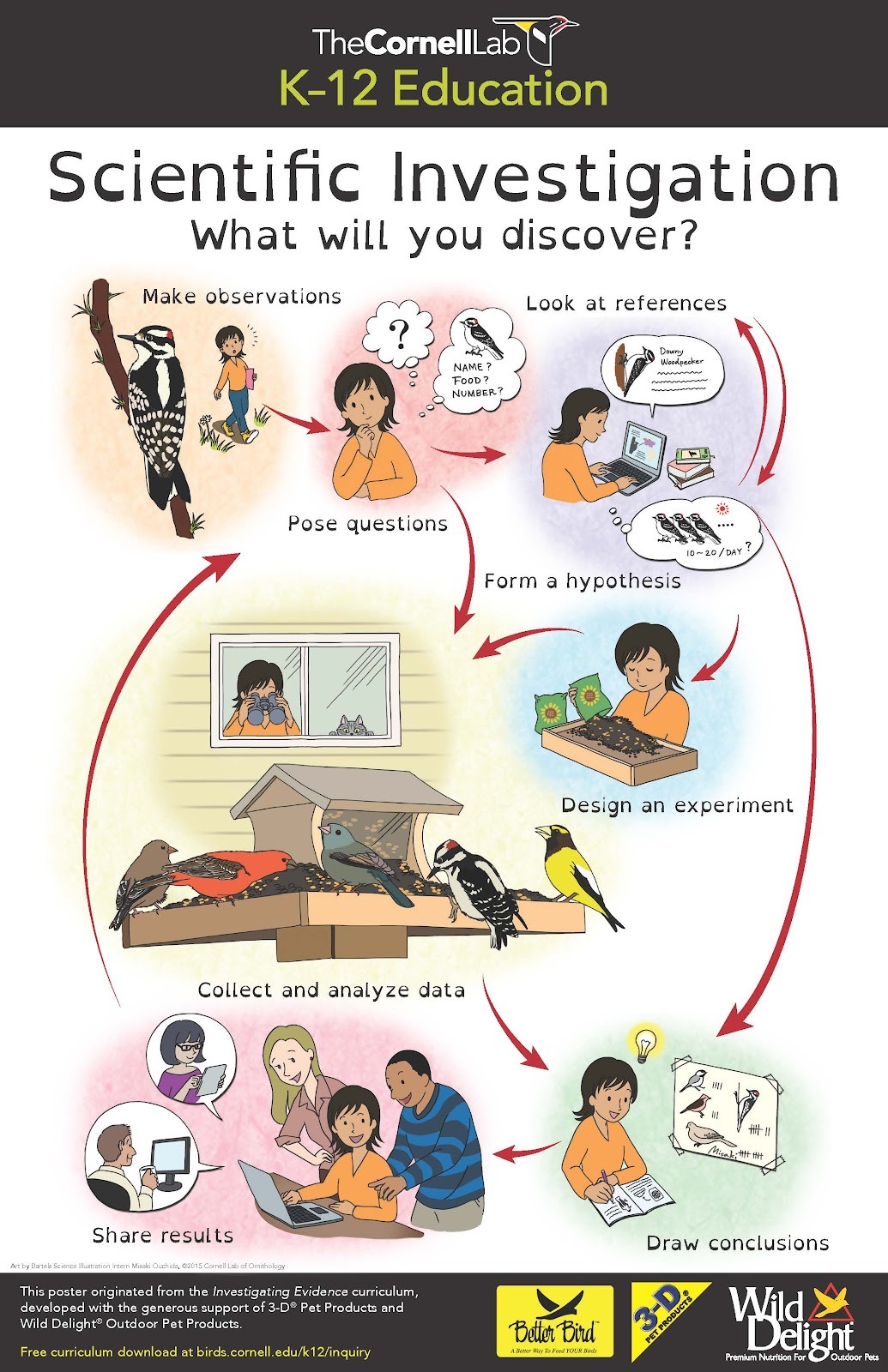
Figure 1. The process of science. © Cornell Lab of Ornithology.
Notes: We encourage kids to go outside a couple of times during the slideshow to practice their observation skills. They will make general observations about the world around them and then study a small area up-close for detailed observations. They will also go for a Sensory Hike to touch, smell, and listen as part of making observations. If going outside isn’t possible, we provide indoor options.
The slideshow will function best in “presentation” mode.
This week’s activities are inspired by our friends at Wild Delight® Outdoor Pet Products, 3-D® Pet Products, and Better Bird™ who generously support our work to make science hands-on and relevant through inquiry investigations. If you would like to explore more ways to support your students through the inquiry process, download our Students as Scientists units.


Family Quests
Choose activities to try out this week as a family, or challenge students to complete them on their own.
- Explore your sense of taste by doing a taste test with salty, sweet, bitter, and sour food. Taste at least one thing with each flavor and talk about which flavors you like best.
- Play “Guess What?” Have each person take turns describing items in nature while everyone else guesses what it is.
- Take a sensory hike. Challenge each other to see who can make the most observations using all your senses in a minute!
- Go on a question hike! See how many science questions everyone can come up with during the walk.
- Hold a mystery box tournament! Have each person take turns putting a random item in a container that the others cannot see into. Have everyone else use their senses to try and guess what is in the container without looking at the item!
“You can know the name of a bird in all the languages of the world, but when you’re finished, you’ll know absolutely nothing whatsoever about the bird… So let’s look at the bird and see what it’s doing – that’s what counts. I learned very early the difference between knowing the name of something and knowing something.” – Richard P. Feynman, Physicist
Lessons
- Internet access with the associated slideshow
- A food item for them to observe (slide 4)
- Blank or lined paper for answering questions
- Pencil and/or colored pencils
- Ideally, access and time for outside observations
- A container that they can’t see through (paper bag, shoe box, etc.) and a place to find a mystery item to take turns guessing (slide 19)
- Gather materials and access the slideshow (use “presentation” mode) to guide the student’s investigation.
- On the title slide, ASK: What’s one question you have about nature?
- On slide 3 (it’s important to be in presentation mode because after they think, then as you click, the other senses will be revealed), ASK: What other senses do we use to observe?
- Hands-on Activity (slide 4): Have them pick a food item, ideally a fruit or vegetable that we often don’t think much about and doesn’t have a lot of variation. We want to challenge them to observe as much as they can with all of their senses. If it’s easy for the student to observe 5 things, challenge them to find 7 or 10 things about the item. To meet standards, ask the students to
- On slide 5, ASK: Do you know what data is? If they aren’t sure or don’t know, click on the link to read the definition or give your definition of data.
- On slide 7, ASK: them to tell you different things they observe in the video. And write down their answers.
- After watching the video on slide 7, ASK: What are some things you observed that these birds need to survive? (food-a fish, the nest to raise young, each other to reproduce). What were the birds sitting on? (a nest, which the birds built so they could raise their young). Specifically for 2nd graders: What was the nest made of? And could you disassemble the nest & make something new? What would you make? (sticks and twigs). How is the habitat (plants, animals, landscape) in the video the same or different from where you live?
- On slide 8, ASK: them what questions they have about what they saw in the video and write down their questions.
- On slide 10, write down at least one of their observations about the Barn Swallow picture.
- One slide 11, write down at least 1 new observation they make about this picture.
- On slide 12, write down at least 1 new observation about this picture.
- Hands-on Activity (slide 13): Go outside and take them on a mini-hike with the purpose of observing a small area up close and focused – use a jump rope, hula hoop, or the bird feeder from last activity to focus in on a small area. Either write down their observations or have them draw their observations. Next, take a walk or sit for 5 minutes and have the student make big picture observations – things like habitat, weather, and other big or whole picture observations. Either write down their observations or have them draw their observations. ASK: What differences and similarities do they see between the two observations lists. (If you can’t go outside, there is an indoor option on the slide).
- On slide 14, ASK: Can you name one thing you’ve observed today using your sense of: Hearing? Smelling? Touching? Tasting?
- Hands-on Activity (slide 15): Hearing challenge, click on the speaker icon and ASK them to tell you what they think the sound is. The next slide (16) reveals the answers & you can listen to it on that slide again.
- Hands-on Activity (slide 17): Take a sensory hike with the student outside. Bring paper and pencil/pen to write down their observations & questions. Have them touch things with different textures. Can you find something rough? Something soft? Something slimy? Stop and sniff. What do you smell? Repeat as you walk. Stop and listen. What do you hear? Repeat as you walk. (If you can’t go outside, there is an indoor option).
- Hands-on Activity (slide 19): you or your partner will choose a mystery item and use all of your senses other than sight & taste to figure out the item. Follow the directions on the slide. It’s important to have a container (a paper bag or a shoe box are good containers) that they can’t see into. Then switch and you be the detective!
Depending on their age and ability, consider asking the student to create stories, drawings, or videos inspired by the following prompts:
- What was your favorite thing you discovered during the mini hike?
- What sense would you make into your super power and how would you use it to make observations?
- Have them observe something up close and then draw a detailed picture of the item.
- Find a special spot out in nature where they can go each day or week and make observations. Have them keep a notebook or journal with drawings about what they observe. Ask what changes they see.
- Have the student listen to different animal sounds & create music with our BeastBox game.
- Read Taking Time by Jo Loring-Fisher.
Chat about what the student learned during this lesson. Encourage the student to write down and investigate any questions they have.
- Internet access with the associated slideshow
- Paper for answering questions
- A food item for them to observe – suggestions: lemon, potato, raisin, or other fruit or vegetable that they see often and don’t think about much
- Pencil and/or colored pencils
- Ideally, access and time for outside observations
- A container that they can’t see through (paper bag, shoe box, etc.) and a place to find a mystery item to take turns guessing
- Before you begin the show, have a conversation with the student about observations and asking questions. ASK:
- What does it mean to observe?
- Do you think observations you make are different than or the same as the observations scientists make? How? Why?
- Do you think asking questions is important? Why or why not?
- Have the student explore the videos within the slideshow (use “presentation” mode). The slideshow will take approximately 30 minutes to complete, plus extra time for hands-on and outdoor activities (timing will vary according to the interest level of the student). The slideshow provides support for the student to:
- Explore different scales of observation – up close and focused to big picture observations.
- Explore using all of their senses for making observations.
- Ask questions based on what they observed.
- Learn about the difference between observations and inferences.
- If possible, go outside with the student to do the mini hike, big picture hike, and sensory hike. Or if it’s safe, give them permission to go outside to do these activities by themselves.
Give the student the materials they need, and access to the slideshow to guide them (use “presentation” mode). Have the student write about the questions presented within the show and complete the activities suggested in the slides.
Depending on your needs and the student’s interest, you might also suggest one or more of the following assignments for them to complete independently.
- Pick one question that was generated during the activity and research it. Ask them to tell you what they learned or write a paper about what they learned.
- Have the student listen to different animal sounds & create music with our BeastBox game.
- Write about which sense they would choose as their super power and why? How would they use that superpower sense to make observations?
- Set up a blind taste test for them and then ask them to describe each food item, using their sense of smell, taste, and even touch by describing the texture of the food. Then have them guess the food.
- To think about different scales of observation have them observe something up close and then draw a detailed picture of the item. Then have them draw a landscape to think about the concept of big picture observations. Ask them to think about the difference in the processes for each and what each type of picture tells them or someone.
- Have them find a special spot in nature where they can go each day or week and make observations. Have them keep a notebook or journal with drawings and/or notes about what they observe and any questions that come from their observations. How does the natural world change and stay the same with time?
- Ask the student to share about their observations & questions. ASK:
- From the video on slide 7: Name 3 or more interesting things you observed. What was the habitat (food, shelter, water, space) that the birds were observed in? What birds or animals or plants might not survive well or at all in that habitat? Why? Would the birds in the video survive in the habitat around your home? Why or why not? What internal and external structures do these birds have that help them survive? (feathers, talons, beaks, lungs, muscles, bones) And how do these structures help them survive? (Feathers keep them warm & help with flight, their talons & beaks help them catch & tear apart their food, their lungs, muscles & bones help them with flying)
- What was your favorite sense to use for observations? Why? What sense did you find hardest to use to make observations?
- Why do you think it’s important to make up close, medicum scale, and big picture observations?
- If we were going to research one of your questions, which one would you pick? Do you think you can find the answer in a book or internet or would you need to design your own experiment?
- What questions did you have from your observations?
- How were your questions different when you were observing up close compared to your big picture observations?
- What questions and observations might you have missed if you only paid attention up close or only to the big picture?
- Talk about:
- What is the main idea of the activity? What details from the activity support the main idea?
- Why is it important to make observations and ask questions in life and in science?
- What was your favorite part of this lesson, and why?
- Finally, chat about what the student learned and encourage them to investigate any questions they might have.
- Internet access with the associated slideshow
- Paper for answering questions
- A food item for them to observe – suggestions: lemon, potato, raisin, or other fruit or vegetable that they see often and don’t think about much
- Pencil and/or colored pencils
- Ideally, access and time for outside observations
- A container that they can’t see through (paper bag, shoe box, etc.) and a place to find a mystery item to take turns guessing
- Before you begin the show, have a conversation with the student about observations and asking questions. ASK:
- What does it mean to observe?
- Do you think observations you make are different than or the same as the observations scientists make? How? Why?
- Do you think asking questions is important? Why or why not?
- Do you know what the scientific process is? Can you explain it to me? See Figure 1.
- Have the student explore the videos and websites within the slideshow (use “presentation” mode). The slideshow will take approximately 45 minutes to complete, plus extra time for hands-on activities (timing will vary according to the interest level of the student). The slideshow provides support for the student to:
- Understand the difference between observations and inferences.
- Explore different scales of observation – up close/focused and big picture observations.
- Explore using all of their senses for making observations.
- Ask questions based on what they observed.
- “Travel” to different parts of the world to practice their observation skills while viewing birds.
- Understand the difference between qualitative and quantitative observations for answering questions.
- If possible and it is safe, allow the student to go outside to complete the mini hike, the big picture hike, and sensory hike.
Give the student the materials they need, and access to the slideshow to guide them. Have the student write about the questions presented within the show and complete the activities suggested in the slides.
Depending on your needs and the student’s interest, you might also suggest one or more of the following assignments for them to complete independently.
- Pick one question that was generated during the activity and research it. Have them write a research paper about what they learned and include their references.
- Have the student listen to different animal sounds & create music with our BeastBox game.
- Write about which sense they would choose as their super power and why? How would they use that superpower sense to make observations?
- Set up a blind taste test for them and then ask them to describe each food item, using their sense of smell, taste, and even touch by describing the texture of the food. Then have them guess the food.
- To think about different scales of observation, have them observe something up close and then draw/paint a detailed picture of the item. Then have them draw/paint a landscape to think about the concept of big picture observations. Ask them to think about the difference in the processes for each and what each type of picture tells them or someone.
- Have them find a special spot in nature where they can go each day or week and make observations. Have them keep a notebook or journal with drawings and notes (including the weather) about what they observe and any questions that come from their observations. How does the natural world change and stay the same with time?
- Ask the student to share about their observations and questions. ASK:
- What are some interesting things you observed from the bird videos?
- What was your favorite sense to use for observations? Why?
- What sense did you find hardest to use to make observations?
- Why do you think it’s important to make both up close/focused and big picture observations?
- Can you categorize your observations into quantitative and qualitative observations?
- From all videos, what animal behaviors affected the probability of successful reproduction of these birds? Using your observations, what environmental and genetic factors influence the growth of the birds?
- Talk about:
- What are the main ideas from this activity? What details from the activity support the main ideas?
- How did their observations and questions changed from watching the first video of birds to the last video? (slide 31 has some specific questions you can ask)
- Why are making observations and asking questions important in life and in science?
- What was your favorite part of this lesson, and why?
- Finally, chat about what the student learned and encourage them to investigate any questions they might have. ASK:
- If you were going to research one of your questions, which one would you pick? Do you think you can find the answer in a book or internet or would you need to design your own experiment?
Please note that these identified standards are based on the student completing the slideshow and answering questions from the adult-guided document. However, learning standards from the “Independent Exploration” section are not included. If a student completes any of the “Independent Explorations,” additional standards may apply.
- K-LS1-1: Use observations to describe patterns of what plants and animals (including humans) need to survive.
- K-ESS2-2: Construct an argument supported by evidence for how plants and animals (including humans) can change the environment to meet their needs.
- K-ESS3-1: Use a model to represent the relationship between the needs of different plants and animals (including humans) and the places they live.
- CCSS.MATH.CONTENT.K.MD.A.1: Describe measurable attributes of objects, such as length or weight. Describe several measurable attributes of a single object.
- CCSS.ELA-LITERACY.RI.K.1: With prompting and support, ask and answer questions about key details in a text.
- CCSS.ELA-LITERACY.RI.K.2: With prompting and support, identify the main topic and retell key details of a text.
- CCSS.ELA-LITERACY.RI.K.3: With prompting and support, describe the connection between two individuals, events, ideas, or pieces of information in a text.
- CCSS.ELA-LITERACY.W.K.1: Use a combination of drawing, dictating, and writing to compose opinion pieces in which they tell a reader the topic or the name of the book they are writing about and state an opinion or preference about the topic or book (e.g., My favorite book is…).
- CCSS.ELA-LITERACY.W.K.8: With guidance and support from adults, recall information from experiences or gather information from provided sources to answer a question.
- CCSS.ELA-LITERACY.SL.K.2: Confirm understanding of a text read aloud or information presented orally or through other media by asking and answering questions about key details and requesting clarification if something is not understood.
- CCSS.ELA-LITERACY.SL.K.4: Describe familiar people, places, things, and events and, with prompting and support, provide additional detail.
- CCSS.ELA-LITERACY.SL.K.6: Speak audibly and express thoughts, feelings, and ideas clearly.
- CCSS.ELA-LITERACY.RI.1.1: Ask and answer questions about key details in a text.
- CCSS.ELA-LITERACY.RI.1.2: Identify the main topic and retell key details of a text.
- CCSS.ELA-LITERACY.W.1.8: With guidance and support from adults, recall information from experiences or gather information from provided sources to answer a question.
- CCSS.ELA-LITERACY.SL.1.2: Ask and answer questions about key details in a text read aloud or information presented orally or through other media.
- CCSS.ELA-LITERACY.SL.1.3: Ask and answer questions about what a speaker says in order to gather additional information or clarify something that is not understood.
- CCSS.ELA-LITERACY.SL.1.4: Describe people, places, things, and events with relevant details, expressing ideas and feelings clearly.
- 2-PS1-1: Plan and conduct an investigation to describe and classify different kinds of materials by their observable properties.
- 2-PS1-3: Make observations to construct an evidence-based account of how an object made of a small set of pieces can be disassembled and made into a new object.
- 2-LS4-1: Make observations of plants and animals to compare the diversity of life in different habitats.
- CCSS.MATH.CONTENT.2.MD.A.3: Estimate lengths using units of inches, feet, centimeters, and meters.
- CCSS.ELA-LITERACY.RI.2.1: Ask and answer such questions as who, what, where, when, why, and how to demonstrate understanding of key details in a text.
- CCSS.ELA-LITERACY.W.2.8: Recall information from experiences or gather information from provided sources to answer a question.
- CCSS.ELA-LITERACY.SL.2.2: Recount or describe key ideas or details from a text read aloud or information presented orally or through other media.
- CCSS.ELA-LITERACY.SL.2.3: Ask and answer questions about what a speaker says in order to clarify comprehension, gather additional information, or deepen understanding of a topic or issue.
- CCSS.ELA-LITERACY.SL.2.6: Produce complete sentences when appropriate to task and situation in order to provide requested detail or clarification.
- CCSS.ELA-LITERACY.L.2.1: Demonstrate command of the conventions of standard English grammar and usage when writing or speaking.
- CCSS.ELA-LITERACY.L.2.4: Determine or clarify the meaning of unknown and multiple-meaning words and phrases based on grade 2 reading and content, choosing flexibly from an array of strategies.
- CCSS.ELA-LITERACY.L.2.6: Use words and phrases acquired through conversations, reading and being read to, and responding to texts, including using adjectives and adverbs to describe.
- 3-LS3-2: Use evidence to support the explanation that traits can be influenced by the environment.
- 3-LS4-3: Construct an argument with evidence that in a particular habitat some organisms can survive well, some survive less well, and some cannot survive at all.
- CCSS.ELA-LITERACY.RI.3.1: Ask and answer questions to demonstrate understanding of a text, referring explicitly to the text as the basis for the answers.
- CCSS.ELA-LITERACY.RI.3.2: Determine the main idea of a text; recount the key details and explain how they support the main idea.
- CCSS.ELA-LITERACY.RI.3.3: Describe the relationship between a series of historical events, scientific ideas or concepts, or steps in technical procedures in a text, using language that pertains to time, sequence, and cause/effect.
- CCSS.ELA-LITERACY.RI.3.4: Determine the meaning of general academic and domain-specific words and phrases in a text relevant to a grade 3 topic or subject area.
- CCSS.ELA-LITERACY.RI.3.7: Use information gained from illustrations (e.g., maps, photographs) and the words in a text to demonstrate understanding of the text (e.g., where, when, why, and how key events occur).
- CCSS.ELA-LITERACY.RF.3.3: Know and apply grade-level phonics and word analysis skills in decoding words.
- CCSS.ELA-LITERACY.W.3.8: Recall information from experiences or gather information from print and digital sources; take brief notes on sources and sort evidence into provided categories.
- CCSS.ELA-LITERACY.SL.3.2: Determine the main ideas and supporting details of a text read aloud or information presented in diverse media and formats, including visually, quantitatively, and orally.
- CCSS.ELA-LITERACY.SL.3.4: Report on a topic or text, tell a story, or recount an experience with appropriate facts and relevant, descriptive details, speaking clearly at an understandable pace.
- CCSS.ELA-LITERACY.SL.3.6: Speak in complete sentences when appropriate to task and situation in order to provide requested detail or clarification.
- CCSS.ELA-LITERACY.L.3.1: Demonstrate command of the conventions of standard English grammar and usage when writing or speaking.
- CCSS.ELA-LITERACY.L.3.4: Determine or clarify the meaning of unknown and multiple-meaning words and phrases based on grade 3 reading and content, choosing flexibly from a range of strategies.
- CCSS.ELA-LITERACY.L.3.5: Demonstrate understanding of figurative language, word relationships and nuances in word meanings.
- CCSS.ELA-LITERACY.L.3.6: Acquire and use accurately grade-appropriate conversational, general academic, and domain-specific words and phrases, including those that signal spatial and temporal relationships.
- 4-LS1-1: Construct an argument that plants and animals have internal and external structures that function to support survival, growth, behavior, and reproduction.
- CCSS.ELA-LITERACY.RI.4.1: Refer to details and examples in a text when explaining what the text says explicitly and when drawing inferences from the text.
- CCSS.ELA-LITERACY.RI.4.2: Determine the main idea of a text and explain how it is supported by key details; summarize the text.
- CCSS.ELA-LITERACY.RI.4.3: Explain events, procedures, ideas, or concepts in a historical, scientific, or technical text, including what happened and why, based on specific information in the text.
- CCSS.ELA-LITERACY.RI.4.4: Determine the meaning of general academic and domain-specific words or phrases in a text relevant to a grade 4 topic or subject area.
- CCSS.ELA-LITERACY.RI.4.9: Integrate information from two texts on the same topic in order to write or speak about the subject knowledgeably.
- CCSS.ELA-LITERACY.RF.4.3: Know and apply grade-level phonics and word analysis skills in decoding words.
- CCSS.ELA-LITERACY.RF.4.4: Read with sufficient accuracy and fluency to support comprehension.
- CCSS.ELA-LITERACY.W.4.8: Recall relevant information from experiences or gather relevant information from print and digital sources; take notes and categorize information, and provide a list of sources.
- CCSS.ELA-LITERACY.W.4.9: Draw evidence from literary or informational texts to support analysis, reflection, and research.
- CCSS.ELA-LITERACY.SL.4.3: Identify the reasons and evidence a speaker provides to support particular points.
- CCSS.ELA-LITERACY.SL.4.4: Report on a topic or text, tell a story, or recount an experience in an organized manner, using appropriate facts and relevant, descriptive details to support main ideas or themes; speak clearly at an understandable pace.
- CCSS.ELA-LITERACY.L.4.1: Demonstrate command of the conventions of standard English grammar and usage when writing or speaking.
- 5-ESS3-1: Obtain and combine information about ways individual communities use science ideas to protect the Earth’s resources and environment.
- CCSS.ELA-LITERACY.RI.5.1: Quote accurately from a text when explaining what the text says explicitly and when drawing inferences from the text.
- CCSS.ELA-LITERACY.RI.5.2: Determine two or more main ideas of a text and explain how they are supported by key details; summarize the text.
- CCSS.ELA-LITERACY.RI.5.3: Explain the relationships or interactions between two or more individuals, events, ideas, or concepts in a historical, scientific, or technical text based on specific information in the text.
- CCSS.ELA-LITERACY.RI.5.4: Determine the meaning of general academic and domain-specific words and phrases in a text relevant to a grade 5 topic or subject area.
- CCSS.ELA-LITERACY.RF.5.3: Know and apply grade-level phonics and word analysis skills in decoding words.
- CCSS.ELA-LITERACY.RF.5.4: Read with sufficient accuracy and fluency to support comprehension.
- CCSS.ELA-LITERACY.W.5.2: Write informative/explanatory texts to examine a topic and convey ideas and information clearly.
- CCSS.ELA-LITERACY.W.5.9: Draw evidence from literary or informational texts to support analysis, reflection, and research.
- CCSS.ELA-LITERACY.L.5.1: Demonstrate command of the conventions of standard English grammar and usage when writing or speaking.
- CCSS.ELA-LITERACY.L.5.2: Demonstrate command of the conventions of standard English capitalization, punctuation, and spelling when writing.
- CCSS.ELA-LITERACY.L.5.4: Determine or clarify the meaning of unknown and multiple-meaning words and phrases based on grade 5 reading and content, choosing flexibly from a range of strategies.
- CCSS.ELA-LITERACY.L.5.5: Demonstrate understanding of figurative language, word relationships, and nuances in word meanings.
- CCSS.ELA-LITERACY.L.5.6: Acquire and use accurately grade-appropriate general academic and domain-specific words and phrases, including those that signal contrast, addition, and other logical relationships.
- MS-LS1-4: Use argument based on empirical evidence and scientific reasoning to support an explanation for how characteristic animal behaviors and specialized plant structures affect the probability of successful reproduction of animals and plants respectively.
- MS-LS1-5: Construct a scientific explanation based on evidence for how environmental and genetic factors influence the growth of organisms.
- CCSS.ELA-LITERACY.RI.6.1: Cite textual evidence to support analysis of what the text says explicitly as well as inferences drawn from the text.
- CCSS.ELA-LITERACY.RI.6.4: Determine the meaning of words and phrases as they are used in a text, including figurative, connotative, and technical meanings.
- CCSS.ELA-LITERACY.RI.6.7: Integrate information presented in different media or formats (e.g., visually, quantitatively) as well as in words to develop a coherent understanding of a topic or issue.
- CCSS.ELA-LITERACY.W.6.1: Write arguments to support claims with clear reasons and relevant evidence.
- CCSS.ELA-LITERACY.W.6.4: Produce clear and coherent writing in which the development, organization, and style are appropriate to task, purpose, and audience.
- CCSS.ELA-LITERACY.W.6.9: Draw evidence from literary or informational texts to support analysis, reflection, and research.
- CCSS.ELA-LITERACY.SL.6.2: Interpret information presented in diverse media and formats (e.g., visually, quantitatively, orally) and explain how it contributes to a topic, text, or issue under study.
- CCSS.ELA-LITERACY.L.6.1: Demonstrate command of the conventions of standard English grammar and usage when writing or speaking.
- CCSS.ELA-LITERACY.L.6.2: Demonstrate command of the conventions of standard English capitalization, punctuation, and spelling when writing.
- CCSS.ELA-LITERACY.L.6.3: Use knowledge of language and its conventions when writing, speaking, reading, or listening.
- CCSS.ELA-LITERACY.L.6.4: Determine or clarify the meaning of unknown and multiple-meaning words and phrases based on grade 6 reading and content, choosing flexibly from a range of strategies.
- CCSS.ELA-LITERACY.L.6.5: Demonstrate understanding of figurative language, word relationships, and nuances in word meanings.
- CCSS.ELA-LITERACY.L.6.6: Acquire and use accurately grade-appropriate general academic and domain-specific words and phrases; gather vocabulary knowledge when considering a word or phrase important to comprehension or expression.
- MS-LS1-4: Use argument based on empirical evidence and scientific reasoning to support an explanation for how characteristic animal behaviors and specialized plant structures affect the probability of successful reproduction of animals and plants respectively.
- MS-LS1-5: Construct a scientific explanation based on evidence for how environmental and genetic factors influence the growth of organisms.
- CCSS.ELA-LITERACY.RI.7.1: Cite several pieces of textual evidence to support analysis of what the text says explicitly as well as inferences drawn from the text.
- CCSS.ELA-LITERACY.RI.7.4: Determine the meaning of words and phrases as they are used in a text, including figurative, connotative, and technical meanings; analyze the impact of a specific word choice on meaning and tone.
- CCSS.ELA-LITERACY.W.7.1: Write arguments to support claims with clear reasons and relevant evidence.
- CCSS.ELA-LITERACY.W.7.9: Draw evidence from literary or informational texts to support analysis, reflection, and research.
- CCSS.ELA-LITERACY.SL.7.2: Analyze the main ideas and supporting details presented in diverse media and formats (e.g., visually, quantitatively, orally) and explain how the ideas clarify a topic, text, or issue under study.
- CCSS.ELA-LITERACY.L.7.1: Demonstrate command of the conventions of standard English grammar and usage when writing or speaking.
- CCSS.ELA-LITERACY.L.7.2: Demonstrate command of the conventions of standard English capitalization, punctuation, and spelling when writing.
- CCSS.ELA-LITERACY.L.7.3: Use knowledge of language and its conventions when writing, speaking, reading, or listening.
- CCSS.ELA-LITERACY.L.7.4: Determine or clarify the meaning of unknown and multiple-meaning words and phrases based on grade 7 reading and content, choosing flexibly from a range of strategies.
- CCSS.ELA-LITERACY.L.7.5: Demonstrate understanding of figurative language, word relationships, and nuances in word meanings.
- MS-LS1-4: Use argument based on empirical evidence and scientific reasoning to support an explanation for how characteristic animal behaviors and specialized plant structures affect the probability of successful reproduction of animals and plants respectively.
- MS-LS1-5: Construct a scientific explanation based on evidence for how environmental and genetic factors influence the growth of organisms.
- CCSS.ELA-LITERACY.RI.8.1: Cite the textual evidence that most strongly supports an analysis of what the text says explicitly as well as inferences drawn from the text.
- CCSS.ELA-LITERACY.RI.8.4: Determine the meaning of words and phrases as they are used in a text, including figurative, connotative, and technical meanings; analyze the impact of specific word choices on meaning and tone, including analogies or allusions to other texts.
- CCSS.ELA-LITERACY.W.8.1: Write arguments to support claims with clear reasons and relevant evidence.
- CCSS.ELA-LITERACY.W.8.9: Draw evidence from literary or informational texts to support analysis, reflection, and research.
- CCSS.ELA-LITERACY.L.8.1: Demonstrate command of the conventions of standard English grammar and usage when writing or speaking.
- CCSS.ELA-LITERACY.L.8.2: Demonstrate command of the conventions of standard English capitalization, punctuation, and spelling when writing.
- CCSS.ELA-LITERACY.L.8.3: Use knowledge of language and its conventions when writing, speaking, reading, or listening.
- CCSS.ELA-LITERACY.L.8.4: Determine or clarify the meaning of unknown and multiple-meaning words or phrases based on grade 8 reading and content, choosing flexibly from a range of strategies.
- CCSS.ELA-LITERACY.L.8.5: Demonstrate understanding of figurative language, word relationships, and nuances in word meanings.
- CCSS.ELA-LITERACY.L.8.6: Acquire and use accurately grade-appropriate general academic and domain-specific words and phrases; gather vocabulary knowledge when considering a word or phrase important to comprehension or expression.
Bird Anatomy: The Amazing Adaptations of Birds
Background
In this lesson, we will explore bird anatomy through the lens of adaptations that allow birds to fly and live in many different habitats. Adaptation is an important concept in science. Birds have many adaptations that are specific to a group or even at a species level. However, several adaptations occur in most or all birds, and in this lesson, we focus on those. The student will first learn generally about adaptations. Then we will explore several different bird anatomy systems and some of the adaptations found within these systems that are unique to birds.
Notes: The student is encouraged to complete an activity that involves taking their resting heart rate and then imitating two birds by flapping their arms & running in circles at different speeds to help them understand the different heart rates of birds. Please ensure that they are healthy enough and have the necessary space to do the activity. We highly recommend completing this activity outside. And they may need an adult’s help.
Note: The slideshow will function best in “presentation” mode.
Family Quests
Choose activities to try out this week as a family, or challenge students to complete them on their own.
- Explore more about bird anatomy at All About Bird Anatomy.
- Take a bird feet hike. See if you can find a woodpecker or nuthatch climbing a tree. Can you see the 2 forward-facing toes and the 2 backward-facing toes, like seen in this photo? Find a perching bird and notice it only has 1 backward-facing toe, as seen in this photo. Did you see any birds with webbed feet, like this duck?
- Take your sketchbook outside and sketch a bird. Add some of the inside body parts of a bird to your sketch. Or make a detailed drawing of its beak or feet.
- Pick one body system from those shown at All About Bird Anatomy. Use strings, rubber bands, play dough, other household items, or items found in nature and try your hand at making a 3-D model of that system.
A ROBIN
I wonder how a robin hears?
I never yet have seen his ears.
But I have seen him tip his head
And Pull a worm right out of bed.
– Author Unknown
Lessons
- Internet access with the associated slideshow
- Blank or lined paper for answering questions
- Pencil and/or colored pencils
- Small bag (plastic sandwich bag or cloth bag, even an old sock with no holes would work)
- Seeds without shells, 2-4 Tablespoons
- 10-12 Small rocks
- A clock or phone that shows the seconds
- Outdoor access, if possible
- Gather materials and access the slideshow (use “presentation” mode) to guide the student’s investigation.
- On the title slide, ASK:
- What do you know about what is inside the body of a bird?
- Do you think there are any of your inside body parts that are like the inside body parts of a bird?
- On slide 3, ASK: them to point out anything that makes the duck special.
- On slide 8, ASK: them to point to the bird’s tongue.
- On slide 9, ASK: them to stick out their tongue as far as they can. And then ask if they think it is shorter or longer than a hummingbird’s?
- Hands-on Activity: slides 13 & 14. Use the materials from the list to make a gizzard. You’ll be trying one without grit and one with grit. Have them answer the questions on the slides.
- Slides 18-20: You may need to help the student find the toe arrangements.
- Slides 22-25 are a matching activity (2 slides/match), ASK: Look at the picture of the feet in the middle of the slide and match those feet to either Bird 1 or Bird 2.
- Hands-on Activity: slide 29, they will feel their chest move as they take a deep breath in and then let it go.
- Hands-on Activity: slides 33-35. This activity is best done outdoors but can easily be done indoors. You will be measuring their heart rate at rest, after they fly like a hummingbird and again after they soar like an eagle. You will have to do a few calculations for them. Answer the questions on slide 35.
Depending on their age and ability, consider asking the student to create stories, drawings, or videos inspired by the following prompts:
- Which of the bird adaptations that we learned about would you like to have? Why?
- Have them try to find their or your heartbeat on the wrist.
- Have them show you where the body parts that we have in common with birds are found in the human body.
- What adaptations do humans have to live in their habitat?
Chat about what the student learned during this lesson. Some questions to ask them to answer verbally, and/or write/draw about:
- What was your favorite part of this lesson, and why?
- What is one thing you learned today that surprised you?
- What was your favorite system that you learned about? Why?
- What questions do you have, and how might you explore them? (Add questions to the “I Wonder” list and encourage the student to explore some of them independently.)
Encourage the student to write down and investigate any questions they have.
- Internet access with the associated slideshow
- Blank or lined paper for answering questions
- Pencil and/or colored pencils
- Small bag (plastic sandwich bag or cloth bag, even an old sock with no holes would work)
- Seeds without shells, 2-4 Tablespoons
- 10-12 small rocks
- A clock or phone that shows the seconds
- Outdoor access, if possible
- Before you begin the show, have a conversation with the student about the insides of birds. ASK:
- What inside body parts do you think both birds and humans have?
- Do you know of any adaptations (special body parts) that birds have?
- What questions do you have about birds? Especially the insides of birds. (Add questions to an “I Wonder” list. These questions could lead to independent research investigations later.)
- Encourage the student to explore the videos and websites within the slideshow (use “presentation” mode). There are also two activities in the slide show that you can help them prepare for in advance: testing out two different types of gizzards and a heart rate activity. You can do this by making sure they have the materials needed. The slideshow will take approximately 30 minutes to complete, plus extra time for hands-on activities (timing will vary according to the interest level of the student). The slideshow provides support for the student to:
- Learn the concept of adaptation.
- Explore how birds have special adaptations, which is mostly because of their need to fly.
- Try an experiment to understand gizzards better.
- Be active by taking their resting heart rate and then again after two different activities. The student may need help with finding their pulse rate or with the calculations.
Give the student the materials they need and access to the slideshow to guide them (use “presentation” mode). Have the student write about the questions presented within the show and complete the activities suggested in the slides.
Depending on your needs and the student’s interest, you might also suggest one or more of the following assignments for them to complete independently.
- Buy a chicken gizzard at the grocery store and have the student dissect it.
- Learn more about Barn Owls & their special hearing abilities. Write a research paper about their hearing adaptations. Hint: it’s not just about their ears.
- Of the adaptations you learned about in birds, what adaptation would you want to have & why?
- Write a poem or creative story about one or more of the different bird body parts or systems that you learned about.
- Ask the student to share about their gizzard experiment. Here are some questions to ASK:
- Was one gizzard better at crushing the seeds than the other? If they found a difference, why do you think one is better than the other? If they did not find a difference, why do they think they both worked the same?
- Why do you think humans don’t have a gizzard?
- Ask the student to share the animation about bird’s breathing. Have them show or explain to you how they could see that the breath only flows one direction.
- Ask the student to share about their heart rate activity. Here are some questions to ASK:
- What was your resting heart rate?
- After which activity was your heart rate highest? Why do you think it was the highest then?
- If you were a bird, would you rather be a hummingbird, an ostrich, or an eagle? Why?
- Talk about:
- What is the main idea of the activity? What details from the activity support the main idea?
- What are some bird body parts that are the same as humans, and which ones are different from humans? Why do you think some are the same and some are different?
- If they could have any of the bird body parts that they learned about, which one would they want? Why?
- What was your favorite part of this lesson, and why?
- Finally, chat about what the student learned and encourage them to investigate any questions they might have. For example, you might wonder:
- What is one thing you learned today that surprised you?
- What was your favorite system that you learned about? Why?
- What questions do you have, and how might you explore them? (Add questions to the “I Wonder” list and encourage the student to explore some of them independently.)
- Internet access with the associated slideshow
- Blank or lined paper for answering questions
- Pencil and/or colored pencils
- Small bag (plastic sandwich bag or cloth bag, even an old sock with no holes would work)
- Seeds without shells, about 2-4 Tablespoons
- 10-12 small rocks
- A clock or phone that shows the seconds
- Outdoor access, if possible
- Before you begin the show, have a conversation with the student about the anatomy of birds. ASK:
- What does the word adaptation mean?
- What does the word anatomy mean? They will learn the definition in the slide show.
- How might these two words be connected? One potential answer, but your student might have additional ideas: A bird’s anatomy has been adapted to their habitat and lifestyle, especially flight.
- What inside body parts do you think both birds and humans have?
- Do you know of any adaptations (special body parts) that only birds have?
- What questions do you have about birds? Especially the insides of birds. (Add questions to an “I Wonder” list. These questions could lead to independent research investigations later.)
- Encourage the student to explore the videos and websites within the slideshow (use “presentation” mode). There are also two activities within the show that you can help them prepare for in advance: testing out two different types of gizzards and a heart rate activity. You can do this by making sure they have the materials needed. The slideshow will take approximately 30-45 minutes to complete, plus extra time for hands-on activities (timing will vary according to the interest level of the student). The slideshow provides support for the student to:
- Remember the concept of adaptation.
- Explore how birds have special adaptations, which is mostly because of their need to fly.
- Learn about the inside anatomy of a bird and the unique parts of each system.
- Try an experiment to understand gizzards better.
- Be active by taking their resting heart rate and then again after two different activities. The student may need help with finding their pulse rate or the calculations.
Ensure the student has the materials they need, and access to the slideshow to guide them. Have the student write about the questions presented within the show and complete the activities suggested in the slides.
Depending on your needs and the student’s interest, you might also suggest one or more of the following assignments for them to complete independently.
- Brainstorm ideas of how to conduct an experiment about capillary action on your own. Then conduct your experiment and write up your results.
- Write a paper about similarities and differences between human anatomy and bird anatomy.
- Buy a chicken gizzard at the grocery story and have the student dissect it.
- Learn more about Barn Owls & their special hearing abilities. Write a research paper about their hearing adaptations. Hint: it is about more than just their ears.
- Of the adaptations you learned about in birds, what adaptation would you want to have & why?
- Repeat the heart rate activity at least 2 more times and keep track of all your data. Then use the data from all three tests and perform statistical analysis based on the grade-level math standards. Or, if completing the activity in a classroom setting, compile the data and then perform statistical analysis on the classroom data based upon grade-level math standards.
- Ask the student to share about their gizzard experiment. Here are some questions to ASK:
- Was one gizzard better at crushing the seeds than the other? If they found a difference, why do you think one is better than the other? If they did not notice a difference, why do they think they both worked the same?
- Why do you think humans don’t have a gizzard?
- Ask the student to share the animation about bird’s breathing. Have them show or explain to you how they could see that the breath only flows one direction.
- Ask the student to share about their heart rate activity. Here are some questions to ASK:
- What was your resting heart rate?
- After which activity was your heart rate highest? Why do you think it was highest then?
- If you were a bird, would you rather be a hummingbird, an ostrich, or an eagle? Why?
- What was your favorite part of this lesson, and why?
- Talk/ask about:
- What are the main ideas from this activity? What details from the activity support the main ideas?
- What are some bird body parts that are the same as humans and which ones are different from humans? How are they the same and different? Why are they the same or different?
- What are these different anatomical systems composed of? (i.e., cells are the basic form, which make up the organs they learned about, and these organs make up the different systems they learned about. These anatomical systems then interact and work together for the bird to survive.)
- If they could have any of the bird body parts they learned about, which one would they want? Why?
- Can you tell me about the adaptations that you learned about today that are specifically because of flight?
- What was your favorite part of this lesson, and why?
- Finally, chat about what the student learned and encourage them to investigate any questions they might have. For example, you might wonder:
- What is one thing you learned today that surprised you?
- What was your favorite system that you learned about? Why?
- You only learned about some aspects of each system. What system would you like to know more about? Why?
- What questions do you have, and how might you explore them? (Add questions to the “I Wonder” list and encourage the student to explore some of them independently.)
Please note that these identified standards are based on the student completing the slideshow and answering questions from the adult-guided document. However, learning standards from the “Independent Exploration” section are not included. If a student completes any of the “Independent Explorations,” additional standards may apply.
- K-LS1-1: Use observations to describe patterns of what plants and animals (including humans) need to survive.
- K-ESS2-2: Construct an argument supported by evidence for how plants and animals (including humans) can change the environment to meet their needs.
- K-ESS3-1: Use a model to represent the relationship between the needs of different plants and animals (including humans) and the places they live.
- K-2-ETS1-3: Analyze data from tests of two objects designed to solve the same problem to compare the strengths and weaknesses of how each performs.
- CCSS.MATH.CONTENT.K.CC.B.4: Understand the relationship between numbers and quantities; connect counting to cardinality.
- CCSS.MATH.CONTENT.K.CC.C.6: Identify whether the number of objects in one group is greater than, less than, or equal to the number of objects in another group, e.g., by using matching and counting strategies.
- CCSS.MATH.CONTENT.K.MD.A.2: Directly compare two objects with a measurable attribute in common, to see which object has “more of”/”less of” the attribute, and describe the difference. For example, directly compare the heights of two children and describe one child as taller/shorter.
- CCSS.ELA-LITERACY.RI.K.1: With prompting and support, ask and answer questions about key details in a text.
- CCSS.ELA-LITERACY.RI.K.2: With prompting and support, identify the main topic and retell key details of a text.
- CCSS.ELA-LITERACY.RI.K.3: With prompting and support, describe the connection between two individuals, events, ideas, or pieces of information in a text.
- CCSS.ELA-LITERACY.W.K.1: Use a combination of drawing, dictating, and writing to compose opinion pieces in which they tell a reader the topic or the name of the book they are writing about and state an opinion or preference about the topic or book (e.g., My favorite book is…).
- CCSS.ELA-LITERACY.W.K.8: With guidance and support from adults, recall information from experiences or gather information from provided sources to answer a question.
- CCSS.ELA-LITERACY.SL.K.2: Confirm understanding of a text read aloud or information presented orally or through other media by asking and answering questions about key details and requesting clarification if something is not understood.
- CCSS.ELA-LITERACY.SL.K.4: Describe familiar people, places, things, and events and, with prompting and support, provide additional detail.
- CCSS.ELA-LITERACY.SL.K.6: Speak audibly and express thoughts, feelings, and ideas clearly.
- K-2-ETS1-3: Analyze data from tests of two objects designed to solve the same problem to compare the strengths and weaknesses of how each performs.
- CCSS.MATH.CONTENT.1.NBT.B.3: Compare two two-digit numbers based on meanings of the tens and ones digits, recording the results of comparisons with the symbols >, =, and <.
- CCSS.MATH.CONTENT.1.MD.C.4: Organize, represent, and interpret data with up to three categories; ask and answer questions about the total number of data points, how many in each category, and how many more or less are in one category than in another.
- CCSS.ELA-LITERACY.RI.1.1: Ask and answer questions about key details in a text.
- CCSS.ELA-LITERACY.RI.1.2: Identify the main topic and retell key details of a text.
- CCSS.ELA-LITERACY.W.1.8: With guidance and support from adults, recall information from experiences or gather information from provided sources to answer a question.
- CCSS.ELA-LITERACY.SL.1.2: Ask and answer questions about key details in a text read aloud or information presented orally or through other media.
- CCSS.ELA-LITERACY.SL.1.3: Ask and answer questions about what a speaker says in order to gather additional information or clarify something that is not understood.
- CCSS.ELA-LITERACY.SL.1.4: Describe people, places, things, and events with relevant details, expressing ideas and feelings clearly.
- 2-LS4-1: Make observations of plants and animals to compare the diversity of life in different habitats.
- 2-PS1-1: Plan and conduct an investigation to describe and classify different kinds of materials by their observable properties.
- 2-PS1-2: Analyze data obtained from testing different materials to determine which materials have the properties that are best suited for an intended purpose.
- K-2-ETS1-3: Analyze data from tests of two objects designed to solve the same problem to compare the strengths and weaknesses of how each performs.
- CCSS.MATH.CONTENT.2.NBT.A.4: Compare two three-digit numbers based on meanings of the hundreds, tens, and ones digits, using >, =, and < symbols to record the results of comparisons.
- CCSS.MATH.CONTENT.2.NBT.B.5: Fluently add and subtract within 100 using strategies based on place value, properties of operations, and/or the relationship between addition and subtraction.
- CCSS.ELA-LITERACY.RI.2.1: Ask and answer such questions as who, what, where, when, why, and how to demonstrate understanding of key details in a text.
- CCSS.ELA-LITERACY.W.2.8: Recall information from experiences or gather information from provided sources to answer a question.
- CCSS.ELA-LITERACY.SL.2.2: Recount or describe key ideas or details from a text read aloud or information presented orally or through other media.
- CCSS.ELA-LITERACY.SL.2.3: Ask and answer questions about what a speaker says in order to clarify comprehension, gather additional information, or deepen understanding of a topic or issue.
- CCSS.ELA-LITERACY.SL.2.6: Produce complete sentences when appropriate to task and situation in order to provide requested detail or clarification.
- CCSS.ELA-LITERACY.L.2.1: Demonstrate command of the conventions of standard English grammar and usage when writing or speaking.
- CCSS.ELA-LITERACY.L.2.4: Determine or clarify the meaning of unknown and multiple-meaning words and phrases based on grade 2 reading and content, choosing flexibly from an array of strategies.
- CCSS.ELA-LITERACY.L.2.6: Use words and phrases acquired through conversations, reading and being read to, and responding to texts, including using adjectives and adverbs to describe.
- 3-LS3-1: Analyze and interpret data to provide evidence that plants and animals have traits inherited from parents and that variation of these traits exists in a group of similar organisms.
- 3-LS3-2: Use evidence to support the explanation that traits can be influenced by the environment.
- 3-LS4-3: Construct an argument with evidence that in a particular habitat some organisms can survive well, some survive less well, and some cannot survive at all.
- CCSS.MATH.CONTENT.3.OA.A.1: Interpret products of whole numbers, e.g., interpret 5 × 7 as the total number of objects in 5 groups of 7 objects each. For example, describe a context in which a total number of objects can be expressed as 5 × 7.
- CCSS.MATH.CONTENT.3.OA.A.3: Use multiplication and division within 100 to solve word problems in situations involving equal groups, arrays, and measurement quantities, e.g., by using drawings and equations with a symbol for the unknown number to represent the problem.
- CCSS.MATH.CONTENT.3.NBT.A.3: Multiply one-digit whole numbers by multiples of 10 in the range 10-90 (e.g., 9 × 80, 5 × 60) using strategies based on place value and properties of operations.
- CCSS.ELA-LITERACY.RI.3.1: Ask and answer questions to demonstrate understanding of a text, referring explicitly to the text as the basis for the answers.
- CCSS.ELA-LITERACY.RI.3.2: Determine the main idea of a text; recount the key details and explain how they support the main idea.
- CCSS.ELA-LITERACY.RI.3.3: Describe the relationship between a series of historical events, scientific ideas or concepts, or steps in technical procedures in a text, using language that pertains to time, sequence, and cause/effect.
- CCSS.ELA-LITERACY.RI.3.4: Determine the meaning of general academic and domain-specific words and phrases in a text relevant to a grade 3 topic or subject area.
- CCSS.ELA-LITERACY.RI.3.7: Use information gained from illustrations (e.g., maps, photographs) and the words in a text to demonstrate understanding of the text (e.g., where, when, why, and how key events occur).
- CCSS.ELA-LITERACY.RF.3.3: Know and apply grade-level phonics and word analysis skills in decoding words.
- CCSS.ELA-LITERACY.W.3.8: Recall information from experiences or gather information from print and digital sources; take brief notes on sources and sort evidence into provided categories.
- CCSS.ELA-LITERACY.SL.3.2: Determine the main ideas and supporting details of a text read aloud or information presented in diverse media and formats, including visually, quantitatively, and orally.
- CCSS.ELA-LITERACY.SL.3.4: Report on a topic or text, tell a story, or recount an experience with appropriate facts and relevant, descriptive details, speaking clearly at an understandable pace.
- CCSS.ELA-LITERACY.SL.3.6: Speak in complete sentences when appropriate to task and situation in order to provide requested detail or clarification.
- CCSS.ELA-LITERACY.L.3.1: Demonstrate command of the conventions of standard English grammar and usage when writing or speaking.
- CCSS.ELA-LITERACY.L.3.4: Determine or clarify the meaning of unknown and multiple-meaning words and phrases based on grade 3 reading and content, choosing flexibly from a range of strategies.
- CCSS.ELA-LITERACY.L.3.5: Demonstrate understanding of figurative language, word relationships and nuances in word meanings.
- CCSS.ELA-LITERACY.L.3.6: Acquire and use accurately grade-appropriate conversational, general academic, and domain-specific words and phrases, including those that signal spatial and temporal relationships.
- 4-LS1-1: Construct an argument that plants and animals have internal and external structures that function to support survival, growth, behavior, and reproduction.
- 4-LS1-2: Use a model to describe that animals receive different types of information through their senses, process the information in their brain, and respond to the information in different ways.
- CCSS.MATH.CONTENT.4.MD.A.1: Know relative sizes of measurement units within one system of units including km, m, cm; kg, g; lb, oz.; l, ml; hr, min, sec.
- CCSS.MATH.CONTENT.4.MD.A.2: Use the four operations to solve word problems involving distances, intervals of time, liquid volumes, masses of objects, and money…
- CCSS.MATH.CONTENT.4.NBT.A.2: Read and write multi-digit whole numbers using base-ten numerals, number names, and expanded form. Compare two multi-digit numbers based on meanings of the digits in each place, using >, =, and < symbols to record the results of comparisons.
- CCSS.MATH.CONTENT.4.NBT.B.4: Fluently add and subtract multi-digit whole numbers using the standard algorithm.
- CCSS.MATH.CONTENT.4.NBT.B.5: Multiply a whole number of up to four digits by a one-digit whole number, and multiply two two-digit numbers, using strategies based on place value and the properties of operations. Illustrate and explain the calculation by using equations, rectangular arrays, and/or area models.
- CCSS.ELA-LITERACY.RI.4.1: Refer to details and examples in a text when explaining what the text says explicitly and when drawing inferences from the text.
- CCSS.ELA-LITERACY.RI.4.2: Determine the main idea of a text and explain how it is supported by key details; summarize the text.
- CCSS.ELA-LITERACY.RI.4.3: Explain events, procedures, ideas, or concepts in a historical, scientific, or technical text, including what happened and why, based on specific information in the text.
- CCSS.ELA-LITERACY.RI.4.4: Determine the meaning of general academic and domain-specific words or phrases in a text relevant to a grade 4 topic or subject area.
- CCSS.ELA-LITERACY.RI.4.9: Integrate information from two texts on the same topic in order to write or speak about the subject knowledgeably.
- CCSS.ELA-LITERACY.RF.4.3: Know and apply grade-level phonics and word analysis skills in decoding words.
- CCSS.ELA-LITERACY.RF.4.4: Read with sufficient accuracy and fluency to support comprehension.
- CCSS.ELA-LITERACY.W.4.8: Recall relevant information from experiences or gather relevant information from print and digital sources; take notes and categorize information, and provide a list of sources.
- CCSS.ELA-LITERACY.W.4.9: Draw evidence from literary or informational texts to support analysis, reflection, and research.
- CCSS.ELA-LITERACY.SL.4.3: Identify the reasons and evidence a speaker provides to support particular points.
- CCSS.ELA-LITERACY.SL.4.4: Report on a topic or text, tell a story, or recount an experience in an organized manner, using appropriate facts and relevant, descriptive details to support main ideas or themes; speak clearly at an understandable pace.
- CCSS.ELA-LITERACY.L.4.1: Demonstrate command of the conventions of standard English grammar and usage when writing or speaking.
- CCSS.ELA-LITERACY.L.4.3: Use knowledge of language and its conventions when writing, speaking, reading, or listening.
- CCSS.ELA-LITERACY.L.4.4: Determine or clarify the meaning of unknown and multiple-meaning words and phrases based on grade 4 reading and content, choosing flexibly from a range of strategies.
- CCSS.ELA-LITERACY.L.4.5: Demonstrate understanding of figurative language, word relationships, and nuances in word meanings.
- CCSS.ELA-LITERACY.L.4.6: Acquire and use accurately grade-appropriate general academic and domain-specific words and phrases, including those that signal precise actions, emotions, or states of being (e.g., quizzed, whined, stammered) and that are basic to a particular topic.
- 5-LS2-1: Develop a model to describe the movement of matter among plants, animals, decomposers, and the environment.
- 3-5-ETS1-2: Generate and compare multiple possible solutions to a problem based on how well each is likely to meet the criteria and constraints of the problem.
- CCSS.MATH.CONTENT.5.NF.B.5: Interpret multiplication as scaling (resizing).
- CCSS.MATH.CONTENT.5.NBT.B.5: Fluently multiply multi-digit whole numbers using the standard algorithm.
- CCSS.ELA-LITERACY.RI.5.1: Quote accurately from a text when explaining what the text says explicitly and when drawing inferences from the text.
- CCSS.ELA-LITERACY.RI.5.2: Determine two or more main ideas of a text and explain how they are supported by key details; summarize the text.
- CCSS.ELA-LITERACY.RI.5.3: Explain the relationships or interactions between two or more individuals, events, ideas, or concepts in a historical, scientific, or technical text based on specific information in the text.
- CCSS.ELA-LITERACY.RI.5.4: Determine the meaning of general academic and domain-specific words and phrases in a text relevant to a grade 5 topic or subject area.
- CCSS.ELA-LITERACY.RF.5.3: Know and apply grade-level phonics and word analysis skills in decoding words.
- CCSS.ELA-LITERACY.RF.5.4: Read with sufficient accuracy and fluency to support comprehension.
- CCSS.ELA-LITERACY.W.5.2: Write informative/explanatory texts to examine a topic and convey ideas and information clearly.
- CCSS.ELA-LITERACY.W.5.9: Draw evidence from literary or informational texts to support analysis, reflection, and research.
- CCSS.ELA-LITERACY.L.5.1: Demonstrate command of the conventions of standard English grammar and usage when writing or speaking.
- CCSS.ELA-LITERACY.L.5.2: Demonstrate command of the conventions of standard English capitalization, punctuation, and spelling when writing.
- CCSS.ELA-LITERACY.L.5.4: Determine or clarify the meaning of unknown and multiple-meaning words and phrases based on grade 5 reading and content, choosing flexibly from a range of strategies.
- CCSS.ELA-LITERACY.L.5.5: Demonstrate understanding of figurative language, word relationships, and nuances in word meanings.
- CCSS.ELA-LITERACY.L.5.6: Acquire and use accurately grade-appropriate general academic and domain-specific words and phrases, including those that signal contrast, addition, and other logical relationships.
- MS-LS1-3. Use argument supported by evidence for how the body is a system of interacting subsystems composed of groups of cells.
- MS-LS4-2: Apply scientific ideas to construct an explanation for the anatomical similarities and differences among modern organisms and between modern and fossil organisms to infer evolutionary relationships.
- CCSS.ELA-LITERACY.RI.6.1: Cite textual evidence to support analysis of what the text says explicitly as well as inferences drawn from the text.
- CCSS.ELA-LITERACY.RI.6.4: Determine the meaning of words and phrases as they are used in a text, including figurative, connotative, and technical meanings.
- CCSS.ELA-LITERACY.RI.6.7: Integrate information presented in different media or formats (e.g., visually, quantitatively) as well as in words to develop a coherent understanding of a topic or issue.
- CCSS.ELA-LITERACY.W.6.1: Write arguments to support claims with clear reasons and relevant evidence.
- CCSS.ELA-LITERACY.W.6.4: Produce clear and coherent writing in which the development, organization, and style are appropriate to task, purpose, and audience.
- CCSS.ELA-LITERACY.W.6.9: Draw evidence from literary or informational texts to support analysis, reflection, and research.
- CCSS.ELA-LITERACY.SL.6.2: Interpret information presented in diverse media and formats (e.g., visually, quantitatively, orally) and explain how it contributes to a topic, text, or issue under study.
- CCSS.ELA-LITERACY.L.6.1: Demonstrate command of the conventions of standard English grammar and usage when writing or speaking.
- CCSS.ELA-LITERACY.L.6.2: Demonstrate command of the conventions of standard English capitalization, punctuation, and spelling when writing.
- CCSS.ELA-LITERACY.L.6.3: Use knowledge of language and its conventions when writing, speaking, reading, or listening.
- CCSS.ELA-LITERACY.L.6.4: Determine or clarify the meaning of unknown and multiple-meaning words and phrases based on grade 6 reading and content, choosing flexibly from a range of strategies.
- CCSS.ELA-LITERACY.L.6.5: Demonstrate understanding of figurative language, word relationships, and nuances in word meanings.
- CCSS.ELA-LITERACY.L.6.6: Acquire and use accurately grade-appropriate general academic and domain-specific words and phrases; gather vocabulary knowledge when considering a word or phrase important to comprehension or expression.
- MS-LS1-4: Use argument based on empirical evidence and scientific reasoning to support an explanation for how characteristic animal behaviors and specialized plant structures affect the probability of successful reproduction of animals and plants respectively.
- MS-LS4-2: Apply scientific ideas to construct an explanation for the anatomical similarities and differences among modern organisms and between modern and fossil organisms to infer evolutionary relationships.
- CCSS.ELA-LITERACY.RI.7.1: Cite several pieces of textual evidence to support analysis of what the text says explicitly as well as inferences drawn from the text.
- CCSS.ELA-LITERACY.RI.7.4: Determine the meaning of words and phrases as they are used in a text, including figurative, connotative, and technical meanings; analyze the impact of a specific word choice on meaning and tone.
- CCSS.ELA-LITERACY.W.7.1: Write arguments to support claims with clear reasons and relevant evidence.
- CCSS.ELA-LITERACY.W.7.9: Draw evidence from literary or informational texts to support analysis, reflection, and research.
- CCSS.ELA-LITERACY.SL.7.2: Analyze the main ideas and supporting details presented in diverse media and formats (e.g., visually, quantitatively, orally) and explain how the ideas clarify a topic, text, or issue under study.
- CCSS.ELA-LITERACY.L.7.1: Demonstrate command of the conventions of standard English grammar and usage when writing or speaking.
- CCSS.ELA-LITERACY.L.7.2: Demonstrate command of the conventions of standard English capitalization, punctuation, and spelling when writing.
- CCSS.ELA-LITERACY.L.7.3: Use knowledge of language and its conventions when writing, speaking, reading, or listening.
- CCSS.ELA-LITERACY.L.7.4: Determine or clarify the meaning of unknown and multiple-meaning words and phrases based on grade 7 reading and content, choosing flexibly from a range of strategies.
- CCSS.ELA-LITERACY.L.7.5: Demonstrate understanding of figurative language, word relationships, and nuances in word meanings.
- MS-LS1-4: Use argument based on empirical evidence and scientific reasoning to support an explanation for how characteristic animal behaviors and specialized plant structures affect the probability of successful reproduction of animals and plants respectively.
- MS-LS4-2: Apply scientific ideas to construct an explanation for the anatomical similarities and differences among modern organisms and between modern and fossil organisms to infer evolutionary relationships.
- CCSS.ELA-LITERACY.RI.8.1: Cite the textual evidence that most strongly supports an analysis of what the text says explicitly as well as inferences drawn from the text.
- CCSS.ELA-LITERACY.RI.8.4: Determine the meaning of words and phrases as they are used in a text, including figurative, connotative, and technical meanings; analyze the impact of specific word choices on meaning and tone, including analogies or allusions to other texts.
- CCSS.ELA-LITERACY.W.8.1: Write arguments to support claims with clear reasons and relevant evidence.
- CCSS.ELA-LITERACY.W.8.9: Draw evidence from literary or informational texts to support analysis, reflection, and research.
- CCSS.ELA-LITERACY.L.8.1: Demonstrate command of the conventions of standard English grammar and usage when writing or speaking.
- CCSS.ELA-LITERACY.L.8.2: Demonstrate command of the conventions of standard English capitalization, punctuation, and spelling when writing.
- CCSS.ELA-LITERACY.L.8.3: Use knowledge of language and its conventions when writing, speaking, reading, or listening.
- CCSS.ELA-LITERACY.L.8.4: Determine or clarify the meaning of unknown and multiple-meaning words or phrases based on grade 8 reading and content, choosing flexibly from a range of strategies.
- CCSS.ELA-LITERACY.L.8.5: Demonstrate understanding of figurative language, word relationships, and nuances in word meanings.
- CCSS.ELA-LITERACY.L.8.6: Acquire and use accurately grade-appropriate general academic and domain-specific words and phrases; gather vocabulary knowledge when considering a word or phrase important to comprehension or expression.
Crows are Cool! Finding the Extraordinary in the Ordinary Bird
Background
Crows, such as the American Crow that is found throughout most of the United States and Canada, are all part of the family Corvidae. Corvidae is a family of perching birds that contains crows, ravens, rooks, jackdaws, jays, magpies, treepies, choughs, and nutcrackers. Corvus is the genus that contains crows and ravens. They are a widely distributed genus of about 45 species of medium-sized to large black or mostly-black birds. They are known for having a diverse diet, being intelligent, and being playful. While some people think that crows are pests, or even ominous, we hope these slides and information will give you a better understanding and appreciation of these cool birds!
In this lesson, we will explore crows, which occur in most of the world and are quite intelligent. The student will first learn about American Crows and their communities. Then we will explore the intelligence of crows – that they can learn to identify humans, solve puzzles, and even make tools to gather food.
Note: The slideshow will function best in “presentation” mode.
Family Quests
Choose activities to try out this week as a family, or challenge students to complete them on their own.
- Take a crow hike. How many crows did you see? Did you see any black birds that were not crows?
- Make friends with your neighborhood crows. Buy some unsalted & in-shell peanuts, take a walk every day or find a special spot, feed the crows your peanuts, and see if you can get your neighborhood crows to recognize you.
- Make crow puppets and have a puppet show. Make your own puppets, or try one of these options: https://www.youtube.com/watch?v=joyia7qDAYE or https://iheartcraftythings.com/crow-puppet-craft.html
- Learn about the crows that live around the world, starting at https://ebird.org/species/houcro1/. What do crows have in common? And how are they different? Note: use the arrows at the top right to scroll through the crows & look at their range map below. Pay attention that the birds you’re looking at have a scientific name that starts with Corvus.
“If men had wings and bore black feathers, few of them would be clever enough to be crows.” – Henry Ward Beecher
Lessons
- Internet access with the associated slideshow
- Blank or lined paper for answering questions
- Blank paper for drawing a comic strip
- Pencil or pen
- Crayons, colored pencils, and/or markers for drawing
- Outdoor access, if possible
- Gather materials and access the slideshow (use “presentation” mode) to guide the student’s investigation.
- On the title slide, ASK:
- Have you ever seen this bird, a crow? How did you know it was a crow?
- What do you already know about crows?
- What questions do you have about crows? (Add questions to an “I Wonder” list. These questions could lead to independent research investigations later.)
- On slide 2, ASK: Can you guess which type of bird has all of these abilities?
- On slide 4, if they aren’t sure if they’ve seen a crow, follow the link and have them listen to the story about identifying crows. At the end of the story, ask if they think they’ve seen a crow before? How do they know it was a crow?
- On slide 5, ASK: them to tell you or write down everything they notice about the bird in the pictures.
- On slide 7, ASK: them to point to all the places they think an American Crow lives. And on slide 8, reveal that they live in all places, including places where humans live, except the rocky desert pictured.
- On slide 12, after the video, ASK: Have you heard a crow call out a warning?
- On slide 14, ASK: Which picture do you think is the baby crow? And on slide 15, ASK: What differences do you see between the two different chicks?
- Hands-on Activity: slide 20. ASK: What is one fact that you remember? Use blank paper and pencils or markers to draw a comic strip.
- On slide 24, ASK: What tool did the New Caledonia Crow use?
- Hands-on Activity: slide 25. Make a crow tool by following the directions on the slide. Do some testing of the tool and answer the questions on the slide.
Depending on their age and ability, consider asking the student to create stories, drawings, or videos inspired by the following prompts:
- Pick a crow that is not found in the United States, learn more about it, and identify ways it is different and similar to an American Crow. You can pick one from slide 9 or use the link found in the Quests to find a crow of interest.
- Write, tell, or draw a story about crows that includes some of the extraordinary characteristics of crows.
- What are some tools humans use that make it easier to eat, drink, or move?
- Create a diorama of a good crow habitat.
- Crow Not Crow by Jane Yolen and Adam Stemple
- The Crow’s Tale by Naomi Howarth
- As The Crow Flies by Sheila Keenan
*This is not an exhaustive list and your local or school library may have additional books about crows.
Chat about what the student learned during this lesson. Here are some questions to ASK:
- Would you want to be a crow’s neighbor? Why or why not?
- How are a crow’s family and communities the same as and different from human families and communities?
- What was your favorite part of this lesson, and why?
Encourage the student to write down and investigate any questions they have.
- Internet access with the associated slideshow
- Blank or lined paper for answering questions
- Blank paper for drawing a comic strip
- Pencil or pen
- Crayons, colored pencils, and/or markers for drawing
- Outdoor access, if possible
- Before you begin the show, have a conversation with the student about crows. ASK:
- Have you ever seen a crow? How did you know it was a crow?
- What do you already know about crows?
- What questions do you have about crows? (Add questions to an “I Wonder” list. These questions could lead to independent research investigations later.)
- Encourage the student to explore the videos and websites within the slideshow (use “presentation” mode). There are also two activities in the slide show that you can help them prepare for in advance: drawing a comic strip and making a crow tool. You can do this by making sure they have the materials needed, and if possible, outdoor access The slideshow will take approximately 20 minutes to complete, plus extra time for hands-on activities (timing will vary according to the interest level of the student). The slideshow provides support for the student to:
- Learn the general characteristics of crows.
- Explore crow communities and draw a comic strip.
- Learn about the intelligence of crows.
- Go outside and develop their own crow tool.
Give the student the materials they need and access to the slideshow to guide them (use “presentation” mode). Have the student write about the questions presented within the show and complete the activities suggested in the slides.
Depending on your needs and the student’s interest, you might also suggest one or more of the following assignments for them to complete independently.
- Pick a crow that is not found in the US, research it, and write a research paper on how it is different and similar to an American Crow.
- Write a creative story about crows that includes some of the extraordinary characteristics of crows that you learned.
- Research an American Crow diet and create a food web based upon the American Crow – don’t forget the predators that prey upon Crows!
- Design and then build a prototype of a new tool or build a puzzle that you could teach a crow to use/solve.
- Write a persuasive essay about the one aspect of the crow’s intelligence that you would want to have if you were your favorite bird (other than a crow). Think about where your favorite bird lives, what type of food it eats, what are its predators, etc.
- Read one of these books or find other books in your school or local library about crows.
- Crow Call by Lois Lowry (fiction)
- Crows! Strange & Wonderful by Laurence Pringle (non-fiction)
- Ask the student to share what they learned about crows. Here are some questions to ASK:
- What is the main idea of the activity? What details from the activity support the main idea?
- What makes it possible for a crow to live in lots of different places?
- Would you want to be a crow’s neighbor? Why or why not? (They learned that crows eat pests, scatter seeds, warn others about danger, & other birds can use their nests. They also learned that crows gather in large roosts & flocks and can be messy & noisy.)
- How are a crow’s family and social groups the same as and different from human families and communities?
- The slideshow shared three things that indicate that crows are smart: they can recognize humans, they can solve puzzles, and they can make tools. Which one of these “smarts” would you want if you were a bird and why?
- What was your favorite part of this lesson, and why?
- Finally, chat about what the student learned and encourage them to investigate any questions they might have. For example:
- What is one thing you learned today that surprised you?
- Do you think crows are smart? Why or why not?
- What questions do you have, and how might you explore them? (Add questions to the “I Wonder” list and encourage the student to explore some of them independently.)
- Internet access with the associated slideshow
- Blank or lined paper for answering questions
- Blank paper for drawing a comic strip
- Pencil or pen
- Crayons, colored pencils, and/or markers for drawing
- Outdoor access, if possible
- Before you begin the show, have a conversation with the student about crows. ASK:
- Have you ever seen a crow? How did you know it was a crow?
- What do you already know about crows?
- Do you think crows live all over the world? Why or why not?
- Do you think crows are smart? Why or why not?
- What questions do you have about crows? (Add questions to an “I Wonder” list. These questions could lead to independent research investigations later.)
- Encourage the student to explore the videos and websites within the slideshow (use “presentation” mode). There are also two activities within the show that you can help them prepare for in advance: drawing a comic strip and creating a crow tool. You can do this by making sure they have the materials needed. The slideshow will take approximately 25 minutes to complete, plus extra time for hands-on activities (timing will vary according to the interest level of the student). The slideshow provides support for the student to:
- Know how to identify a crow from other black birds.
- Understand that they are a generalist bird that lives in lots of different places.
- Learn about the families and communities of crows.
- Discover why crows are smart birds.
Ensure the student has the materials they need, and access to the slideshow to guide them. Have the student write about the questions presented within the slideshow and complete the activities.
Depending on your needs and the student’s interest, you might also suggest one or more of the following assignments for them to complete independently.
- Read this article about the evolution of the New Caledonia Crow’s beak https://www.allaboutbirds.org/news/unique-beak-evolved-with-tool-use-in-new-caledonian-crow/
- Pick a crow that is not found in the US, research it, and write a research paper on how it is different and similar to an American Crow.
- Write a creative story about crows that includes some of the extraordinary characteristics of crows that you learned.
- Design and then build a prototype of a new tool or build a puzzle that you could teach a crow to use/solve.
- Design your own experiment that would help you test or understand crows’ intelligence. Think of a question that you want to find out the answer to and that you can test. Use what you learned in the slideshow, conduct your own additional research, and then design an experiment to test. If you conduct your experiment, share your results.
- Write a research paper about the differences in precocial and altricial hatchlings.
- Read this book or find other books in your school or local library about crows: Crow Smarts: Inside the Brain of the World’s Brightest Bird by Pamela S. Turner.
- Ask the student to share about crows. Here are some questions to ASK:
- What are the main ideas from this activity? What details from the activity support the main ideas?
- Did you learn any new ways to tell if the black bird you see is a crow or not?
- What makes it possible for a crow to live in lots of different places? Which specific traits help them survive in many environments?
- Would you want to be a crow’s neighbor? Why or why not? (They learned that crows eat pests, scatter seeds, warn others about danger, & other birds can use their nests. They also learned that crows gather in large roosts & flocks and can be messy & noisy.)
- How are a crow’s family and social groups the same as and different from human families and communities?
- The slideshow shared three things that make crows smart: they can recognize humans, they can solve puzzles, and they can make tools. Which one of these smarts would you want if you were a bird and why?
- What was your favorite part of this lesson, and why?
- Finally, chat about what the student learned and encourage them to investigate any questions they might have. For example, you might wonder:
- What is one thing you learned today that surprised you?
- Do you think crows are smart? Why or why not?
- What questions do you have, and how might you explore them? (Add questions to the “I Wonder” list and encourage the student to explore some of them independently.)
Please note that these identified standards are based on the student completing the slideshow and answering questions from the adult-guided document. However, learning standards from the “Independent Exploration” section are not included. If a student completes any of the “Independent Explorations,” additional standards may apply.
- K-LS1-1: Use observations to describe patterns of what plants and animals (including humans) need to survive.
- K-ESS3-1: Use a model to represent the relationship between the needs of different plants and animals (including humans) and the places they live.
- K-2-ETS1-1: Ask questions, make observations, and gather information about a situation people want to change to define a simple problem that can be solved through the development of a new or improved object or tool.
- K-2-ETS1-2: Develop a simple sketch, drawing, or physical model to illustrate how the shape of an object helps it function as needed to solve a given problem.
- CCSS.MATH.CONTENT.K.G.B.5: Model shapes in the world by building shapes from components (e.g., sticks and clay balls) and drawing shapes.
- CCSS.ELA-LITERACY.RI.K.1: With prompting and support, ask and answer questions about key details in a text.
- CCSS.ELA-LITERACY.RI.K.2: With prompting and support, identify the main topic and retell key details of a text.
- CCSS.ELA-LITERACY.RI.K.3: With prompting and support, describe the connection between two individuals, events, ideas, or pieces of information in a text.
- CCSS.ELA-LITERACY.W.K.1: Use a combination of drawing, dictating, and writing to compose opinion pieces in which they tell a reader the topic or the name of the book they are writing about and state an opinion or preference about the topic or book (e.g., My favorite book is…).
- CCSS.ELA-LITERACY.SL.K.2: Confirm understanding of a text read aloud or information presented orally or through other media by asking and answering questions about key details and requesting clarification if something is not understood.
- CCSS.ELA-LITERACY.SL.K.4: Describe familiar people, places, things, and events and, with prompting and support, provide additional detail.
- CCSS.ELA-LITERACY.SL.K.6: Speak audibly and express thoughts, feelings, and ideas clearly.
- 1-LS1-2: Read texts and use media to determine patterns in behavior of parents and offspring that help offspring survive.
- 1-LS3-1: Make observations to construct an evidence-based account that young plants and animals are like, but not exactly like, their parents.
- K-2-ETS1-1: Ask questions, make observations, and gather information about a situation people want to change to define a simple problem that can be solved through the development of a new or improved object or tool.
- K-2-ETS1-2: Develop a simple sketch, drawing, or physical model to illustrate how the shape of an object helps it function as needed to solve a given problem.
- CCSS.ELA-LITERACY.RI.1.1: Ask and answer questions about key details in a text.
- CCSS.ELA-LITERACY.RI.1.2: Identify the main topic and retell key details of a text.
- CCSS.ELA-LITERACY.W.1.3: Write narratives in which they recount two or more appropriately sequenced events, include some details regarding what happened, use temporal words to signal event order, and provide some sense of closure.
- CCSS.ELA-LITERACY.W.1.5: With guidance and support from adults, focus on a topic, respond to questions and suggestions from peers, and add details to strengthen writing as needed.
- CCSS.ELA-LITERACY.W.1.8: With guidance and support from adults, recall information from experiences or gather information from provided sources to answer a question.
- CCSS.ELA-LITERACY.SL.1.2: Ask and answer questions about key details in a text read aloud or information presented orally or through other media.
- CCSS.ELA-LITERACY.SL.1.3: Ask and answer questions about what a speaker says in order to gather additional information or clarify something that is not understood.
- CCSS.ELA-LITERACY.SL.1.4: Describe people, places, things, and events with relevant details, expressing ideas and feelings clearly.
- 2-LS4-1: Make observations of plants and animals to compare the diversity of life in different habitats.
- 2-PS1-2: Analyze data obtained from testing different materials to determine which materials have the properties that are best suited for an intended purpose.
- K-2-ETS1-1: Ask questions, make observations, and gather information about a situation people want to change to define a simple problem that can be solved through the development of a new or improved object or tool.
- K-2-ETS1-2: Develop a simple sketch, drawing, or physical model to illustrate how the shape of an object helps it function as needed to solve a given problem.
- CCSS.ELA-LITERACY.RI.2.1: Ask and answer such questions as who, what, where, when, why, and how to demonstrate understanding of key details in a text.
- CCSS.ELA-LITERACY.W.2.3: Write narratives in which they recount a well-elaborated event or short sequence of events, include details to describe actions, thoughts, and feelings, use temporal words to signal event order, and provide a sense of closure.
- CCSS.ELA-LITERACY.W.2.8: Recall information from experiences or gather information from provided sources to answer a question.
- CCSS.ELA-LITERACY.SL.2.2: Recount or describe key ideas or details from a text read aloud or information presented orally or through other media.
- CCSS.ELA-LITERACY.SL.2.3: Ask and answer questions about what a speaker says in order to clarify comprehension, gather additional information, or deepen understanding of a topic or issue.
- CCSS.ELA-LITERACY.SL.2.6: Produce complete sentences when appropriate to task and situation in order to provide requested detail or clarification.
- CCSS.ELA-LITERACY.SL.2.6: Produce complete sentences when appropriate to task and situation in order to provide requested detail or clarification.
- CCSS.ELA-LITERACY.L.2.1: Demonstrate command of the conventions of standard English grammar and usage when writing or speaking.
- CCSS.ELA-LITERACY.L.2.4: Determine or clarify the meaning of unknown and multiple-meaning words and phrases based on grade 2 reading and content, choosing flexibly from an array of strategies.
- CCSS.ELA-LITERACY.L.2.6: Use words and phrases acquired through conversations, reading and being read to, and responding to texts, including using adjectives and adverbs to describe.
- 3-LS1-1: Develop models to describe that organisms have unique and diverse life cycles but all have in common birth, growth, reproduction, and death.
- 3-LS3-2: Use evidence to support the explanation that traits can be influenced by the environment.
- 3-LS4-2: Use evidence to construct an explanation for how the variations in characteristics among individuals of the same species may provide advantages in surviving, finding mates, and reproducing.
- 3-LS2-1: Construct an argument that some animals form groups that help members survive.
- 3-LS4-3: Construct an argument with evidence that in a particular habitat some organisms can survive well, some survive less well, and some cannot survive at all.
- 3-5-ETS1-3: Plan and carry out fair tests in which variables are controlled and failure points are considered to identify aspects of a model or prototype that can be improved.
- CCSS.ELA-LITERACY.RI.3.1: Ask and answer questions to demonstrate understanding of a text, referring explicitly to the text as the basis for the answers.
- CCSS.ELA-LITERACY.RI.3.3: Describe the relationship between a series of historical events, scientific ideas or concepts, or steps in technical procedures in a text, using language that pertains to time, sequence, and cause/effect.
- CCSS.ELA-LITERACY.RI.3.4: Determine the meaning of general academic and domain-specific words and phrases in a text relevant to a grade 3 topic or subject area.
- CCSS.ELA-LITERACY.RI.3.7: Use information gained from illustrations (e.g., maps, photographs) and the words in a text to demonstrate understanding of the text (e.g., where, when, why, and how key events occur).
- CCSS.ELA-LITERACY.RF.3.3: Know and apply grade-level phonics and word analysis skills in decoding words.
- CCSS.ELA-LITERACY.W.3.3: Write narratives to develop real or imagined experiences or events using effective technique, descriptive details, and clear event sequences.
- CCSS.ELA-LITERACY.SL.3.2: Determine the main ideas and supporting details of a text read aloud or information presented in diverse media and formats, including visually, quantitatively, and orally.
- CCSS.ELA-LITERACY.SL.3.4: Report on a topic or text, tell a story, or recount an experience with appropriate facts and relevant, descriptive details, speaking clearly at an understandable pace.
- CCSS.ELA-LITERACY.SL.3.6: Speak in complete sentences when appropriate to task and situation in order to provide requested detail or clarification.
- CCSS.ELA-LITERACY.L.3.1: Demonstrate command of the conventions of standard English grammar and usage when writing or speaking.
- CCSS.ELA-LITERACY.L.3.3: Use knowledge of language and its conventions when writing, speaking, reading, or listening.
- CCSS.ELA-LITERACY.L.3.4: Determine or clarify the meaning of unknown and multiple-meaning words and phrases based on grade 3 reading and content, choosing flexibly from a range of strategies.
- CCSS.ELA-LITERACY.L.3.5: Demonstrate understanding of figurative language, word relationships and nuances in word meanings.
- CCSS.ELA-LITERACY.L.3.6: Acquire and use accurately grade-appropriate conversational, general academic, and domain-specific words and phrases, including those that signal spatial and temporal relationships.
- 4-LS1-1: Construct an argument that plants and animals have internal and external structures that function to support survival, growth, behavior, and reproduction.
- 3-5-ETS1-3: Plan and carry out fair tests in which variables are controlled and failure points are considered to identify aspects of a model or prototype that can be improved.
- CCSS.ELA-LITERACY.RI.4.1: Refer to details and examples in a text when explaining what the text says explicitly and when drawing inferences from the text.
- CCSS.ELA-LITERACY.RI.4.3: Explain events, procedures, ideas, or concepts in a historical, scientific, or technical text, including what happened and why, based on specific information in the text.
- CCSS.ELA-LITERACY.RI.4.4: Determine the meaning of general academic and domain-specific words or phrases in a text relevant to a grade 4 topic or subject area.
- CCSS.ELA-LITERACY.RF.4.3: Know and apply grade-level phonics and word analysis skills in decoding words.
- CCSS.ELA-LITERACY.RF.4.4: Read with sufficient accuracy and fluency to support comprehension.
- CCSS.ELA-LITERACY.W.4.8: Recall relevant information from experiences or gather relevant information from print and digital sources; take notes and categorize information, and provide a list of sources.
- CCSS.ELA-LITERACY.W.4.9: Draw evidence from literary or informational texts to support analysis, reflection, and research.
- CCSS.ELA-LITERACY.SL.4.3: Identify the reasons and evidence a speaker provides to support particular points.
- CCSS.ELA-LITERACY.SL.4.4: Report on a topic or text, tell a story, or recount an experience in an organized manner, using appropriate facts and relevant, descriptive details to support main ideas or themes; speak clearly at an understandable pace.
- CCSS.ELA-LITERACY.L.4.1: Demonstrate command of the conventions of standard English grammar and usage when writing or speaking.
- CCSS.ELA-LITERACY.L.4.3: Use knowledge of language and its conventions when writing, speaking, reading, or listening.
- CCSS.ELA-LITERACY.L.4.4: Determine or clarify the meaning of unknown and multiple-meaning words and phrases based on grade 4 reading and content, choosing flexibly from a range of strategies.
- CCSS.ELA-LITERACY.L.4.5: Demonstrate understanding of figurative language, word relationships, and nuances in word meanings.
- CCSS.ELA-LITERACY.L.4.6: Acquire and use accurately grade-appropriate general academic and domain-specific words and phrases, including those that signal precise actions, emotions, or states of being (e.g., quizzed, whined, stammered) and that are basic to a particular topic.
- 5-LS2-1: Develop a model to describe the movement of matter among plants, animals, decomposers, and the environment.
- 3-5-ETS1-3: Plan and carry out fair tests in which variables are controlled and failure points are considered to identify aspects of a model or prototype that can be improved.
- CCSS.ELA-LITERACY.RI.5.1: Quote accurately from a text when explaining what the text says explicitly and when drawing inferences from the text.
- CCSS.ELA-LITERACY.RI.5.3: Explain the relationships or interactions between two or more individuals, events, ideas, or concepts in a historical, scientific, or technical text based on specific information in the text.
- CCSS.ELA-LITERACY.RI.5.4: Determine the meaning of general academic and domain-specific words and phrases in a text relevant to a grade 5 topic or subject area.
- CCSS.ELA-LITERACY.RF.5.3: Know and apply grade-level phonics and word analysis skills in decoding words.
- CCSS.ELA-LITERACY.RF.5.4: Read with sufficient accuracy and fluency to support comprehension.
- CCSS.ELA-LITERACY.W.5.3: Write narratives to develop real or imagined experiences or events using effective technique, descriptive details, and clear event sequences.
- CCSS.ELA-LITERACY.W.5.9: Draw evidence from literary or informational texts to support analysis, reflection, and research.
- CCSS.ELA-LITERACY.L.5.1: Demonstrate command of the conventions of standard English grammar and usage when writing or speaking.
- CCSS.ELA-LITERACY.L.5.2: Demonstrate command of the conventions of standard English capitalization, punctuation, and spelling when writing.
- CCSS.ELA-LITERACY.L.5.4: Determine or clarify the meaning of unknown and multiple-meaning words and phrases based on grade 5 reading and content, choosing flexibly from a range of strategies.
- CCSS.ELA-LITERACY.L.5.5: Demonstrate understanding of figurative language, word relationships, and nuances in word meanings.
- CCSS.ELA-LITERACY.L.5.6: Acquire and use accurately grade-appropriate general academic and domain-specific words and phrases, including those that signal contrast, addition, and other logical relationships
- MS-LS4-4: Construct an explanation based on evidence that describes how genetic variations of traits in a population increase some individuals’ probability of surviving and reproducing in a specific environment.
- MS-LS1-5: Construct a scientific explanation based on evidence for how environmental and genetic factors influence the growth of organisms.
- MS-ETS1-4: Develop a model to generate data for iterative testing and modification of a proposed object, tool, or process such that an optimal design can be achieved.
- CCSS.ELA-LITERACY.RI.6.7: Integrate information presented in different media or formats (e.g., visually, quantitatively) as well as in words to develop a coherent understanding of a topic or issue.
- CCSS.ELA-LITERACY.W.6.3: Write narratives to develop real or imagined experiences or events using effective technique, relevant descriptive details, and well-structured event sequences.
- CCSS.ELA-LITERACY.W.6.9: Draw evidence from literary or informational texts to support analysis, reflection, and research.
- CCSS.ELA-LITERACY.SL.6.2: Interpret information presented in diverse media and formats (e.g., visually, quantitatively, orally) and explain how it contributes to a topic, text, or issue under study.
- CCSS.ELA-LITERACY.L.6.4: Determine or clarify the meaning of unknown and multiple-meaning words and phrases based on grade 6 reading and content, choosing flexibly from a range of strategies.
- CCSS.ELA-LITERACY.L.6.5: Demonstrate understanding of figurative language, word relationships, and nuances in word meanings.
- MS-LS4-4: Construct an explanation based on evidence that describes how genetic variations of traits in a population increase some individuals’ probability of surviving and reproducing in a specific environment.
- MS-LS1-5: Construct a scientific explanation based on evidence for how environmental and genetic factors influence the growth of organisms.
- MS-ETS1-4: Develop a model to generate data for iterative testing and modification of a proposed object, tool, or process such that an optimal design can be achieved.
- CCSS.ELA-LITERACY.RI.7.4: Determine the meaning of words and phrases as they are used in a text, including figurative, connotative, and technical meanings; analyze the impact of a specific word choice on meaning and tone.
- CCSS.ELA-LITERACY.W.7.3: Write narratives to develop real or imagined experiences or events using effective technique, relevant descriptive details, and well-structured event sequences.
- CCSS.ELA-LITERACY.W.7.9: Draw evidence from literary or informational texts to support analysis, reflection, and research.
- CCSS.ELA-LITERACY.SL.7.2: Analyze the main ideas and supporting details presented in diverse media and formats (e.g., visually, quantitatively, orally) and explain how the ideas clarify a topic, text, or issue under study.
- CCSS.ELA-LITERACY.L.7.4: Determine or clarify the meaning of unknown and multiple-meaning words and phrases based on grade 7 reading and content, choosing flexibly from a range of strategies.
- CCSS.ELA-LITERACY.L.7.5: Demonstrate understanding of figurative language, word relationships, and nuances in word meanings.
- MS-LS1-5: Construct a scientific explanation based on evidence for how environmental and genetic factors influence the growth of organisms.
- MS-ETS1-4: Develop a model to generate data for iterative testing and modification of a proposed object, tool, or process such that an optimal design can be achieved.
- CCSS.ELA-LITERACY.RI.8.4: Determine the meaning of words and phrases as they are used in a text, including figurative, connotative, and technical meanings; analyze the impact of specific word choices on meaning and tone, including analogies or allusions to other texts.
- CCSS.ELA-LITERACY.W.8.3: Write narratives to develop real or imagined experiences or events using effective technique, relevant descriptive details, and well-structured event sequences.
- CCSS.ELA-LITERACY.W.8.9: Draw evidence from literary or informational texts to support analysis, reflection, and research.
- CCSS.ELA-LITERACY.L.8.4: Determine or clarify the meaning of unknown and multiple-meaning words or phrases based on grade 8 reading and content, choosing flexibly from a range of strategies.
What Can You Do to Help Birds? Bird Conservation
Background
Bird conservation, taking actions to protect birds, has been around since at least the late 1800s. Through these and other conservation efforts in the 1900s, many bird species were protected through the Migratory Bird Treaty Act. Plus other conservation efforts during this time saved Bald Eagles and Whooping Cranes from the brink of extinction. Yet other bird species were not so lucky and today birds still need protection. A 2019 study found that we have lost almost 30% of the birds in North America since 1970. However, there is reason for hope because through concerted conservation efforts, some bird species are doing well and have even increased in numbers.
In this lesson, we explore bird conservation. In the slides that accompany this lesson, kids will see examples of how conservation efforts and activism helped create laws and on-the-ground actions to protect birds. They will watch a video about the loss of birds today and learn more about what can be done to change the course of declining bird populations. They’ll discover specific actions that young people can take to help protect birds.
Note: The slideshow will function best in “presentation” mode.
Family Quests
Choose activities to try out this week as a family, or challenge students to complete them on their own.
- Plant native plants to provide habitat for birds, whether that’s in your yard or your community. Use this guide to find the right native plants for your space.
- Discover a participatory-science project and participate! Collect data that will help conservation efforts and start your own career as a scientist.
- Pick up litter on your next walk or hike.
- Explore a conservation issue in your state or town and take action to make a difference.
- Keep going outside to observe and learn more about birds and the planet.
“UNLESS someone like you
Cares a whole awful lot,
Nothing is going to get better
It’s not.
– The Lorax, Dr. Seuss
Lessons
- Internet access with the associated slideshow
- Blank or lined paper for answering questions
- Blank paper for drawing
- Pencil or pen
- Crayons, colored pencils, paints, and/or markers
- Gather materials and access the slideshow (use “presentation” mode) to guide the student’s investigation.
- On the title slide, ASK:
- What do you already do to help birds?
- What questions do you have about helping birds? (Add questions to an “I Wonder” list. These questions could lead to independent research investigations later.)
- On slide 3, ASK: What do you notice about these hats?
- Hands-on Activity: slide 7. Encourage your child to draw a bird-friendly hat. Help them with the questions on the slide.
- On slide 9, listen to the story of a Philippine Eagle.
- Slide 10 answers. 1) a boy and his father; 2) the trees were cut down; 3) they need the other animals that live there for food, they need the space to fly, they need the trees to build nests and raise their babies.
- On slide 13, ASK: What reusable items do you already use?
- On slide 14, ASK: What other items can be recycled? (Examples: clothing, batteries, metal, aluminum cans, electronics such as TVs, computers, phones). ASK: And do they become the same thing or something different? (some become the same thing such as aluminum cans and some things become entirely different things such as plastic bottles becoming carpeting or clothing).
- On slide 15, ASK: Is there a place you can think of where we could plant flowers or other plants for birds? Is there a place we could feed and water the birds?
- On slide 17, if you have a cat, ASK: Which of these ideas do you think our cat would like best?
- Hands-on Activity: slide 18. Make an action plan to help the student’s favorite or often seen bird. The student will draw their bird and then decide on two actions to help the bird.
Depending on their age and ability, consider these ideas for exploring more on the topic of conservation:
- Learn about a conservationist that has helped our planet. A few ideas are Wangari Maathai, Greta Thunberg, Rachel Carson, Jane Goodall, Anna Botsford Comstock, Harriet Lawrence Hemenway, Minna Hall, Aldo Leopold, Jacques Cousteau, or John Muir. Or find a local hero!
- Brainstorm other ideas or ways of helping preserve wild animals and plants and their habitats.
- Read one of these books about conservation or ask a librarian for other recommendations:
- The Lorax by Dr. Seuss
- Seeds Of Change by Jen Cullerton Johnson, illustrated by Sonia Lynn Sadler
- City Green by DyAnne DiSalvo-Ryan
- One Love by Cedlla Marley, illustrated by Vanessa Brantley-Newton
- The Lonely Polar Bear by Khoa Le
- 111 Trees: How One Village Celebrates the Birth of Every Girl by Rina Singh, illustrated by Marianne Ferrer
- Plastic Sea: A Bird’s-eye View by Kirsti Blom & Geir Wing Gabrielsen
- Earth Hour: A Lights-Out Event for Our Planet by Nanette Heffernan, illustrated by Bao Luu
- Loony Little: The Ice Cap is Melting! by Dianna Hutts Aston, illustrated by Kelly Murphy
Chat about what the student learned during this lesson. Here are some questions to ASK:
- Have them share their bird and action plan with you. Ask why those chose that bird and those actions? Also, ask if they need any help from you to implement their action plan.
- What was your favorite part of this lesson, and why?
Encourage the student to write down and investigate any questions they have.
- Internet access with the associated slideshow
- Blank or lined paper for answering questions
- Blank paper for drawing
- Pencil or pen
- Crayons, colored pencils, paints, and/or markers for drawing
- Access to materials for making Whooping Crane puppet. Though we’ve given some ideas for the puppet, we encourage the students to be creative and choose materials to use.
- Before you begin the slideshow, have a conversation with the student about conservation. ASK:
- How would you define conservation?
- What actions do you already take to help birds or other animals and plants?
- What questions do you have about conservation? (Add questions to an “I Wonder” list. These questions could lead to independent research investigations later.)
- Encourage the student to explore the videos and websites within the slideshow (use “presentation” mode). There are also two activities in the slide show that you can help them prepare for in advance: designing a hat or other piece of clothing and making a Whooping Crane puppet. You can do this by making sure they have access to the materials needed. The slideshow will take approximately 30 minutes to complete, plus extra time for hands-on activities (timing will vary according to the reading and interest level of the student). The slideshow provides support for the student to:
- Define conservation.
- Learn about past conservation effort successes that include the Migratory Bird Treaty, the Bald Eagle, and Whooping Cranes.
- Learn about the challenges birds face today.
- Get ideas about actions the student can take to help birds today and make an action plan for helping birds.
Give the student the materials they need and access to the slideshow to guide them (use “presentation” mode). Have the student write about the questions presented within the show and complete the activities suggested in the slides.
Depending on your needs and the student’s interest, you might also suggest one or more of the following assignments for them to complete independently.
- Learn about and write a paper about a conservationist that has helped the environment. A few ideas are Wangari Maathai, Greta Thunberg, Rachel Carson, Jane Goodall, Anna Botsford Comstock, Harriet Lawrence Hemenway, Minna Hall,Aldo Leopold, Jacques Cousteau, or John Muir. Or find a local hero!
- Research and write a paper about laws that have had either a positive or negative impact on the planet.
- Environmental boycotts, like the fashion boycott of the early 1900s, have happened throughout time. Research other environmental boycotts and write a research paper about one that interests you.
- Research a local environmental problem and then develop a plan to make “Your actions matter!” Maybe you want to solve the problem outright, help people gain awareness about the problem, or get your local government to make changes. You can do anything, be creative!
- Research the Bald Eagle on AllAboutBirds.org and teach someone else about what they learned.
- Learn about other cranes around the world, their population status, actions being taken, and ways you can help – https://www.savingcranes.org/species-field-guide/.
- Read one of these books or find other books at your library about conservation:
- Plastic Sea: A Bird’s-eye View by Kirsti Blom & Geir Wing Gabrielsen
- Beauty and the Beak: How Science, Technology, and a 3D-Printed Beak Rescued a Bald Eagle by Deborah Lee Rose and Jane Veltkamp
- Music for Tigers by Michelle Kadarusman
- Let’s Eat! Sustainable Food for a Hungry Planet by Kimberley Veness
- Thank You, Earth: A Love Letter to Our Planet by April Pulley Sayre
- The Water Protectors by Carole Lindstrom
- Wild World by Angela McAllister
- All That Trash: The Story of the 1987 Garbage Barge and Our Problem with Stuff by Meghan McCarthy
- Plastic: Past, Present, and Future by Eun-ju Kim
- Rising Seas: Flooding, Climate Change and Our New World by Keltie Thomas
- Ask the student to share what they learned about bird conservation. Here are some questions to ASK:
- Did your definition of conservation change from when you started this activity? If so, in what way?
- You learned about a boycott in the activity. Is there anything that you feel so strongly about that you would boycott to try and make a change? What is the issue and why do you feel strongly about it?
- There were 3 conservation success stories. Can you summarize the one you liked best? And tell me why you liked it best?
- What bird did you identify to help and what actions are you taking in your action plan?
- What was your favorite part of this lesson, and why?
- Ask the student to share the bird-friendly hat (or other clothing) they designed. Here are some questions to ASK:
- What is the purpose of the hat or clothing?
- What materials would you use? Are they renewable or recycled?
- What other things did you consider in the design? Why?
- Talk about:
- What is the main idea of the activity? What details from the activity support the main idea?
- Do you think your actions can make a difference? Why or why not? If everyone you know took one action, would that make a difference? Why or why not?
- Finally, chat about what the student learned and encourage them to investigate any questions they might have. For example, you might wonder:
- What is one thing you learned today that surprised you?
- Why do you think it is important to protect the planet?
- What questions do you have, and how might you explore them? (Add questions to the “I Wonder” list and encourage the student to explore some of them independently.)
- Internet access with the associated slideshow
- Blank or lined paper for answering questions
- Blank paper for drawing
- Pencil or pen
- Crayons, paints, colored pencils, and/or markers for drawing
- Materials for making a diorama
- Before you begin the slideshow, have a conversation with the student about conservation. ASK:
- What is your definition of conservation?
- What actions do you already take to help birds or other animals and plants?
- How do you think that humans impact the planet?
- What do you think the role of individuals, companies, and government should be when protecting the planet?
- What questions do you have about conservation? (Add questions to an “I Wonder” list. These questions could lead to independent research investigations later.)
- Encourage the student to explore the videos and websites within the slideshow (use “presentation” mode). There are also two activities within the show that you can help them prepare for in advance: designing a bird-friendly hat (or other piece of clothing) and creating a diorama. Make sure they have access to materials needed. The slideshow will take approximately 30 minutes to complete, plus extra time for hands-on activities (timing will vary according to the interest level of the student). The slideshow provides support for the student to:
- Learn about how conservation efforts in the past have saved birds from extinction.
- Learn about the challenges birds face today.
- Get ideas about actions the student can take to help birds today and make an action plan for helping birds.
Ensure the student has the materials they need, and access to the slideshow to guide them. Have the student write about the questions presented within the slideshow and complete the activities.
Depending on your needs and the student’s interest, you might also suggest one or more of the following assignments for them to complete independently.
- Learn about and write a paper about a conservationist that has helped the natural world. A few ideas are Wangari Maathai, Greta Thunberg, Rachel Carson, Jane Goodall, Anna Botsford Comstock, Harriet Lawrence Hemenway, Minna Hall, Aldo Leopold, Jacques Cousteau, or John Muir. Or find a local hero!
- Research and write a paper about other laws that have had either a positive or negative impact on the planet.
- Read this article and learn more about the House Finch eye disease, how citizen scientists helped collect the data necessary to understand the disease, and ongoing efforts https://feederwatch.org/learn/house-finch-eye-disease/.
- Environmental boycotts, like the fashion boycott of the early 1900s, have happened throughout time. Research other environmental boycotts and write a research paper about one.
- Research a local environmental problem and then develop a plan to make “Your actions matter!” Maybe you want to solve the problem outright, or help people gain awareness about the problem, or get your local government to make changes. You can do anything, be creative!
- Learn about other cranes around the world, their population status, actions being taken, and ways you can help – https://www.savingcranes.org/species-field-guide/
- Research and write a paper about why some of the Whooping Cranes migrate and some do not.
- Read about conservation. Pick a book(s) from this list or ask a librarian for more ideas:
- Hoot by Carl Hiaasen
- Strange Birds by Celia C. Perez
- Music for Tigers by Michelle Kadarusman
- What Is Climate Change? by Gail Herman and Who HQ, illustrated by John Hinderliter
- The Last Wild by Piers Torday
- Who Was Rachel Carson? by Sarah Fabiny and Who HQ, illustrated by Dede Putra
- The Wondrous Workings of Planet Earth by Rachel Ignotofsky
- Start Now! You Can Make a Difference by Chelsea Clinton
- Who Is Jane Goodall? by Roberta Edwards and Who HQ, illustrated by John O’Brien
- Ask the student to share about bird conservation. For example, ASK:
- When humans move into a previously uninhabited ecosystem, what happens? They need food, water, & shelter just like the animals that lived in the ecosystem prior to human arrival. What do humans do to the ecosystem? How do the animals respond? How can conservation efforts help?
- Did your definition of conservation change from when you started this activity? If so, in what way?
- You learned about a boycott in the activity. Is there anything that you feel so strongly about that you would boycott to try and make a change? What is the issue, and why do you feel strongly about it?
- There were three conservation success stories. Can you summarize the one you liked best? Why did you like it best?
- What was your favorite part of this lesson, and why?
- Ask the student to share the bird-friendly hat (or other pieces of clothing) they designed. Here are some questions to ASK:
- What is the purpose of the hat or clothing?
- What materials would you use? Are they renewable or recycled?
- What other things did you consider in the design? Why?
- Ask the student to share their Whooping Crane diorama and teach you about Whooping Cranes using their diorama.
- Ask the student to share their action plan. Here are some questions to ASK:
- Why did you choose that specific bird?
- What steps do you need to take to put your action plan into action? Is there anything you need from me?
- Talk/ask about:
- What are the main ideas from this activity? What details from the activity support the main ideas?
- Do you think your actions can make a difference? Why or why not?
- If everyone you know took one action, would that make a difference? Why or why not?
- Finally, chat about what the student learned and encourage them to investigate any questions they might have. For example, you might wonder:
- What is one thing you learned today that surprised you?
- Why do you think it is important to protect the planet?
- What questions do you have, and how might you explore them? (Add questions to the “I Wonder” list and encourage the student to explore some of them independently).
Please note that these identified standards are based on the student completing the slideshow and answering questions from the adult-guided document. However, learning standards from the “Independent Exploration” section are not included. If a student completes any of the “Independent Explorations,” additional standards may apply.
- K-LS1-1: Use observations to describe patterns of what plants and animals (including humans) need to survive.
- K-ESS3-1: Use a model to represent the relationship between the needs of different plants and animals (including humans) and the places they live.
- K-ESS3-3: Communicate solutions that will reduce the impact of humans on the land, water, air, and/or other living things in the local environment.
- CCSS.ELA-LITERACY.RI.K.1: With prompting and support, ask and answer questions about key details in a text.
- CCSS.ELA-LITERACY.RI.K.2: With prompting and support, identify the main topic and retell key details of a text.
- CCSS.ELA-LITERACY.RI.K.3: With prompting and support, describe the connection between two individuals, events, ideas, or pieces of information in a text.
- CCSS.ELA-LITERACY.W.K.1: Use a combination of drawing, dictating, and writing to compose opinion pieces in which they tell a reader the topic or the name of the book they are writing about and state an opinion or preference about the topic or book (e.g., My favorite book is…).
- CCSS.ELA-LITERACY.W.K.8: With guidance and support from adults, recall information from experiences or gather information from provided sources to answer a question.
- CCSS.ELA-LITERACY.SL.K.2: Confirm understanding of a text read aloud or information presented orally or through other media by asking and answering questions about key details and requesting clarification if something is not understood.
- CCSS.ELA-LITERACY.SL.K.4: Describe familiar people, places, things, and events and, with prompting and support, provide additional detail.
- CCSS.ELA-LITERACY.SL.K.6: Speak audibly and express thoughts, feelings, and ideas clearly.
- CCSS.ELA-LITERACY.RI.1.1: Ask and answer questions about key details in a text.
- CCSS.ELA-LITERACY.RI.1.2: Identify the main topic and retell key details of a text.
- CCSS.ELA-LITERACY.W.1.8: With guidance and support from adults, recall information from experiences or gather information from provided sources to answer a question.
- CCSS.ELA-LITERACY.SL.1.2: Ask and answer questions about key details in a text read aloud or information presented orally or through other media.
- CCSS.ELA-LITERACY.SL.1.3: Ask and answer questions about what a speaker says in order to gather additional information or clarify something that is not understood.
- CCSS.ELA-LITERACY.SL.1.4: Describe people, places, things, and events with relevant details, expressing ideas and feelings clearly.
- CCSS.ELA-LITERACY.RI.2.1: Ask and answer such questions as who, what, where, when, why, and how to demonstrate understanding of key details in a text.
- CCSS.ELA-LITERACY.W.2.8: Recall information from experiences or gather information from provided sources to answer a question.
- CCSS.ELA-LITERACY.SL.2.2: Recount or describe key ideas or details from a text read aloud or information presented orally or through other media.
- CCSS.ELA-LITERACY.SL.2.3: Ask and answer questions about what a speaker says in order to clarify comprehension, gather additional information, or deepen understanding of a topic or issue.
- CCSS.ELA-LITERACY.SL.2.6: Produce complete sentences when appropriate to task and situation in order to provide requested detail or clarification.
- CCSS.ELA-LITERACY.L.2.1: Demonstrate command of the conventions of standard English grammar and usage when writing or speaking.
- CCSS.ELA-LITERACY.L.2.4: Determine or clarify the meaning of unknown and multiple-meaning words and phrases based on grade 2 reading and content, choosing flexibly from an array of strategies.
- CCSS.ELA-LITERACY.L.2.6: Use words and phrases acquired through conversations, reading and being read to, and responding to texts, including using adjectives and adverbs to describe.
- 3-5-ETS1-1: Define a simple design problem reflecting a need or a want that includes specified criteria for success and constraints on materials, time, or cost.
- CCSS.ELA-LITERACY.RI.3.1: Ask and answer questions to demonstrate understanding of a text, referring explicitly to the text as the basis for the answers.
- CCSS.ELA-LITERACY.RI.3.2: Determine the main idea of a text; recount the key details and explain how they support the main idea.
- CCSS.ELA-LITERACY.RI.3.3: Describe the relationship between a series of historical events, scientific ideas or concepts, or steps in technical procedures in a text, using language that pertains to time, sequence, and cause/effect.
- CCSS.ELA-LITERACY.RI.3.4: Determine the meaning of general academic and domain-specific words and phrases in a text relevant to a grade 3 topic or subject area.
- CCSS.ELA-LITERACY.RI.3.7: Use information gained from illustrations (e.g., maps, photographs) and the words in a text to demonstrate understanding of the text (e.g., where, when, why, and how key events occur).
- CCSS.ELA-LITERACY.RF.3.3: Know and apply grade-level phonics and word analysis skills in decoding words.
- CCSS.ELA-LITERACY.W.3.8: Recall information from experiences or gather information from print and digital sources; take brief notes on sources and sort evidence into provided categories.
- CCSS.ELA-LITERACY.SL.3.2: Determine the main ideas and supporting details of a text read aloud or information presented in diverse media and formats, including visually, quantitatively, and orally.
- CCSS.ELA-LITERACY.SL.3.4: Report on a topic or text, tell a story, or recount an experience with appropriate facts and relevant, descriptive details, speaking clearly at an understandable pace.
- CCSS.ELA-LITERACY.SL.3.6: Speak in complete sentences when appropriate to task and situation in order to provide requested detail or clarification.
- CCSS.ELA-LITERACY.L.3.1: Demonstrate command of the conventions of standard English grammar and usage when writing or speaking.
- CCSS.ELA-LITERACY.L.3.4: Determine or clarify the meaning of unknown and multiple-meaning words and phrases based on grade 3 reading and content, choosing flexibly from a range of strategies.
- CCSS.ELA-LITERACY.L.3.5: Demonstrate understanding of figurative language, word relationships and nuances in word meanings.
- CCSS.ELA-LITERACY.L.3.6: Acquire and use accurately grade-appropriate conversational, general academic, and domain-specific words and phrases, including those that signal spatial and temporal relationships.
- 4-LS1-1: Construct an argument that plants and animals have internal and external structures that function to support survival, growth, behavior, and reproduction.
- 3-5-ETS1-1: Define a simple design problem reflecting a need or a want that includes specified criteria for success and constraints on materials, time, or cost.
- CCSS.ELA-LITERACY.RI.4.1: Refer to details and examples in a text when explaining what the text says explicitly and when drawing inferences from the text.
- CCSS.ELA-LITERACY.RI.4.2: Determine the main idea of a text and explain how it is supported by key details; summarize the text.
- CCSS.ELA-LITERACY.RI.4.3: Explain events, procedures, ideas, or concepts in a historical, scientific, or technical text, including what happened and why, based on specific information in the text.
- CCSS.ELA-LITERACY.RI.4.4: Determine the meaning of general academic and domain-specific words or phrases in a text relevant to a grade 4 topic or subject area.
- CCSS.ELA-LITERACY.RI.4.9: Integrate information from two texts on the same topic in order to write or speak about the subject knowledgeably.
- CCSS.ELA-LITERACY.RF.4.3: Know and apply grade-level phonics and word analysis skills in decoding words.
- CCSS.ELA-LITERACY.RF.4.4: Read with sufficient accuracy and fluency to support comprehension.
- CCSS.ELA-LITERACY.W.4.8: Recall relevant information from experiences or gather relevant information from print and digital sources; take notes and categorize information, and provide a list of sources.
- CCSS.ELA-LITERACY.W.4.9: Draw evidence from literary or informational texts to support analysis, reflection, and research.
- CCSS.ELA-LITERACY.SL.4.3: Identify the reasons and evidence a speaker provides to support particular points.
- CCSS.ELA-LITERACY.SL.4.4: Report on a topic or text, tell a story, or recount an experience in an organized manner, using appropriate facts and relevant, descriptive details to support main ideas or themes; speak clearly at an understandable pace.
- CCSS.ELA-LITERACY.L.4.1: Demonstrate command of the conventions of standard English grammar and usage when writing or speaking.
- 5-ESS3-1: Obtain and combine information about ways individual communities use science ideas to protect the Earth’s resources and environment.
- 3-5-ETS1-1: Define a simple design problem reflecting a need or a want that includes specified criteria for success and constraints on materials, time, or cost.
- CCSS.ELA-LITERACY.RI.5.1: Quote accurately from a text when explaining what the text says explicitly and when drawing inferences from the text.
- CCSS.ELA-LITERACY.RI.5.2: Determine two or more main ideas of a text and explain how they are supported by key details; summarize the text.
- CCSS.ELA-LITERACY.RI.5.3: Explain the relationships or interactions between two or more individuals, events, ideas, or concepts in a historical, scientific, or technical text based on specific information in the text.
- CCSS.ELA-LITERACY.RI.5.4: Determine the meaning of general academic and domain-specific words and phrases in a text relevant to a grade 5 topic or subject area.
- CCSS.ELA-LITERACY.RF.5.3: Know and apply grade-level phonics and word analysis skills in decoding words.
- CCSS.ELA-LITERACY.RF.5.4: Read with sufficient accuracy and fluency to support comprehension.
- CCSS.ELA-LITERACY.W.5.2: Write informative/explanatory texts to examine a topic and convey ideas and information clearly.
- CCSS.ELA-LITERACY.W.5.9: Draw evidence from literary or informational texts to support analysis, reflection, and research.
- CCSS.ELA-LITERACY.L.5.1: Demonstrate command of the conventions of standard English grammar and usage when writing or speaking.
- CCSS.ELA-LITERACY.L.5.2: Demonstrate command of the conventions of standard English capitalization, punctuation, and spelling when writing.
- CCSS.ELA-LITERACY.L.5.4: Determine or clarify the meaning of unknown and multiple-meaning words and phrases based on grade 5 reading and content, choosing flexibly from a range of strategies.
- CCSS.ELA-LITERACY.L.5.5: Demonstrate understanding of figurative language, word relationships, and nuances in word meanings.
- CCSS.ELA-LITERACY.L.5.6: Acquire and use accurately grade-appropriate general academic and domain-specific words and phrases, including those that signal contrast, addition, and other logical relationships.
- MS-ESS3-3: Apply scientific principles to design a method for monitoring and minimizing a human impact on the environment.
- MS-LS2-2: Construct an explanation that predicts patterns of interactions among organisms across multiple ecosystems.
- MS-ETS1-1: Define the criteria and constraints of a design problem with sufficient precision to ensure a successful solution, taking into account relevant scientific principles and potential impacts on people and the natural environment that may limit possible solutions.
- CCSS.ELA-LITERACY.RI.6.1: Cite textual evidence to support analysis of what the text says explicitly as well as inferences drawn from the text.
- CCSS.ELA-LITERACY.RI.6.4: Determine the meaning of words and phrases as they are used in a text, including figurative, connotative, and technical meanings.
- CCSS.ELA-LITERACY.RI.6.7: Integrate information presented in different media or formats (e.g., visually, quantitatively) as well as in words to develop a coherent understanding of a topic or issue.
- CCSS.ELA-LITERACY.W.6.1: Write arguments to support claims with clear reasons and relevant evidence.
- CCSS.ELA-LITERACY.W.6.4: Produce clear and coherent writing in which the development, organization, and style are appropriate to task, purpose, and audience.
- CCSS.ELA-LITERACY.W.6.9: Draw evidence from literary or informational texts to support analysis, reflection, and research.
- CCSS.ELA-LITERACY.SL.6.2: Interpret information presented in diverse media and formats (e.g., visually, quantitatively, orally) and explain how it contributes to a topic, text, or issue under study.
- CCSS.ELA-LITERACY.L.6.1: Demonstrate command of the conventions of standard English grammar and usage when writing or speaking.
- CCSS.ELA-LITERACY.L.6.2: Demonstrate command of the conventions of standard English capitalization, punctuation, and spelling when writing.
- CCSS.ELA-LITERACY.L.6.3: Use knowledge of language and its conventions when writing, speaking, reading, or listening.
- CCSS.ELA-LITERACY.L.6.4: Determine or clarify the meaning of unknown and multiple-meaning words and phrases based on grade 6 reading and content, choosing flexibly from a range of strategies.
- CCSS.ELA-LITERACY.L.6.5: Demonstrate understanding of figurative language, word relationships, and nuances in word meanings.
- CCSS.ELA-LITERACY.L.6.6: Acquire and use accurately grade-appropriate general academic and domain-specific words and phrases; gather vocabulary knowledge when considering a word or phrase important to comprehension or expression.
- MS-ESS3-3: Apply scientific principles to design a method for monitoring and minimizing a human impact on the environment.
- MS-LS2-2: Construct an explanation that predicts patterns of interactions among organisms across multiple ecosystems.
- MS-ETS1-1: Define the criteria and constraints of a design problem with sufficient precision to ensure a successful solution, taking into account relevant scientific principles and potential impacts on people and the natural environment that may limit possible solutions.
- CCSS.ELA-LITERACY.RI.7.1: Cite several pieces of textual evidence to support analysis of what the text says explicitly as well as inferences drawn from the text.
- CCSS.ELA-LITERACY.RI.7.4: Determine the meaning of words and phrases as they are used in a text, including figurative, connotative, and technical meanings; analyze the impact of a specific word choice on meaning and tone.
- CCSS.ELA-LITERACY.W.7.1: Write arguments to support claims with clear reasons and relevant evidence.
- CCSS.ELA-LITERACY.W.7.9: Draw evidence from literary or informational texts to support analysis, reflection, and research.
- CCSS.ELA-LITERACY.SL.7.2: Analyze the main ideas and supporting details presented in diverse media and formats (e.g., visually, quantitatively, orally) and explain how the ideas clarify a topic, text, or issue under study.
- CCSS.ELA-LITERACY.L.7.1: Demonstrate command of the conventions of standard English grammar and usage when writing or speaking.
- CCSS.ELA-LITERACY.L.7.2: Demonstrate command of the conventions of standard English capitalization, punctuation, and spelling when writing.
- CCSS.ELA-LITERACY.L.7.3: Use knowledge of language and its conventions when writing, speaking, reading, or listening.
- CCSS.ELA-LITERACY.L.7.4: Determine or clarify the meaning of unknown and multiple-meaning words and phrases based on grade 7 reading and content, choosing flexibly from a range of strategies.
- CCSS.ELA-LITERACY.L.7.5: Demonstrate understanding of figurative language, word relationships, and nuances in word meanings.
- MS-ESS3-3: Apply scientific principles to design a method for monitoring and minimizing a human impact on the environment.
- MS-LS2-2: Construct an explanation that predicts patterns of interactions among organisms across multiple ecosystems.
- MS-ETS1-1: Define the criteria and constraints of a design problem with sufficient precision to ensure a successful solution, taking into account relevant scientific principles and potential impacts on people and the natural environment that may limit possible solutions.
- CCSS.ELA-LITERACY.RI.8.1: Cite the textual evidence that most strongly supports an analysis of what the text says explicitly as well as inferences drawn from the text.
- CCSS.ELA-LITERACY.RI.8.4: Determine the meaning of words and phrases as they are used in a text, including figurative, connotative, and technical meanings; analyze the impact of specific word choices on meaning and tone, including analogies or allusions to other texts.
- CCSS.ELA-LITERACY.W.8.1: Write arguments to support claims with clear reasons and relevant evidence.
- CCSS.ELA-LITERACY.W.8.9: Draw evidence from literary or informational texts to support analysis, reflection, and research.
- CCSS.ELA-LITERACY.L.8.1: Demonstrate command of the conventions of standard English grammar and usage when writing or speaking.
- CCSS.ELA-LITERACY.L.8.2: Demonstrate command of the conventions of standard English capitalization, punctuation, and spelling when writing.
- CCSS.ELA-LITERACY.L.8.3: Use knowledge of language and its conventions when writing, speaking, reading, or listening.
- CCSS.ELA-LITERACY.L.8.4: Determine or clarify the meaning of unknown and multiple-meaning words or phrases based on grade 8 reading and content, choosing flexibly from a range of strategies.
- CCSS.ELA-LITERACY.L.8.5: Demonstrate understanding of figurative language, word relationships, and nuances in word meanings.
- CCSS.ELA-LITERACY.L.8.6: Acquire and use accurately grade-appropriate general academic and domain-specific words and phrases; gather vocabulary knowledge when considering a word or phrase important to comprehension or expression.
What’s So Amazing About Birds? Bird Superpowers
Background
Birds have many amazing superpowers. While flight is often the first thing we think of, birds have other amazing skills! They are able to see ultraviolet light, have outstanding hearing, and special body parts (such as a third eyelid and webbed feet). Woodpeckers have the ability to withstand an incredible amount of force as they repeatedly hammer their beak into wood without injuring their skull or brain. Penguins and cormorants are skilled swimmers. Some species fly thousands of miles during migration. Some are amazingly camouflaged, blending into their environment to escape predation or sneak up on prey.
In the slides that accompany this lesson, students will see examples of how bird superpowers help birds survive. Thanks to Jeffrey Train, the Cornell Lab K-12 Teacher in Residence in summer 2021, they will watch a few fun videos to help them learn about different aspects of bird superpowers. We hope you enjoy them! Plus, they’ll have the opportunity to discover other bird superpowers than the ones we chose to focus on, write their own story (3rd-8th grades), and create a comic strip.
Note: The slideshow will function best in “presentation” mode.
Family Quests
Choose activities to try out this week as a family, or challenge students to complete them on their own.
- Flight is an amazing superpower. Try flapping your arms at the speed of different birds (each number is the number of flaps per second): Turkey Vulture, 1; Golden Eagle, 5; House Sparrow, 15; Black-capped Chickadee, 27; and Ruby-throated Hummingbird, 53. Experiment with holding your arms straight out and then with your elbows tucked into your sides. Which way were you able to “fly” faster?
- We may not have an owl’s super hearing, but we can pretend. With a partner, take turns closing your eyes and listening as the other partner tries to sneak closer. If the “owl” hears the other person moving, point to them. How good are your owly ears?
- Look for evidence of woodpeckers around your neighborhood. Do the holes look different from each other? What kinds of trees are used, and where are the holes located?
- Some birds’ eggs are also camouflaged. Pick three different areas (such as the grass, a shrub, and a place inside your home) and create one camouflaged egg for each area. “Hide” the eggs and see how quickly your family can find them.
“The more clearly we can focus on the WONDERS and realities of the universe, the less taste we shall have for destruction.” – Rachel Carson
Lessons
- Internet access with the associated slideshow
- Blank or lined paper for answering questions
- Blank paper for drawing
- Pencil or pen
- Crayons, colored pencils, paints, and/or markers
- Gather materials and access the slideshow (use “presentation” mode) to guide the student’s investigation.
- On the title slide, ASK: What makes birds so amazing?
- On slide 2, ASK: What are some things that birds can do that humans can’t do? Challenge your student to think of at least 3 or more things.
- On slide 5, Have them pretend to be a hummingbird and “fly” forward, backwards, & sideways!
- On slide 6, ask them the questions on the slide after they watch the video. If they have seen a hummingbird, ask them if they ever saw the hummingbird sit still (or perch) or if it was like the hummingbird in the video that kept flying & you can’t really see the wing flaps because they are so fast.
- Hands-on Activity: slide 8, click on the link to the “Wall of Birds” and explore other birds that interest them. See if any of their birds have amazing flying abilities or other superpowers. Each bird has a description with it to read and find out about its superpowers. Write down the birds & their superpowers.
- On slide 10, find the bird in the picture and then explore the other birds and their camouflage.
- On slide 11, ASK: Can you name one reason a woodpecker drills holes in trees? You can guide them in answering the question or click again and the answers are provided. Hint: the picture on this slide shows one reason.
- On slide 16, ASK: Can you name one bird that is active at night? Click for the answer. (note: There are other birds that are active at night but owls are the most commonly known).
- On slide 17, ASK: Would you want super hearing like a Barn Owl?
- Hands-on Activity: slide 18. Have the student pick one or more bird superpower and draw a comic strip with the student as the superhero.
Depending on their age and ability, consider these ideas for exploring more on the topic of bird superpowers:
- Have students draw a picture and/or tell a story about a real-life bird that interests them.
- Pick one of the birds they found on the Wall of Birds that has a superpower they really like. Learn more about that bird or its superpower.
- Ask them what they would do if they could fly? And how would they make the world a better place with their ability to fly?
- If they could be any bird, what bird would they pick and why?
Chat about what the student learned during this lesson. Here are some questions to ASK:
- What was your favorite bird superpower that you learned about? Why?
- What was their favorite bird that they found on the Wall of Birds and what was its superpower?
- If you haven’t already, ask them to share their comic with you and to tell you about it.
- What was your favorite part of this lesson, and why?
Encourage the student to write down and investigate any questions they have.
- Internet access with the associated slideshow
- Blank or lined paper for answering questions & writing a story
- Blank paper for drawing
- Pencil or pen
- Crayons, colored pencils, paints, and/or markers for drawing
- Before you begin the slideshow, have a conversation with the student about bird superpowers. ASK:
- Can you name any superpowers birds have? If so, what is your favorite & why?
- What questions do you have about amazing things birds can do? (Add questions to an “I Wonder” list. These questions could lead to independent research investigations later.)
- Encourage the student to explore the videos and websites within the slideshow (use “presentation” mode). The slideshow will take approximately 30 minutes to complete, plus extra time for hands-on activities (timing will vary according to the reading and interest level of the student). The slideshow provides support for the student to:
- Explore some of the superpowers of birds.
- Learn about specific birds’ superpowers plus explore other birds to see if they have any superpowers.
- Create a fictional story about a real bird that interests them.
- Draw a comic with them as the superhero using their favorite bird superpower.
Give the student the materials they need and access to the slideshow to guide them (use “presentation” mode). Have the student write about the questions presented within the show and complete the activities suggested in the slides.
Depending on your needs and the student’s interest, you might also suggest one or more of the following assignments for them to complete independently.
- Read Winged Heroes, a graphic novel, by Mya Thompson & illustrated by Virginia Greene.
- As a follow up to reading Winged Heroes, download the book guide and have the student complete one or more of the 10 suggested activities. Note: some of these activities can be done independently of reading the book so you may want to explore these ideas even if the student does not read the book.
- Research what other bird species have their favorite superpower and either write or orally present their findings. Ask them to share similarities and differences between how the superpower works for different bird species (e.g., hummingbirds can hover, while Turkey Vultures, at times, barely flap their wings at all while flying).
- We didn’t dive into penguins and yet one person in the opening video shared that she would want to have the ability to swim like a penguin. Research penguins and learn about their swimming abilities.
- Write a poem about bird superpowers.
- Ask the student to share what they learned about bird conservation. Here are some questions to ASK:
- What was your favorite bird superpower that was shared in the slideshow? Why is it your favorite?
- Ask them to share any birds that they found on the “Wall of Birds” and their superpowers.
- Go to slide 10 and have them point out the bird in the photo. Ask about each habitat that the six birds listed blend into.
- Ask them to share their “Super Bird Story” (slide 13) and their comic strip (slide 20). Talk about each activity.
- Practice pronouncing “nictitating” (slide 14) with them.
- What was your favorite part of this lesson, and why?
- What is the main idea of the activity? What details from the activity support the main idea?
- What superpowers do you have? How can you use your superpower to make the world a better place?
- Finally, chat about what the student learned and encourage them to investigate any questions they might have. For example, you might wonder:
- What is one thing you learned today that surprised you?
- What questions do you have, and how might you explore them? (Add questions to the “I Wonder” list and encourage the student to explore some of them independently.)
- Internet access with the associated slideshow
- Blank or lined paper for answering questions
- Blank paper for drawing
- Pencil or pen
- Crayons, paints, colored pencils, and/or markers for drawing
- Before you begin the slideshow, have a conversation with the student about unique bird abilities, aka their superpowers. ASK:
- What bird superpowers can you name? Why would you call those abilities superpowers?
- What questions do you have about bird “superpowers”? (Add questions to an “I Wonder” list. These questions could lead to independent research investigations later.)
- Encourage the student to explore the videos and websites within the slideshow (use “presentation” mode). The slideshow will take approximately 30 minutes to complete, plus extra time for hands-on activities (timing will vary according to the interest level of the student). The slideshow provides support for the student to:
- Learn about some general bird superpowers.
- Learn about specific birds’ superpowers plus explore other birds to see if they have any superpowers.
- Create a fictional story about a real bird that interests them.
- Draw a comic with them as the superhero using their favorite bird superpower.
Ensure the student has the materials they need, and access to the slideshow to guide them. Have the student write about the questions presented within the slideshow and complete the activities.
Depending on your needs and the student’s interest, you might also suggest one or more of the following assignments for them to complete independently.
- Read Winged Heroes, a graphic novel, by Mya Thompson & illustrated by Virginia Greene.
- As a follow up to reading Winged Heroes, download the book guide and have the student complete one or more of the 10 suggested activities. Note: some of these activities can be done independently of reading the book so you may want to explore these ideas even if the student does not read the book.
- Research what other bird species have their favorite superpower and either write or orally present their findings. Ask them to share similarities and differences between how the superpower works for different bird species (e.g., hummingbirds can hover, while Turkey Vultures, at times, barely flap their wings at all while flying).
- We didn’t dive into penguins and yet one person in the opening video shared that she would want to have the ability to swim like a penguin. Research penguins and learn about their swimming abilities.
- Learn more about UV light by watching this video https://thekidshouldseethis.com/post/the-world-in-uv-veritasium.
- Write a poem about bird superpowers.
- Design their own superhero outfit but add the challenge that the outfit needs to be made sustainably (i.e., use the fewest resources, use renewable materials such as organic cotton rather than synthetic fabric).
- Ask the student to share what they learned about bird superpowers. For example, ASK:
- What was your favorite bird superpower that was shared in the slideshow? Why is it your favorite?
- Ask them to share any birds that they found on the “Wall of Birds” and their superpowers.
- Go to slide 9 and have them point out the bird in the photo. Ask about each habitat that the six birds listed blend into.
- Ask them to share their “Super Bird Story” (slide 12) and their comic strip (slide 20). Talk about each activity.
- What was your favorite part of this lesson, and why?
- What are the main ideas from this activity? What details from the activity support the main ideas?
- What superpowers do you have? How can you use your superpower to make the world a better place?
- Finally, chat about what the student learned and encourage them to investigate any questions they might have. For example, you might wonder:
- What is one thing you learned today that surprised you?
- What questions do you have, and how might you explore them? (Add questions to the “I Wonder” list and encourage the student to explore some of them independently).
Please note that these identified standards are based on the student completing the slideshow and answering questions from the adult-guided document. However, learning standards from the “Independent Exploration” section are not included. If a student completes any of the “Independent Explorations,” additional standards may apply.
NGSS Science and Engineering Practices
- Analyzing and interpreting data
- Constructing explanations and designing solutions
- Engaging in argument from evidence
- Obtaining, evaluating, and communicating information
NGSS Crosscutting Concepts
- Patterns
- Cause and effect
- K-LS1-1: Use observations to describe patterns of what plants and animals (including humans) need to survive.
- K-ESS2-2: Construct an argument supported by evidence for how plants and animals (including humans) can change the environment to meet their needs.
- CCSS.MATH.CONTENT.K.CC.B.4: Understand the relationship between numbers and quantities; connect counting to cardinality.
- CCSS.ELA-LITERACY.RI.K.1: With prompting and support, ask and answer questions about key details in a text.
- CCSS.ELA-LITERACY.RI.K.2: With prompting and support, identify the main topic and retell key details of a text.
- CCSS.ELA-LITERACY.RI.K.3: With prompting and support, describe the connection between two individuals, events, ideas, or pieces of information in a text.
- CCSS.ELA-LITERACY.W.K.1: Use a combination of drawing, dictating, and writing to compose opinion pieces in which they tell a reader the topic or the name of the book they are writing about and state an opinion or preference about the topic or book (e.g., My favorite book is…).
- CCSS.ELA-LITERACY.W.K.8: With guidance and support from adults, recall information from experiences or gather information from provided sources to answer a question.
- CCSS.ELA-LITERACY.SL.K.2: Confirm understanding of a text read aloud or information presented orally or through other media by asking and answering questions about key details and requesting clarification if something is not understood.
- CCSS.ELA-LITERACY.SL.K.4: Describe familiar people, places, things, and events and, with prompting and support, provide additional detail.
- CCSS.ELA-LITERACY.SL.K.6: Speak audibly and express thoughts, feelings, and ideas clearly.
- CCSS.ELA-LITERACY.RI.1.1: Ask and answer questions about key details in a text.
- CCSS.ELA-LITERACY.RI.1.2: Identify the main topic and retell key details of a text.
- CCSS.ELA-LITERACY.W.1.8: With guidance and support from adults, recall information from experiences or gather information from provided sources to answer a question.
- CCSS.ELA-LITERACY.SL.1.2: Ask and answer questions about key details in a text read aloud or information presented orally or through other media.
- CCSS.ELA-LITERACY.SL.1.3: Ask and answer questions about what a speaker says in order to gather additional information or clarify something that is not understood.
- CCSS.ELA-LITERACY.SL.1.4: Describe people, places, things, and events with relevant details, expressing ideas and feelings clearly.
- 2-LS4-1: Make observations of plants and animals to compare the diversity of life in different habitats.
- CCSS.ELA-LITERACY.RI.2.1: Ask and answer such questions as who, what, where, when, why, and how to demonstrate understanding of key details in a text.
- CCSS.ELA-LITERACY.W.2.8: Recall information from experiences or gather information from provided sources to answer a question.
- CCSS.ELA-LITERACY.SL.2.2: Recount or describe key ideas or details from a text read aloud or information presented orally or through other media.
- CCSS.ELA-LITERACY.SL.2.3: Ask and answer questions about what a speaker says in order to clarify comprehension, gather additional information, or deepen understanding of a topic or issue.
- CCSS.ELA-LITERACY.SL.2.6: Produce complete sentences when appropriate to task and situation in order to provide requested detail or clarification.
- CCSS.ELA-LITERACY.L.2.1: Demonstrate command of the conventions of standard English grammar and usage when writing or speaking.
- CCSS.ELA-LITERACY.L.2.4: Determine or clarify the meaning of unknown and multiple-meaning words and phrases based on grade 2 reading and content, choosing flexibly from an array of strategies.
- CCSS.ELA-LITERACY.L.2.6: Use words and phrases acquired through conversations, reading and being read to, and responding to texts, including using adjectives and adverbs to describe.
- 3-LS3-2: Use evidence to support the explanation that traits can be influenced by the environment.
- CCSS.ELA-LITERACY.RI.3.1: Ask and answer questions to demonstrate understanding of a text, referring explicitly to the text as the basis for the answers.
- CCSS.ELA-LITERACY.RI.3.2: Determine the main idea of a text; recount the key details and explain how they support the main idea.
- CCSS.ELA-LITERACY.RI.3.3: Describe the relationship between a series of historical events, scientific ideas or concepts, or steps in technical procedures in a text, using language that pertains to time, sequence, and cause/effect.
- CCSS.ELA-LITERACY.RI.3.4: Determine the meaning of general academic and domain-specific words and phrases in a text relevant to a grade 3 topic or subject area.
- CCSS.ELA-LITERACY.RI.3.7: Use information gained from illustrations (e.g., maps, photographs) and the words in a text to demonstrate understanding of the text (e.g., where, when, why, and how key events occur).
- CCSS.ELA-LITERACY.RF.3.3: Know and apply grade-level phonics and word analysis skills in decoding words.
- CCSS.ELA-LITERACY.W.3.8: Recall information from experiences or gather information from print and digital sources; take brief notes on sources and sort evidence into provided categories.
- CCSS.ELA-LITERACY.SL.3.2: Determine the main ideas and supporting details of a text read aloud or information presented in diverse media and formats, including visually, quantitatively, and orally.
- CCSS.ELA-LITERACY.SL.3.4: Report on a topic or text, tell a story, or recount an experience with appropriate facts and relevant, descriptive details, speaking clearly at an understandable pace.
- CCSS.ELA-LITERACY.SL.3.6: Speak in complete sentences when appropriate to task and situation in order to provide requested detail or clarification.
- CCSS.ELA-LITERACY.L.3.1: Demonstrate command of the conventions of standard English grammar and usage when writing or speaking.
- CCSS.ELA-LITERACY.L.3.4: Determine or clarify the meaning of unknown and multiple-meaning words and phrases based on grade 3 reading and content, choosing flexibly from a range of strategies.
- CCSS.ELA-LITERACY.L.3.5: Demonstrate understanding of figurative language, word relationships and nuances in word meanings.
- CCSS.ELA-LITERACY.L.3.6: Acquire and use accurately grade-appropriate conversational, general academic, and domain-specific words and phrases, including those that signal spatial and temporal relationships.
- 4-LS1-1: Construct an argument that plants and animals have internal and external structures that function to support survival, growth, behavior, and reproduction.
- CCSS.ELA-LITERACY.RI.4.2: Determine the main idea of a text and explain how it is supported by key details; summarize the text.
- CCSS.ELA-LITERACY.RI.4.3: Explain events, procedures, ideas, or concepts in a historical, scientific, or technical text, including what happened and why, based on specific information in the text.
- CCSS.ELA-LITERACY.RI.4.4: Determine the meaning of general academic and domain-specific words or phrases in a text relevant to a grade 4 topic or subject area.
- CCSS.ELA-LITERACY.RI.4.9: Integrate information from two texts on the same topic in order to write or speak about the subject knowledgeably.
- CCSS.ELA-LITERACY.RF.4.3: Know and apply grade-level phonics and word analysis skills in decoding words.
- CCSS.ELA-LITERACY.RF.4.4: Read with sufficient accuracy and fluency to support comprehension.
- CCSS.ELA-LITERACY.W.4.8: Recall relevant information from experiences or gather relevant information from print and digital sources; take notes and categorize information, and provide a list of sources.
- CCSS.ELA-LITERACY.W.4.9: Draw evidence from literary or informational texts to support analysis, reflection, and research.
- CCSS.ELA-LITERACY.SL.4.3: Identify the reasons and evidence a speaker provides to support particular points.
- CCSS.ELA-LITERACY.SL.4.4: Report on a topic or text, tell a story, or recount an experience in an organized manner, using appropriate facts and relevant, descriptive details to support main ideas or themes; speak clearly at an understandable pace.
- CCSS.ELA-LITERACY.L.4.1: Demonstrate command of the conventions of standard English grammar and usage when writing or speaking.
- CCSS.ELA-LITERACY.RI.5.1: Quote accurately from a text when explaining what the text says explicitly and when drawing inferences from the text.
- CCSS.ELA-LITERACY.RI.5.2: Determine two or more main ideas of a text and explain how they are supported by key details; summarize the text.
- CCSS.ELA-LITERACY.RI.5.3: Explain the relationships or interactions between two or more individuals, events, ideas, or concepts in a historical, scientific, or technical text based on specific information in the text.
- CCSS.ELA-LITERACY.RI.5.4: Determine the meaning of general academic and domain-specific words and phrases in a text relevant to a grade 5 topic or subject area.
- CCSS.ELA-LITERACY.RF.5.3: Know and apply grade-level phonics and word analysis skills in decoding words.
- CCSS.ELA-LITERACY.RF.5.4: Read with sufficient accuracy and fluency to support comprehension.
- CCSS.ELA-LITERACY.W.5.2: Write informative/explanatory texts to examine a topic and convey ideas and information clearly.
- CCSS.ELA-LITERACY.W.5.9: Draw evidence from literary or informational texts to support analysis, reflection, and research.
- CCSS.ELA-LITERACY.L.5.1: Demonstrate command of the conventions of standard English grammar and usage when writing or speaking.
- CCSS.ELA-LITERACY.L.5.2: Demonstrate command of the conventions of standard English capitalization, punctuation, and spelling when writing.
- CCSS.ELA-LITERACY.L.5.4: Determine or clarify the meaning of unknown and multiple-meaning words and phrases based on grade 5 reading and content, choosing flexibly from a range of strategies.
- CCSS.ELA-LITERACY.L.5.5: Demonstrate understanding of figurative language, word relationships, and nuances in word meanings.
- CCSS.ELA-LITERACY.L.5.6: Acquire and use accurately grade-appropriate general academic and domain-specific words and phrases, including those that signal contrast, addition, and other logical relationships.
- MS-LS1-4: Use argument based on empirical evidence and scientific reasoning to support an explanation for how characteristic animal behaviors and specialized plant structures affect the probability of successful reproduction of animals and plants respectively.
- MS-LS4-4: Construct an explanation based on evidence that describes how genetic variations of traits in a population increase some individuals’ probability of surviving and reproducing in a specific environment.
- CCSS.ELA-LITERACY.RI.6.1: Cite textual evidence to support analysis of what the text says explicitly as well as inferences drawn from the text.
- CCSS.ELA-LITERACY.RI.6.4: Determine the meaning of words and phrases as they are used in a text, including figurative, connotative, and technical meanings.
- CCSS.ELA-LITERACY.RI.6.7: Integrate information presented in different media or formats (e.g., visually, quantitatively) as well as in words to develop a coherent understanding of a topic or issue.
- CCSS.ELA-LITERACY.W.6.1: Write arguments to support claims with clear reasons and relevant evidence.
- CCSS.ELA-LITERACY.W.6.4: Produce clear and coherent writing in which the development, organization, and style are appropriate to task, purpose, and audience.
- CCSS.ELA-LITERACY.W.6.9: Draw evidence from literary or informational texts to support analysis, reflection, and research.
- CCSS.ELA-LITERACY.SL.6.2: Interpret information presented in diverse media and formats (e.g., visually, quantitatively, orally) and explain how it contributes to a topic, text, or issue under study.
- CCSS.ELA-LITERACY.L.6.1: Demonstrate command of the conventions of standard English grammar and usage when writing or speaking.
- CCSS.ELA-LITERACY.L.6.2: Demonstrate command of the conventions of standard English capitalization, punctuation, and spelling when writing.
- CCSS.ELA-LITERACY.L.6.3: Use knowledge of language and its conventions when writing, speaking, reading, or listening.
- CCSS.ELA-LITERACY.L.6.4: Determine or clarify the meaning of unknown and multiple-meaning words and phrases based on grade 6 reading and content, choosing flexibly from a range of strategies.
- CCSS.ELA-LITERACY.L.6.5: Demonstrate understanding of figurative language, word relationships, and nuances in word meanings.
- CCSS.ELA-LITERACY.L.6.6: Acquire and use accurately grade-appropriate general academic and domain-specific words and phrases; gather vocabulary knowledge when considering a word or phrase important to comprehension or expression.
- MS-LS1-4: Use argument based on empirical evidence and scientific reasoning to support an explanation for how characteristic animal behaviors and specialized plant structures affect the probability of successful reproduction of animals and plants respectively.
- MS-LS4-4: Construct an explanation based on evidence that describes how genetic variations of traits in a population increase some individuals’ probability of surviving and reproducing in a specific environment.
- CCSS.ELA-LITERACY.RI.7.1: Cite several pieces of textual evidence to support analysis of what the text says explicitly as well as inferences drawn from the text.
- CCSS.ELA-LITERACY.RI.7.4: Determine the meaning of words and phrases as they are used in a text, including figurative, connotative, and technical meanings; analyze the impact of a specific word choice on meaning and tone.
- CCSS.ELA-LITERACY.W.7.1: Write arguments to support claims with clear reasons and relevant evidence.
- CCSS.ELA-LITERACY.W.7.9: Draw evidence from literary or informational texts to support analysis, reflection, and research.
- CCSS.ELA-LITERACY.SL.7.2: Analyze the main ideas and supporting details presented in diverse media and formats (e.g., visually, quantitatively, orally) and explain how the ideas clarify a topic, text, or issue under study.
- CCSS.ELA-LITERACY.L.7.1: Demonstrate command of the conventions of standard English grammar and usage when writing or speaking.
- CCSS.ELA-LITERACY.L.7.2: Demonstrate command of the conventions of standard English capitalization, punctuation, and spelling when writing.
- CCSS.ELA-LITERACY.L.7.3: Use knowledge of language and its conventions when writing, speaking, reading, or listening.
- CCSS.ELA-LITERACY.L.7.4: Determine or clarify the meaning of unknown and multiple-meaning words and phrases based on grade 7 reading and content, choosing flexibly from a range of strategies.
- CCSS.ELA-LITERACY.L.7.5: Demonstrate understanding of figurative language, word relationships, and nuances in word meanings.
- MS-LS1-4: Use argument based on empirical evidence and scientific reasoning to support an explanation for how characteristic animal behaviors and specialized plant structures affect the probability of successful reproduction of animals and plants respectively.
- MS-LS4-4: Construct an explanation based on evidence that describes how genetic variations of traits in a population increase some individuals’ probability of surviving and reproducing in a specific environment.
- CCSS.ELA-LITERACY.RI.8.1: Cite the textual evidence that most strongly supports an analysis of what the text says explicitly as well as inferences drawn from the text.
- CCSS.ELA-LITERACY.RI.8.4: Determine the meaning of words and phrases as they are used in a text, including figurative, connotative, and technical meanings; analyze the impact of specific word choices on meaning and tone, including analogies or allusions to other texts.
- CCSS.ELA-LITERACY.W.8.1: Write arguments to support claims with clear reasons and relevant evidence.
- CCSS.ELA-LITERACY.W.8.9: Draw evidence from literary or informational texts to support analysis, reflection, and research.
- CCSS.ELA-LITERACY.L.8.1: Demonstrate command of the conventions of standard English grammar and usage when writing or speaking.
- CCSS.ELA-LITERACY.L.8.2: Demonstrate command of the conventions of standard English capitalization, punctuation, and spelling when writing.
- CCSS.ELA-LITERACY.L.8.3: Use knowledge of language and its conventions when writing, speaking, reading, or listening.
- CCSS.ELA-LITERACY.L.8.4: Determine or clarify the meaning of unknown and multiple-meaning words or phrases based on grade 8 reading and content, choosing flexibly from a range of strategies.
- CCSS.ELA-LITERACY.L.8.5: Demonstrate understanding of figurative language, word relationships, and nuances in word meanings.
- CCSS.ELA-LITERACY.L.8.6: Acquire and use accurately grade-appropriate general academic and domain-specific words and phrases; gather vocabulary knowledge when considering a word or phrase important to comprehension or expression.
The Benefit of Birds: Birds are Important to the Planet
Background
Birds provide many ecosystem services or benefits to humans and the planet as a whole. These include everything from providing food, to keeping ecosystems balanced, to helping grow the yearly flu vaccine, to scientific discoveries. We explore each of these and more in this slide show. The students will have the opportunity to go outside and look for signs of the benefits of birds, create a local food web, and learn about birds as bioindicators.
Note: The slideshow will function best in “presentation” mode.
Family Quests
Choose activities to try out this week as a family, or challenge students to complete them on their own.
- Birds are an important part of food webs and play many roles in them. Draw a food web using these birds: Peregrine Falcon, Great Horned Owl, Sandhill Crane, American Coot, American Crow; plus bats, several plant species, several insect species, and several small mammals (such as mice and squirrels). If you’re unsure about what each bird eats, search the species you want to learn about at allaboutbirds.org and look at the Life History tab.
- What’s your environmental impact? Visit Nature.org to learn more about your carbon footprint you leave behind. What can you do to reduce your carbon footprint and help your local ecosystem?
- Look for different kinds of birds in your neighborhood. How many species did you see? Do you think your neighborhood is a good home for birds? Why or why not?
- We learned how birds helped humans. Now turn the tables… go on a local scavenger hunt to look for ways that humans help birds. Find: a bird feeder, a bird bath, a fruit tree, an indoor cat, a bird house, a garden, and a recycling bin.
“Birds and insects are part of the ecosystem and help in pollination. I don’t see any problem in having fruits and vegetables that birds want to eat, as opposed to the perfect shaped tomato that only you can eat.” – R. Madhavan
Lessons
- Internet access with the associated slideshow
- Blank or lined paper for answering questions
- Blank paper for drawing
- Pencil or pen
- Crayons, colored pencils, paints, and/or markers
- If possible, access to the outdoors
- Gather materials and access the slideshow (use “presentation” mode) to guide the student’s investigation.
- On slide 2, ASK: Can you think of ways animals help you? If help is needed, please write down the animals and how they help.
- On slide 4, ASK: Can you think of any ways birds help you?
- On slide 13, ASK: Can you point to the nest hole in each picture?
- Outdoor Activity: slide 14, this scavenger hunt is ideally done outdoors. But slide 10 contains videos to watch, if you are not able to go outside. The answers for slide 15 are at the very end of the slideshow.
- On slide 17, ASK: the questions on the slide. Provide help, as needed.
- Hands-on Activity: slide 20, help your student create a local food web. A few hints: start with the sun, then draw an arrow to the plant(s), then draw an arrow to the insect or other animal that eats plants, etc. The food web arrows show the flow of energy from one thing to the next; not what the animal eats.
Depending on their age and ability, consider these ideas for exploring more on the topic of the benefit of birds:
- Have students draw a picture and/or tell a story about a bird that helps someone.
- If your family eats eggs and/or chicken, find a new recipe to cook together.
- Read books about birds and their benefits, below are a few suggestions. This is not an exhaustive list; your local or school library may have additional books:
- Birds, by Carme Lemniscates
- Ruby’s Birds, by Mya Thompson
- An Eagle’s Feather, by Minfong Ho
Chat about what the student learned during this lesson. Here are some questions to ASK:
- What was your favorite way that birds help the planet? Why?
- Would you rather be a hawk at the top of the food web that eats other animals or a grasshopper that eats plants and is lower in the food web? Why?
- What was your favorite part of this lesson, and why?
Encourage the student to write down and investigate any questions they have.
- Internet access with the associated slideshow
- Blank or lined paper for answering questions & writing a story
- Blank paper for drawing
- Pencil or pen
- Crayons, colored pencils, paints, and/or markers for drawing
- If possible, access to the outdoors
- Before you begin the slideshow, have a conversation with the student about how birds benefit us and the planet. ASK:
- Can you think of any benefits of birds to us or the planet?
- What questions do you have about how and why birds are important to the planet? (Add questions to an “I Wonder” list. These questions could lead to independent research investigations later.)
- Encourage the student to explore the videos and websites within the slideshow (use “presentation” mode). The slideshow will take approximately 30 minutes to complete, plus extra time for hands-on activities (timing will vary according to the reading and interest level of the student). The slideshow provides support for the student to:
- Think about and explore some of the benefits of birds.
- Learn about how Clark’s Nutcracker helps spread the seed of the Whitebark Pine and why this is important.
- Go on a scavenger hunt to look for signs of birds helping the planet.
- Learn about birds in the food web and then create a local food web.
- Learn about birds as bioindicators and their role in science.
Give the student the materials they need and access to the slideshow to guide them (use “presentation” mode). Have the student write about the questions presented within the show and complete the activities suggested in the slides.
Depending on your needs and the student’s interest, you might also suggest one or more of the following assignments for them to complete independently.
- Research and write about other birds that are bioindicators (e.g., Western Meadowlark, American Dipper, Bald Eagle).
- Turkey Vultures and Black Vultures are often associated with dead animals. Write a persuasive paper about the benefits of vultures, their place in the food web, and/or the unique adaptations they have.
- Click on the link on slide 25 or research other sources about evolution.
- Ask the student to share what they learned about the benefits of birds. Here are some questions to ASK:
- Can you think of any other ways that birds help humans?
- What bird benefit were you most surprised by?
- Did you find all the items on the scavenger hunt list?
- Go to slide 17 and have them share their answers with you.
- Would you rather be a Hawk at the top of the food web that eats other animals or a Chipping Sparrow that only eats seeds and is lower in the food web? Why?
- Ask them to share their local food web.
- Ask them to share their story or comic about bioindicators.
- What was your favorite part of this lesson, and why?
- What is the main idea of the activity? What details from the activity support the main idea?
- What benefits do humans provide to birds?
- Finally, chat about what the student learned and encourage them to investigate any questions they might have. For example, you might wonder:
- What questions do you have, and how might you explore them? (Add questions to the “I Wonder” list and encourage the student to explore some of them independently.)
- Internet access with the associated slideshow
- Blank or lined paper for answering questions
- Blank paper for drawing
- Pencil or pen
- Crayons, paints, colored pencils, and/or markers for drawing
- If possible, access to the outdoors
- Before you begin the slideshow, have a conversation with the student about unique bird abilities, or their superpowers. ASK:
- Can you think of any benefits of birds to us or the planet?
- What questions do you have about how and why birds are important to the planet? (Add questions to an “I Wonder” list. These questions could lead to independent research investigations later.)
- Encourage the student to explore the videos and websites within the slideshow (use “presentation” mode). The slideshow will take approximately 30 minutes to complete, plus extra time for hands-on activities (timing will vary according to the interest level of the student). The slideshow provides support for the student to:
- Think about and explore some of the benefits of birds.
- Learn about how Clark’s Nutcracker helps spread the seed of the Whitebark Pine and why this is important.
- Go on a scavenger hunt to look for signs of birds helping the planet.
- Learn about birds in the food web and then create a local food web.
- Learn about birds as bioindicators and their role in science and write about a bird that is indicating habitat loss.
Ensure the student has the materials they need, and access to the slideshow to guide them. Have the student write about the questions presented within the slideshow and complete the activities.
Depending on your needs and the student’s interest, you might also suggest one or more of the following assignments for your child to complete independently.
- While many people simply love birds, they also provide an economic value to people. Read and discuss this article: https://www.allaboutbirds.org/news/analysis-the-economic-value-of-birds/.
- Research and write about other birds that are bioindicators (e.g., Western Meadowlark, American Dipper, Bald Eagle).
- Turkey Vultures and Black Vultures are often associated with dead animals. Write a persuasive paper about the benefits of vultures, their place in the food web, and/or the unique adaptations they have.
- Click on the link on slide 25 or research other sources about evolution.
- Ask the student to share what they learned about the benefit of birds. For example, ASK:
- Can you think of any other ways that birds help humans?
- What bird benefit were you most surprised by?
- Did you find all the items on the scavenger hunt list?
- Go to slide 16 and have them share their answers with you.
- Would you rather be a Hawk at the top of the food web that eats other animals or a Chipping Sparrow that only eats seeds and is lower in the food web? Why?
- Them to share their local food web.
- Them to share their story or comic about bioindicators.
- What was your favorite part of this lesson, and why?
- What is the main idea of the activity? What details from the activity support the main idea?
- What benefits do humans provide to birds?
- Finally, chat about what the student learned and encourage them to investigate any questions they might have. For example, you might wonder:
- What is one thing you learned today that surprised you?
- What questions do you have, and how might you explore them? (Add questions to the “I Wonder” list and encourage the student to explore some of them independently).