eBird Status and Trends
eBird Status and Trends (S&T) products transform raw bird sightings submitted by the global eBird community into high-resolution estimates of bird distribution, abundance, and population trends over time. The eBird Science team at the Cornell Lab uses advanced statistical models and machine learning to produce:
- Abundance maps and animations—where and when species occur and in what relative numbers throughout the year
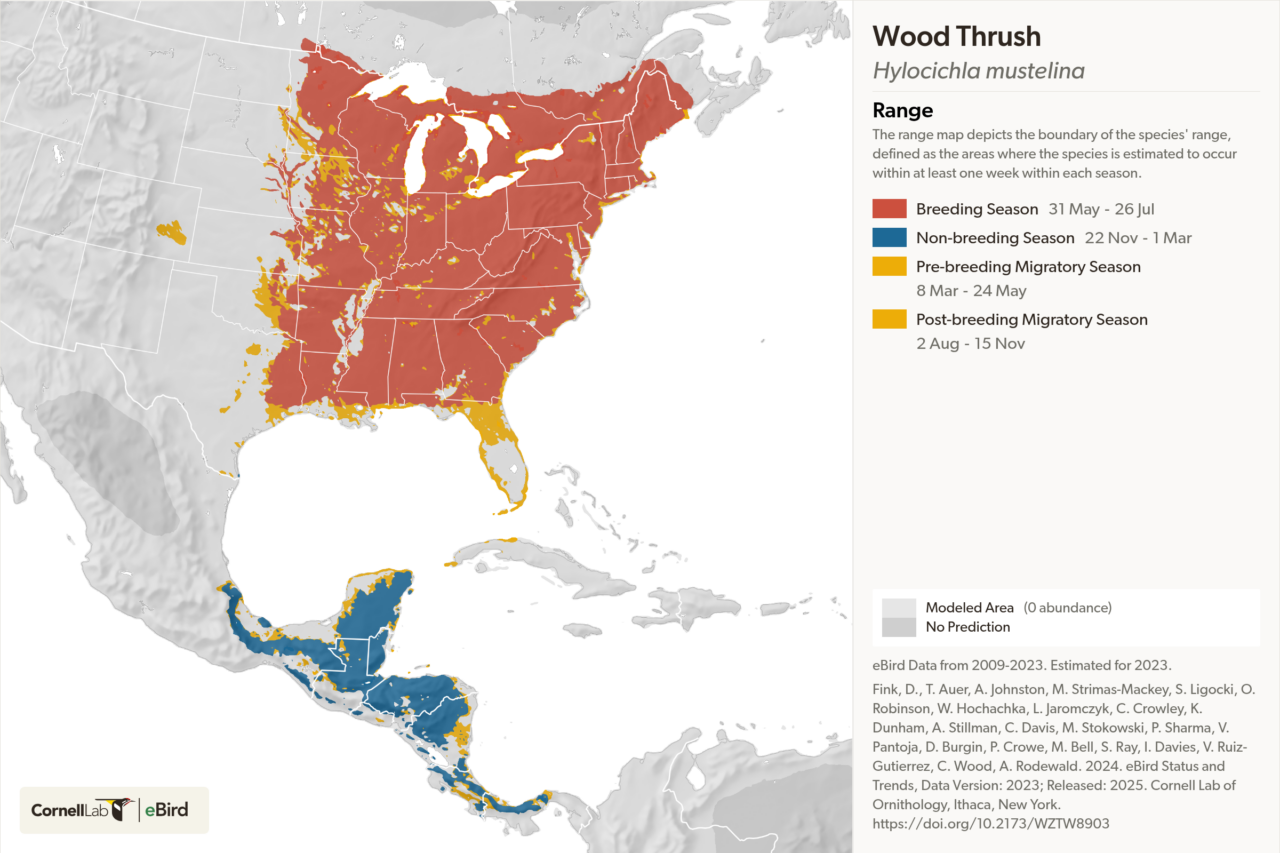
- Range maps—seasonal distribution boundaries
- Trends maps—where bird populations are increasing or decreasing at fine spatial scales (e.g., 27 × 27 km grids)
- Migratory journeys—annual changes in species abundance patterns
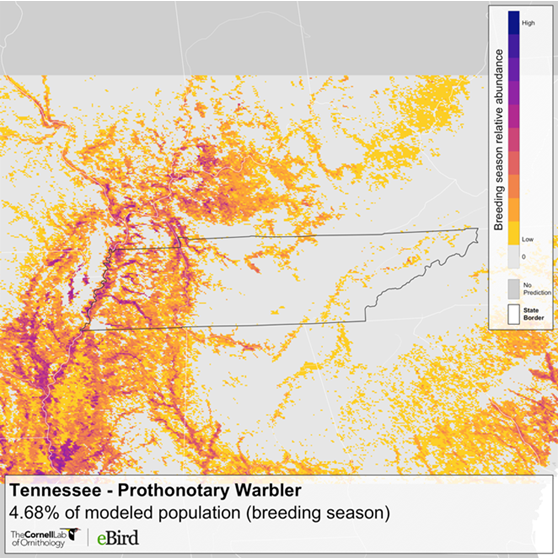
- Regional summaries—relative abundance, percent of seasonal modeled population, and cumulative trends within regions at the state or province level
All of this is updated regularly as new data come in, with the most recent models incorporating millions of eBird checklists each year. The Data Products behind S&T visualizations are publicly accessible and available for download through an access request form. These are powerful tools for land trusts to strengthen planning, engagement, and conservation efforts.
What Can eBird Status and Trends Offer Land Trusts?
For land trusts and conservation organizations, eBird S&T provides actionable ecological insights that can support multiple conservation goals:

- Strategic Land Protection and Prioritization
- S&T abundance and trend maps may help identify areas where priority bird species are most abundant or where populations are declining, guiding where conservation efforts and limited dollars can have the biggest impact.
- S&T data can be integrated into GIS planning tools and combined with land trust priority layers to guide analysis and decision-making.
- Community Engagement and Participatory Science
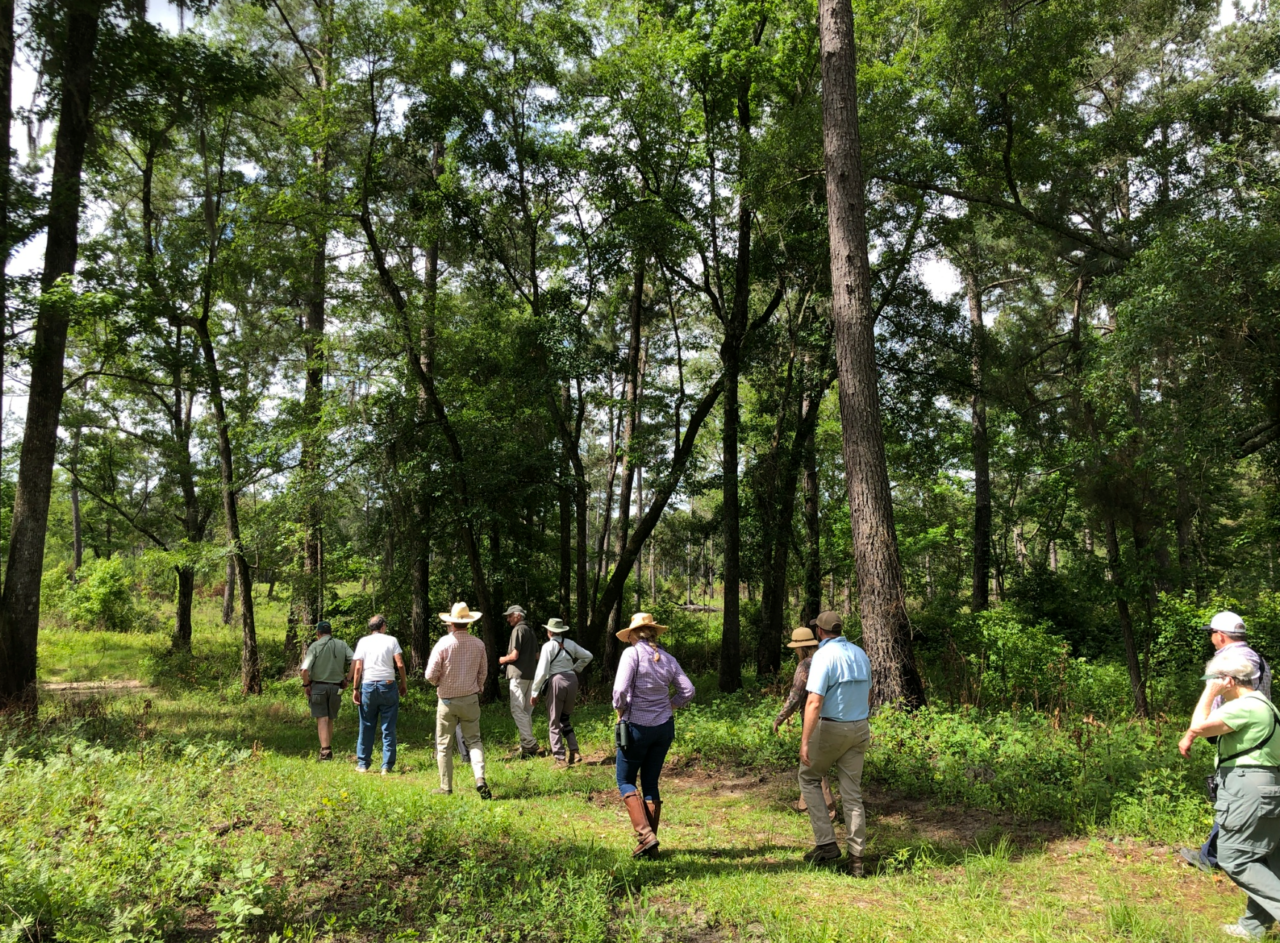
- The eBird platform creates opportunities to engage volunteers, landowners, and the public in data collection and stewardship—turning birdwatchers into conservation allies. Knowing that eBird checklists contribute to scientific understanding of bird species through S&T products is one more reason to participate.
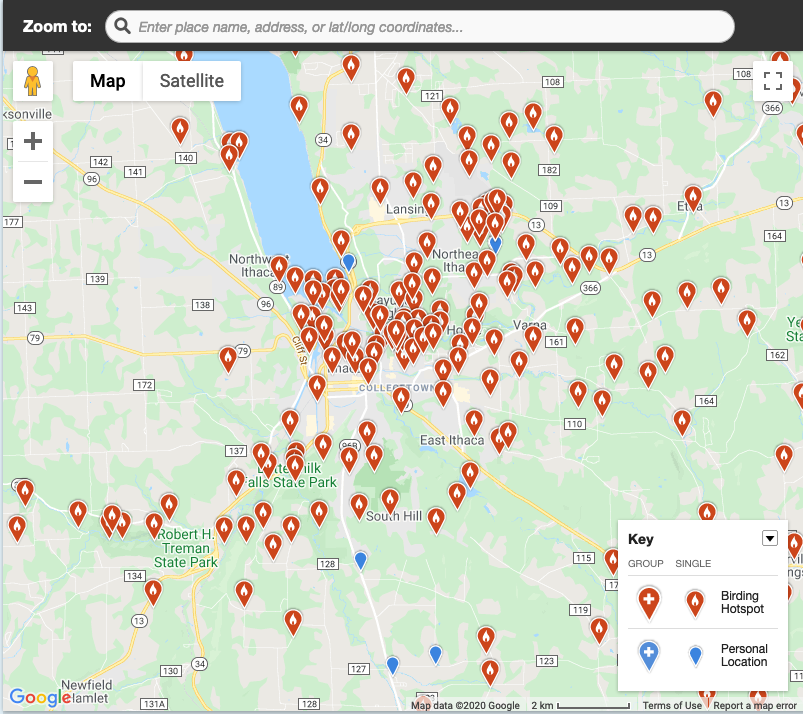
- eBird Hotspots and Group Accounts help organize data by location and encourage local birding activity on protected lands.
- Grant Writing & Reporting
- Robust, data-driven S&T products can strengthen grant proposals and reports to funders by demonstrating likely target species presence, population status, or long-term trends within key areas of interest.
More Resources: